


FW
Disaster looms over factories in Pakistan
Pakistan’s garment and textile workers work under unsafe conditions.
Deadly safety violations persist in factories supplying H&M, C&A, Bestseller, and Zara. There are still no binding agreements in place between apparel brands and labor unions to keep workers safe.
Factories have no fire-rated stairwells or exits. Explosions happen and workers are exposed to electrical discharge and harmful substances. Gas leaks happen. In the past 18 months alone there have been over 30 serious safety incidents in garment and textile factories in Pakistan. Over a dozen people have died and more have been injured. And yet the true extent of the safety violations in factories remains unknown.Ten years ago more than 250 people died in a factory fire in Pakistan – the deadliest factory fire ever in the global garment industry. Ironically the factory was audited as safe only a few weeks before the devastating fire.
The brands which have been named above are accused of delaying the implementation of the International Accord for Health and Safety in the Textile and Garment Industry. Bringing factories under the program can ensure credible, independent inspections, remediation, safety training, and a complaint mechanism to keep workers safe.
So Pakistan’s garment and textile workers remain in the exact same unsafe conditions that led to the horrific disaster a decade ago.
India and Bangladesh hope for trade pact
India can double its merchandise exports to Bangladesh if the latter reduces its peak tariff of 25 per cent on 415 goods under the proposed Comprehensive Economic Partnership Agreement (CEPA).
India has export competitiveness in these 415 goods. However, India meets hardly 22 per cent of the total import demand of Bangladesh in these 415 goods as the 25 per cent peak import tariff levied by Bangladesh acts as an impediment for Indian exports.These 415 products include denim, woven fabrics, iron and steel articles, paper and paperboard, fresh grapes, electric conductors, gems and jewelry, plastic products, cardamom, footwear, tricycles, washing and cleaning chemicals, ceramic sinks, stranded wires and cables etc.
The deal may also increase India’s share in the total import of Bangladesh, which currently stands around 19 per cent behind China’s share of 33 per cent.
A trade agreement between India and Bangladesh, two large economies in South Asia, can boost intra-regional trade in South Asia, which is the least connected region in terms of trade when compared to other regions such as North America, Europe and Asean.
Intra-regional exports in South Asia account for hardly nine per cent of the total exports of this regioncompared to 13 per cent in Sub-Saharan Africa, 22 per cent in Asean, 30 per cent in North America and 60 per cent in the European Union.
Bemberg to unveil new fiber at Filo
Bembergby Asahi Kasei will unveil a new yarn range at Filo.
The staple fiber expands the company’s realm of applications for the fashion and luxury industry, including also knitwear, jersey and casualwear. The fiber comes with a circular economy footprint obtained from cotton linters through a closed-loop process. Bemberg also ensures certified sustainability credentials through its transparent and traceable approach.
Bemberg by Asahi Kasei is a one-of-a-kind, matchless, and original new generation material made from the smart-tech transformation of cotton linter pre-consumer material, converted through a traceable and transparent closed loop process.
Bemberg has the RCS, Oeko-Tex Standard 100 e ISO 14001 certifications. Bemberg is the brand name of the regenerated cellulose fiber cupro, produced only by Asahi Kasei.Bemberg is cool and sensual with a unique, supple drape. It is antistatic and breathable while its soft versatility makes it perfect for the modern wardrobe for fashion, athleisure, and everyday casual wear.
Bemberg by Asahi Kasei expands its journey and evolution in contemporary style with a brandnew staple fiber that unlocks creative paths towards new aesthetics, touch and sustainability.
Filo, to be held in Italy, September 14 to 15, 2022, is an international trade show and business platform dedicated to premium collections of yarns and fibers with a sustainable and ethical imprint.
Federico is the Redress award winner
Federico Badini Confalonieri is the winner of the Redress Design Award. Redress is the world’s largest sustainable fashion design competition and is collaboration between VF Corporation and NGO Redress.
The aim of this partnership is to reduce waste and advance circular design in the fashion industry. VF Corporation is a global leader in branded lifestyle apparel, footwear and accessories.NGO Redress, an environmental charity, is based in Hong Kong.
Confalonieri impressed the judges with his collection which uses zero-waste techniques to upcycle waste fabrics from his previous collections, and draws attention to the issue of microplastics in the fashion industry, with garments made with synthetic fabrics that have an incorporated filter fabric to retain pollution during washing.
In their fourth year of collaboration, the partnership between VF and Redress reflects a shared mission to innovate and foster the next generation of forward-thinking, environmentally conscious designers in the apparel and footwear industry. The winner, Federico Badini Confalonieri, will gain the opportunity to work with VF’s Timberland team and collaborate on a special sustainable design project that advances the brand’s vision for a greener future.
Creating sustainable circular designs is crucial to VF’s mission of bettering both people and the planet. Therefore, VF wants to equip talented next-generation designers with the tools and experience needed to further develop innovative circular solutions.
Pakistan seeks the help of ICA
The cotton industry in Pakistan is getting the help of the International Cotton Association (ICA) especially in regard to the issues faced by Pakistani cotton buyers.
Pakistan is emerging as a cotton importing country but importers are not fully aware of ICA rules and their rights as buyers.
ICA is visiting Pakistan to learn at first-hand how current market conditions, logistic challenges and retail demands are affecting the cotton trade and Pakistan’s textile manufacturers are being updated about the best global practices in the cotton and textile trade being adopted by various countries to meet the new challenges.
Pakistan is an important textile country in South Asia, having a significant ICA membership and playing a major international role in yarn and textile manufacturing. Cotton is an important cash crop for Pakistan and a major raw material for its textile industry, representing 75 percent in the fiber mix of the textile industry products.
The industry provides livelihood to 25 million people in Pakistan. The present demand for cotton in Pakistan is at least 13 million bales. Cotton production in Pakistan has dropped to less than eight million bales this year due to water shortage, fake pesticides, and poor pest management.
Growing fascination for trendy fashion drives up growth in menswear globally
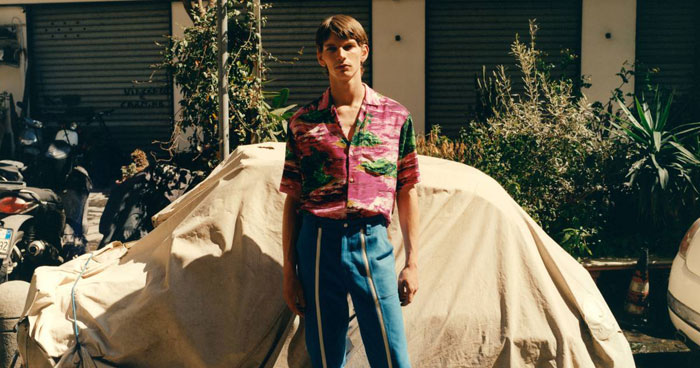
With shoppers trading their skinny jeans and fitted suits for wide-legged trousers, loose-fitted tees and casual attire, menswear business is booming across the globe. As per a Business of Fashion report, the category grew 40 per cent compared to the same period last year at London-based luxury retailer MatchesFashion. It is expected to grow faster than women’s wear over the next four years, expanding to $547.9 billion by 2026, projects Euromonitor International. The average annual growth rate is projected to at around 5.8 per cent compared to 5.3 per cent for women’s wear.
Brands capitalize on the category growth
Betting on this shift, brands are launching their new range. The Outnet launched a menswear range in March while J Crew plans to relaunch its revamped menswear category under Noah designer Brendon Babenzien in fall.
Menswear category is also attracting investments from luxury players like Louis Vuitton that opened a dedicated men’s store in Beverly Hills in July. Italian luxury tailoring brand Zegna plans to launch a sportier and more immersive menswear range. Labels like Burberry, Gucci and Dior have signed new sports stars as ambassadors to capitalize on growing interest from new audiences of men.
Driven by a reset in fashion, menswear boom was cemented with the launch of new silhouettes prioritizing comfort. The category’s revival is also being driven by gender fluidity with men now opting for wider-legged cropped trousers, cargo pants and oversized shirts — clothing they can wear on most life occasions, points out Chris Black, Menswear Consultant for brands like Thom Browne, New Balance and Stüssy through his agency, Done to Death Projects.
Customized tailored pieces
UK-based luxury retail chain Flannels has launched a more personalized shopping experience to cater to the demand for bespoke product alterations. According to David Epstein, Managing Director, Frasers Group, the retailer’s new flagship store in Liverpool enables consumers to shop for clothing made to measure at a tailoring hub on the menswear floor. Meanwhile, brands like Zegna are promoting more causal pieces of clothing including sports coats and knitwear. New luxury cult brands like Aimé Leon Dore are capitalizing on trends like ‘blokecore’, a viral subculture that celebrates the style of middle-aged men, like wide-legged jeans, quilted cardigans, polo shirts and bucket hats.
Accessories continue to drive growth
Micheal Kliger,CEO, Mytheresa points out menswear retailers have also been focusing on accessories over the last year. Leather accessories and hit items like Prada’s crossbody nylon bags are driving sales category sales at Mytheresa. Demand for bags and sunglasses have also increased. Sales of men’s accessories have grown 35 per cent year-on-date, explains Epstein, Managing Director, Mytheresa. Meanwhile, Mr Porter has doubled its fine jewelry brand offering in the last year thanks to increased demand, the company said. And Matches Fashion noted a rise in spending on watches and fine jewelry this year as well.
Men’s deepening engagement with fashion
Black says, men’s engagement with fashion has grown with new cultural channels launching menswear ranges. Enabling menswear to reach new audiences, podcasts like Throwing Fits, Instagram accounts such as NCL Gallery, Hidden and JJJound, as well as subreddits and Discord Channels are providing menswear fans an environment reserved for industry insiders. The market is being driven by influencers or aspirational personalities.
China T&A exports up 12 per cent, domestic market sluggish
During January 2022 to July 2022, the total exports of China’s textile and apparel goods were up 12 per cent year-on-year.
Apparel exports alone were up 13 per cent year-on-year.Viewed from the proportion of major products exported, knitted garments made of chemical fiber took the largest part, and cotton knitted garments came second, followed by woven fabrics made of chemical fibers and other fabrics.
From January to July, the share of fabric exports was rather large, accounting for about 23 per cent of total textile and apparel exports.China’s exports of textile and apparel made of chemical fibers performed better than cotton goods. One of the reasons lies in the ban on Xinjiang cotton and another reason is that the unit price of cotton products increases faster than the unit price of products made of chemical fibers.
Chinese export destinations
The EU countries, the US, Japan and Asean countries are still the major destinations for China’s textile and apparel exports. Year-on-year growth of exports to Asean and Bangladesh increased more rapidly to reach 23 per cent and 36 per cent respectively.The proportion of China’s textile and apparel exports to Europe, the US and Japan has moved down gradually. The proportion to the US, in particular, has declined rapidly since the US-China trade war.
Although China’s textile and apparel still hold a dominant position in those countries, especially in Japan, yet parts of the share are being squeezed by Southeast and South Asia countries. China is in the middle of an outward shift of its low-end textile and apparel industry, and this is expected to continue in the future. However, given the limited capacity and incomplete industrial chains, Southeast and South Asia countries are highly dependent on imports, particularly imports from China.
From 2007 till now, the share of China's textile exports in the total textile and apparel exports has risen gradually from 32 per cent to 47 per cent, up 14 percentage points.
Sluggish domestic sales
This year, domestic sales of textile and apparel were relatively sluggish. From January to July, retail sales of garments, footwear, hats and knitwear declined by five per cent year-on-year. In perspective of monthly sales, only June and July saw positive year-on-year growth, but the growth was limited.
So, from January to July, China’s textile and apparel exports were significantly better than domestic sales, and exports of textile and apparel made of chemical fibers were clearly higher thanthose of cotton goods.
Freudenberg opens technical center in China
Freudenberg has set up an Apparel Technical Solution Center in China. The aim is to offer technical expertise and innovations to apparel customers. The ATSC is equipped with cutting-edge technology. This includes a wide variety of fusing and bonding machines, laser and ultrasonic cutters, specialized sewing machines for sportswear applications, fiber filling machines for insulation applications, and washing and dry-cleaning machines that meet GB and AATCC standards.The ATSC offers unparalleled technical knowhow to help customers design complex apparel solutions.
In particular, it furthers Freudenberg’s dedication to finding technical solutions for performance applications. The factory as an important R&D and technical hub will advance the ongoing development of a robust supply chain. Dedicated to continuously improving production quality, the new factory also includes an innovative online defect detection system. The online weft density automatic adjustment system helps improve the stability of the drying process and the quality of semi-finished products.
Freudenberg, based in Germany, is a leading global supplier of innovative technical textiles for a broad range of markets and applications such as apparel, automotive, building interiors, building materials, healthcare, energy, filter media, shoe and leather goods as well as specialties. The company employs some 50,000 people in around 60 countries worldwide.
Tonello exhibits at CAITME
Tonello is having a presence at CAITME, Uzbekistan, September 7 to 9, 2022.
Tonello will present its full range of products including the Evolution 3 washing machines. Evolution 3 is the new generation of Tonello’s signature washing and dyeing machines. The innovations implemented in Evolution 3 washing machines further reduce water and energy consumption, increase productivity, and lead to lower energy and maintenance costs. In the Evolution 3, the tried-and-tested machine construction allows for maximum optimization of water use during each type of process as well as huge energy savings provided by several improvements. The new high-efficiency motors are built with materials that reduce losses and consumption and increase overall machine efficiency.
The optimized transmission with new high-efficiency belts absorbs less energy and promotes greater durability and wear resistance than previous models; the machine is also more compact. The entire transmission system has been improved to achieve greater energy savings than conventional systems. Tonello's Evolution 3 line of washing and dyeing machines enable energy savings of up to 20 per cent compared to previous models, reduce overall operating costs and contribute to greater competitiveness in an increasingly unpredictable market. CAITME is a textile machinery exhibition dedicated to all technologies used in the textile industry. Uzbekistan is one of the world’s leading cotton producers.
Intertex Tunisia in October 2022
Intertex Tunisia will be held October 6 to 8, 2022.The event brings together professionals from all sub-sectors of textiles such as raw materials, fabrics, yarns, accessories, dyes, and chemicals.
It attracts thousands of professional textile buyers from African countries and also Europe and the Middle East.Over 8.000 industry professionals come together on the same platform and can meet with new suppliers, customers, and business partners. Intertex Tunisia is full of opportunities for exhibitors and visitors to do business on a global scale and Intertex Tunisia is where one can discover thousands of trendy products of widely known brands and chain stores.
In the previous edition which took place October 14 to 16, 2021, Intertex Tunisia welcomed 182 exhibitors/brands and 8.240 professional visitors from 18 countries.
Tunisia is emerging as one of the major production sites of clothing products in the Euro-Mediterranean zone. It’s the sixth largest supplier of textiles to Europe; more than 95 per cent of Tunisian exports go to Europe. The Tunisian economy offers businesses an environment of higher quality than those found in competing countries.The textile andclothing sector is positioned as a pillar of Tunisian industry and retains a prominent place in the national economy and makes a strong contribution to the socio-economic balance of Tunisia.











