FW
To grow exports to Bangladesh, India to revise strategy under CEPA
The Indian textile industry needs to develop its strength and formulate an effective strategy when the Comprehensive Economic Partnership Agreement (CEPA) comes into effect.
Bangladesh and India are interested in deepening trade ties.Bangladesh is an emerging star in the global textile industry as it has succeeded in converting itself into a global factory for textile products.Bangladesh’s apparel exports over the last fiscal increased 35 per cent over the previous fiscal. On the other hand, India’s apparel exports increased 33 per cent in the last fiscal.
Currently, Bangladesh imports more yarn and fabric from India and exports finished products like apparel. The Comprehensive Economic Partnership Agreement may change this equation.There is a view that exporting cotton and yarn from India would enable competing countries including Bangladesh to offer tough competition to Indian exporters after getting cheaper raw materials. A trade agreement between India and Bangladesh, two large economies in South Asia, can boost intra-regional trade in South Asia, which is the least connected region in terms of trade when compared to other regions such as North America, Europe and Asean. India can double its merchandise exports to Bangladesh if the latter reduces its peak tariff of 25 per cent on 415 goods under the CEPA.
Made in Bangladesh Week will showcase apparel strength
Made in Bangladesh Week will begin on November 12, 2022.The event will showcase the strength and potential of Bangladesh’s apparel industry. The goal is to present the important and positive sides of the apparel industry on the world stage.
The apparel industry will be presented as a sustainable and innovative industry to international brands and retailers. The hope is that branding Bangladesh-made garment products will aid in recovering from the pandemic losses.
Bangladesh has been enjoying growth in garment exports since August last year. Numbers were high in July to August this year as well but purchase orders have been shrinking and for the next holiday season orders have dropped by 20 per cent to 30 percent due to rising inflation and recession in Europe and the US, Bangladesh’s main markets.
Bangladesh’s huge clothing industry is looking for new markets in countries such as Japan and South Korea. Inflation has stifled orders from its key buyers, North America and Europe.Most factories are getting orders of less than 30 per cent of their capacity for the next winter season amid record inflation rates across Europe and the US. The South Asian nation’s producers of readymade garments contribute around a fifth of its gross domestic product and more than 80 per cent of its export earnings.
Bangladesh aims at enhancing apparel share in world market
Bangladesh aims at a ten per cent share of the global apparel market by 2025 and an eight per cent share by 2022.
This will be done on the back of the diversification of both products and markets. Currently, Bangladesh’s share of the global apparel market is six per cent. The share is expected to cross seven per cent soon. Asian markets such as India and Japan will be the major export destinations for Bangladesh as it looks to earn $100 billion from the sales of apparel items in the global markets by 2030.
Bangladesh is the world’s second-largest garment exporter. Bangladesh’s huge clothing industry is looking for new markets in countries such as Japan and South Korea. Inflation has stifled orders from its key buyers, North America and Europe.Most factories are getting orders of less than 30 per cent of their capacity for the next winter season amid record inflation rates across Europe and the US. Maintaining healthy exports will be crucial for Bangladesh as it struggles with dwindling foreign exchange reserves.
Nine countries -- Canada, the US, Belgium, France, Germany, Italy, the Netherlands, Spain and the UK -- account for more than 70 per cent of Bangladesh's readymadegarment exports.
Chinese textiles up four per cent
China’s textile industry posted stable revenue growth of four per cent in the first seven months of the year.
The total value-added output of these companies rose 0.3 percent year-on-year during the period. Combined sales of primary retailers were up one percent from a year earlier.The country’s garment exports increased 12 percent year-on-year.
China’s exports of textiles, apparel and clothing accessories increased by 17 per cent in the first seven months of 2022.Garments and clothing accessories exports in the first seven months were 18 per cent higher than in the same period of last year. China’s textile exports grew 16 per cent year-on-year in January to July 2022. Of this, the export of textile yarn increased by 19 per cent, fabrics by 20.2 per cent and textile products by 11 per cent. Viewed from the proportion of major products exported, knitted garments made of chemical fiber took the largest part, and cotton knitted garments came second, followed by woven fabrics made of chemical fibers and other fabrics. From January to July, the share of fabric exports was rather large, accounting for about 23 per cent of total textile and apparel exports.China’s exports of textile and apparel made of chemical fibers performed better than cotton goods.
Indian exports optimistic despite downtrend
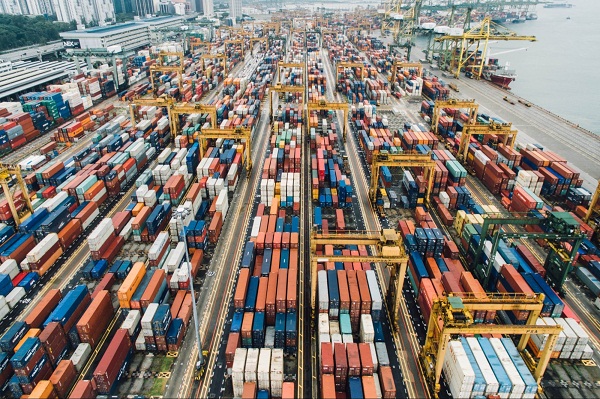
India’s upbeat export figures weren’t immune to the pandemic outbreak and Russo-Ukrainian conflict. Last month, exports recorded a decline of 1.15 per cent year-on-year. The worst hit were cotton yarn, fabrics and handloom products which experienced negative growth of nearly 33 per cent.
Weak demand from traditional markets
Ajay Sahay, Director General and CEO, Federation of Indian Export Organisation points out, the trend being witnessed now is, receiving orders for low-value products because of high inflation. He believes, going ahead, we may see a little impact on the value of these products but volumes exported will remain intact. Stable volumes will have a positive impact on employment and job creation. This certainly signals practical optimism as sector experts feel India has pulled off a speedy post-pandemic recovery before Russia declared war on Ukraine. Sahay, also says, weak demand from India’s some of the biggest export markets, such as China, the European Union and the US, due to a slowdown in these regions and high inflation, as well as export restrictions on some commodities, has resulted in export drop.
Confidence on FTAs for future growth
As we moves towards the festive season at the end of the year, imports from the West are expected to increase. Additionally, the upcoming free-trade agreement with UK is another growth opportunity the sector is looking forward to. Apart from reducing tariffs, the FTA also looks at lowering non-tariff barriers, particularly technical barriers to trade around rules of origin, investor protection and IPR.
The Indian government is currently engaged in multiple FTA deals, prominent ones being the EU and Canada. It must be noted that the EU is the second largest trading bloc after the US. India’s exports to the EU jumped 57 per cent in 2021-22 to $65 billion. FTA negotiations are part of India’s broader strategy to forge balanced trade agreements with key economies and revamp existing trade pacts to improve trade and investment.
The recently-signed FTAs with the UAE and Australia are reaping good yields for Indian exports. The deal with Australia has 95 per cent of Indian merchandize duty free. Similarly, the figure stands at 90 per cent of exported merchandize to the UAE exempt from duties.
The department of commerce has revealed figures that clearly indicate that India’s export forges forward, growing from strength to strength. In March 2022, Indian exports recorded a whopping $40 billion plus, the largest figure for any given month. Whilst the department of commerce has set a target of $400 billion in merchandize exports for 2021-22, Indian exports overreached the target with total value of $418 billion.
India has moved away from exporting primary goods and is focused on value-added items instead. Local manufacturers who are the backbone of the ‘Make in India’ initiative have been the direct beneficiaries of the current sweep of FTAs. With each FTA signed, the scenario keeps getting more favorable for India.
Centrestage begins in Hong Kong

Centrestage is being held in Hong Kong, September 9 to 11, 2022.
This is Asia's premier fashion event being organised by the Hong Kong Trade Development Council (HKTDC). A number of renowned and emerging fashion brands from Hong Kong and overseas are presenting their spring/summer 2023 collections during the three-day event. Visitors have the opportunity to browse and shop for the latest designs from around the world, with some brands offering exclusive discounts.The event is playing host to more than 240 brands from 15 countries and regions, including newly participating brands from Hong Kong, Mainland China, Macao, Japan, UK, Sweden and Italy. Three thematic zones feature a broad spectrum of designs and styles: Metro presents the leisure aspects of urban life; Iconic represents modern, chic and avant-garde design and Allure showcases the elegance and refinement of design excellence and craftsmanship.
HKTDC has proactively engaged local and overseas fashion buyers to support Centrestage exhibitors in expanding their businesses. Local buyers such as Lane Crawford, Joyce, Next Sourcing, Palmers and online fashion store Farfetch have a physical presence at the event. In addition, online business meetings have been arranged to match exhibitors with fashion buyers from the mainland and overseas. During the fair period, Fashion Hong Kong Studio will collect and upcycle unwanted white 100 per cent cotton T-shirts or polo shirts from visitors. The first 100 donors will receive a limited-edition souvenir made from upcycled materials. Entering its seventh year, Centrestage has adopted inclusion and diversity as its theme in 2022, highlighting individuality and self-expression.
AI insights
An artificial intelligence design institute shared insights into the application of artificial intelligence in the fashion industry.A 3D visual effects animation firm along with a digital service provider looked into topics such as the metaverse and sustainability in the fashion industry. This year’s Centrestage venue has integrated cyber and metaverse elements into its design and features a host of interactive virtual experiences. Visitors can create their own avatar and connect with others in the Centreverse, as well as enjoying an augmented reality fashion try-on.To further enrich the visitor experience, workshops on making eco-friendly scented pouches and the co-creation of large-scale artworks are also on offer.
About HKTDC
Hong Kong Trade Development Council (HKTDC) is a statutory body established in 1966 to promote, assist and develop Hong Kong's trade. With 50 offices globally, including 13 in Mainland China, HKTDC promotes Hong Kong as a two-way global investment and business hub. HKTDC organises international exhibitions, conferences and business missions to create business opportunities for companies, particularly small and medium-sized enterprises in the mainland and international markets. HKTDC also provides up-to-date market insights and product information via research reports and digital news channels.
Zegna launches traceable cashmere range
Zegna has launched a new cashmere collection named Oasi Cashmere.
This is a fully traceable line intended to represent a new model of environmental and business consciousness.Every garment will carry a QR code describing the entire journey of the Oasi Cashmere collection, from the cashmere farm to spinning or knitting, and eventually the Italian luxury brand’s boutiques. The codes also provide customers with a visual tour of Oasi Zegna, the Italian brand’s new give-back-to-nature program.
It’s all about the iconic overshirt; the new short coat; knits in new gauges; full pants and triple-stitch shoes.Zegna made-to-measure takes only four weeks door-to-door to people’s apartments. Zegna Cashmere uses only refined long-fiber cashmere, making it notably tough. The name Oasi was chosen to underline the value of traceability.
Like other luxury brands, Zegna is also working on a block chain project, a vitally important task as the growing number of vintage fashion sites encounter increasing numbers of fakes. Zegna is testing various technological solutions and has eased up its whole sartorial style and silhouette, as consumers search for more comfortable clothes and a softer shape coming out of the pandemic.Zegnahas tied up with and created a new wardrobe for Real Madrid, where everything is made with recycled sources.
Indo Rama undertakes expansion in India, diversify into resin manufacturing
Indo Rama Synthetics is undertaking an expansion plan of Rs 600 crores ( USD .075 bn).
Balancing equipment will be added for value addition. The company will diversify into a 700 TPD PET resin manufacturing facility at its Butibori, Maharashtra, plant, India. The commercial production for the growth projects is likely to be started in a phased manner up to the fourth quarter of the financial year 2022-23.
Incorporated in 1986, Indo Rama is one of the largest dedicated polyester manufacturers in India. With more than three decades of market presence, it is India’s most cost-efficient polyester producer. The company’s investments in innovation and capacity expansion allow it to integrate value for its large customer base.Indo Rama has an integrated production facility in Butibori and has prioritized expanding and revamping its facilities, enhancing the product portfolio with high-value products and improving operation efficiency through optimum utilisation of resources.
Manmade fiber demand has been rising in recent years due to the increased consumption of nonwovens and technical textiles. Demand is also being driven by the rapid shift in fashion trends and increased brand consciousness. India is the world’s secondlargest producer of polyester and viscose. Polyester and viscose together account for around 94 per cent of the domestic manmade fiber sector in terms of volume.
Krinsky is Reebok CEO
Todd Krinsky is the CEO of Reebok.A 30-year Reebok veteran, Krinsky has been a member of the brand’s senior leadership team for more than a decade. Most recently, he served as the senior vice president, Reebok design group, Reebok’s global hub for product design, development and innovation.
Before that, he held positions across product development, merchandising and management, sports and entertainment marketing, and business unit and category leadership, and led the growth of Reebok’s classics business.
In his new role, Krinsky will lead the team in implementing Reebok’s growth strategy, which leans into the brand’s authentic sports heritage, unique collaborations and disruptive brand activations. He is seen as a product visionary who brings tremendous credibility in the athletic industry. Krinsky will report to Marc Miller, CEO of the Sparc Group.
Preserving Reebok’s core values was an important focus as the brand enhanced its senior leadership team. Sparcis owned by Authentic Brands.
Coinciding with Krinsky's promotion, Sparc Group also announced two new members to the senior leadership team at Reebok. Erika Swan has been promoted to senior vice president of global operations and sourcing at RDG, while John Moore has been promoted to senior vice president, US commercial market.
Lenzing relies on renewable energy to reduce carbon emissions
Lenzing will rely in future on electricity generated from renewable energies.
The hope is that concepts such as these will make Lenzing less dependent on global energy markets in the medium to long term and further support its transition from a linear to a circular economy model. Lenzing has already installed photovoltaic systems to reduce its carbon emissions even further in line with strategic targets. In 2019, Lenzing became the first fiber manufacturer to set a target to reduce its carbon emissions by 50 percent by 2030 and to be climate neutral by 2050. Lenzing is also currently investing in reducing carbon emissions at sites worldwide.
Lenzing, a provider of wood-based specialty fibers, stands for ecologically responsible production of specialty fibers made from the renewable raw material wood. As an innovation leader, Lenzing is a partner of global textile and nonwoven manufacturers and drives many new technological developments. Lenzing fibers form the basis for a variety of textile applications ranging from elegant clothing to versatile denims and high-performance sports clothing. Due to consistent high quality, biodegradability and compostability, Lenzing fibers are also highly suitable for hygiene products and agricultural applications. Together with its customers and partners, Lenzing develops innovative products along the value chain, creating added value for consumers.