FW
Dyeing units in New Delhi India come under probe
New Delhi will study the environmental impact of units engaged in dyeing or washing of garments and metal surface treatment activities such as electroplating and phosphating.
Effluents from such small scale units operating in non-conforming and residential areas flow directly into the Yamuna, increasing its pollution load.Most of these units operate without permission orwithout effluent treatment plants. Their effluents have high concentrations of ammonia and phosphates, one of the primary reasons behind the thick foam on the river water.
Activities such as dyeing or washing of jeans and other garments or metal surface treatment — electroplating, phosphating, and anodising etc. — have huge water consumption and pollution potential. An environmental study will be conducted to know the pollution potential and its treatment facilities, impact on the environment and remedial measures. It will ascertain how much water is being used by these units and the capacity of the treatment plants and water bodies in their areas.
Effluents discharged from such units are a cocktail of carcinogenic chemicals, dyes, and heavy metals which also pollute drinking water sources. Some textile dyeing industrial units were found to be operating without any license or pollution clearance certificate. The dyeing units were releasing polluted water without treating it first.
Global luxury market to prove its resilience in 2023

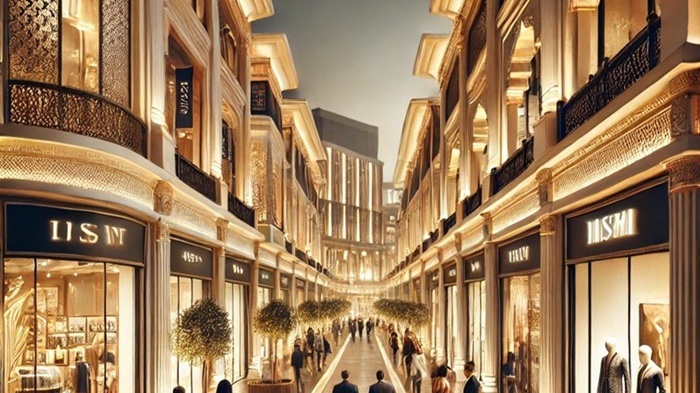
Year 2023 opens up many possibilities for global luxury brands, flushed with the sector’s success in the previous year. As per Mediaboom Global, 2022 yielded more than $312 billion and annual growth predicted at 5 per cent. Whilst luxury brands continue to look strong they also seem unfazed with the current economic slowdown being faced by many economies around the world.
However, economists and analysts are questioning if this parade will hold itself through 2023. After two years in lockdown, a substantial number of consumers who hadn’t spent money under lockdown came out to the world to travel, socialize and network like it was 2019 and spent as much to dress for it. That was 2022.
The new year may be a bit different as the initial enthusiasm has cooled off with prospects of recession across the US, the world’s largest luxury goods market, China, the second largest luxury goods market grappling with a pandemic situation all over again and the EU fighting energy crisis and a very high inflation. Experts say, the enthusiasm of 2022 may cool off in 2023 given the uncertain economic times ahead which may be in direct contrast to a Statista report that predicts a luxury goods market valued at $350 billion by 2030 with a 4 per cent GAGR. According to the report, the top five luxury brands in 2023 will be Gucci, Dior, Chanel, Louis Vuitton and Hermès.
Report suggest resilience to recession
As per management consulting firm Bain & Co., performance of the luxury segment in the final quarter of this year will largely depend on the progressive lifting of Covid-19 pandemic restrictions in China, as well as the evolution of European and American luxury consumer confidence in the face of rising inflation and cost of living pressures. While this report was prepared in October 2022, the current scenario does not exactly mirror the statement.
However, the company’s report concludes that 95 per cent luxury brands will achieve positive sales growth this year, regardless. A Bain spokesperson said the luxury market now appears better equipped to cope with economic turbulence with its consumer base both larger and more concentrated. Customer-centricity and a multi-touchpoint ecosystem as factors will contribute towards resilience amid disruptions. It is clear that confidence factor is riding high in this sector which has prompted high levels of investments in future growth.
Therefore, the luxury goods sector may not see the 2022 levels of profits in 2023 but will be driven by continued growth. As per Claudio D Arpizio, lead author of the Bain’s Global Luxury Goods and Fashion Report, the nouvelle vague or new wave of the luxury goods market will demand evolution amid disruption, adaptation amid uncertainty, and an expansion of creativity in all of the basics – all while new trends and concepts develop. It seems the luxury goods market is going to be more resilient in 2023 than it was after the financial crisis of 2009.
Entry of developing markets
Even as the US continued to hold pole position in luxury purchases, Europe’s post-pandemic bounce back was also noteworthy, particularly France and Germany and the return of North American as well as Middle Eastern tourists. The promise factor though comes from South Korea, South East Asia and India. The big question for the luxury goods market in 2023 is about China’s recovery from the ongoing Covid crisis which doesn’t seem to subside. Hopefuls are predicting that the second largest purchaser of luxury goods could bounce back by mid-2023.
India is being seen as the rising star as predictions indicate great growth potential driven by the changing attitudes towards lifestyle in general and luxury in particular by the younger generations. The Indian market for luxury goods is expected to expand by 3.5 times by 2030.
Italy’s textile machinery sector looks at sustained growth with focus on green labeling
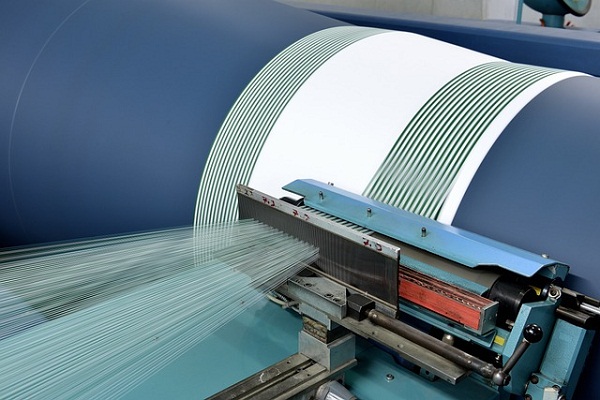
Italian textile machinery manufacturers are confident and upbeat about 2023 as the new year will be the springboard for strong future growth as it indicates healthy progress after the disruption of the last few years. As was projected, Italy’s textile and garment industry made a positive turnaround in 2022 and piggy-backing its success is the related machinery sector. The global textile machinery market is valued at $29 billion in 2023 and is projected to reach $52 billion by 2033, at a CAGR of 6.1 per cent from 2023 to 2033.
Currently, Switzerland is the world’s largest producer of textile machinery with 40 per cent global market share. Italy too holds a strong position as one of the main suppliers of textile machinery in the world, together with Germany, Japan, China and Switzerland. Italy’s market share of world exports of textile machinery is about 11per cent. And as per Association of Italian Textile Machinery Manufacturers (ACIMIT), creativity, sustainable technology, reliability and quality are the characteristics that have made Italy a leader in manufacturing of textile machinery. There are approximately 400 companies who produce textile machines and related accessories.
ACIMIT is confident of 2023 and beyond
As per Association of Italian Textile Machinery Manufacturers (ACIMIT) the value of Italian machinery production in 2022 is expected to exceed €2.5 billion. This register is a 10 per cent increase compared to previous year. Almost 85 per cent of this value was from exports. As per ACIMIT’s spokesperson, the association has forecasted a slight growth between 2023 and 2026, due to the current negative conditions prevailing worldwide and resonating across the textile and garment industry.
Italian textile machinery is certified with sustainable performance and digitally enhanced. ACIMIT is actively participating in ITMA 2023 being hosted in June in Milan, showcasing 380 Italian textile manufacturing and associated companies. At ITMA, ACIMIT will focus on selling the green-labeled and digital certified aspects of Italian machinery. ACIMIT will unveil these initiatives at a press conference on March 15, 2023.
ACIMIT goes to green-labeling machinery and digitisation
Italian textile machinery manufacturers are seriously committed to solving ecological issues that taint the textile sector. As Alessandro Zucci, President, ACIMIT told textilegence.com that “A commitment that ACIMIT has made its own by developing the Sustainable Technologies project. At the heart of the initiative is the Green Label, the document that certifies the energy and environmental performance of the machinery and summarizes it by giving a value to the carbon footprint of the machine itself. Through a survey on the Green Labels produced from 2016 to date, the quantified avoided emissions using green labeled machines are 1.2 billion tonnes of carbon dioxide equivalent, corresponding to 2,21,187 cars travelling for 35.000 km over a year.”
Furthermore, Italian textile machinery is now digital ready and ACIMIT is issuing DIGITAL READY certificates, a first in the Italian textile machinery sector. As Zucchi points out, the certification is designed to simplify production process, making use of a standard language and unique data reading system that allows different types of machinery to dialogue with production systems. The certification aims to build customer loyalty while establishing virtuous link between textile machinery manufacturers and their customers.
China top importer, India among fastest growing market
Whilst Turkey, India and Uzbekistan will be the fastest growing market for Italian textile machinery in 2023, China will continue being the largest single buyer, followed by Turkey coming in second. From January to June 2022, Turkey imported machinery worth €145 million. The most favored machinery for Turkey were finishing and knitting machines. For India, Italy was the fifth largest supplier with 5 per cent market share compared to China that has a 39 per cent market share. The US is also a key importer of Italian textile machinery with about 280 active importers.
After the success of mass fashion, American luxury brands have finally arrived

For years Europe has taken centre stage in the world of luxury brands with France and Italy in the forefront. The French word haute couture epitomizes ultimate luxury of bespoke apparel and the official appellation is granted by ‘Chambre syndicale de la haute couture’ to luxury brands that meet the stringent standards of creativity, quality and exclusivity. The US, despite being the single largest luxury market in the world for decades, has not had a seat at this table until now. However, when Estée Lauder purchased the iconic brand Tom Ford in November 2022 for $2.8 billion, the world has woken up to the entry of American luxury in Europe’s domain. Tom Ford has turned out to be far more expensive as a luxury brand than the Chanels, Diors and Guccis of the world. A Tom Ford suit starts at $5,000 compared to a bespoke Zegna suit that starts at $3,000. A 30ml Tom Ford’s Lost Cherry scent retails at $240 which is more than a 30ml bottle of Miss Dior at $72 and a 30ml bottle of Hermès D’orange Verte at $ 132. It is the first time that an American brand has out-positioned European luxury brands in terms of premium pricing and met success.
American brands are quintessentially mass or bridge
When it comes to fashion brands that have catered to the masses for their fashion fix, the US has not been wanting. Sports brands like Nike and Under Armor are now legends not only in sportswear but also in athleisure, the new trending fashion. Old Navy, GAP, Banana Republic, Levi’s, Wranglers and a slew of such mass brands have held sway in the mass global market. The US has also produced bridge brands that straddle the middle between mass and luxury and is often termed accessible luxury – Kate Spade, Coach, Tory Burch, Tommy Hilfiger, Michael Kors, Ralph Lauren and Calvin Klein are some of the more well-known ones.
It must be noted since US is a young nation born out of a revolution, it did not have the legacy of aristocracy, kingly courts and entourages that were traditional patrons of luxury across Europe. What the US did have was economic success pre and post WWI and WWII, which influenced the world with its casual lifestyle that was seen as liberating, equalizing and trendy. Hence, the success of mass fashion a la American style. The success of mass or high street American brands gave birth to its very own accessible luxury brands that sat well with upwardly mobile professionals who wanted a taste of luxury without the deep end pocket.
The current world of luxury
According to Statista Luxury Markets by Revenue 2022 Report’s rankings, the American luxury goods industry lead all other nations by far, generating around $65 billion 2020 and expected to reach $81.5 billion by 2025. China remains the second largest luxury market valued at $39 billion in 2020 and expected to reach over $56 billion by 2025. Japan, France and Germany are in third, fourth and fifth position with 2020 values at $28.2 billion, $14.1 billion and $11.9 billion and 2025 projections at $36.1 billion, $ 20 billion and $17 billion respectively. The downturn of the Russian economy after its war on Ukraine has not created any dent in the luxury goods sector as it only represented a mere 2 per cent of the total value. In 2022, LMVH remains the most valuable luxury brand, valued at $124.3 billion, and its fiscal year 2021 revenues at $68.41 billion.
Pakistan’s textile export competitiveness on a steady decline
Pakistan needs to get up and going to increase private investment and create a more sustainable diversified export product portfolio to steer the trade imbalance in the wake of the country’s declining export competitiveness. World Bank’s Pakistan development update 2021 reveals the current low economic growth is due to the many factors hindering exports such as highly effective import tariff rates and lesser availability of long-term financing for companies to expand export capacity. The availability of fewer market intelligence service firms for exporters and the low manufacturing ability of Pakistani industries have also affected the economic downturn.
Exports lack product and market diversification.
However, the long-term decline in exports as a share of GDP has implications for the country’s foreign exchange, jobs as well as productivity growth. And it is high time that Pakistan confronted core challenges to compete in global markets for sustainable growth according to Derek Chen, Senior Economist, at the World Bank. As per the data released by the Pakistan Bureau of Statistics (PBS), exports in July were recorded at $2.2 billion against the $2.9 billion exports registered in June 2022. On a YoY basis, exports declined 0.5 per cent as they totalled $2.219 billion in July 2022 compared to $2.340 billion in July 2021.
One of the main reasons for the low GDP is that Pakistan's exports lack diversification, including both product diversification as well as market diversification. Pakistan's exports mainly comprise resource-based items such as cotton, rice, hides and skins over the past many decades, dominated largely by textiles products and rice. As the world progresses, diversification and innovation is the primary motivator for exports which the country is sadly lacking in.
Even while all other countries are focussing on more systematic and sustainable growth in the export category, Pakistan continues to have its head stuck in the sand and make a hostile economic environment for all businesses. As per annual ratings of the World Bank, Pakistan is currently ranked 108 among 190 economies as far as the ease of doing business goes. The increase in the levels of working capital and the high-interest rate has pushed business costs. Along with this, the withdrawal of zero-rating sales tax and implementation of a 17 per cent general sales tax on the export-oriented sector has added to the woes of Pakistani exporters.
Urgent wake-up call needed for economic stability
However, it will take more than just these niggling problems to shake Pakistan’s role as one of the world’s leading cotton producers and the fact that the textiles and clothing industry is the single largest manufacturing sector in the country. More than $5 billion of textile and garment machinery has been imported into Pakistan in the last few years and is based almost entirely on the private sector.
Meanwhile, because of rising production cost and a depreciating rupee, many textile units have shut down in Pakistan – a development that can damage the country’s exports. Reports suggest that around 150 spinning and weaving mills have closed since July, which, some estimates say, made two million people jobless directly or indirectly. The situation is complicated with the shortage of dollars in the markets as the difference between the official interbank and open market rates is huge – around Rs7 to Rs9.
Textiles exports a silver lining
As per the Pakistan Bureau of Statistics (PBS), the country has exported textile products worth $19.33 billion during the fiscal year 2021 making a record high on annual basis by showing an increase of 25.53 per cent when compared with $15.4 billion in the preceding fiscal year. The rebound in exports of textiles since last year was the result of many new incentives to help exporters to overcome the pandemic challenges. However, Covid 19 did have a silver lining as having kept businesses open during the lockdown had enabled them to secure orders diverted from economies under strict lockdown.
Product-wise figures show cotton cloth exports dropped 25 per cent to $153.7 million in November compared to $204.85 million in the same month last year. The decrease stood at 9.45 per cent over the previous month’s exports of $169.6 million. However, knitwear exports were up 2.17 per cent to $400.2 million, bedwear 2.45 per cent to $222.5 million, towels 16.4 per cent to $92.65 million and readymade garments 18.55 percent to $326.7 million when compared with October.
But knitwear exports declined 12.8 per cent over the corresponding month of last year followed by bedwear 29.4 per cent and towels 12 per cent compared to November 2022. Exports of readymade garments were the same as recorded in November 2021.
Increasing burden of foreign loans and lack of political stability have affected the country's economic resources. Pakistan needs a wake-up call to create a more sustained robust and diversified export portfolio to ensure that the textile and clothing industry remains the backbone of Pakistan’s economy in the near future.
Bangladesh RMG exports see encouraging growth
Bangladesh’s garment exports have seen good growth at the end of the year. Inflationary pressures in the Western world are slowly easing which enables consumers to spend more on clothing items. Christmas sales were also buoyant, with international retailers and brands selling off their billions of dollars of old stocks.
Holiday shoppers are showing resilience, and retailers are offering great products and experiences at the right price levels to help stretch household budgets. Consumers are returning to in-store shopping for a more traditional holiday shopping experience.
International apparel retailers and brands have started bringing in new work orders for Bangladesh’s garment factories, prompting inquiries for future purchases. All in all, apparel suppliers expect a moderate recovery in exports in the coming year. In November 2022 Bangladesh’s apparel exports were 35 per cent higher than the same period last year. As a part of the post-Covid recovery, Bangladesh’s entrepreneurs have been able to increase their exports. However, they don’t expect the recovery in apparel shipments to be strong. It is expected to be moderate and the real recovery is expected to start from March onwards. There is still uncertainty about when the war will end and many issues are yet to be resolved, which could affect global trade.
Growing demand for polyester fiber across sectors
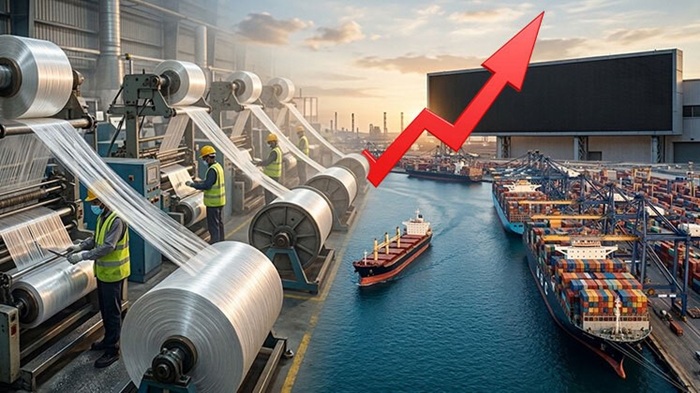
A growing demand for carpets and rugs in the commercial and residential sectors drives the polyester fiber market.
An increase in nonwoven materials and products, along with growing urbanization and home décor industries, are expected to drive the polyester fiber industry to grow.
A growing preference for polyester fiber over cotton is expected to help boost the market, due to its abrasion resistance, strength, and anti-wrinkle properties as well as its increased abrasion resistance. A wide range of industries, such as automobiles, electronics, and hospitality, is expected to contribute to the market’s growth.In addition, polyester is also used to make ropes and yarns that are used in safety belts, conveyor belts, tapes, tire reinforcements, and plastic reinforcements due to its high strength and tenacity. There will also be a positive effect on the market from the thriving demand for polyester fibers from industries like hospitality, automotive, electronics, household, and manufacturing.
Further, a rise in the mattress market in the coming years is likely to further strengthen the demand for polyester fibers.To achieve a substantial market share in the worldwide polyester fiber market and strengthen their position, manufacturers are pursuing expansion methods such as current developments, mergers and acquisitions, product innovations, collaborations, and partnerships, joint ventures.
Warangal in Telengana to have mega textile park
Telangana is establishing India’s biggest textile park in a textile park and this is attracting investments from national and international companies. Telangana is strengthening the handloom sector as well in the state. The powerloom sector in Sircilla has over 25,000 machines. The state plans to strengthen the value chain, modernize power looms in Sircilla, improve the market, skill development, capacity building and project monitoring.
There are over 40,000 handloom weavers in various parts of Telangana, with most of them in Yadadri Bhuvanagiri, Gadwal, Warangal, Rajanna Sircilla and Karimnagar. Telangana’s unique textile crafts have been listed by Unesco. These include Siddipet Gollabhama saris, Himru weaving and Gongadi sheep wool blankets. Unesco has listed the histories and legends behind the textiles, especially the strenuous efforts put in by weavers.
A lot of effort has gone into identification and collating a representative sample of Indian textile crafts from across the country that merit special consideration. Siddipet Gollabhama saris have motifs woven on the pallu (the loose end draped over the shoulder) and on the lower border but none on the upper border. The body of the sari is plain or has motifs. These saris are made of cotton. Another important feature of Gollabama saris is that the motifs are not woven on the loom but made entirely by hand.
India strives to stand above global recession gloom
An expected global recession in the second half of FY23 is now top of the mind for business communities around the world. Just when the global economy was recovering from the pandemic, the Russian-Ukraine war led to further economic instability disrupting supply chains, increasing prices of all commodities including apparel and creating geopolitical tensions. And a new Covid surge in China with strict lockdowns has impacted global economy even further.
Growth decline a cause of concern
The IMF which works to achieve sustainable growth and prosperity for all its 190 member countries recently released its global economic outlook survey which has projected a 2022 global GDP growth to reach 3.2 per cent as compared to 6 per cent last year. Although this indicates a decline in growth rate by 46 per cent from 2021, it is set to further decline by 16 per cent to reach 2.7 per cent in 2023. Growth projection of advanced economies has seen a decline of 5.2 per cent last year to 2.4 per cent in 2022 and 1.1 per cent in 2023 which translates to a drop of 53.8 per cent in 2022 from 2021 and 54 per cent in 2023 from 2022.
With the strongest-ever tightening in history as governments withdraw Covid restrictions and raise interest rates to control persistent multi-decadal high inflation globally, a series of hikes in rates of various commodities has led to an economic slowdown for all countries. In the last year, Fed funds rate has seen the biggest change ever since 1981 in the ECB target rate since the Eurozone was created along with the largest tightening of global central bank policy since 1980.
Globally, things are not looking good and the light at the end of the tunnel is still rather dim. In 2023, slow growth will force a down-turn in the US if core inflation persists; Europe is going into a recession driven by an escalation in energy prices while China reels under a new Covid wave and delays the reopening of many segments.
Closer home, Sri Lanka’s monthly export in October 2022 also fell for the first time in seven months as global demand for industrial products led by the garment segment has sharply declined when global recession looms ahead.
Analysts hopeful about India
Almost all emerging markets and developing economies’ outlook are facing a post-pandemic downward slide and this is reflected in the Indian economy too. In October 2022, India’s exports of non-oil goods were at $25 billion which translates to -18 per cent lower than last year and 28 per cent lower than the highest monthly goods exports of $34.7 billion. Although the service sector exports sum up over 50 per cent of gross value added with the manufacturing sector contributing less than 20 per cent the disruptions in the global supply chain will significantly affect manufacturing industry much more than the general impact on the domestic economy. Experts say, exports are less than a fifth of the domestic economy, so while factoring in the reduced export figures, India’s GDP will continue within the fastest-growing emerging countries with a growth rate of 6.8 per cent in FY23.
Summing it up well is a recent World Bank report titled ‘Navigating the Storm’ which says that “India’s economy is relatively more insulated from global spillovers than other emerging markets. India is less exposed to international trade flows and relies on its large domestic market. India’s external position has also improved considerably over the last decade.” Analysts remain hopeful while the pull-down external economic environment will negatively affect India’s growth prospects, the present economy is better than the other emerging markets to weather the storm better and use global spill-overs to its advantage.
China: Rise in Xinjiang cotton output
Cotton output in northwest China's Xinjiang Uygur Autonomous Region topped 5.39 million tons in 2022, up 2,62,000 tons over the previous year. The autonomous region contributed 90.2 per cent of the country's total cotton output this year. The cotton planting area in Xinjiang edged down in 2022 to around 2.5 million hectares, accounting for 83.2 per cent of the national planting area. The cotton yield in Xinjiang averaged 143.9 kg per mu in 2022, an increase of 7.5 kg per mu over the previous year.
Xinjiang has ranked first in China for 28 consecutive years in terms of total cotton output, per unit yield, planting area, and commodity allocation. Xinjiang has seen mechanized and intelligent cotton planting in recent years, with machines doing over 80 per cent of the picking work.
Since the 1990s, Xinjiang has gradually become the largest cotton production base in China and an important producer of the crop throughout the world. Nearly half of the local farmers are engaged in cotton production. The use of cotton made in China’s Xinjiang Uyghur autonomous region has been facing criticism in the wake of allegations of forced labor. It is difficult to rule on the legality of the entire process of manufacturing cotton products, which involves a number of stages, including cotton cultivation, spinning and sewing.