


FW
Cambodian GFT exports continue to grow
Cambodia’s exports of garments, footwear and travel (GFT) goods grew by around 15 percent in 2022 compared to the previous year.
The GFT sector is the largest export earner for the country, accounting for 56 percent of the total exports last year. Among GFT goods, exports of footwear grew by 24 percent in 2022 compared to the previous year, while non-knitted apparel articles went up by 21 percent, travel goods by 17 percent and knitted apparel articles by nine percent.
But Cambodian exporters don’t expect orders to revive until mid-2023 as retailers in Europe and the US have just too much stock from unsold goods of the previous seasons. Moreover, the Ukraine war and inflation have pushed global garment demand down.
The continued progress of the GFT sector was crucial for Cambodia during the Covid pandemic. The sector accounted for 11 percent of the economy and contributed around 50 percent of Cambodia’s real GDP growth in 2021. This indicated that the GFT sector had been functioning relatively well throughout the Covid pandemic while other sectors such as tourism suffered greater setbacks.
GFT exports have averaged over 70 percent of Cambodia’s total merchandise exports over the past decade and more.
Bangladesh attracts Taiwanese companies
A Taiwanese apparel manufacturer is setting up a factory in Bangladesh.
Makalot will invest around $17 million to set up a factory over 10,119 sqmts of space, where around 1,500 employment opportunities will be created. The company that produces sportswear, ready to wear garments, sleepwear, leisure clothing and outdoor garments will set up two more factories in Bangladesh if this current endeavour is successful.
The company has factories in China, Cambodia, Indonesia, Philippines and Vietnam. Bangladesh is the sixth country where it is setting up a factory.
A number of Taiwanese companies are considering relocating their businesses from Vietnam. Their eyes are now on Bangladesh. Several companies in Taiwan are exploring the potential of investment in readymade garments and leather goods sectors and are planning to make big investments. Bangladesh has been able to create a healthy investment-friendly environment.
Currently, online services to investors are ensured by setting up a one stop service centre. Bangladesh is a populated country, so the workforce is available, which is a challenge for many other countries. Also readymade garment accessories are more affordable in Bangladesh compared to other countries. Other helpful factors are increased port facilities, developed communication systems and the availability of a young workforce.
Agoa due for renewal in 2025 needs major revisions, wider coverage
The African Growth and Opportunity Act (Agoa) needs major revisions. This came into force in 2000. It offers almost 6,500 African products duty-free access to US markets.
Many of these exporters are small and medium enterprises that can grow by leveraging Agoa to their benefit. The act expires in 2025, having been extended four times before. Initially, it was meant to last until 2007 but was amended to clarify on preferential treatment of African goods and other standards required of goods. African countries may need more trade privileges with the US.
As of December 31, 2022, only 36 sub-Saharan Africa countries are eligible for the Agoa. Plans by the United States to renew Agoa should include proposals on how to include agricultural products which is the mainstay of the African economy.In terms of product coverage, the three African countries that have benefited the most from the Agoa are Ethiopia, Kenya and Lesotho because they export apparel. The product coverage excludes agricultural products. For a continent like Africa, excluding agriculture is excluding the main product. So African countries want Agoa to be renewed to cover more products. Agoa also excludes processed products as Africa is allowed to export iron and ore but not steel products. So it has to be expanded in terms of product coverage.
Spain to host footwear fair
Momad will take place in Spain, February 3 to 5, 2023. This is a footwear fair.
This year Momad will feature more than 20 footwear companies. Among them will be a number of leading names in the sector, such as Alma en Pena, Mascaró, Pons Quintana and Calzados Victoria. This initiative aims to respond to the needs of companies and visitors, presenting a more comprehensive offer that is more in line with modern-day shops.
Since Momad Metrópolis and Momad Shoes merged in 2018, the trade fairs dedicated to fashion and footwear have been held jointly at Ifema. In their first edition under this new format, the space reserved for footwear companies presented 80 brands.
In order to drive its global reach, the fair will once again feature its foreign buyers' program, organised in conjunction with the events held in parallel. Likewise, the event will present brands from countries such as Italy, France, Portugal and Turkey. The biggest surprise has been the increasing participation of Greek brands. Over the last few editions, brands from Greece, which had previously focused more on Italian trade fairs, have opted to participate in Spain mainly due to strong tourism.The event hopes to return to pre-pandemic attendance figures.
Kenya to host Indian shopping fair in May
Divalicious will take place in Kenya, May 20 to 21, 2023. This business-to-customer fashion fair will bring traditional Indian fashion to Kenya and promote women’swear brands to enable them to reach new customers in the country.
Divalicious focuses on brands in the bridge-to-luxury segment of the market. The shopping fair will feature product categories including Indian traditional wear, ethnic wear, occasion wear, and fusion wear as well as jewellery, fashion accessories, décor, and gift items, among others.
The shopping fair aims to cater to the large Indian and South Asian community in Nairobi as well as shoppers looking for something different. The event will give participating brands a platform from which to connect with new customer demographics and even local retailers. Bridal looks for the upcoming wedding season will also feature.
Divalicious launched its Mumbai edition on January 10, 2023. The fashion fair’s next destination is Dubai, where it will take place from January 14 to 15, 2023. February 3 will see the shopping fair take place at Ahmedabad, where Pernia's Pop Up Shop will visit Ahmedabad for the first time with its curated brands.
Divalicious has also held fairs in Durban, Singapore,London, Johannesburg, Hong Kong, Jakarta, Sri Lanka, Hyderabad, Bangalore and Raipur.
Millions lose jobs in Pakistan
About seven million people in textile and textile-related industries in Pakistan have been laid off. So say representatives of value-added textile associations.
They say this has been due to dwindling exports and the economic crisis. Textile factories are being deprived of the necessary raw material and accessories.
The industry is on the verge of closure as many units have already closed down. Several others are planning to either shut down or shift their production abroad. Letters of credit worth as low as $5,000 are being refused, which has hit in-progress export orders of $500,000 per consignment. This has caused severe disruption and production delays and has led to the cancellation of export orders. Demurrage on various consignments has increased the cost too much, the associations say. The industrial sector cannot operate under extreme financial stress as the alarm bells for sovereign default have been continuously ringing.
The country is in the middle of a dollar crisis and the economy is facing an emergency-like situation. The current shortage of dollars, say the associations, can be overcome only by promoting exports.
In the meantime the value of textile and garment exports from Pakistan decreased by five per cent from July 2022 to November 2022.
US garment prices up four per cent
Retail prices for garments in the United States increased by four per cent year over year in November 2022. Month over month retail prices were 0.3 per cent higher. Compared to the average before Covid, clothing prices were 1.7 per cent higher.
In November, consumer spending was flat month over month and two per cent higher year over year. Spending on clothing was 0.8 per cent lower month over month and up 0.1 per cent year over year.
The US economy was estimated to have added 2,23,000 jobs in November, near the levels posted over the past four months. Revisions to figures from the last two months were negative. The current twelve-month average is 3,75,000 jobs.The unemployment rate decreased slightly, from 3.6 per cent to 3.5 per cent, and remains low by historical standards. Wages were up 4.6 per cent yearoveryear in December 2022. This is the lowest rate of annual gain since August 2021 and is below current rates of inflation.
Consumer spending during the holidays was generally reported as stronger than feared and may help alleviate issues involving retailer inventories. However, there are other challenges for retailer order demand, including higher sourcing costs and fears that the lagged effects of interest rate increases will weigh on consumer demand in 2023.
Revised rates RoDTEP help Indian exporters
The Remission of Duties and Taxes on Exported Products (RoDTEP) scheme has considerably enhanced the global competitiveness of textile and clothing products by avoiding export of embedded taxes and levies. So says the Southern India Mills Association (SIMA).
The rates declared with effect from January 1, 2021, were on the lower side for certain key textile products such as manmade fibers, yarns, fabrics, cotton knitted fabrics etc. Now, the rates have been enhanced for several productsincluding denim and polyester staple fiber spun yarn.
RoDTEP is a WTO-compliant export benefit for refund of embedded duties and state levies for all goods exported from the country, with effect from January 1, 2021. Under the RoDTEP scheme, all other textile products were covered with suitable rates and value cap based on the incidence of duties and levies furnished by the industry.
RoDTEP rates for lycra blended knitted fabric has been increased from one per cent to 2.5 per cent and for 100 per cent cotton knitted fabric the rate has increased from one per cent to three per cent.SIMA says the revised RoDTEP rates have helped knitted fabric exporters, who are facing a crisis owing to various external factors including the global economic slowdown.
The luxury A-list brands of the world being driven by young millennials
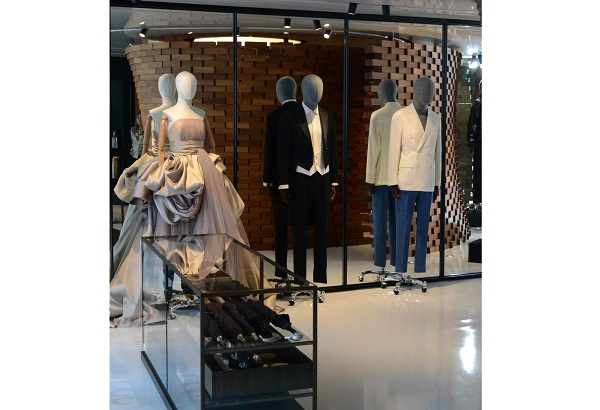
Luxury is a personal indulgence and a slice of heaven for those who can afford it or have an affinity towards it. Luxury goods and services are not just defined by the physical item but an emotional experience that transforms the mundane to an elevated feeling. It is not just limited to clothing and accessories but extends to food and beverages, hospitality, tourism and travel, real estate and personal well-being.
This sector’s natural customer base is the well-heeled and for decades, its geo-location was centred in developed economies of the West and demographically a slightly older consumer who had arrived at the higher disposable income level. However, since the early 80s, the luxury market started changing and today is no longer the exclusive domain of the West.
The Gulf, flushed with new petro-dollars developed a quick affinity for all things luxurious as did Russia after the disintegration of the Communist Soviet Union and the rise of capitalism. Then it was time for the Chinese, following the same pattern of Russian conversion to capitalism although disguised under Communist rule. Last but not the least India too has emerged as a growing market for luxury.
Whilst luxury being an expensive proposition was always associated with successful economies, year 2021 proved the assumption wrong and shook off the shackles of pandemic and luxury continued its successful run. As per a report issued by Bain & Company, a leading global management consulting firm, the luxury sector unlike the other segments actually experienced a sales boost in 2021 in certain countries after the pandemic started and this trend persisted all through 2022. The personal luxury market was predicted to end 2022 at €353 billion a 22 per cent year-on-year rise. The overall global luxury market grew 21 per cent in 2022, closing at €1.4 trillion.
Luxury drivers that made the difference
Luxury’s success story during the difficult time can be attributed to many things and what stands out is it was being driven by a very young customer base – the young Millennials and Gen Z, flush with disposable income as most of them had returned to live with their parents during the worldwide lockdowns. An interesting attitudinal development has been published by the RealReal 2022 Luxury Resale Report that Gen Z are treating personal luxury goods as investments. Some brands are thinking of NFTs and payments in crypto currencies to keep the virtual presence on a roll.
The following are the biggest luxury companies in personal luxury items including apparel, footwear, and other accessories.
The Top Ten
10. Tapestry, Inc. that on December 31, 2022 ended with a market cap of $9.14 billion.
9. V.F. Corporation with a market cap of $10.63 billion on December 31, 2022
8. Prada S.p.A. (1913.HK) with market cap as of December 31, 2022: HK$112.84 billion.
7. Adidas AG (ADS.DE) with a market cap as of December 31, 2022 at €23.26 billion
6. Lululemon Athletica Inc. with a market cap as of December 31, 2022 at $40.53 billion.
5. Kering SA (KER.PA) with a market cap as of December 31, 2022 at €58.11 billion
4. Compagnie Financière Richemont SA (CFR.SW) with a market cap as of December 31, 2022 at CHF 68.03 billion
3. The Swatch Group AG (OTC:SWGAY) with a market cap as of December 31, 2022 at $73.33 billion
2. Hermès International Société en commandite par actions (RMS.PA) with a market cap as of December 31, 2022 at €151.05 billion
1. LVMH Moët Hennessy – Louis Vuitton, Société Européenne (OTC:LVMUY) with a market cap as of December 31, 2022 at $362.95 billion
An expanding customer base and the use of a multi-touchpoint ecosystem along with increased demand from millennials and Generation Z accounting to 72 per cent of the global luxury market have been the main factors driving expansion against all Covid odds. Many premium luxury apparel and accessories companies have now aggressively expanded to the virtual world, with several brands launching their metaverse strategies in 2022. With 2023 just unfolding, a lot can and will happen in the luxury world of premium brands by those who will continue to live life kingsize.
Global maternity fashion market to be worth over $44 billion by 2030: Study
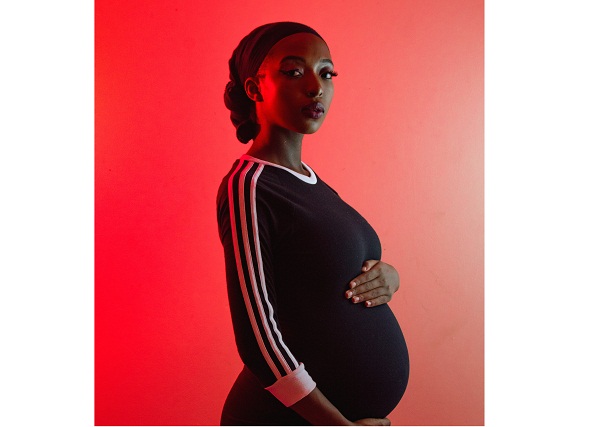
Maternity apparel is no longer a shapeless outfit designed for maximum comfort and nothing else. Contemporary mothers-to-be see no reason that maternity apparel can’t be stylish and fashionable as they juggle a normal work and social life. Scores of social media influencers, fashion magazines and celebrities have changed the way maternity clothing is looked at and pregnant women are lapping up this niche clothing lines world over.
The motto is: Look good. Feel good. Comfort meets style as many apparel brands diversify to include fashionable maternity wear, including items to suit occasions and locations. And why not as the global maternity market is projected to be valued at $44.08 billion by 2030, having been valued at $23.05 billion at the end of 2022? According to research agency Future Market Insights, the CAGR is pegged at a decent 6.7 per cent up until the forecasted period of 2030.
Growth drivers
There are many drivers activating this growth: Pregnancy fashion is an official category of clothing as a growing population of pregnant women in developing and emerging countries continue being in the workforce during their pregnancies and want to be dressed accordingly. The size of clothing that complements different body types has also played a role in increasing the demand for maternity clothing. Thanks to all kinds of media, there is high awareness about comfortable pregnancy clothing that is fashionable and on trend as nowadays fashionable women do not wish to compromise their sense of fashion because of pregnancy.
Leading players worldwide
Gap Inc, Seraphine, Isabella Oliver, H& M Hennes and Mauritz AB, Brunelli and Co S.R.L., Mothercare, Boob Design, SHAICO Fashion, Pink blush Maternity, and Organic are some of key players. These companies provide a wide range of product portfolios for the maternity wear market and have their presence in the developing regions, which provides a lucrative opportunity for them. They have built their reputation in maternity wear through high-quality and innovative products to cater to the comfort and fashion sense of modern women during their pregnancies.
Popular high street brand Zara had introduced its first line of maternity wear back in 2018 with a 25-piece set of clothing that represented Zara’s chic styling and comfort. Rival Spanish brand Mango had launched its first maternity collection two years before Zara. H& M, Seraphine, Gap Inc., are the top three market players, identified by Future Market Insights. They cumulatively accounted for nearly 5 to 6 per cent of total sales in 2021.
A leading and internationally reputed business magazine recently featured top global brands item-wise. Lululemon, A Pea in the Pod, Blanqi, Joe’s Jeans, Madewell, GapMaternity, Lively, Cosabella, Kindred Bravely, Pink Blush, Ingrid + Isabel, Hatch, H&M, ASOS, Old Navy, Hill House Home, Storq, Angel Maternity, Modern Eternity, BB Dakota, Seraphine, Nordstrom, Kimi and Kai, Summersalt, Kindred Bravely and Motherhood Maternity across affordability, casual wear, formal wear, occasion wear, swim wear, home wear and inner wear.
India emerging a strong market
The Future Market Insight Report mentions maternity outerwear has the promise of the highest growth in this niche category including leggings, jeans, skirts, shirts, dresses and tunics. The outerwear sub-category made up 76.2 per cent of all maternity wear sales in 2021. Based on sales channels, multi-brand store-based retailing is forecast to hold the largest revenue share in the segment, accounting for more than 29.3 per cent of the sales in 2021.
The US is anticipated to dominate the market in North America, accounting for more than 79.2 per cent of the regional sales by 2021-end. South Korea and Japan are projected to account for 23.6 and 33.7 per cent of maternity apparel sales across East Asia in 2021, respectively. India is projected to emerge one of the most remunerative markets in South Asia, accounting for around 31.7 per cent of sales in 2021.











