


FW
More brand involvement and supplier coordination can help solve labor issues
 Labor related issues are becoming routine in the global fashion world. As a report in Fashion Law points out, last year laborers in a Bangladesh garment factory went on a week-long strike to protest against their low wages. Before that, laborers in a Zara factory protested against non-payment of dues while Myanmar garment workers revolted against their employers’ non-observation of Thingyan, one of the largest and most widely celebrated holidays in the country. Luxury and high fashion brands too are not immune to labor unrest. In 2018, 100 laborers in Marc Jacobs, Coach and Michael Kors’ suppliers’ factories went on a strike to protest substandard working conditions while workers of Chanel’s Korean factory protested against their long working hours and low wages.
These are just a few examples of the growing unrest amongst garment workers against their exploitation. Brands that strive to find a solution to this issue are hindered by the current legal system. To eradicate labor exploitation completely, they need to take more control of their supply chains. However, this puts them at risk of tremendous legal liability.
Amend labor laws
Therefore, to bring about real change, the countries in which these brands are based, need to amend their current labor laws and reward brands for their involvement in labor issues within supply chains.
Garment production has undergone tremendous evolution over the past few decades. A garment value chain now involves activities including designing, manufacturing, selling, and sometimes, even recycling. A brand is legally responsible for the actions of suppliers only if the supplier is directly employed by the brand. In a global value chain, most suppliers are hired as either contractors or subcontractors. This prevents them from being held accountable for their actions.
Improve supplier coordination
To protect workers’ rights, brands need to improve their coordination with suppliers and subsidiaries. They need to take control not only of their own suppliers but also of suppliers’ suppliers, and so on. This will help improve production efficiency, product quality control and manage brand reputation effectively.
As per current law, brands can rarely hold their suppliers accountable for violation of laws. If they try to control their supply chains, they risk losing legal defenses. Hence, to help brands stop worker exploitation in their supply chains, the industry needs to understand their financial and operational limitations and offer them new incentives to reform their operations.
Government aid, risk evaluation can help reshore US apparel supply chain
 The COVID-19 pandemic has disrupted apparel supply chains across the globe with companies now trying to balance their operational skills with flexibility and affordability. As David Simchi-Levi, Professor, MIT opines, the US-China trade war has compelled companies to reconsider their relationship with China. A survey of over 3,000 companies released in February by the Bank of India revealed, companies in 10 to 12 global sectors aim to shift a part of their supply chains away from their current locations. Some of these companies plan to set up manufacturing units closer to demand while others plan to reshore operations.
Some apparel manufacturers are moving to Southeast Asia. High-tech industries are maintaining a portion of their manufacturing in China. However, they are also moving into Brazil, Mexico, and Eastern Europe. These restructuring trends are accelerating in light of the pandemic, explains Levi.
Technological advancements make China shift difficult
In her paper ‘Reshoring, restructuring, and the future of supply chains’ author Sara Brown says COVID-19 prompted many supply chain leaders to move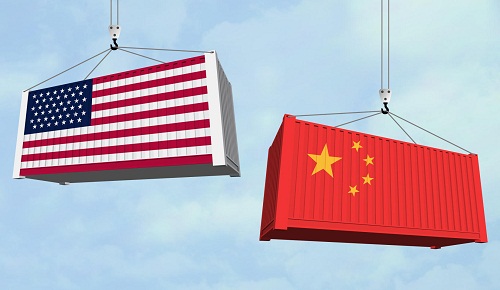 out of China. However, this is not really happening, believes Yossi Sheffi, Director, MIT Center for Transportation and Logistics. Though some companies have left China due to rising costs, most have been unable to move their supply chains completely out of the country.
It would take decades for these companies to move out of China completely, Sheffi argues. China is a sophisticated supplier of many parts and its exports of raw textiles have increased over the years. Even the US-China trade war doesn’t incentivize companies to move out of China. Hence, companies need to diversify both inside and outside China, adds Levi
Role of standard tests and procedure in reshoring
Brown writes post COVID-19, many apparel manufacturers plan to bring production back to the US. However, this does not offer companies what they are looking for, says Levi. Also, this kind of consolidation can be risky, Levi adds pointing to the slaughter plants in the US that are concerned about their backup in meat production, falling prices for farmers, and meat shortages.
Reshoring also requires government involvement. For example, reshoring of drug manufacturing requires clean chemical manufacturing technologies. In turn, this needs significant investment of time and money. Companies should focus on stress test rather than location, Levi says.
Companies can successfully reshore their activities through the risk exposure model which allows them to evaluate the impact of disruptions on their performance. To achieve this, brands need to engage in supply chain mapping. The government needs to establish standards and stress tests, similar to the annual stress test that banks need.
Supply chains pass the pandemic test
Both Sheffi and Levi feel global supply chains performed better than expected during the pandemic. Despite facing empty shelves, the food supply chain in the US continued to work as did the medical supply chain which too did not face any shortage of drugs. In fact, the pandemic successfully highlighted the role of these supply chain managers in the corporate hierarchy.
Inditex returns to quarterly profit
Inditex, returned to quarterly profit in the three months from May to July despite a 31 per cent fall in sales as the coronavirus crisis kept consumers away from city centre shopping districts.
Inditex, which also owns the Massimo Dutti and Bershka brands, said 98 per cent of its stores had reopened and that current trade showed a progressive return to normality with online sales growing sharply and store sales recovering.
Inditex reported a second-quarter net profit of 214 million euros ($253 million), beating the 96 million euro mean forecast from Refinitiv's SmartEstimate model, which is weighted towards more recent estimates and higher-ranked analysts.
It saw a 74 per cent jump in online sales in the first half, a trend seen at apparel retailers worldwide, as shoppers bought from home with many stores closed and movement restrictions in place.
Focus on the US apparel market: ITF
Indian apparel makers should aggressively focus on the US market, said Prabhu Dhamodharan, Convener, Indian Texpreneurs Federation (ITF).
Many clusters in Tamil Nadu have demonstrated high level of quality, consistency, on-time delivery, best sustainable practices, green manufacturing practices, and empowerment of rural workforce. Its time for Tamil Nadu textile clusters to form an alliance, project their strengths and market it well to establish a strong TN textile sector and US partnership as an alternative to China in apparel sector, said Dhamodharan
Due to COVID-19 implications, the overall US apparel imports dropped by 30 per cent in the first seven months of 2020, but this decline was much higher at 49 per cent for import of apparel from China. The recent US actions in terms of trade restrictions on Chinese apparel and other products from one of the major textile regions, Xinjiang, will accelerate this trend further, Damodaran added.
India has a level-playing field with its competing nations like Vietnam and Bangladesh as none of these countries have an FTA with the US as of now. So, as a market diversification strategy, it’s now the right time to step up efforts to export more apparel to the US market.
Garment textile exports of Uzbekistan rise by 112%
Uzbek garment-textile exports rose by 112 per cent to $1 billion from January to July as new markets opened up and new products were developed. During the period, the country exported textile-garment products to 57 countries and regions. The main destinations were Russia (39 per cent), China (18 per cent), Kyrgyzstan (13 per cent) and Turkey (12 per cent).
In addition to traditional markets, Uzbekistan also exported to Hungary, Slovakia and Greece. With the support of the Uzbek embassy in Kuwait, it exported to that country for the first time this year.
Uzbekistan optimised the export commodity structure of its industry by increasing the proportion of value-added finished products such as knitwear and readymade garments to 51 per cent, according to a report in an Uzbek media outlet.
It also started exporting new products like protective masks and clothing. Uzbekistan textile companies currently produce 6 million masks and 10,000 sets of protective clothing per day, and export them to Russia, Kuwait, Ukraine, Belarus, Georgia and other countries.
The government also committed to simplifying the process whereby producers get value-added tax rebates once they ship their goods out of the country.
Inditex to invest €3 billion in three years
Inditex plans to invest nearly €3 billion over the next two years to beef up its digital platforms and integrate store and online stock, as it culls smaller stores and focuses on larger, spruced-up flagships.
The Zara owner reported €241 million in net profit over the second quarter, forging a path toward recovery amid ongoing disruption from the coronavirus crisis.
The Spanish fast-fashion retailer, which also owns labels Massimo Dutti, Bershka and Stradivarius, marked an improvement in its sales, which declined by 31 percent in the second quarter as 44 percent decline in the first quarter, amounting to €8 billion for the first half of the year. Its online sales continued to grow robustly, up 74 percent for the first half.
The retailer recently hit the 1 million order mark in a single day for the first time and noted that since the beginning of the year, its brands reached nearly 3 billion online visits and now count 190 million followers on social networks.
Extend deadline for Caribbean Basin Trade Partnership Act, urge US apparel companies
A group of American apparel companies recently urged US Trade Representative\ Robert Lighthizer, to extend the Caribbean Basin Trade Partnership Act beyond September 30 According to Lighthizer, this will benefit both Haiti and the United States.
The Caribbean Basin Trade Partnership Act provides duty-free and quota-free access for apparel made in eligible countries, as long as the fabrics are made and cut in the United States. It builds on a larger trade preference program, the Caribbean Basin Economic Recovery Act, which has been in place since 1983 and has no expiration date
The Carribean Basin Trade Partnership Act operates in concert with the Haitian Hemispheric Opportunity through Partnership Encouragement Act and the Haiti Economic Lift Program Act American textiles manufactured as part of this program helped increase US exports to Haiti to about $6 billion cumulatively from 2014 through 2018.
These acts have also supported many jobs for American workers, incentivized private sector-led economic development in the region, including investment in the Haitian economy that has helped to reduce extreme poverty, and advanced other important US foreign policy goals.
Michelle Poole is the new President at Croc
Colorado-based footwear company Crocs, Inc appointed Michelle Poole its new president. Crocs’ EVP and chief product merchandising officer since April 2020, Crocs, Poole has also served as senior vice president and chief product and merchandising officer from 2014. She has over three decades of industry experience which includes stints in marketing, merchandising and product management at brands including Sperry Top-Spider, Timberland, Kangol, Converse, MTV Europe and Pepe Jeans.
On the eve of its participation in CI King & Associates' 18th Annual Best Ideas Conference on September 16, Crocs announced a 10 per cent revenue growth forecast in third quarter and predicted continued growth in business in the coming months. This upbeat outlook is a result of the exceptional consumer demand and strong sell through, experienced by the company which indicates its strong recovery from the COVID-19 crisis.
US’ ban on China textile imports to benefit India: ICRA
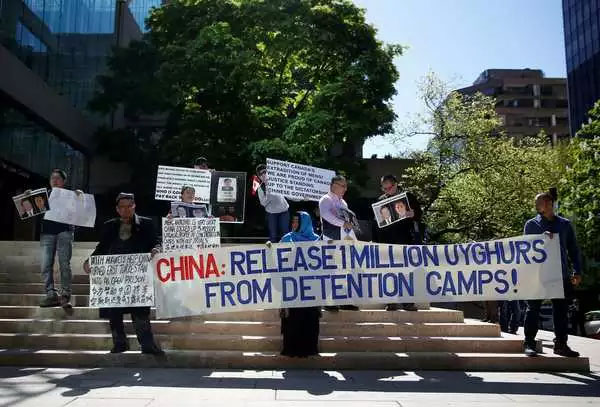
As per ICRA report, US’ restrictions on textile imports from Xinjiang, China will prove beneficial for Indian textile exporters. Citing concerns over illegal or forced labor, US banned import of certain products originating from the Xinjiang Autonomous Region in China. Besides other product categories, including hair products and computer parts, the ban also includes restrictions on some entities from the region involved in manufacturing apparels and producing and processing cotton.
China is the leading apparel exporter, accounting for more than 35 per cent of global trade. Over three-fourths of China's cotton originates from the Xinjiang region, any extension of the ban to a wider base in China could trigger a material shift in global apparel trade in coming years, said Jayant Roy, Senior Vice President and Group Head, ICRA Ratings
There have already been reports of several international buyers planning to diversify their sourcing base across countries, the report opined. Some of the major Indian apparel exporters have either already started receiving increased orders or are negotiating with large international buyers.
Kingpins Transformers ED to organize third edition digitally
Kingpins Transformers ED, a student- and consumer-facing denim education series, will present its third edition virtually via Zoom on October 14 to 16 reports Sportswear International. The digital event will be held in collaboration with Ravensbourne University London. The three day event will focus on topics such as supply chain, sustainability and design. To be hosted by denim expert Mohsin Sajid, the event will host speakers and panelists including Alberto DeConti, Rudolf Group; Jason Denham, Denham; Ebru Ozaydin, Artistic Milliners; Alberto Candiani, Candiani Denim; Sue Barrett, Denim Forum; Amy Leverton, Denim Dudes, etc.
The event will also accommodate US students. It will aim to give students a clear understanding of the opportunities and challenges in the denim industry and prepare them for a future in the fashion industry.
The response to the past Transformers ED events has been overwhelming with students from 30 universities, and fashion programs across Europe receiving an in-depth knowledge about the denim supply chain, says Andrew Olah, Founder, Transformers Foundation and Kingpins Show.











