FW
UK retailer Tesco added to US Cotton Trust Protocol
UK retailer Tesco has been added as the new member of the US Cotton Trust Protocol. As per Knitting Industry report, Tesco has committed to source 100 per cent sustainable cotton by 2025.
Tesco’s membership marks a significant step in its ambitious sustainability programme which sets out its plan for climate action, its approach to protecting important ecosystems such as forests and marine environments, and its work on promoting sustainable agricultural practices that protect soil health and biodiversity.
Tesco also wants to continue to provide transparency throughout its clothing supply chain. a key reason for sourcing more sustainable materials through the U.S. Cotton Trust Protocol for both its home and clothing ranges in store.
The Trust Protocol is a new initiative that provides fashion brands and retailers with the critical assurances they need to show the cotton fibre element of their supply chain is more responsibly grown. It works by providing member brands such as Gap Inc., Gildan, Next and Byford access to the Protocol Credit Management System to validate consumption of cotton and associated credit; and to aggregate year-over-year data in six sustainability areas: water use, greenhouse gas emissions, energy use, soil carbon, soil loss, and land use efficiency.
The Trust Protocol is governed by a board of directors, including Joe Little at Tesco. It is aligned with the UN Sustainable Development Goals, recognized by Textile Exchange and Forum for the Future, and part of the Sustainable Apparel Coalition, Cotton 2025 Sustainable Cotton Challenge, Cotton 2040 and Cotton Up initiatives.
Pitti Filati launches new show space
Textile trade show Pitti Filati launched a new show space inside the Stazione Leopolda former railway plant, welcoming some 78 exhibitors. Exhibitors described the return to the physical experience as relieving in that there’s nothing that can replace the touch-and-feel experience when it comes to choosing fibers and textiles.
Exhibitors said, they felt the impact of the pandemic on many levels, from the notable absence of some international buyers to the preoccupation of exhibitors, which are recovering from a downturn in orders caused by protracted store closures that have left retailers with huge inventory from previous seasons.
They expect to see some signs of a rebound this year, even though the health emergency has conditioned retail sales and promotion of new collections in the first half, so it’s hardly business as usual, says Fabio Campana, CEO, Lanifico dell’Olivo.
Increasing challenges in the procurement of raw materials and spiking prices — due to shortage of supply, farmers’ financial struggles and increased logistics costs — are leaving spinners with more than one snafu to handle, he adds.
According to Alessandro Bastagli, CEO, Lineapiu, a Florence-based company, prices for the most luxurious materials including alpaca and super kid mohair skyrocketed by as much as 70 percent year-over-year, and even acrylic fibers are on the rise.
New COVID wave prompts Bangladesh to shut garment factories
A new wave of COVID cases, especially along the Indian border, has prompted the Bangladesh government to shutdown its garment factories.
As per a new analysis from Panjiva, a business line of S&P Global Market Intelligence, this marks a stark reversal from a trend spotted earlier on in the pandemic. Then, Bangladeshi apparel manufacturers suffered from orders being canceled by retailers in Europe and the Americas, where COVID restrictions were much tighter.
Still, Panjiva’s data show Bangladeshi exporters of apparel to the United States have been more resilient than nearby regions during the pandemic. Shipments in the three months ended April 30 are down by just 1.6 per cent, compared with the same period of 2019, the firm said. Exporters from India and Sri Lanka, in contrast, dropped 10.1 per cent and 6.4 per cent, respectively.
Among the major retail brands with a presence in Bangladesh, shipments linked to H&M increased 13.5 per cent in the three-months ended May 31, compared with the same period of 2019, Panjiva found. While imports associated with Levi’s fell 47.8 per cent, and those with Calvin Klein-owner PVH dropped 68.7 per cent.
According to a September analysis of US International Trade Commission data by the Peterson Institute for International Economics, Bangladesh has been gaining market share as China has become less competitive in labor-intensive sectors including apparel.
However, the additional supply chain disruptions are likely to hit retail companies. A shortage of shipping containers and a dearth of truck drivers have already left inventory backlogged for weeks.
Next MarediModa Miami to be held on a virtual platform
The next edition of MarediModa Miami will be held virtually throughout Miami Swim Week from July 10-31, 2021. As per Knitting Industry, the fair will showcase collections of textiles and accessories for beachwear, intimates and athleisure from a selection of European companies.
The fair will present elegant and sophisticated plain fabrics refined and iconic prints, vibrant and fresh colors, jacquards, flocked prints, laminated and metallic fabrics, lace, embroidery, fringes, sequins, precious accessories, innovative elastic rubber tapes, hi-tech and eco-sustainable fabrics. It represents the most innovative and sophisticated proposal for beachwear, swimwear, underwear, athleisure, resortwear and cruisewear, they add.
A part of the official trade show calendar of Miami, the event focuses on maintaining an active relationship with American customers, as well as promoting the European textile and accessories industry.
Messe Frankfurt plans next Texworld Evolution Paris in February 2022
Despite recent government announcements that regulations have been relaxed in France, several countries, particularly India, Taiwan, and Turkey, remain heavily impacted by the coronavirus crisis. Hence, Messe Frankfurt France has decided to schedule the next edition of Texworld Evolution Paris in February 2022. As per Knitting Industry, the trade fair will be held in its usual format at the Parc des Expositions du Bourget in Paris.
In the meantime, the Messe Frankfurt France team continues to work actively on the installation of Texworld Evolution Paris – Le Showroom, which will be held from July 05 to 09, 2021.
This second and expanded edition will host the collections of 150 international companies and 7000 products and samples in two exhibition venues (the Atelier Richelieu and the 5 rue du Mail). This intermediary event will allow buyers to exchange ideas with other professionals, to discover new creative approaches and to decode trends for the sourcing of Autumn-Winter 2022-2023 collections.
Gym gear gains popularity as searches for leggings increase: Lyst report
With 144 per cent increase in searches for leggings, gym gear has become everyday wear for consumers, says a Lyst report. As per Allied Market Research, the global activewear market is expected to reach £393bn by 2024.
Black-owned fashion brand Teflar and Alexandria Ocasio-Cortez, known for its vegan leather, gender-neutral handbag and luxury durags, plan to launch a sportswear line in September. Besides, sustainable fashion brand Pangaia has announced a 31-piece gym line.
Sales for athleisure have outperformed fashion sales, says Matt Powell, Senior Sports Adviser, NPD Group. Despite it being a trend before the pandemic, in 2020 the activewear market accounted for 40 per cent of all online sales.
Home gym goers are fully leaning into a new look. Lululemon announced an 88 percent sales increase in the first quarter of this year. Under Armour reported a year-on-year sales increase of 35% Gym brands such as Puma, Gap’s Athleta, and running shoe brands such as Brooks, On and Hoka all outperformed in their market.
Good Fashion Fund signs first investment contract with Pratibha Syntex
Initiated by Fashion for Good, the Good Fashion Fund has signed the first investment contract with Indian manufacturer Pratibha Syntex. As per this contract, the investment company has granted a $4.5 million long-term loan to Pratibha Syntex to support its planned capital expenditures for machine replacement and sustainable equipment expansion in various sectors.
The $ 4.5 million investment will replace machinery in the spinning, processing and garment sectors, providing new equipment to expand its activities and facilities. The new equipment will significantly reduce the amount of water, energy and chemicals used. This enables Pratibha Syntex to drive a sustainability agenda to meet clients’ manufacturing demands while at the same time meeting their positive ambitions for climate change.
Pratibha Syntex supplies textiles and garments to popular brands such as C & A, H & M, Patagonia and Zara. Founded in 1997 in Pitampur, India, it is a sustainable, vertically integrated “farm-to-fashion” textile and garment producer. With more than 6,000 employees, the company connects 35,000 farmers in more than 20 countries with apparel brands and produces more than 40 million clothing annually.
China’s GAC threatens action against H&M for low quality garments
China’s General Administration of Customs (GAC) has threatened action against H&M for manufacturing low-quality, hazardous products that fall below China’s quality and safety standards.
As per a Jing Daily report, nine batches of H&M cotton dresses for girls were found to contain harmful color additives and other chemicals that might be hazardous if ingested or absorbed through the skin.
However, the Western media alleges that Beijing is singling out global fashion brands that made statements on forced labor in Xinjiang. And while some actions might appear retaliatory, China isn’t the only country to accuse the Swedish retailer of producing low-quality garments, despite its sustainability pledge.
In recent years, Western styles and trends have lost influence. With the rise of patriotism came a revival of traditional Chinese culture and fashion trends, but international fast-fashion retailers ignored the new reality and continued to promote the same old Western designs. Moreover, H&M didn’t get localization right. In fact, H&M clothing items have a strong Western aesthetic that doesn’t resonate with Chinese customers.
Chinese netizens argue that H&M’s only leverage is that it commands lower price points. But that cannot be seen as a competitive advantage in a country like China, which is known as the largest producer and exporter of clothing, textiles and apparel.
Chinese consumers already have access to trendy, low-cost clothing designed by domestic players in accordance with the taste preferences of local consumers. As such, China doesn’t need affordable Western brands.
In the near future, H&M needs to expand its product lines to incorporate items that reflect the local culture. Moreover, the Swedish retailer needs to improve the quality of its ready-to-wear line and take its sustainability and social responsibility pledge more seriously.
Casual, sportswear transform menswear segment as demand for suits fall
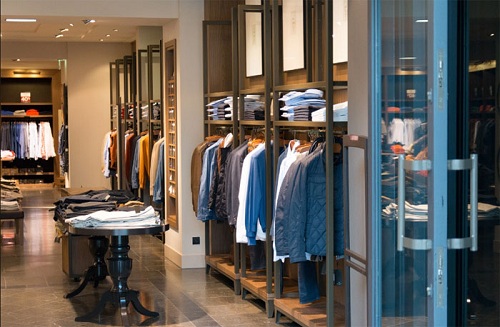
Fashion is no longer an exclusively women’s domain. For last few years, the menswear category has been witnessing rapid development, compelling retailers to adapt to consumer’s changing fashion choices. As per a report by global fashion journal MDS, menswear section underwent a huge transformation in 2016 as it outperformed women’s wear sector for the second consecutive time. The sector broadened itself to embrace gender fluidity and new menswear styles.
Demand for suits grow 1.3 per cent in 2021
Though today menwear sector is dominated by New Age professionals who prefer to dress in casual and comfy clothes, suits still remain the standard attire for formal occasions. Data from analyst Statista shows, after a 0.7 per cent decline last year owing to the pandemic, demand for men’s suits in the US is likely to rise 1.3 per cent to $6.76 billion this year.
Pre-pandemic, menswear brand Hugo Boss recorded strong sales and earnings growth in Q4 2019. EBITDA rose 9 per cent during the period to €122 million ($134 million). The company had restructured operations in 2018 to address clients’ need to create status-oriented, classic yet modern clothes. The brand aims to offer customers with more fashionable choices in future.
Another prominent menswear retailer Ermengildo Zegna Group has decided to revive its men’s line after a 4 per cent increase in revenues in 2018. The company had discontinued menswear label Agnona in 2000.
Sportswear gain popularity, formal wear decline
While revenues of some menswear brands have increased over the years, those of others have declined. A reason for this is the exponential rise in popularity of sportswear in the last few years. Statista figures show, sportswear segment is likely to grow 2.7 per cent year-over-year in 2020. Revenues from the sector are expected to rise to $ 7.4 billion in the United States alone.
The menswear category underwent a huge transformation in 2020. Demand for suits has declined though they are not completely abandoned. On the other hand, casual and sportswear have in popularity, encouraging many formalwear brands to diversify into these two emerging segments.
Technology, experience can help China tap global made-to-order luxury apparel market
 There is growing demand for made-to-order garments amongst Chinese luxury consumers. As a Jing Daily report affirms, in the last few years, China has witnessed the rise of a whole range of technologically dependent customization services spanning from Nike sneakers to luxury handbags to personalized items of clothing. Chinese luxury consumers are increasingly adapting to this rising trend which helps them stand out from the crowd. As a March McKinsey & Co report shows, customization has become a necessity rather than just a possibility for Chinese luxury consumers.
With growing adaption, consumers’ expectations for customization options have also increased, says Zhou Ting, Head-Research, Yoak Institute that surveyed over 40,000 Chinese millionaires and billionaires. They now look at customization as a way to express their personality and quality standards.
Customizing brands’ back-end operations
As luxury brands roll out new customization services, fashion tech entrepreneurs in China are endeavoring to adopt the made-to-order functionality to back-end operations. One of them is PlatformE, the start-up that drove to the creation of ABCDior, the customization pop-up launched by Dior. China’s luxury brands no longer depend on the inventory system as it often adds to fashion’s waste problem, adds Ben Demiri, Co-founder. For them, deadstock is a financial burden that can be unloaded only with made-to-order fashion.
Made-to-order also makes the current supply chain model more agile, opines Janice Wang, CEO, Alvanon which offers technologies to accelerate brands’ product development process by almost eight weeks. The company helps leading luxury brands Chanel, Alexander Wang, and Coach, develop their own sizing schemes with 3D scanning and data analytics. The technology can help shift the legacy design process to a 3D virtual sample creation, development and approval, adds Wang. 3D can help brands not just expand their made-to-order services but also enhance customers shopping experiences, he affirms.
PlatformE, which attracted leading investors including The Amorim Group, The Luxury Fund Management and Carmen Busquets, is known for transforming the linear supply chain model to an interconnected one. The startup helps brands personalize production as per customers’ request. It uses a platform approach that enables brands to engage into one-to-many-type of communication with consumers, says Demiri.
Made-to-order is also gaining popularity on China’s social media platforms. Louis Vuitton’s e-commerce brands Monogram and Goyard Chevron offer customization in their classic offerings. The sprouting of customization shops across China is also helping consumers personalize luxury items with cartoon figures, drawings of pets, portraits of their loved ones. Various customization options are being explored by luxury brands. Gucci is exploring made-to-order menswear services beyond Tier I cities like Beijing and Shanghai to Tier-II cities like Shenyang and Chengdu.
Brands are also exploring new customization types, notes Zhou Ting, Head. One of this is the ‘under the brand’ customization, which is similar to consumers’ perception of made-to-order luxury. The second ‘above the brand,’ customization enables brands to offer customization beyond their current offerings.
Lack of product samples and longer deliver times
Expansion of made-to-order has also given rise to new issues such as lack of customized product samples for Chinese consumers. Many brands are tackling this issue by using the new infrared technology, though the technology is yet to be widely adopted.
Another issue with Chinese brands is the longer time taken for delivering customized orders. Brands like Chanel and Celine take almost six months to ship a bespoke order. Reason includes, customization done from a European perspective rather than Chinese perspective. China therefore, needs to explore new customization techniques and combine them with previous experiences to offer a truly bespoke experience to customers.