FW
Growing demand from domestic, foreign players boosts India’s textile machinery business
 Heralding a textile revolution in India, the textile machinery industry is transforming from labor-intensive to a more modern and automated manufacturing industry. The sector managed to survive the COVID-19 pandemic and rise above expectations in August 2021. It is likely to get a further boost from rising demand in both domestic and foreign markets in coming years.
As per a Textile Value Chain report, the textile machinery industry imported fiber processing machines worth $203.02 million by the end of August 2021as against $78.65 million worth of machines imported in August 2020. Import of auxiliary machines and part textiles machines were worth $254.31 million by the end of August 2021, an increase of 89.75 per cent. Import of weaving machines increased 31.85 percent to $242.1 million by the end of August 2021. On the other hand, imports of machinery for knitting, lace, embroidery, tufting, etc, grew to $04.25 million. The country imported machinery for making belt, nonwovens and hats worth 56.31 million dollars by August 2021-end.
Japan emerges top importer of fiber processing machinery
Japan emerged the leading import destination for India for import of machinery for processing fiber in 2021 with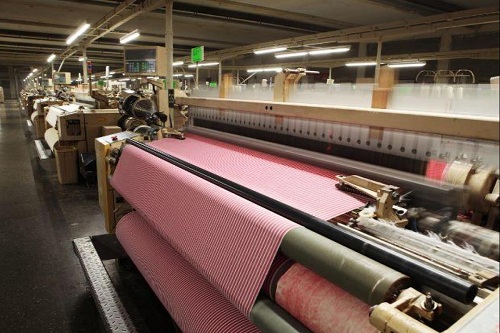 imports worth $76.81 million by August 2021-end. India’s imports of commodities from China increased to $32.78 million while from Germany it was $19.54 million at the end of August 2021. India bought machineries worth $16,64 million from Netherlands while imports from Italy and Switzerland totaled $15.91 and $11.24 million respectively. Malaysia exported machineries worth $7.49 million by the end of August 2021.
Germany top imports of auxiliary and parts textile machinery
China exported auxiliary and textile machinery worth $42.04 million to India by the end August 2021. India’s import of machinery from Germany was worth $71.57 million while from Japan it was $19.36 million. Between January to August 2021, Netherland’s exports to India rose to $7.56 million; Korea and France exported auxiliary machinery and textile machinery parts worth $4.97 and $4.34 million to India.
China dominates weaving machines imports
China emerged the top exporter of weaving machines (looms) with exports worth $138.7 million. However, Japan’s exports to India dropped 25.88 per cent to $33.59 million. Exports by the US and Hong Kong, increased to $5.92 and $4.12 million and UAE’s exports declined 20.32 per cent to $3.34 million.
Knitting, lace, embroidery, tufting machines exports rise
At the end of August 2021, India’s overall exports of machines for knitting, lace, embroidery, tufting, and other crafts climbed by 99.30 per cent. It imported machinery worth $16.05 from Germany while Taiwan exported machinery worth $10.97 million s. Turkey exported machines worth $5.14 million during the year while imports from Singapore and United States were totaled $2.22 and $2.12 million.
New materials, conscious production will reduce impact on biodiversity: McKinsey Study

The impact of apparel industry on biodiversity is often overlooked, as a new McKinsey study reveals. The study defines biodiversity as the variety of life on Earth at all levels. Though a distinct issue, the term is related to Climate Change. The study blames three main stages in the apparel value chain for the industry’s negative impact on biodiversity. These are: production of raw materials; preparation and processing of materials; end of life. The McKinsey study also identifies five reasons for biodiversity loss related to apparel value chain:
Cotton farming
One of the most used non-synthetic fiber in the world cotton farming involves heavy use of insecticides and pesticides. As a Textile Today report shows, though cotton farming involves only 2.4 per cent of global cropland, it accounts for 22.5 percent of the world’s insecticide use and 10 percent of all pesticide use. Also, cotton is a water-intensive crop. It requires around t 713 gallons (2,700 liters) of water to produce one T-shirt.
Increasing use of man-made cellulose fibers (MMCFs)
Created from cellulose, a wood-derived material, MMCFs acquired from certified and sustainable tree plantations. According to estimations, more than 150 million trees are cut annually to make MMCFs. However, around 30 per cent MMCFs are also obtained from endangered and primary forests. The water and soil pollution in these plantation forests often leads to loss of habitat and endangered species.
Water pollution from textile dyeing and treatment
Textile dyeing leads to approximately 25 per cent industrial water pollution. The process contaminates freshwater resources with chemicals and other non-biodegradable liquid waste. Around 165 of the 1,900 chemicals used in clothing production have been classified as hazardous to health by the European Union,
Release of microplastics in oceans
Apparel production also leads to a release of around half a million tons of microplastics in oceans every year. Around 35 per cent of primary microplastics in the world’s oceans are released from the washing of synthetic textiles.
Rising textile waste
Nearly 73 per cent of textile waste ends up in landfills every year. This releases pollutants in the surroundings and leads to loss of habitat. Around 30 to 300 species per hectare are lost during the development of just one landfill site.
Measures to slow down impact on biodiversity
The study recommends certain measures to slowdown the apparel sector’s impact on biodiversity loss. These include:
Introduce new materials, processes
The study recommends making the most commonly used materials in the apparel industry such as cotton, MMCFs, and synthetics more sustainable. It also recommends stepping up investments in introducing new and innovative materials.
Tougher stance against waterway pollution
The study urges apparel brands to take tougher stance against waterway pollution from textile dyeing and processing. It urges brands to engage with suppliers to establish zero certification standards through education, targeted investment, and stricter accountability. Suppliers should also comply with Zero Discharge of Hazardous Chemicals, Manufacturing Restricted Substances List (ZDHC MRSL), and Wastewater Guidelines, it adds
Educate consumers
The study also urges brands to educate consumers to minimize their actions on biodiversity loss. It recommends simple behavioral adjustments and consumption choices like washing clothes in cold water, filtering microfibers during washing and using water-efficient or waterless washing machines for substantive results. Another way consumers can curb biodiversity loss is by garment repair, recycling, and resale.
Stop overproduction
Curbing overproduction of clothes is one of the best ways for apparel brands to stop biodiversity loss. Though manufacturers are known to recycle roughly 75 per cent of pre-consumer textile waste the remaining 25 per cent primarily ends up in landfills. This can be stopped by producing lesser clothes.
GST hike on textiles evokes a strong response from the industry
 There is strong opposition in Indian garment industry against the government's move to increase goods and service tax (GST) on textiles as the costs of raw materials are already rising. The Confederation of All India Traders believes, status quo on GST rates on finished goods be maintained and changes should be made only after a consultation with the textile ministry and industry stakeholders In fact, Praveen Khandelwal, Secretary General also plans to approach Finance Minister Nirmala Sitharaman and state finance ministers requesting them to reverse the proposed hike.
Contrasting views from the industry
Though the proposed hike is being opposed by many industry associations, a few consider it beneficial for the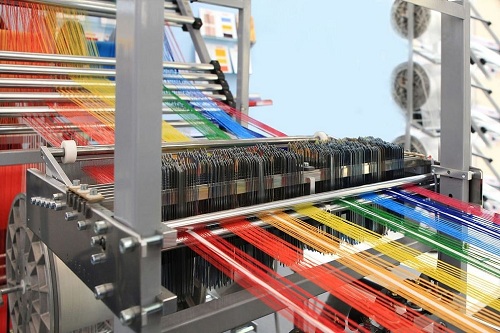 industry. A Sakthivel, Chairman, AEPC opines, the GST hike rates will lessen the burden of tax compliance and help in releasing input tax credit residues accumulated on account of the inverted tax structure, saving crucial working capital for small businesses. Dealers in finished goods, however, disagree with him. Kumar Rajagopalan, CEO, Retailers Association of India, opines, such a steep hike will impact the remaining 85 per cent of the industry while benefitting only 15 per cent. It may also lead to a rise in garment prices.
BC Bhartia, National President, CAIT, believes the tax may block the capital of small traders and may prove to be a regressive step for the industry. The Retailers Association of India recommends a flat 5 per cent GST on the entire textile value as a solution to this problem. The will not only resolve the issue of inverted tax structure but also boost sector’s growth.
Clothing Manufacturer’s Association of India also calls the hike unjustifiable. The market may see a 15-20 per cent price increase in apparel costs in coming season even without the revised GST rate as prices of raw materials, especially yarn, packing material, raw cotton and freight are already rising.
The prices of raw cotton have increased by Rs 130 per kg so far this year compared to the preceding year, informs MP Muthurathinam, President, Tiruppur Exporters and Manufacturers Association. Further hike could force many units to shut down.
Mixed response from manufacturers
Tax experts say, the 7 per cent hike is substantial and would have a mixed effect on textile manufacturers depending on their business model. If they absorb the hike, it will erode their profit margins. On the other hand, if they pass it on to consumers, it will further strain their monthly budgets, adds Bipin Sapra, Indirect Tax Partner, EY India.
Zara opts for a series of collaborations
In 2020, fast fashion retailer Zara released a pair of sneakers with Playstation. In 2021, Zara partnered with Everlast in January, Kassl Additions in September and Charlotte Gainsburg in October. And in the last three weeks, it’s rolled out collaborations with Korean streetwear label Ader Error, biotech company LanzaTech and TRX, a company that makes at-home fitness equipment and publishes digital workout videos.
Each of these collaborations connects Zara with a buzzy area of fashion. The Ader Error collaboration encompasses physical and digital outfits. The LanzaTech collab focuses on sustainability by making clothes from captured carbon emissions, and the TRX partnership links Zara to on-the-rise at-home fitness.
Zara’s strategy is to tap partners that specialize in emerging spaces and gain a foothold in those categories. While collaborations are often planned months in advance, Zara’s change in strategy around collabs comes just as parent company Inditex is going through a leadership transition. Longtime CEO Pablo Isla stepped down in November and will be replaced by Oscar Garcia Maceiras, and Marta Ortega has been promoted to chair of the company. Between November 1, 2021 and December 10, 2021 Inditex’s sales increased ten per cent over 2019 and 33 per cent over 2020.
Uwe Rondé is the new CEO of Saurer
Uwe Rondé has a strong technical background and extensive management experience. He brings with him over 30 years of experience in the machine tool business and the manufacturing space. Most recently, he was managing director of EMAG in Germany, having previously headed up the machine tool and production systems supplier’s Chinese subsidiary. He was also CEO of Franz Kessler, one of the biggest motor spindle manufacturers in the world, and of Intercontec Pfeiffer, a manufacturer of connectors. He will continue to drive the further development of technological innovation, product competitiveness and management as well as the success of Saurer’s future strategy.
Saurer plans and instal transport systems, especially between roving frames and ring-spinning machines. The company has successfully implemented over 100 systems worldwide. The new product line serves as customers’ expert engineering partner for integrated automation solutions across the entire textile value chain. It consists of specially designed automation elements that the project engineering team combines into tailored system solutions that are seamlessly integrated into customers’ processes. These offer tailor-made automation solutions in the areas of staple fiber spinning and twisting, filament twisting and cabling and project engineering. Thanks to these solutions, Saurer is meeting the growing demand for cost-effective automation of spinning.
Vicunha launches hemp denim
Vicunha has launched denim made with hemp. Hemp is one of the most versatile and sustainable fibers in the world. Among the advantages of hemp are its high-yield culture and a renewable resource. This means that it produces much more fiber per acre compared to other raw materials, requiring even less water and land in the crop.
Vicunha is one of the first Brazilian textile companies to invest in manufacturing fabrics with hemp in the country. Among the novelties produced with the mixture of cotton and hemp, there are four products: hemp and hemp light (in denim) and Itacaré and Maragogi (in twill).
The launches are part of the Vicunha’s V.Eco product line. Vicunha is in a constant search for sustainable innovations and solutions that save resources and reduce the impact on the environment. And it saw this opportunity in hemp, to deliver to the market a sustainable product, of high quality and low environmental impact.
In addition, the Brazilian jeanswear brand has also created, in partnership with the Swedish company Polygiene, an innovative technology that inhibits the growth of odor-causing bacteria created from sweat, heat or humidity. The products developed by Vicunha are available in denim and denim color bases.
Korea invests in Vietnam garment and leather
The Republic of Korea has invested heavily in the textile, garment, leather and footwear industries of Vietnam. Korea is investing in Vietnam’s textile and garment industry in a big way. As per Vietnam Trade Promotion Agency, Korea is one of the biggest trading partners. The move is to satisfy growing orders from US importers, mostly leading retailers such as Target, Walmart, Kohls, Kmart, Sears and Tesco. With more than 500 businesses based in Vietnam, and nearly two billion dollars in total committed capital, Korean investment has helped bolster Vietnam’s textile and garment industry.
Korea is one of the leading economic partners of Vietnam, ranking first in foreign direct investment and third in trade with Vietnam. Bilateral trade in the first ten months of 2021 was up 17.6 per cent year on year. Korea hopes to invest more in Vietnam’s industry, especially in material production and design, so as to benefit from preferential treatment under free trade agreements.
Vietnam is the second biggest exporter of leather and footwear products in the world. There are nearly 2,000 enterprises in this sector, and they engage in all production steps. Meanwhile, the Republic of Korea is one of the five main export markets of this industry. Given this, Vietnamese businesses have relatively big opportunities to cooperate with Korean importers to boost exports.
Premiere Vision gets new fashion director
Desolina Suter is the new fashion director of Première Vision. Of dual French/Italian origin, Suter is an expert in materials, colors and trends. She began her career as a textile designer for the Boussac Group, and later worked for Habitat. She oversaw the development and launch of Armani’s home collection. After working for four years at the Italian fashion house, and interested in taking on new projects and challenges, Suter founded her own consulting firm, specialised in fashion, home and decoration. For 20 years, she has worked to imagine and propose creative solutions to inspire and assist professionals - industrialists and fashion and design brands - in developing their products.
Suter will be in charge of coordinating the Première Vision fashion team, charged with planning the organisation of forward-looking fashion information at a time of important changes to the Première Vision show calendar. This involves developing seasonal directions in advance of the shows, in collaboration with international experts and professionals, and in association with exhibiting manufacturers. She will also help in adapting key seasonal, material and color directions to the needs of the market, to provide concrete support to manufacturers as they develop their collections of materials. Further, she will be responsible in developing new communication channels and tools to transmit Première Vision's fashion information in an impactful manner to its target audiences: exhibiting manufacturers, designers and creative fashion and accessories brands and more.
Namibia looks forward to free trade
Entrepreneurs in Namibia are positioning themselves to seize the opportunities created under the African Continental Free Trade Area (AfCFTA) agreement. Hurdles in paperwork due to stringent requirements for compliance and long wait often thwart their efforts. The duration for imports and exports also eats into their cost of doing business and adds to the operations of the business. The trade barriers are many and thus discourage traders from stimulating cross-border trade. To leverage the free trade area, entrepreneurs are positioning their ventures to maximize opportunities under the agreement. Operators in the tourism fraternity are also exploring ways to expand market share within the continent.
They are looking at collaborating with other ventures in the African continent through inclusive packages for the continental market and populace. The sector is pleased about AfCTA as it contributes to the movement of capital and natural persons, which would be an added advantage for the tourism sector. The agreement also presents more opportunities for the local economy and contains strong potential to promote industrialization in sectors including textiles, apparel, leather, milk and dairy products, wood and paper, metals, chemicals, vehicle and transport, electronics and other machinery. Namibia has always taken part in negotiations to reduce non-tariff barriers and remove trade barriers of products manufactured in Africa.
Tencel launches carbon emission campaign
Tencel has launched a campaign to combat carbon emissions caused by the fashion industry. The campaign wants to continue to raise awareness and inspire action to make a change. The movement has managed to plant over 7,500 trees to combat carbon emissions from the fashion industry. Within the initiative, Tencel has also begun a partnership with renowned artist Bodil Jane to create the artwork for the campaign.
TikTok and Instagram users are encouraged to post a 15-second video while wearing their favorite outfit by eco-friendly brands or created with sustainably made pieces, showing how cool it is to wear eco-friendly fashion. At the end of the posting, they can redeem the certificate to plant a tree in their name. The fashion industry is responsible for eight per cent to ten per cent of global carbon emissions. Fast fashion has only exacerbated the problem as consumers are increasingly purchasing clothes with reduced shelf lives. Although the world is striving to achieve net-zero carbon, fashion isn’t doing enough. The industry has a long way to go in combating waste and fast fashion, but with such movements people are finally empowered to take action and choose brands that are caring for the planet.