FW
Nitin Spinners approves Rs 950 crore capacity expansion project
On December 30, 2021, Nitin Spinners approved capacity expansion at a total project cost of Rs 950 crore. The expansion is targeted to be completed over next 20 months with an aim to strengthen the company's market position and capture the benefits of a growing market opportunity in international as well as domestic markets, Nitin Spinners said.
According to the company, the Indian cotton industry is well poised to take advantage of improving demand across the globe and the china + supply chain strategy adopted by global majors.The government thrust on Atmanirbhar Bharat is expected to surge internal demand for raw materials thereby uplifting industry ecosystem. The company hopes to capitalize on growth opportunities arising from investment promotion scheme of the state government and other schemes of central government.
For the first half (April-September) of financial year 2021-22 (H1FY22), Nitin Spinners had reported profit after tax (PAT) of Rs 147 crore as against Rs 3 crore in H1FY21. Revenue from operations grew 88.6 per cent year on year (YoY) to Rs 1,218 crore from Rs 646 crore in the same period last fiscal. Earnings before interest, taxes, depreciation, and amortization (ebitda) margin improved to 25.1 per cent from 12.2 per cent.
The company achieved sales of 11.34 million meters of woven fabric in H1FY22 contributing to 14 per cent of revenue in H1FY22. The company exported more than 70 per cent of its production to over 50 countries across the globe during H1FY22.
Copenhagen Fashion Week unveils schedule for AW22 show
Copenhagen Fashion Week has unveiled the schedule for its AW22 show that will take place in Copenhagen from February 01-04, 2022. The show will presents 20 physical activations that will be digitally broadcast alongside 9 fully digital showcases and 2 digital showcases with physical screenings, alongside a curated list of events, talks and activations. The full series will be available to watch live from YouTube/fashion - streamed directly on the home page for our global community.
The AW22 season of Copenhagen Fashion Week will hosts around 31 brands include A Roege Hove and (di) vision who will showcase alongside internationally renowned Nordic brands including Ganni, Stine Goya, Holzweiler, Saks QPotts and Marienokko..The AW22 edition will also mark a return of brands like Martin Asbjorn and Wood Wood. Furthermore, Jade Cropper, winner of this season's Talent Slot will present for the first time as part of Copenhagen Fashion Week. For the third season of the Zalando Sustainability Award, Iso.Poetism by Tobias BirkNeilsen, Fassbender and Tommorrow Denim, Fassbender and Tomorrow Denim will present their collections as finalists, with the winner announced during the AW22 edition.
Eyewear brand John Jacobs to expand in India
John Jacobs plans to expand its retail presence in India. The eyewear brand opened a 1,200 square feet store in Andheri, Mumbai. It is targeting landmark locations that provide the best opportunities for brand awareness and recall.
Stocked with the coolest eyeglasses and sunglasses in fine quality and at affordable prices, John Jacobs fits the bill perfectly for Mumbai shoppers. Its new store is outfitted with a chic ambience, vintage decor, stunning interiors swathed in warm lighting and a hip vibe.
In line with pandemic regulations, masks are mandatory for all staff and customers at every JJ store, with regular temperature checks and hand sanitisers at entrances; along with a vigilant eye on social distancing guidelines. Staff and customer capacity for each store is being monitored as per instructions by authorities.
Levi’s tops Remake’s second annual accountability report
 Nonprofit organization Remake’s second annual accountability report naming the worst performance in sustainability has been published. The report lists some of the least accountable brands in 2021 which includes Foreever 21, Ross, Global Brands TJX, Cros, Inc, Edingburg Woolen Mill, the Children’s Place, etc. Most of these brands scored negative points on a possible 150-point scale, as per a report by Women’s Wear Daily.
Remake consulted over a dozen industry experts across human rights, employment, fashion and law for this report. It also relied on publicly available disclosures. Rating 60 fashion companies across fast fashion, luxury, children’s wear, the nonprofit also evaluated the performance of smaller brands like Christy Dawn, Nudie Jeans and Nisolo. The brands were evaluated for their transparency, wages and well-being, commercial practices, raw materials, environmental justice and climate change, governance, diversity and inclusion. Remake also ranked the companies for their total product output and the impact they had on the environment.
Worst offenders
In the results that followed, Supreme, Allbirds and Everlane emerged as the worst offenders in sustainability in November 2020. Forever 21 and Ross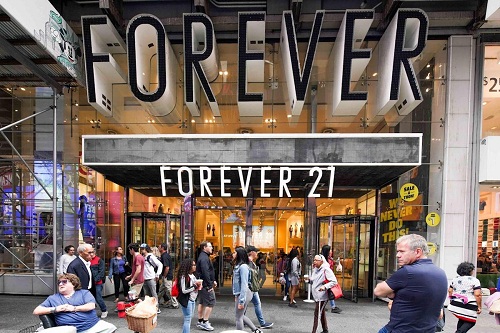 scored lowest with 13 points while the highest score of 83 points was awarded to Nisolo. Despite being one of the most profitable companies in the world, Ross scores low on human rights. The company’s initiative, Ross Dress for Less, is known for wage theft in California apparel factories. It has benefited from the state’s sweatshop conditions for years, shows the report.
Not only this, Ross Stores allow trade associations to lobby against the wage theft legislation titled, ‘Garment Worker Protection Act,” passed in California in September. The report also reprimands Forever 21 for its low-price, fast-fashion business model. The brand is notorious for stealing designs from young designers, paying sweatshop wages in Los Angeles and being opaque about its supply chain.
The California Company is known to have violated the Garment Worker Protection Act time and again. . The company only scores in the area of animal welfare, which is however designed to distract from its use of oil-derived fabrics like polyester. Another offender is the Global Brands Group, which has been shamed for its stake in the American Apparel and Footwear Association, which lobbied against the legislation.
Nisolo emerges most transparent brand
Nisolo emerged as the highest scoring brand in the list for being transparent about its social sustainability efforts. The Nashville-based leather goods brand was honored for paying living wages to not only garment makers and direct employees but also models, photographers, photo assistants and logistics workers. The company is also transparent about its production processes and carbon footprint. The report, however, urges the company to be more transparent about its raw material suppliers, especially around leather sourcing.
The report also ranks companies for launching campaigns for communities of color. Only 12 per cent companies invested in communities where they operate, and mere 8 per cent companies were able to prove living wages.
Levi’s, only brand to achieve targets
Finally, the report names Levi’s as the only brand being on track to achieve its science-based climate target. Levi’s was early to adopt sustainable practices like water-saving and less toxic denim manufacturing. It reduced carbon emissions in 2020 in line with its science-based target, adds the report.
Global readymade garments market to grow by 8.8% CAGR till 2027: Report
According to a new report published by Allied Market Research, titled, "Readymade Garment Market by Product Type, Application, Fabric Type, Age Group, Sales Channel, and Region: Global Opportunity Analysis and Industry Forecast, 2021–2027”, global readymade garments market is projected to reach $1,268.3 billion by 2027, with a CAGR of 8.8 per cent from 2021 to 2027. The outer clothing segment is estimated to grow at a CAGR of 8.8 per cent during the forecast period.
China is the largest country in terms of demand and production of readymade garments in the readymade garments market. E-commerce is anticipated to witness the highest growth rate, registering a notable CAGR from 2021 to 2027, in value terms. The formal wear segment is estimated to grow at a CAGR of 9.1 per cent during the forecast period. However, the others segment is expected to witness higher growth rate during the forecast.
The woven garments market is estimated to register a CAGR of 9.1 per cent during the forecast period. However, the non-woven segment is expected to witness a high growth rate of 8.6 per cent during the forecast period. Based on As age group, the adult segment is estimated to grow at a CAGR of 9.1 per cent during the forecast period. However, kids segment is expected to witness a high growth rate of 9.4 per cent during the forecast period.
According to sales channel, the supermarket/hypermarket segment is estimated to exhibit a CAGR of 9.0 per cent during the forecast period. However, the e-commerce segment is expected to witness higher growth rate during the forecast.
Men’s trade Show project postponed to July
Men’s trade show Project has been postponed from January 26-27, 2022 to July to better serve the menswear market. As per a Sourcing Journal report, the move allows the trade show to concentrate its efforts on Project Las Vegas, scheduled for February 14-16 at the Las Vegas Convention Center.
By postponing the New York event, the organizers will be able bring both events to life in a more meaningful way for the menswear community, safeguarding the health and safety of our community while ensuring all brands and buyers receive the highest quality experience.
In November, organizers announced Project New York’s return after a two-year hiatus due to COVID-19. The show was intended to showcase in an intimate setting an edited assortment of upcoming and immediate season collections by domestic and international men’s brands. Some brands, however, will show at Project Las Vegas instead, including 34 Heritage, Paraboot, Inc., Serge Blanco, Taft Clothing, Inc., and Tiger of Sweden.
Premiere Vision Calendar to be introduced in 2022
Delayed due to pandemic, the revised Première Vision Paris calendar, will now be introduced in 2022. As per a Knitting Industry report, dates of flagship event will be advanced to meet current market demand, which has seen significant expansion in terms of design and collection-delivery calendars.
The show will now be at the end of January-early February for Spring/Summer collections, and in the first two weeks of July for the Autumn/Winter collections. In 2022, the hybrid event will be held at the Parc des Expositions de Paris Nord Villepinte (physical show) and online on the Première Vision website and marketplace (Digital Show).
Première Vision Group decided to advance its traditional dates from mid-February for Spring/Summer and mid-September for Autumn/Winter in order to meet audiences’ new needs regarding material selections and inspiration. These were brought to light in a European-wide survey of 1765 industry professionals conducted on its behalf by the Institut Français de la Mode and communicated in the first semester of 2020.
The results of the survey indicated that 72 per cent of the brands surveyed favored advancing the show to the end of January/early February, and 69 per cent favored an event held at the beginning of July.
India to achieve $400 bn export target this year: Chairman, AEPC
As per A Sathivel, Chairman, AEPC, India will achieve its $400 billion merchandize exports target for the current fiscal. In December 2021, India’s monthly merchandize exports rose 37 per cent to $ 37 billion against $27 billion exports in December 2020. Sakthivel believes, newly introduced two mega schemes will help India reclaim its global leadership position in textiles and apparels. However, the PLI scheme will be more beneficial if the investment and turnover targets are reduced by 50 per cent as most players in the apparel industry are in the MSME segment, he adds.
Sakthivel also welcomed the 22 per cent increase in readymade garments exports which rose from $1.20 billion in December 2020 to $1.46 billion in December 2021. India’s total apparel exports stood at $11.13 billion during April-December 2021, adds Sakthivel. Exports in the first nine months of this fiscal increased 35 per cent to $8.22 billion between April-December 2020, this despite local restrictions impacting operations in the first quarter during the second wave of the pandemic.
India has a fast growing order book from brands and buyers across the world and will see historic heights in apparel exports in the coming months, claims Sakthivel.
Prada, Adidas join hands for a new collection from recycled nylon
Italian fashion brand Prada and sportswear giant Adidas will jointly launch a new sportswear collection made from recycled nylon. As per a Retail Gazette report, each item in the collection will be made by Prada in Italy. It will made from the recycled re-nylon fabric, created through the recycling of plastic waste collected from oceans, fishing nets and textile fiber waste. The fabric can be purified and recycled indefinitely, with no loss of quality.
The Adidas for Prada Re-Nylon collection will be launched on January 13. It will shift the entire Prada production from virgin nylon to Re-Nylon — a milestone underscored by Lorenzo Bertelli, Group Marketing Director and Head, Corporate Social Responsibility. The collection will be a fusion of the technical innovation and innate knowledge of performance sportswear synonymous with Adidas, and the luxury vision of Prada. The sneakers will be available in monochromatic black and white colorways while the collection also includes six bags.
The Adidas for Prada Re-Nylon collection will be available globally in Prada boutiques and on Prada’s and Adidas’ online shops and will be accompanied by a dedicated campaign and a unique digital activation.
ILO launches new project with the Netherlands government
The International Labor Organization (ILO) has launched a project in collaboration with the Government of Netherlands to anticipate and address future skills needs in the garment sector in Vietnam. As per a Textile Excellence report, the two-year old project starting in January 2022 will require ILO to support the Vietnam government, employers’ and workers’ organizations to understand the industry’s need for skilled employees now and in future. The project will focus on those at highest risk of losing their jobs as a result of the COVID-19 crisis and increased automation and digitalization in the industries.
Guided by the ILO Centenary Declaration for the Future of Work (2019) , the ILO Global Call to Action for a Human-Centered Recovery (2021) and the recent International Labor Conference resolution concerning skills and lifelong learning, the new project will apply lessons learned from similar ILO garment sector skills anticipation projects in the garment sector in Brazil, Ethiopia, Jordan and Peru, and it will build on the achievements of past ILO skills development programs in Vietnam.
The project will be implemented in close collaboration with the IFC-ILO Better Work Vietnam programme, and the findings and achievements in Vietnam will be shared with other Member States of the ILO through the creation of a regional knowledge platform on future skills needs in textiles and garments in Asia and the Pacific.