FW
Paco Rabanne, Iconic Designer and Creator of Popular Fragrances, Passes Away at 88
Fashion Designer, Perfumer Paco Rabanne Dies At 88.
Paco Rabanne, born Francisco Rabaneda-Cuervo, was a Spanish fashion designer known for his eclectic and often unwearable designs.
Nicknamed "Wacko Paco" in the 1960s, Rabanne later became famous for his globally popular line of fragrances. He dressed famous figures such as Lady Gaga, Jane Fonda, Brigitte Bardot, and Francoise Hardy and was a co-creator of the 1960s space-age movement in fashion.
Rabanne studied architecture at the Beaux-Arts university in Paris and began his career creating accessories that caught the attention of famous designers like Christian Dior and Yves Saint-Laurent. In 1968, Rabanne signed a deal with the Barcelona-based Puig family, which marked his entry into perfumes.
Rabanne was known for his provocations and eccentric beliefs, including claims of multiple lives, 78,000 years of age, and predictions of Paris' destruction based on the writings of Nostradamus. He was described as a futurist, couturier, mystic, madman, and many more.
China International Fashion Fair (CHIC) kicks off with new dates, fresh ideas
“China International Fashion Fair (CHIC) starts the new year with a new date and fresh ideas", said Ms. Liu, the responsible person for CHIC March 2023. "The fair will now take place on 28-30 March 2023 at the National Exhibition and Convention Center in Shanghai and is postponed by around 3 weeks to make it easier for international visitors and exhibitors to enter the country, as almost all entry restrictions have been lifted in China since 8 January."
With over 1,600 exhibitors expected in 5 halls, the clearly structured exhibition segments present big players, up-and-coming designers, and niche brands in areas such as women's wear, men's wear, kid's wear, and accessories. The latest trends in the Chinese market include retro vibes inspired by the 90s and Y2K style, denim suits, wide silhouettes, and a return to mini length. Loungewear and casual streetwear are also on the rise due to the pandemic.
CHIC organizers have invited 150,000 agents for brands, 83,000 buyers, 37,000 online platform visitors, 50,000 wholesale market visitors, and more than 10,000 international visitors. With CHIC Matching, exhibitors and visitors can efficiently and individually network and make new contacts. CHIC also offers comprehensive marketing activities through its CHIC WeChat Public Account and CNGA WeChat Mini Program, among other channels.
A new addition to CHIC is the CHIC Showroom by China World in Beijing, where a curated selection of international brands is being presented to the Chinese fashion scene. The first phase features 10 premium brands from Italy and France, with plans to expand the concept in the future.
Rise in India’s textile imports a cause of concern

Industry analysts are concerned as the country’s textile exports surpassed imports. Recently, there has been a growth in textile imports, driven not just by massive purchases of raw materials such as raw cotton, fabrics, and man-made textiles but surprisingly also of finished products. India, traditionally a major exporter saw its textile and garment imports grow almost t48.8 per cent until November this fiscal from a year ago to $7.2 billion. At the same time outbound shipment of such products dropped 13.4 per cent to $23.1 billion. And officials say, these imports are likely to be over $10 billion in the current fiscal and that’s a record.
PLI, trade deals hope to decrease import dependence
As per a Financial Express report, apparel imports increased 53 per cent to $1.2 billion in the first eight months of last year. This includes around 40 per cent of garment imports from Bangladesh where many Indian companies have set up units over the past 15 years to take advantage of its duty-free access to large markets of the US and EU while another 20 per cent has come from China.
However, experts feel once early investments made under the production-linked incentive (PLI) scheme for textiles bear fruit, the situation will change for the better this fiscal. Moreover, recent trade deals with the UAE and Australia will further improve the situation and the government’s efforts to improve cotton production will also reduce imports of basic raw material cotton in 2023. The current shortage of cotton in the domestic market has not only hiked up the fibre import percentage but harmed production capacity of several units in the value chain. The increase in cotton prices also drove up the import value of both inputs and finished products along with Indian companies getting more garment supplies to India from their manufacturing units in Bangladesh.
Man-made fibers and other causes for export slump
With global consumption pattern currently focussed more on man-made fibers and technical textiles products, many factors such as the dominance of smaller businesses with limited scale manufacturing capacity and inflexible labour rules have affected this segment. Along with this, high logistics costs as well as stiffer competition from Bangladesh and Vietnam in the last decade have been detrimental to this segment.
As per a CCF Group study, India where the main exports are textiles followed by apparel, there has been a slump for five consecutive months leading up to December 2022. Textile products such as cotton and yarn products which account for nearly one-third of the total were down 3.6 percentage points compared with the proportion of the same period last year which was down 12.2 per cent over the same period last year.
From the volume of Indian cotton in the current markets, the 2022-23 Indian cotton yield is lower than expected in the previous period, which is a support for Indian cotton prices. Although downstream demand is relatively weak, it will be further affected by the present high cotton prices and the year ahead doesn’t look too optimistic. With cotton prices remaining high, there is not much significant improvement among its domestic midstream and upstream spinning and weaving mills where the operating rate remains at a low level and also lowers the actual international competitiveness of Indian textiles.
As per the CCF Group study, India’s low textile and apparel exports in 2022 was mainly due to a fall in exports in the second half of the year. What’s more, December stats do not show much improvement either. And the situation may not improve too much in the first quarter of 2023.
Franco Giachetti, pioneer of cutting room solutions, passes away
Franco Giachetti, founder of Morgan Tecnica Spa, Italy,a leading provider of cutting room solutions for the garment industry, passed away recently.
Giachetti, who studied electronics, was a pioneer in developing efficient and automated cutting room solutions. He founded Morgan Tecnica in 2008 and turned the company into a powerhouse, producing cutting room solutions, roll loading systems, automatic spreaders, table, labellers, and automatic cutters.
Morgan Tecnica also offers smart software for 2D and 3D modelling, product management, and order management. Giachetti was a visionary in the clothing industry and invented several innovative solutions, including the first electronic spreader and the first automatic spreader without clamps.
He had a strong bond with India and opened the company's first foreign branch, GA Morgan Dynamics, in Bengaluru.
Giachetti is survived by his daughter, Federica, who is now the President of Morgan Tecnica, and son, Fabrizio, who is the CEO of the company.
Vietnam to host apparel summit
Global Textile and Apparel Summit (GTAS) will be held in Vietnam, April 20 to 21, 2023.
Experts from all over the world will share project case studies, discuss opportunities and deliver solutions for the major challenges faced by the Vietnamese industry.
The summit will also host discussions on digital textile printing, labour market trends, supply chain and production chain issues, supply chain management and apparel procurement, rethinking business models for the fashion industry, digital fashion and the metaverse, quality and compliance.
Vietnam is considered as one of the world’s leading manufacturers and exporters in the textile and apparel industry. After Vietnam fully reopened its doors to international visitors, the local market has quickly adapted to the new normal and is back on track after the pandemic.
Despite optimism for future development, Vietnam’s textile and apparel industry still faces many challenges such as rising costs, global supply chains and labour deficit. Vietnam’s apparel exports in the first half of 2022 were up 17 per cent year on year. The growth was fairly high amid challenges plaguing the global market.The high export revenue, coupled with high-quality Vietnamese products at competitive prices, has recently made the Vietnam textile and garment industry more attractive to foreign investors.
US dominates golf clothing market growing at 6% CAGR
The global golf clothing market is growing at six per cent a year.
In 2021, the worldwide golf equipment and apparel market reached all-time high sales levels around the world. Strong consumer demand for golf products continued into 2022.However, several factors constrained manufacturers’ ability to meet orders during the first three quarters, and then economic woes dragged down the market in the fourth quarter.
The UK market is the fourth biggest in the world, behind South Korea, Japan and the US. While the US and Japan combine to represent over 66 percent of the world’s golf equipment market, Korean golfers spend more per capita on golf equipment and apparel than any other country.
The emergence of the trend of golf tourism, a surge in fitness consciousness among consumers and the trend for fashionable sports apparel have driven the growth of the global golf clothing market. The bottomwear segment is the fastest growing segment. This is due to the increase in the number of participations in sports tournaments and physical activities.
On the basis of distribution channels, the online store segment is registering the fastest growth, as users are inclining more towards online shopping due to the easy accessibility of different sports apparel.
Nonprofit releases recycling directory
A free directory of textile-to-textile recycling resources has been released by Accelerating Circularity.
Accelerating Circularity is a nonprofit focused on scaling textile-to-textile recycling,scalability, viability, and transparency. The aim of creating a comprehensive directory of international recyclers is to spur connections across the value chain.
The Accelerating Circularity Recycler List includes commercial technologies for chemical and mechanical recycling of polyester and cellulosics. The catalog details the different aspects of each recycler, such as location, feedstock fiber type, restrictions, etc. The information can be organized and filtered by users in the Airtable platform to pinpoint specific capabilities.The directory is launched with 143 company listings in 27 countries, including the US. The directory will be regularly updated.
Accelerating Circularity is a nonprofit that creates new supply chains and business models to turn textile waste into mainstream raw materials. It is a collaborative effort to accelerate the textile industry's move from linear to circular.Accelerating Circularity’s mission is to establish systems that will use the embedded value and resources in existing textiles for new products. It does research on existing systems for textile feedstock generation, collection, sorting, preprocessing, recycling, apparel and product development and brands and retailer businesses, maps existing systems and identifies gaps.
Levi Strauss Q4 revenue down six per cent, despite share gains
For the fourth quarter Levi Strauss’s revenue fell by six percent.
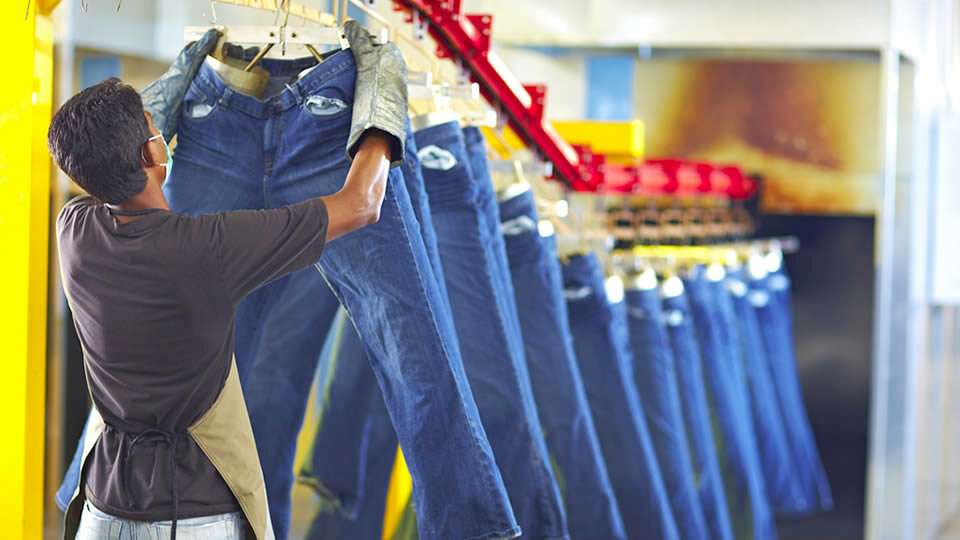
Despite the revenue decline, both sales and adjusted profit topped Wall Street expectations. The Levi’s brand grew eleven percent in 2022, and expanded its global market share more than any other denim brand for the second year in a row, led by share gains in both men’s and women’s.
The brand’s merchandise saw average selling prices rise by six percent in 2022.Globally, Levi Strauss anticipates opening more than 80 net new company-operated stores in the full year. In the fourth quarter, the company opened the first two brick-and-mortar stores for Beyond Yoga, the activewear brand it acquired in 2021.
During the fourth quarter, inventory delays and supply chain disruptions prevented the company from fulfilling select US wholesale customer orders. Total inventories increased 58 percent over the prior year. The increase relative to the third quarter was in line with the company’s expectations.
Core product represents more than two-thirds of total inventories. Levi’s expects the fourth quarter inventory growth will be the high point, and anticipates bringing inventory back to normal levels by the end of the second quarter. To do so, the company is planning to reduce inventory buys by 25 percent through the period.
Faibrics converts carbon emission into polyester
Faibrics is developing a technology to convert CO2 emissions into high value polyester through a circular manufacturing approach.
By using CO2 emissions instead of fossil resources to manufacture polyester, Fairbrics, based in France, addresses one of the greatest global challenges –greenhouse gas emissions. This technology has the potential to provide highly polluting industries like textiles with an alternate environment-friendly and economically viable solution.
Fairbrics will initially address the fashion industry and has already secured strategic partnerships with major brands such as H&M, On-Running and Aigle. It intends to progressively diversify its technology platform with solutions addressing other sectors such as sports equipment, packaging and automotive.
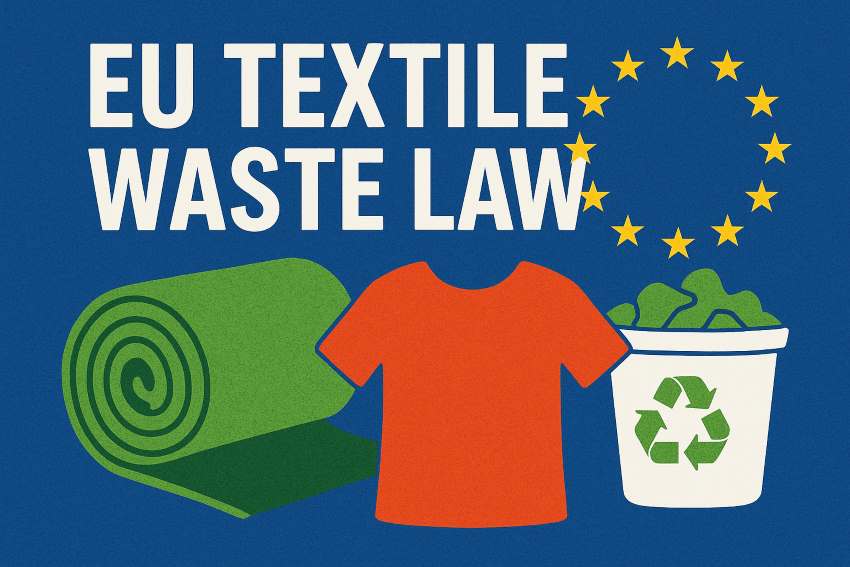
European textile units are bound by new norms. Some 300 textile industry and 3,000 chemical plants in the European Union will have to comply with new legal normsto reduce their environmental impact.In the case of the textile sector, the environmental legislative changes concern in particular the wet processing of textiles, which include treatments such as bleaching, dyeing, or finishing treatment to give specific properties to the textile, like water repellence.
The new norm is part of the EU strategy for sustainable and circular textiles which aims to create a greener, more competitive textiles sector.
H&M expects a tough quarter
H&M expects the first quarter of this year to be very challenging. Even though the prices of some products were increased,this did not cover all the losses. A dynamic pricing strategy has been followed.
Instead of passing on the full cost to customers, H&M chose to strengthen its market position first. In anticipation of losses due to soaring production and distribution costs, the fashion brand will continue to raise prices in several categories at various rates.In line with this, several strategies have also been implemented, especially in dealing with the threat of recession and geopolitical conflicts such as between Russia and Ukraine. H&M quickly decided to stop sales in the affected countries and then stop business in Russia and Belarus, in anticipation of even greater losses. The decision to stop doing business in Russia, which is an important and profitable market, has had a significant negative impact on the company’s results.
Meanwhile H&M has decided to close all its stores in England. Changes in fashion trends and customer behavior have forced the brand, which has been around for almost 66 years, to reorganize its business plan. During September 2022 to November 2022, H&M's turnover in the country was very thin due to soaring production and distribution costs.