FW
FY 20 Q1 sales of Hermès International decline 6.5 per cent
The sales of Hermès International SA, a French high fashion luxury goods manufacturer, decreased by 6.5 per cent to €1,506 million in first quarter (Q1) FY20 ended in March 2020 compared to sales of €1,610 million in same period prior year. Ready-to-Wear and Accessories sales fell 9.6 per cent to €325.8 million compared to sales of €360.2 million in Q1 FY19.
The leather goods and Saddlery business declined 6 per cent to €771.1 million due to closure of stores in various geographies. Silk and textiles sales dropped 18.1 per cent to €115.0 million. Sales in France fell 8.6 per cent to €168.9 million, while sales in rest of Europe dropped 10.3 per cent to €234.7 per cent. Sales in Japan grew 4.6 per cent to €213.6 million. Asia-Pacific region reported 8.4 per cent decrease in its sales to €600.9 million. Sales in Americas were 4.2 per cent down to €258.5 million.
The company in its outlook reported that the developments in the pandemic and the measures decided by governments do not enable them to anticipate the dates for re-opening stores. And Hermès believes that sales in the second quarter will be significantly impacted by the closures of a significant part of the network.
Lenzing forms JV to produce protective masks
Austrian fibres producer Lenzing has formed a joint venture with Austria’s Palmers Textil AG to produce protective masks for the European market in April The JV, Hygiene Austria LP GmbH, is producing so-called mouth-nose protective masks and surgical protective masks and plans to produce more than 25 million masks per month.
The company reported a 59 per cent drop in first-quarter net profit and dropped its dividend as the sector grapples with oversupply. Its net profit fell to $19.2 million and its revenue declined by 17 per cent for the three months to March 31.
The company’s prices for standard viscose fell to an all-time low due to oversupply, said the company, which produces cellulose fibers derived from sustainable wood and pulp. It would withdraw its dividend proposal of one euro per share due to the coronavirus crisis.
Fast Retailing reports 4.1 per cent drop in H1 revenues
Japan-based manufacturer and retailer Fast Retailing, reported 4.7 per cent decrease in its revenues to ¥1,208 billion in the half-year period (H1) FY20 ended on February 29, 2020 compared to ¥1,267 billion in same period prior year. Operating profit for six months period were ¥136.7 billion compared to ¥172.9 billion in H1 FY19.
The company’s gross profits in H1 FY20 were ¥576.7 billion. Its selling, general and administrative expenses reported a loss of ¥438.7 billion. The company reported weaker performance was due to reductions in revenue and profit at Uniqlo International segment (South Korea, Mainland China, Hong Kong and Taiwan), which were adversely impacted by Covid-19 and other factors.
Uniqlo Japan reported 5.7 per cent decrease in revenue to ¥463.5 billion. However, its operating profit rose by 5.7 per cent to ¥71.6 billion. Same-store sales declined by 4.6 per cent after the warmer winter weather stifled sales of core winter items. While e-commerce sales grew by 8.3 per cent, the rate of online sales growth slowed for the same reasons as for our physical stores.
Uniqlo International reported 6.7 per cent decline in revenue to ¥ 541.2 billion and operating profit fell 39.8 per cent to ¥53.2 billion. This was reportedly due to considerable reductions in revenue and profit at Uniqlo South Korea and Uniqlo Greater China, which were both adversely impacted by the outbreak of Covid-19 and other factors.
Australian brands reevaluate business models amidst lockdown: AFC survey
A recent survey by members of the Australian Fashion Council (AFC) reveals though fashion brands in the country have been hit hard with strict social distancing restrictions on consumer spending, many businesses are taking advantage of the current crisis to rethink over their business models to be more competitive in a post-COVID-19 world. While 75-80 per cent of the 182 survey participants reported they were negatively impacted by COVID-19, 55 per cent said they are proactively responding by developing ‘post-COVID’ strategies.
Topping the list of priorities is beefing up their digital offerings. Around 45 per cent of respondents affirmed their plans to increase digital marketing and otherwise amplify their digital channels. But many also expressed interest in pooling resources and forming joint ventures to modernize Australian manufacturing, and creating co-working spaces, sharing assets and equipment and combining orders to meet MOQs to help smaller brands and sole traders compete.
The participants also expected the government to support local supply chains and manufacturing and increase global awareness of Australian fashion brands by creating group opportunities at international fashion and trade events.
They also expressed interest in adopting more sustainable practices, such as moving towards circular economy and recycling fashion waste. The AFC also noted the need for investment in smart infrastructure, clean energy, tech innovation, increased use of Australian natural fibers and increased processing of regenerated and recycled fibers, as well as a product stewardship scheme for textiles like there is for e-waste and plastics.
Medical nonwovens come to rescue for China’s textile economy in the first quarter
Xiantao city which is known as “China Famous Town of Nonwovens”, has over 300 nonwoven manufacturers all are in operation. High-tech Jiahua Nonwoven Company diverted their original business to the melt-blown nonwovens on urgent notice in the middle of February to keep daily output for more than 20 tons, adequate for 20 million pieces of face mask. Xiantao city is capable of producing over 20 million protective clothing, 100 million N95 medical masks and over 2000 million disposable face masks.
Amid hustles and bustles in the first quarter of the year 2020, the industrial textile sector (internationally known as technical textile industry) in China proved a high confidence index in the textiles for medical and healthcare, safety and protection, filtering and isolation, besides in nonwoven and equipment and accessories subsectors. It is worthy of mentioning the nonwoven manufacturers who proactively added more production lines and improved process flow to increase capacity for the first-aid medical textiles to ensure a quick-response supply at the time when emergency materials for fighting virus were called for, more often than not, on short notice.
It does not necessarily mean a thriving business for the whole industrial textile sector even though some subsectors were doing pretty well in the past few months. In recent days, China Nonwovens & Industrial Textiles Association (CNITA) has concluded its survey in the member companies to see how the business was going on in the first quarter of this year. CNITA got 233 respondents out of 240 companies that the questionnaires were sent to, and 11.16 percent of them responded to say that they were doing very well in the first quarter, 30.47 percent of them said they had a fairly good business, 38.63 percent of them were of the opinion that the business was just so so. On the negative side, about 20 percent of them simply said that their operations were not good, 4 percent out of which said the first three months were very bad period for their business performance. CNITA analyzed all the situation to process the data on business climate index model to conclude that the first quarter of 2020 witnessed the prosperity index on averaged 63.7 level in such subsectors as the medical and healthcare, safety and protection, filtering and isolation, nonwovens, equipment and its accessory parts, and the medical and healthcare subsector stands out to rise to 79.2 as a result of urgent demands for these protective gowns and face masks in the virus-ridden period. On the other side of the picture, the subsectors in civil engineering and construction, ropes and nets, linings etc. were rated on the level below 50, a demarcation line to define business expansion or contraction.
 In the domestic demand, despite the coronavirus impacts, 31.33 percent of the companies responded to say that the rising demand for medical-grade nonwovens spurred their business growth while 21.03 percent of the sampled companies had a negative reply, saying that the coronavirus outbreaks reduced their business, and 4.12 percent of the companies under questionnaires survey replied that their clients’ orders for production were postponed, but expected to recover within the year, and 6.44 percent stood out to say that the COVID-19 did not impact their business at all. In the export business, 34.4 percent of them expressed that their OEM orders from international clients stayed stable, and 32.79 percent of them said their manufacturing orders were called off to some extent, and 8.2 percent of the companies under survey replied that their export orders were not in effect on voluminous basis, except for 9.84 percent of the companies which were reported to maintain a moderate growth in their business orders.
In the first-aid materials, 20.6 percent of the companies in subject had, as always, been engaged in face masks, protective clothing and its accessory business, and 31.76 percent of the companies shunted their business to the production tied to anti-virus products, leaving 47.64 percent to remain their old businesses not pertaining to the pandemic.
In the fixed assets investment, 66.09 percent of the companies expressed the plan of the new investment in 2020. In the investment in the project that was halted by the coronavirus impact, 67.53 percent of the companies would continue to implement the construction as scheduled, 29.87 percent remained in two minds as to whether or not to prolong it or start construction immediately, only one company decided to put the investment plan on the shelf.
With a lot of hometown of nonwovens in China, China National Textile and Apparel Council (CNTAC) has nominated many hubs of nonwoven and technical textiles manufacturing industry to brand them as “Famous Town of Nonwoven Industry”, like Xiantao in Hubei province, Changxing, Xialue , Xiaojiang and Yiwu in Zhejiang province, Zhenzhou and Rudong in Jiangsu province, and Changle in Shandong province, where the companies producing medical and healthcare textiles were expanding their capacity to meet the needs of the market.
Let us take a look at Xiantao city which is branded as “China Famous Town of Nonwovens”. Over 300 nonwoven manufacturers all are in operation, some of them had actually turned themselves into this nonwoven business by reshaping their production lines. For example, High-tech Jiahua Nonwoven Company diverted their original business to the melt-blown nonwovens on emergent notice in the middle of February to keep daily output for more than 20 tons, adequate for 20 million pieces of face mask with the granules and bacteria filtering effect leveling 99 percent in a quality-assured and quantity-sufficient supply to the market. As the domestic situation improves, these newborn nonwoven companies turned their supply to the international demand. According to Mr. Zhou Zhihong, Secretary General of the CPC Party Committee in Xiantao city, there are 146 nonwoven companies eligible for licenses to do export business, over 80 percent of them rely mainly on international market, and half of the total companies are qualified with ISO 9002 and the other international certifications. As the national manufacturing base for the first-aid and emergent materials reserves, Xiantao city is capable of producing over 20 million protective clothing, 100 million N95 medical masks and over 2000 million one-off face masks.
With the analytical report out of these companies in the survey, China Nonwovens & Industrial Textiles Association (CNITA) predicts an industrial upgrading trend especially in the sector that pertains to medical, healthcare, environment, emergent monitoring and handling etc., where the relevant companies should find more opportunities for business growth through reshaping and upgrading investment. When the crisis is over, the relevant companies in the technical textile industry will expedite the reconsolidation process by virtue of merging and acquiring to be qualified for national reserves base. The industrial clusters should develop a well-matching supply chain to forge a strong manufacturing pivot.
Contributed by Mr. ZHAO Hong
He is working for CHINA TEXTILE magazine as Editor-in-Chief in addition to being involved in a plethora of activities for the textile industry. He has worked for the Engineering Institute of Ministry of Textile Industry, and for China National Textile Council and continues to serve the industry in the capacity of Deputy Director of China Textile International Exchange Centre, V. President of China Knitting Industry Association, V. President of China Textile Magazine and its Editor-in-Chief for the English Version, Deputy Director of News Centre of China National Textile and Apparel Council (CNTAC), Deputy Director of International Trade Office, CNTAC, Deputy Director of China Textile Economic Research Centre. He was also elected once ACT Chair of Private Sector Consulting Committee of International Textile and Clothing Bureau (ITCB)
New sales models, discounts, digital fashion to reign post COVID-19 market: McKinsey study
 Even before COVID-19 disrupted financial markets, fashion industry leaders were already on a high alert. And the latest ‘The State of Fashion 2020’ report suggests, future outlook has gotten dramatically and suddenly bleaker as the average market capitalisation of apparel, fashion and luxury players has dropped almost 40 per cent between the start of January and March 24, 2020. Combined with the McKinsey Global Fashion Index (MGFI) analysis, the report expects a large number of global fashion companies to go bankrupt in the next 12 to 18 months. The report outlines five themes that will dominate the post COVID-19 market scenario:
Slow sales recovery
According to the report, a two- to three-month lockdown will cause financial distress for 80 percent of European and North American fashion businesses. The luxury sector will suffer more due to its reliance on travel retail in addition to lower levels of online presence and high dependency on department stores and experiential in-store retail.
Any momentary uptick in sales will not be able to offset a decline in spending across the board. Markets that have been under economic distress before the crisis — such as Venezuela and Nigeria — will require more time to restore growth, owing to their inherent political instability. Looking ahead, businesses will have to review their operating models. While implementing short-term interventions these companies will have to consider actions for the recovery period and implement resiliency into their planning.
Discounting culture to grow
Low consumer sentiment has hit the fashion industry especially hard due to the discretionary nature of clothing purchases. In Europe and the US, more than 65 per cent consumers expect to decrease their spending on apparel, while only 40 per cent expect to decrease total household spending. As a result, overfilled warehouses laden with unsold seasonal stock will haunt most players, as long lead times weigh heavily on fashion’s supply chain and global consumer appetite for discretionary purchases wavers. Companies will turn to steep discounting to clear inventory for the rest of the year. Mid-market brands and retailers will be hit hardest, as middleclass consumers will turn more to heavily discounted affordable luxury and premium goods.
Digital fashion to grow
The global pandemic’s shutdown of offline retail channels has pushed digitally inept fashion companies to the brink. Consumers in China are increasingly embracing digital solutions for shopping, entertainment and communications thanks to the response of brands and retailers who quickly enhanced their digital capabilities by launching or improving innovative new channels. Nike — whose digital sales in the region grew 36 per cent in the third quarter ended February 29, 34 leveraged Taobao livestream bloggers during lockdown in China, while local fashion group Peacebird grew retail sales as a result of innovative customer engagement on their digital channels including WeChat, which featured over 41 live broadcasting sessions with influencers.
Gap between winners and losers to widen
The shutdown of physical retail and the slump in both consumer and investor confidence will accelerate the decline of struggling companies and buoying stronger empires. This will widen the gap between fashion’s winners and losers, with the latter likely to file for bankruptcy, seek government aid, close, or become targets for stronger players or private equity firms.
New sales models and technologies to emerge
The coronavirus has forced companies to create new sales models to stay afloat. Technologies like virtual fashion shows and digital show rooms, sample sign-offs in sourcing offices, livestream commerce and the latest 3D design tools are being relied upon to get business done. As soon as the immediate firefighting subsides, brands will rush to make longer investments in these innovations.
Raw material focus, credit infusion will help India reclaim lost textile glory
 The advent of technology has rendered millions of artisans in the sector jobless with most of their their skills becoming outdated. COVID-19 has further compounded this problem with the crisis likely to render around one lakh workers in the industry jobless, estimates CMAI. Once famed across the globe as ‘artisans’, these textile workers have now become one of the biggest concerns for many Indian textile manufacturing enterprises.
Globalization leads to erosion of smaller players
Globalization has necessitated textile and clothing manufacturing processes to become cost-competitive. As the annual 2018-19 report of the Indian Ministry of Textiles, notes, this has resulted in a setback for the largely fragmented textile and clothing value chain in India which produces 70 per cent of its output from small and medium scale industries. Handloom and handicraft artisans are suffering due to their loss to market access and branding. This is further preventing them from getting reasonable returns on their efforts.
Schemes launched by the government
As a solution to these problems, the Textiles Ministry launched schemes like Technology Upgradation Fund Scheme (TUFS) or the Powertex scheme for 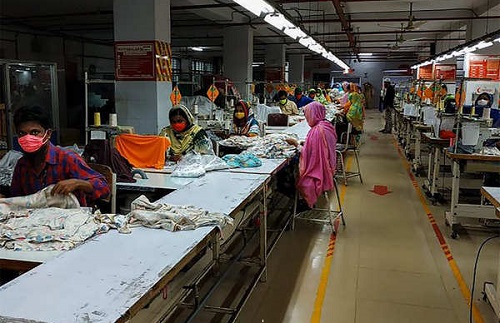 powerlooms or the Scheme for Integrated Textile Park (SITP) in order to increase productivity, efficiency, exportability, scalability and marketability of the textile products in India. However, the government fails to adopt an outward looking approach to address the external factors affecting the sector.
Equal focus on all raw materials
One of the critical factors that the government overlooks is India’s overdependence on cotton. While global demand of clothing is inclined towards man-made fiber over cotton, India’s production still remains cotton-dominated. This is mainly due to the high production costs of these raw materials in India. Until recently, India used antidumping duty to protect the very few such domestic manufacturing oligopolies. Therefore, there is a need to infuse efficiency into domestic manufacturing of all raw materials.
Credit facilities for handlooms and powerlooms
The second factor that the government needs to consider is of increasing costs, which have a direct impact on the viability of the textile enterprises. The government needs to provide credit support for both handlooms and powerlooms to start business and working capital support to run their businesses. Also, banks need to assist MSME clusters to leverage their manpower skills and compete with the large corporates operating at economies of scale.
As textile is a power intensive industry, mills incur a significant proportion of their costs as electricity bills. For this, the government needs to reform the power sector by rationalizing tariffs and passing on the efficiency gains to end-consumers.
E-commerce and fintech solutions can be used to link handlooms and handicrafts with the market. This has to go hand to hand with effective advertising and branding support from the government and other agencies including National Institute of Fashion Technology and various textile promotion councils.
Lastly, the government needs to reemphasize the value of the worker in the modern textile industry. To achieve this, it needs to focus on effective skill development and capacity building by revamping the existing research-cum-training agencies. In addition, it needs to focus on the job skill training to adapt to the changing nature of work on the factory floor. This type of value creation will help it to provide a universal social safety net, a safe working environment and decent income levels for workers.
Aberchrombie, Kohl’s, Gap reopen stores
Abercrombie & Fitch Co., Kohl's and Gap, Inc. are the latest companies to announce their plans to reopen temporarily shuttered stores. Abercrombie & Fitch Co. has begun the process of reopening its North American and EMEA region stores. The temporary North American and EMEA store closings for the company's brands, including Abercrombie, Abercrombie Kids and Hollister, were first announced in mid-March. These closings were later extended, and the company further announced that it borrowed $210 million under its senior secured asset-based revolving credit facility and withdrew the majority of excess funds from its Rabbi Trust--amounting to approximately $50 million in additional cash--in order to boost liquidity.
In order to follow WHO and CDC safety recommendations, the company said its employees will wear masks, practice physical distancing and wash and sanitize their hands frequently, while stores will increase their sanitation efforts, enforce physical distancing among customers, and have health guards at checkout. The company also would quarantine returns for 24 hours before putting the clothes back on shelves. After extending the temporary closure of its stores nationwide in late March, Kohl's said earlier this week that it is reopening stores in alignment with the Covid-19 timelines and precautions for each state and locale, with many stores operating with reduced hours. The first round of reopened stores are located in Arkansas, Oklahoma, South Carolina and Utah.
In addition to limiting store hours, the company said it is implementing further safety precautions by upholding physical distancing practices in stores, ramping up its cleaning and sanitation practices, and reserving certain shopping hours for consumers who are most at-risk, including those above the age of 60, pregnant customers and those who have underlying health conditions. Kohl's will also require all employees to wear masks and gloves. The company first announced the temporary closure of its store on March 19. After extending these closures, the company further announced that it would draw down on its $1 billion revolving credit facility and cut spending by about $500 million to make it through the pandemic
PHMA urges for zero tax system
Textile value-added sector of Pakistan has proposed to the government to restore zero-rating of sales tax, reduce withholding tax and impose regulatory duty on cotton yarn export to create job opportunities, and boost country's exports. In its budget proposals for 2020-21 submitted to Razak Dawood, Advisor to the Prime minister on Commerce and Textile, Pakistan Hosiery Manufacturers and Exporters Association (PHMA) stated that the current global slowdown due to the coronavirus pandemic and fast changing worldwide geo-strategic dynamics and unprecedented economic challenges are being faced by Pakistan in all segments of the economy.
It is dire need of the time that the budgetary and policy measures for fiscal year 2020-21 must hold the key to economic prosperity to confront challenges and create conducive and enabling environment for investment and growth for industry and trade, through major structural changes in tax regime, policy revision focusing to incentivise commerce and industry to generate more employment and overcome the fiscal, current accounts and trade deficit. The PHMA proposed that it is imperative to revive SRO 1125 in its true spirit and reintroduce system of no payment and no refund of sales tax for the five export-oriented sectors. In the budget 2019-20, the government rescinded SRO 1125 and imposed 17 percent sales tax on erstwhile five zero-rated export sectors and exporters are required to apply for refund after export of consignment.
Exporters, who have filed their refund claims up to date, have received 35 percent of claims payment only, while 65 percent of the refund claims are stuck up with the government, which cumulate 12 percent amount of exporters' running capital. However, the profit margin of exporters is around five percent to eight percent. Due to availability of liquidity and smooth cash flow, the confidence of exporters will be boosted to enhance their exports and cement their business ties with the foreign counterparts to capture true business potential. Currently, the WHT is charged at various levels and items such as import of raw material, registration of new vehicles etc, which is adjusted or refunded later. Exporters fall under final tax regime u/s 143(b) and should be exempted from payment of the WHT and be given exemption certificates. This will greatly benefit them and also lower workload on the Federal Board of Revenue (FBR) who is busy in a futile exercise.
For exporters fall under final tax regime withholding tax should be reduced from one percent to 0.50 percent. This would help exporters in using the cash liquidity for enhancement of the exports. Currently there is 11 percent customs duty, five percent regulatory duty, and two percent additional duty on import of the cotton yarn. This has created artificial shortage of availability of yarn, rendering the value-added textile exporters uncompetitive in the global market against regional competing countries. This will lead to decline in exports as local industries are hurting and closing down. Further, garment stitching units are not allowed to import yarn under Duty and Tax Remission for Exporters (DTRE). The PHMA proposed that whenever government desires to impose regulatory duty on import of cotton yarn, the government should also impose regulatory duty on export of cotton yarn, and there should be time limit/duration of imposition of duty.
The government should look into the ways of reducing cost of doing business/energy cost for the spinners and bring them at par with cotton producing countries. Yarn is essential raw material to manufacture value-added textile products for export, and the same is required to be made available at reasonable prices. Further, the Export Oriented Units (EOU) under SRO 327 was introduced on the pattern of Export Processing Zone, where there is no taxes on buying of locally-procured input goods and no taxes on utilities.
Industries registered in the EOU are liable to export 80 percent of their annual production. The PHMA proposed that the FBR should withdraw its SRO 747(I)/2019, so that exporters operating under the EOU can procure input goods without taxes. Further, it is also proposed that industries, registered in the EOU, and export 80 percent of their annual production, should be supplied utilities – gas and electricity without sales tax at zero rates.
Mango to donate 1% sales revenue to WHO
Mango will donate 1 per cent of its sales from physical stores to the World Health Organization’s Covid-19 fund, in order to support the more vulnerable health care systems and groups during the pandemic
The fund) enables individuals, corporations, foundations and other organizations around the world to directly support the WHO’s global effort to assist countries in preventing, detecting and responding to the pandemic,
The initiative will last for the next two months, and will involve Mango’s monobrand stores in Europe, Russia, Turkey and New York, as they will gradually reopen.
Since the beginning of the pandemic, Mango has been active in a series of efforts to tackle the health emergency. At the end of March, it donated two million face masks to various hospitals in Spain. In addition, Mango put its logistics, production and distribution organisation at the Spanish authorities’ disposal, manufacturing 13,000 protective gowns for health care professionals.
Mango, founded in 1984 and based in Barcelona, is one of the world's leading fashion groups, with approximately 15,000 employees in 110 countries. In 2019, it generated a revenue of €2.374 billion.