FW
Indian cotton costlier despite lower global demand
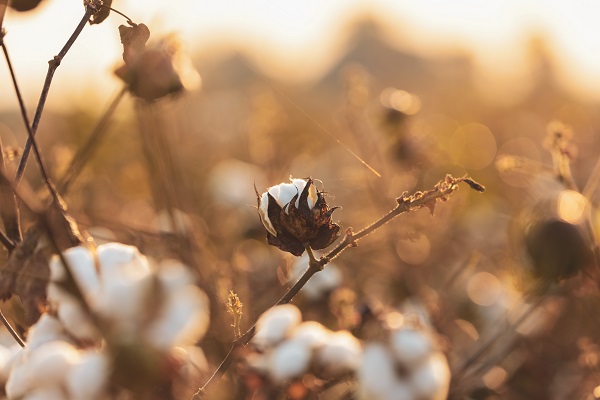
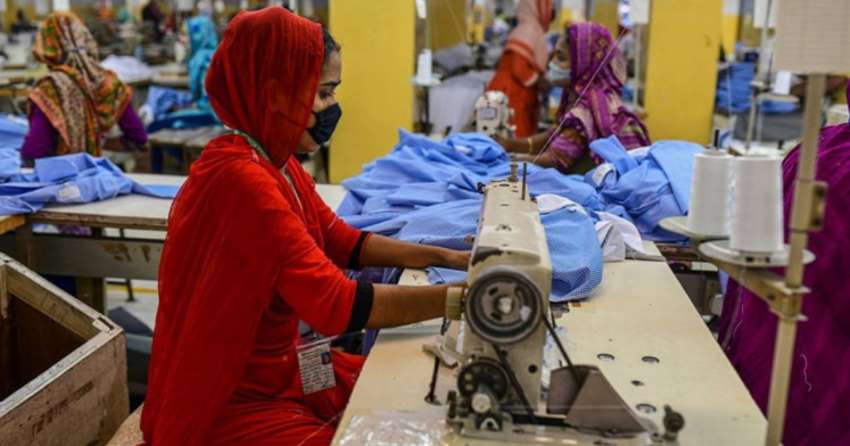
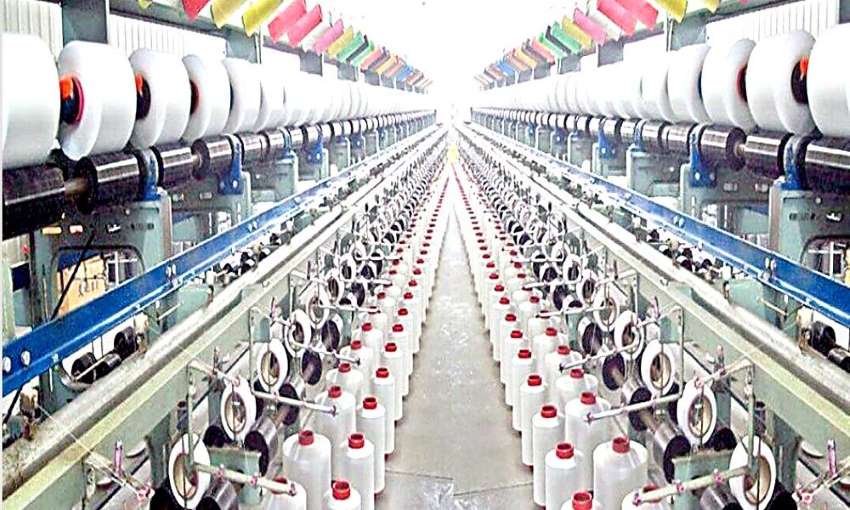
The world of textile and readymade garment manufacturing continues their collective rollercoaster ride of ups and downs indicate various analyses, reports and experts’ statements. The international financial projections have added to the confusion on the state of economies worldwide which saw international cotton prices spiral downwards. In this milieu, Indian cotton grower has been showered with good news that the product is holding its ground and a fortnight ago a candy of Indian spot cotton was selling for Rs 63,300 and a candy of the S-6 2 variant at Rs 62,150. This begets the question what is prompting this trend that bucks the international one?
Market delivery lowered
Reports have confirmed that raw cotton being delivered to local market in India is significantly lower this year compared to the previous years. Weekly arrivals were only about 55 kt in the last few weeks and by April 9, 2023, the cumulative delivery of domestic cotton was 3.068 million tonnes, a significant shortfall as per the prediction of 5.32 million tonnes as was assessed by the Cotton Association of India. The body also reported that as early as February 2023, delivery totaled 2.632 million tons, a deficit of 32 per cent. The continuous delivery shortfall is organically increasing price.
India’s manufacturing sector contributes to hike
The local textile industry is seeing a surge of positivity as the Indian government’s expansion plan in this sector is about to take off. In this context, the overall domestic manufacturing sector has held fort against the global downturn and is carrying on well as per World Bank’s report commending the growth of Indian manufacturing and exports.
As one of the main sectors within India’s manufacturing industry, textile production has been resilient despite sluggish global growth, one of the reasons being a robust domestic demand. It should be noted that India’s Manufacturing Purchase Index (PMI) rose by 1.1 per cent and as of January 2023 stood at 55. 4 points, signaling steady growth. In comparison, the world’s largest economy, the US is at a PMI of 47.70 currently.
Vibrant downstream demand triggers up-pricing
From the very first week of fiscal year 2023-24, downstream industry for cotton has regained activity. In South India, cotton yarn transactions started increasing and cotton yarn prices in Mumbai’s market gained 2-3 pounds per kilo. It is said that the local spinning wheels are getting busier although the cotton inventory this year is lower than last year. Orders from lockdown-free China, post-earthquake Turkey and coming to terms with its new economic reality Europe have increased, leading to escalating prices for a commodity in short supply.
Globally, cotton of Indian provenance has taken an upward turn in demand. India’s cotton-yarn spinners are the secondary beneficiaries as well as the projection is a 100-basis point improvement in operating profitability to 12 per cent in fiscal year 2023-24 despite a 10 per cent on year fall in revenue due to lowered realisations and sluggish exports, based on CRISIL ratings.
Indian government’s initiatives
The Indian government continues to introduce policies that are conducive to downstream capacity expansion which is what makes the Indian textile industry’s commercial outlook upbeat. The acclaimed seven gigantic textile parks in the country are in their advanced stage of readiness, fuelling a lot of hope for both the domestic and exports markets. The key components of these governmental policies are reduced import tariffs on certain textile machinery, spare parts and accessories, including shuttle-less looms in the category of zero tariffs.
LVMH top European company in market value, CEO tops Forbes billionaires list
Luxury goods giant LVMH has made history by becoming the first European company to exceed $500 billion in market value. The Paris-based firm, which owns Louis Vuitton, Moët & Chandon and Hennessy, as well as Givenchy, Bulgari, and Sephora stores, reported an impressive 17% rise in first-quarter sales in April, beating analyst expectations.
The company's shares hit a record high, rising by 32.8% in the year to date, after the results were announced.
LVMH's revenue for 2022 was 79.2 billion euros ($87.1 billion), with profit from recurring operations of 21.1 billion euros, marking its second consecutive year of record results. The luxury giant expects to benefit from China's Covid reopening, as the return of travel brings back high-end spenders. The anticipated rebound in Chinese consumer spending has also boosted the share prices of other luxury groups, including Richemont, Kering, and Burberry.
LVMH's CEO, Bernard Arnault, is currently the world's richest person, according to the Forbes real-time billionaires index.
In 2021, the company completed the acquisition of U.S. jeweler Tiffany & Co for $15.8 billion. This landmark achievement reaffirms LVMH's position as a dominant force in the luxury industry.
Pakistan's export competitiveness hindered by lack of diversity, infrastructure, and productivity
Pakistan’s lack of diversity in exports, inadequate infrastructure, and low productivity are hindering its competitiveness in the global market.
These factors make the country more susceptible to external shocks and reduce its ability to generate foreign currency and employment. The challenges facing Pakistan's export sector include inadequate infrastructure, unfavorable trade policies, limited access to finance, and a lack of skilled workers.
However, Pakistan has a number of opportunities to increase its export competitiveness, including regional integration, developing markets, policy reforms, and human capital development.
The implementation of policy initiatives such as infrastructure improvements, trade policy liberalization, access to financing, and skill development can help Pakistan improve its export competitiveness, generate foreign currency, and create job opportunities.
Pakistan must also study the international markets and their demands to enhance its export competitiveness.
Alibaba launches new luxury platform
Chinese e-commerce giant Alibaba Group Holding has launched a new luxury platform called Soho that targets younger consumers and also aims to help high-end brands shed excess inventory built up during the global coronavirus lockdown. The platform will allow brands to run their own online stores with full control over their pricing, product selection and strategy. It would be home to “luxury deals, older collections, timeless classics and vintage collectibles”.
The platform would help high-end houses reach newer consumers such as those from China’s lower-tier cities or so-called Gen Z shoppers, young clients up to the age of 25 who are just entering the world of luxury and are expected to become increasingly important for the sector.
Chinese shoppers account for more than a third of global luxury goods spending and China was the first key market to be hit by the coronavirus pandemic, which forced brands to shut stores and led to a virtual halt in international travelling.
Gap to reopen 800 apparel shops
Gap Inc. is preparing to reopen 800 of its apparel shops by the end of May, as states such as Texas and South Carolina slowly begin to lift lockdown restrictions that were put in place due to the coronavirus pandemic.
The San Francisco-headquartered company, which owns Banana Republic, Old Navy and Athleta, joins a growing list of retailers including Macy’s, Nordstrom, Abercrombie & Fitch and Chico’s — that are taking steps to get back to business.
On April 23, the company warned investors it might not have enough cash to sufficiently fund operations, with its shops temporarily shut to try to help curb the spread of Covid-19. A day later, Gap issued $2.25 billion of new secured bonds to help it repay existing debt. At the end of March, Gap drew down its entire $500 million credit line and said it was suspending dividend payments.
Looking for ways to cut costs, Gap also stopped paying rent to its landlords, with monthly rent expenses amounting to roughly $115 million in North America. Only about 20 per cent of Gap Inc.’s revenue comes from indoor shopping malls, she went on to say. Gap’s net sales totaled $16.4 billion in fiscal 2019.
Mall-based retailers, including apparel companies and department stores, have been some of the hardest hit during the pandemic that has kept families holed up at home. Even as lockdown restrictions lift, analysts say malls could be one of the venues consumers look to avoid, longer term, because of their enclosed nature. Nordstrom said Tuesday evening that it plans to permanently shut 16 of its department stores, after assessing the market.
The biggest U.S. mall owner, Simon Property Group, notably has 412 Gap stores, including Banana Republic and Old Navy, at its malls and outlet centers. This makes Gap Simon’s biggest in-line tenant at its properties in terms of rent. Simon started opening some of its malls in the South last Friday.
“We feel confident that our online composition and street, strip, outlet and lifestyle [outdoor] malls give us an advantage,” Syngal said about Gap’s positioning away from enclosed malls. “That is exciting for us.”
As Gap reopens its doors to customers again, the changes will be noticeable. And it is unclear how long some of them will be in place. Some could become permanent.
Among them: Gap will be placing plexiglass dividers at registers to protect workers from shoppers. It will place signs in stores encouraging customers to wear face coverings and to follow social distancing protocols. Restrooms and fitting rooms will be temporarily closed. Hand sanitizer will be positioned at store entrances, and store hours will be reduced for the foreseeable future.
Gap will also be holding any returned merchandise for 24 hours before placing it back on the sales floor, a practice Syngal said the retailer agreed upon based on conversations with industry peers and the trade group Retail Industry Leaders Association. It remains unclear how long the Covid-19 virus lingers on materials such as clothing.
Gap operated 3,345 stores globally, with an additional 574 franchise locations, as of Feb 1. To meet online demand and to try to utilize inventory sitting in dark stores, the company currently is fulfilling and shipping online orders from 1,000 locations. And it has curbside pickup available at 75 shops.
Gap plans to double the number of locations where it is shipping from the store, as well as add additional curbside pickup options, according to Syngal. “When Covid hit, we saw a meaningful acceleration in our online performance.”
When it warned about its financial situation last month, Gap also said it is possible that some of its stores never reopen. Syngal, who became CEO effective March 23 after leading the Old Navy brand, said the retailer is still thoughtfully evaluating its real estate.
Gap shares have fallen more than 58 per cent this year. The retailer has a market cap of $2.7 billion.
Gap to reopen 800 apparel shops
Gap Inc. is preparing to reopen 800 of its apparel shops by the end of May, as states such as Texas and South Carolina slowly begin to lift lockdown restrictions that were put in place due to the coronavirus pandemic.
The San Francisco-headquartered company, which owns Banana Republic, Old Navy and Athleta, joins a growing list of retailers including Macy’s, Nordstrom, Abercrombie & Fitch and Chico’s — that are taking steps to get back to business.
On April 23, the company warned investors it might not have enough cash to sufficiently fund operations, with its shops temporarily shut to try to help curb the spread of Covid-19. A day later, Gap issued $2.25 billion of new secured bonds to help it repay existing debt. At the end of March, Gap drew down its entire $500 million credit line and said it was suspending dividend payments.
Looking for ways to cut costs, Gap also stopped paying rent to its landlords, with monthly rent expenses amounting to roughly $115 million in North America. Only about 20 per cent of Gap Inc.’s revenue comes from indoor shopping malls, she went on to say. Gap’s net sales totaled $16.4 billion in fiscal 2019.
Mall-based retailers, including apparel companies and department stores, have been some of the hardest hit during the pandemic that has kept families holed up at home. Even as lockdown restrictions lift, analysts say malls could be one of the venues consumers look to avoid, longer term, because of their enclosed nature. Nordstrom said Tuesday evening that it plans to permanently shut 16 of its department stores, after assessing the market.
The biggest U.S. mall owner, Simon Property Group, notably has 412 Gap stores, including Banana Republic and Old Navy, at its malls and outlet centers. This makes Gap Simon’s biggest in-line tenant at its properties in terms of rent. Simon started opening some of its malls in the South last Friday.
“We feel confident that our online composition and street, strip, outlet and lifestyle [outdoor] malls give us an advantage,” Syngal said about Gap’s positioning away from enclosed malls. “That is exciting for us.”
As Gap reopens its doors to customers again, the changes will be noticeable. And it is unclear how long some of them will be in place. Some could become permanent.
Among them: Gap will be placing plexiglass dividers at registers to protect workers from shoppers. It will place signs in stores encouraging customers to wear face coverings and to follow social distancing protocols. Restrooms and fitting rooms will be temporarily closed. Hand sanitizer will be positioned at store entrances, and store hours will be reduced for the foreseeable future.
Gap will also be holding any returned merchandise for 24 hours before placing it back on the sales floor, a practice Syngal said the retailer agreed upon based on conversations with industry peers and the trade group Retail Industry Leaders Association. It remains unclear how long the Covid-19 virus lingers on materials such as clothing.
Gap operated 3,345 stores globally, with an additional 574 franchise locations, as of Feb 1. To meet online demand and to try to utilize inventory sitting in dark stores, the company currently is fulfilling and shipping online orders from 1,000 locations. And it has curbside pickup available at 75 shops.
Gap plans to double the number of locations where it is shipping from the store, as well as add additional curbside pickup options, according to Syngal. “When Covid hit, we saw a meaningful acceleration in our online performance.”
When it warned about its financial situation last month, Gap also said it is possible that some of its stores never reopen. Syngal, who became CEO effective March 23 after leading the Old Navy brand, said the retailer is still thoughtfully evaluating its real estate.
Gap shares have fallen more than 58 per cent this year. The retailer has a market cap of $2.7 billion.
Gap to reopen 800 apparel shops
Gap Inc. is preparing to reopen 800 of its apparel shops by the end of May, as states such as Texas and South Carolina slowly begin to lift lockdown restrictions that were put in place due to the coronavirus pandemic.
The San Francisco-headquartered company, which owns Banana Republic, Old Navy and Athleta, joins a growing list of retailers including Macy’s, Nordstrom, Abercrombie & Fitch and Chico’s — that are taking steps to get back to business.
On April 23, the company warned investors it might not have enough cash to sufficiently fund operations, with its shops temporarily shut to try to help curb the spread of Covid-19. A day later, Gap issued $2.25 billion of new secured bonds to help it repay existing debt. At the end of March, Gap drew down its entire $500 million credit line and said it was suspending dividend payments.
Looking for ways to cut costs, Gap also stopped paying rent to its landlords, with monthly rent expenses amounting to roughly $115 million in North America. Only about 20 per cent of Gap Inc.’s revenue comes from indoor shopping malls, she went on to say. Gap’s net sales totaled $16.4 billion in fiscal 2019.
Mall-based retailers, including apparel companies and department stores, have been some of the hardest hit during the pandemic that has kept families holed up at home. Even as lockdown restrictions lift, analysts say malls could be one of the venues consumers look to avoid, longer term, because of their enclosed nature. Nordstrom said Tuesday evening that it plans to permanently shut 16 of its department stores, after assessing the market.
The biggest U.S. mall owner, Simon Property Group, notably has 412 Gap stores, including Banana Republic and Old Navy, at its malls and outlet centers. This makes Gap Simon’s biggest in-line tenant at its properties in terms of rent. Simon started opening some of its malls in the South last Friday.
“We feel confident that our online composition and street, strip, outlet and lifestyle [outdoor] malls give us an advantage,” Syngal said about Gap’s positioning away from enclosed malls. “That is exciting for us.”
As Gap reopens its doors to customers again, the changes will be noticeable. And it is unclear how long some of them will be in place. Some could become permanent.
Among them: Gap will be placing plexiglass dividers at registers to protect workers from shoppers. It will place signs in stores encouraging customers to wear face coverings and to follow social distancing protocols. Restrooms and fitting rooms will be temporarily closed. Hand sanitizer will be positioned at store entrances, and store hours will be reduced for the foreseeable future.
Gap will also be holding any returned merchandise for 24 hours before placing it back on the sales floor, a practice Syngal said the retailer agreed upon based on conversations with industry peers and the trade group Retail Industry Leaders Association. It remains unclear how long the Covid-19 virus lingers on materials such as clothing.
Gap operated 3,345 stores globally, with an additional 574 franchise locations, as of Feb 1. To meet online demand and to try to utilize inventory sitting in dark stores, the company currently is fulfilling and shipping online orders from 1,000 locations. And it has curbside pickup available at 75 shops.
Gap plans to double the number of locations where it is shipping from the store, as well as add additional curbside pickup options, according to Syngal. “When Covid hit, we saw a meaningful acceleration in our online performance.”
When it warned about its financial situation last month, Gap also said it is possible that some of its stores never reopen. Syngal, who became CEO effective March 23 after leading the Old Navy brand, said the retailer is still thoughtfully evaluating its real estate.
Gap shares have fallen more than 58 per cent this year. The retailer has a market cap of $2.7 billion.
Q4 2022’s top brand and hottest ‘it’ items as per Lyst

One of the most popular apps for fashion e-commerce, Lyst recently curated list of the most desired fashion items worldwide. A well-researched report, it included 200 million Lyst users, social media listening for brand mentions and responses as well as brand engagement levels online for a period of three months.
Lyst toppers
Prada aced the report for two strategic reasons. It debuted in the fine jewellery segment with a collection made from recycled gold, the operative word being ‘recycled’ which resonated with the ever-growing upper echelons of conscious fashionistas. The other was the launch of its collection of technology-based fashion line Linea Rossa for Fall/Winter 2022 season, with Charli D’Amelio as its face. Not surprisingly this publicity coincided with Prada’s collection of handbags being some of the most searched pieces in 2022 as per that year’s Ultra-Luxury Resale Report. Around this time, Prada also welcomed the reputable Andrea Guerra as the new CEO.
Italian brand Gucci came in second, thanks to its ground-breaking industry first work in the Metaverse. Gucci purchased virtual space in the Sandbox Metaverse for a store-plus-event area, where it has set up a virtual gallery showing NFT artifacts and historical clothing items.
Moncler, Miu Miu and Valentino completed the top five with Prada and Gucci and Bottega Veneta, Loewe, Dior, Dolce & Gabbana and Saint Laurent completed the top 10. Not surprisingly Balenciaga dropped from the top 10 due its advertising campaign using children that generated heat and boycott calls. In the end, Prada knocked Gucci off Numero Uno spot and Moncler was the new entry into the top 10.
Top 2022 ‘it’ items
Occupying the most desired ‘it’ item was the Saint Laurent Icare handbag made exclusively from quilted lambskin. The brushed-leather and patent-leather variations of the Prada logo-featured sling-backs came in second place, followed by Dr. Martens Leonore Chelsea boot, easy-on, easy-off pull-on boot with an elastic ankle gusset that sports an extra-rugged air-cushioned sole plus faux fur lining for the winter months came in third. The Solaria maxi dress from 16Arlington stole hearts as it landed in fourth place with its anthracite sequins shimmering through and the fifth place went to the Bottega Veneta Sardine handbag which gets its name from the metallic fish-shaped handles. The Acne Studio’s checked mohair scarf came in sixth followed by padded bomber jackets by Loewe that was an instant hit with Gen Z fashionistas in seventh place. The satin and diamante dream Mach & Mach double bow embellished court shoes were in place eight followed by the ninth slot for Miu Miu’s logo-patch satin briefs. The last slot in top ten “it” items for 2022 was for the Crocs x Saleha Bembury clogs.
The challengers
16Arlington’s collection of Solaria cocktail and maxi dresses set the tone of the challenger brands described by Lyst as breakthrough. In particular, its grey version made from sequined tulle with a toggled keyhole contour at the front and elegantly fluted sleeves was an instant hit with celebrities with 313 million views on TikTok and searches up by 56 per cent in Q4. After a two-year break, Mugler with its spiral leggings were back in the game, graced by the likes of Kylie Jenner, Dua Lipa and Addison Rae. In the same quarter, Mugler registered nearly 50 per cent rise in online search. Alaïa launched resale in partnership with Re-SEE and the trending product became the Le Coeur shoulder bag as celebrities such as Kaia Gerber, Kylie Jenner and Margot Robbie were seen with it. Search for the quarter upped by 33 per cent.
Plus size clothing widens into mainstream fashion markets
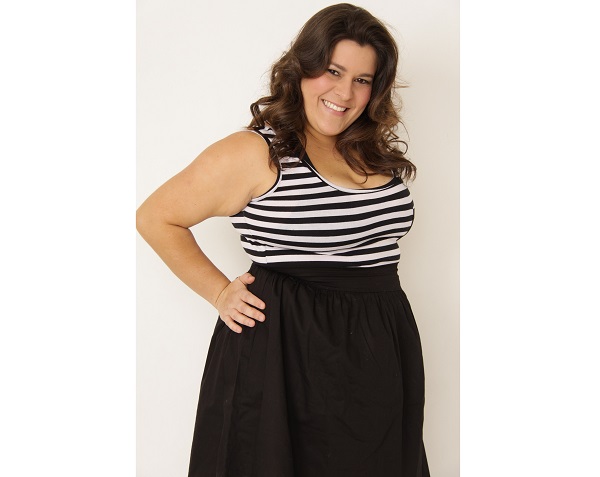
With body positivity and size inclusivity now a mainstream fashion trend, plus-size fashion garments are now emerging as a big growth opportunity for brands and retailers. The old order changes yielding place to new as gone are old stereotypes of body-shaming if women did not conform to certain beauty standards have now long gone with people ready to accept and support all shapes and sizes of beauty.
Big is also beautiful and more socially accepted
The self-acceptance and social acceptance of women with bigger and curvier bodies has brought about a major change in fashion with many brands now adding the pus size segment to their portfolio as well as all-new brands dedicated to bigger and taller men and women jumping into the plus-size bandwagon. The global plus size segment is no longer a niche segment or with a limited appeal and once valued at $480,991.8 million in 2019, it is projected to reach $696,712.1 million by 2027, according to a recent report by Dublin-based Research and Markets.
Market is increasing globally at a compound annual growth rate of 5.9 per cent from 2021 to 2027, as the Covid years of being home and post-Covid years of wining and dining excesses are taking a toll on both men and women. The US is currently the leading country in plus size segment with its largely obese population while South East Asian countries such as Japan, Vietnam, Singapore and still others have the least number.
Globally, many brands such as Walmart has launched a new plus-size brand named Terra and Sky in 2018 and other high-street brands such as River Island, Marks & Spencer, and New Look are offering an all-new wide range of plus-size items to suit demand. In India many specialized brands such as FabAlley Curve, Alto Moda By Pantaloons, Gia By Westside, PlusS.and ASOS Curve as well as an added segment of plus size clothes by premium brands are now rapidly increasing. Strong fashion marketing and promotional efforts on the covers of Indian and foreign magazine editions of Vogue, Cosmopolitan, Elle, and Glamour, have increased women’s body acceptance, which has been increased by curvy celebrity endorsements and a positive public impression of plus-size men and women
India’s pus size segment growing bigger
The rising trend is seen in the Indian fashion clothing industry too as the plus size segment of those who wear sizes from the UK 14-28 and beyond is rapidly becoming half of the total consumers in India, according to Statista, a German market, and consumer data company. The 16-59 age group of women fall mainly in the obese category and sizes 1X to 6X and extended sizes 7X and above are being included as an extended portfolio for most retailers.
A recent report on plus-size apparel in India indicated the casual wear segment is most popular with a CAGR of 4.8 per cent in the plus-size segment and it is the male category and not the female that will be leading this segment. Moreover, mid-price brand segment has emerged most profitable in post-Covid years. From 2022 to 2032, the Asia-Pacific region is forecast to grow at the highest rate due to a larger number of obese people.
Plus-size fashion is a latent growth market and global consumers are increasingly buying clothes that are not made for models but for real women. And real women don’t want to wear sack-like clothing but instead wear clothes that fit well and flatter their curves and specific body types. One size doesn’t fit all and big is beautiful is the new concept that brands need to incorporate more into each and every seasonal collection to keep them flying above the rest in the current turbulent economy.
Italy to hold first Milano Digital Fashion Week
Milan will hold its first digital fashion week from July 14-17. It will showcase spring-summer 2021 men’s collection’s together with women’s and men’s pre-collections for next spring. Organised by the Camera Nazionale della Moda Italiana, it will be called Milano Digital Fashion Week.
Established brands will be part of the event, including the Ermenegildo Zegna Group, which, as reported, will present its spring-summer 2021 collection in July in a new ‘phygital’ format, as artistic director Alessandro Sartori said showing in September would be too late to be able to deliver the clothes in December or January. In addition, to support young brands, clearly a pressing issue at this moment, the Camera will be funding the production of digital content for emerging labels.
As reported at the end of March, in light of the coronavirus pandemic, the Camera said the spring 2021 men’s shows and presentations slated for June 19 to 23 would run in September during Milan Fashion Week women’s, which is expected to start on Sept. 22 and end on Sept. 28.
Camera continues to work with the New York, Paris and London fashion bodies and that the latter succeeded in keeping the shows’ original dates, while a late restart of production here prevented Italian brands from also presenting in June. As reported, the Fédération Haute Couture et de la Mode has canceled Paris Fashion Week Men’s and the Paris Couture scheduled for late June and early July, respectively, and the Council of Fashion Designers of America said New York Fashion Week resort 2021 would be canceled, and New York Fashion Week: Men’s, originally slated for June, was postponed.