FW
Bangladesh becomes the third-largest garment supplier to the US
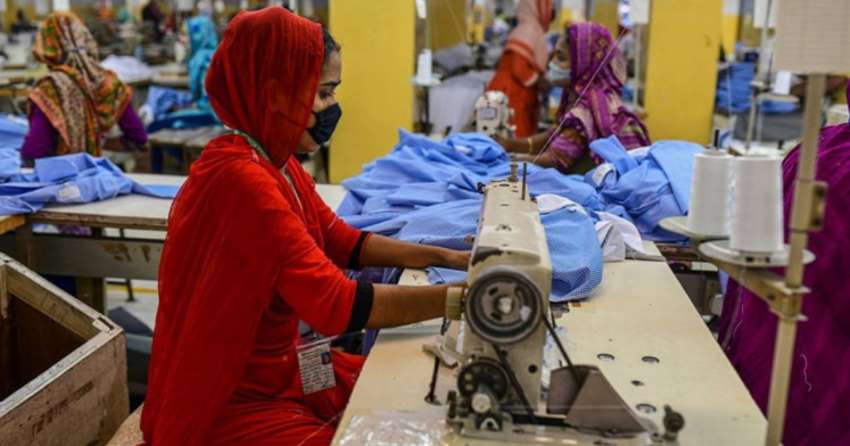
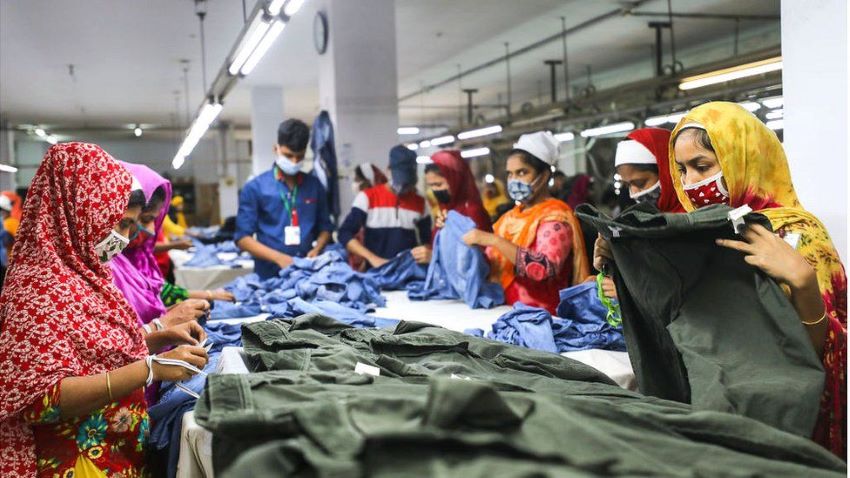
As per the US Department of Commerce affiliated Office of Textiles and Apparel (Otexa), Bangladesh's apparel exports to the United States grew by 6.73 percent in the first quarter of 2020 year-on-year, strengthening the country's position as the third-largest supplier to the American market, after Vietnam and China.
Bangladesh fetched about $1.67 billion from apparel exports to the US during the January-March period in 2020, against $1.56 billion earnings during the corresponding period of 2019. However, the country's apparel export earnings witnessed over an 85 per cent decline to $375 million in April 2020, which was $2.54 billion in the same period last year.
Experts and exporters opined that the growth happened since Bangladesh had not been affected by the novel coronavirus till March. At that time, Chinese factories faced closures and supply chains had been disrupted due to the Covid-19 outbreak. The US also witnessed a tough phase of the outbreak, resulting in retail store closures. As a result, their imports fell by 12.07 per cent to $17.84 billion in the first quarter of 2020.
Exporters believe that Bangladesh's apparel exports will observe the effect the outbreak of coronavirus for the next two to three months as most factories were closed for the last one month – March 26 to April 26.
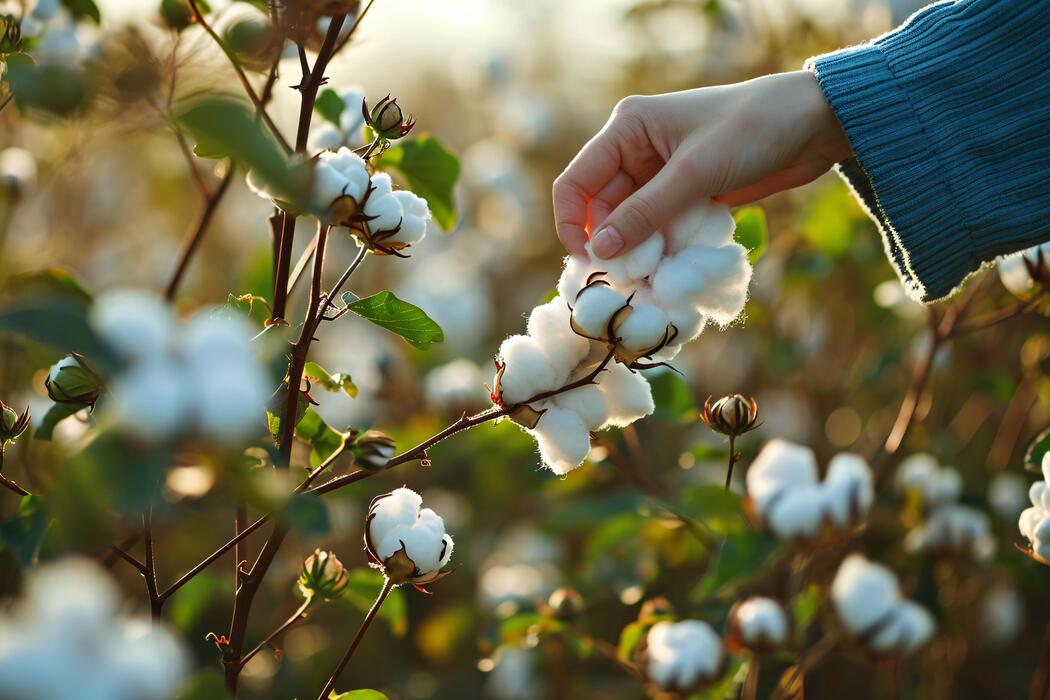
Between January and March 2020, Bangladesh shipped 602.98 m. sq. mt. of apparel goods to the US. But apparel exports from Cambodia and Pakistan saw growths of 14.4 per cent and 13.8 per cent, respectively. According to the BGMEA, cotton products constitute a share of 74.14 percent of Bangladeshi apparel exports. Against an increased demand for cotton, import of the item from the US has increased over the last few years.
Clean clothes campaign encourages brands to ensure suppliers’ safety
Clean Clothes Campaign has encouraged brands to help suppliers ensure that their employees have safe workplaces and transportation, including safe distance between employees and the availability of protective equipment revealed by workers’ surveys.
A startling investigation by the Clean Clothes Initiative and Germany-based Bread for the Planet reveals that about 120,000 workers across Europe are forced to work in high-risk conditions following closures in the workplace worldwide. No EU law is yet in place to ensure brands and retailers respect human rights through supply chains and ban unfair and inhumane trade practices.
In Serbia, Ukraine, Croatia and Bulgaria, employees are still working for far less than a living wage for German fashion brands including Hugo Boss, Gerry Weber, Esprit, as well as German supermarket and drugstore chains. In spite of the pandemic, factory managers continue to force workers to report to work despite the high risk of infection of Covid-19 and in contravention of international guidelines.
Wages of garment workers remain extremely low in the Eastern and South Eastern Europe manufacturing industries. A Ukrainian tailor will earn around 126 Euro per month, leaving no room to save money for contingencies such as the current Covid-19 crisis.
Even the meager wage is actually not charged because in Germany clothing firms cancel and factories shut down, not in order to protect workers, but because work does not exist. Employees indicated that they are now forced to go on unpaid leave to Clean Clothes Drive, leaving those already on the poverty line in even more desperate circumstances.
Footwear brand Aldo files for bankruptcy
Leading footwear brand, Aldo is seeking protection from creditors by declaring bankruptcy in Canada, Europe and US. In Canada, the company has been seeking protection under the Companies’ Creditors Arrangement Act from the Superior Court in Quebec and is filing for bankruptcy in US under Chapter 15 along with preparing to do the same in Switzerland.
The court filings indicated that the company sold $1.2 billion worth of merchandise by the end of February this year against losses of merchandise worth $74.8 million in Canada and $52.8 million in US. The company did not pay rent for its stores for April and May, but the lockdowns have drained the cash reserves leading to their effort to seek protection as they restructure the company.
Although their stores remain closed until guidelines from concerned authorities in each country, the ‘Aldo, Call It Spring’ and ‘Globo’ websites remain open for orders during the bankruptcy proceedings.
British Wool remains unaffected by COVID-19
Despite the challenges facing the wool sector due to the Covid-19 pandemic, British Wool is collecting and receiving wool as usual.
The company’s network of depots and collection sites are ready to start receiving wool from producers – which, given the circumstances is quite an achievement. Also, following the Government guidance related to Covid-19, company has ensured that protocols are in place for the safety of producers as well as British Wool staff.
However, the Covid-19 pandemic has had a significant impact on the global wool market which affected British Wool before the rest of the UK due to the reduced demand from the Chinese market in January. The global cross bred wool market slowed significantly in February and then shut completely at the beginning of March and remains closed.
According to company, February to May is normally the busiest selling period of the year and, as a result, British Wool has approximately 7 million kgs extra of unsold 2019 clip wool on top of the approximately 3 million kgs that it would normally be carrying at this time of year.
The severe drop in demand for wool products coupled with the huge global overhang in cross bred wool stocks from the 2019 season is likely to severely impact prices for the next 12-18 months. It will also make the company’s longer term objective of repositioning British Wool as a premium product more challenging. However, finding new demand for 9ts wool in China at attractive prices will be a key driver of the early stages of recovery in British Wool prices.
China slips to 4th position in denim apparel exports to USA
According to OTEXA, due to the impact of COVID-19, China has slipped from 2nd rank to 4th in its denim apparel exports to USA in Q1 of 2020.Chinese shipment of blue denim apparels plunged massively by 63.11 per cent to $67.79 million from $183.75 million in Q1of 2019.
This drastic fall has reduced China’s share in denim apparel exports to USA to 9.71 per cent in this year from 22.67 per cent in the corresponding period of the prior year. Mexico, Bangladesh and Vietnam are now ahead of China in denim export values to USA.
Mexico too fell by 28.85 per cent to ship $138.89 million worth of denim apparels to USA and allowed Bangladesh to narrow the massive gap which both had in the first quarter of 2019.
In the first quarter of 2020, USA decelerated by 13.95 per cent in its import value which stood at $ 697.51 million. The major fall was recorded from China and Mexico, which allowed other countries to boost their export.
Until March this year, Bangladesh upped its denim apparel exports to USA by 30 per cent and clocked US $ 123.41 million revenue; Vietnam took benefit of fall of the Chinese shipment and grew by 35.09 per cent to ship $86.37 million worth of denim apparels to USA.
Even Pakistan saw a boost of around 16.64 per cent in its denim apparel exports to USA which valued at $62.83 million in Q1of 2020.
Cambodia too noted a solid growth in the period by 88.40 per cent to escalate its denim apparel export value to $39.39 million from $20.91 million in Q1 of 2019.
ALDO Group to restructure operations
The ALDO Group Inc recently obtained an initial order from the Superior Court of Quebec pursuant to the Companies' Creditors Arrangement Act (CCAA). The Montreal-headquartered company will work to complete its restructuring in a timely fashion and hopes to exit from the process as soon as possible and better positioned for long term growth. It intends to use the proceedings to stabilise the business and build on its legacy in retail fashion.
In addition, the Canadian fashion footwear and accessory retailer has voluntarily applied for similar protection in the United States and is about to do the same in Switzerland.
Among other things, the initial order provides for a stay of proceedings in favour of the company for an initial period of 10 days, subject to extension thereafter as the court deems appropriate, and the appointment of Ernst & Young Inc. as monitor in the CCAA proceedings.
ALDO, Call It Spring and GLOBO's e-commerce websites will remain open throughout the process. The company's corporate stores, which are temporarily closed due to COVID-19, will re-open based on the guidelines set by local governments and health authorities.
Gap implements safety measures at stores
As Gap prepares to re-open up to 800 of our Old Navy, Athleta, Gap, Banana Republic, Janie and Jack, Intermix stores before end of month, the brand is implementing enhanced safety measures to become a trusted place for customers.
Gap is working with local government, led by health official guidelines, and in partnership with RILA and industry peers, to open its stores when and where it is safe to do so.
In addition to 1,000 Ship from Store locations, the brand is providing Curbside Pickup in 75 locations to provide its customers a comfortable and seamless customer experience and plans to expand both programs in the coming months.
It is also implementing rigorous cleaning routines throughout each store and providing hand sanitiser stations at its front doors and cash wraps and temporarily closing fitting rooms.
Besides, the brand supplies all team members with high-quality, reusable face masks to wear during their shifts and encouraging customers to wear a face covering while shopping, has installed plexiglass health guard partitions in front of registers and for mobile payments, posting signage throughout the store encouraging customers to observe social distancing guidelines, is opening with reduced hours and actively monitoring the flow of customers in stores, temporarily closing restrooms and quarantining returns for 24 hours before putting them back on the salesfloor and ensuring teams follow healthy hygiene habits such as frequent hand washing/sanitising and monitor for COVID-19 symptoms before heading to work with a provided health checklist.
Giorgio Armani’s runway shows rescheduled to September
Giorgio Armani recently revealed the schedule for its next runway shows. According to it, the shows will take place in September, apart from the house's next Haute Couture show, which has been pushed back to January 2021.
While the fashion world 100 per cent digital runway shows, with London, Milan and Paris all having announced online fashion weeks for June and July, some of the larger brands are revealing their own catwalk calendars. Such is the case of Giorgio Armani, which has presented the dates of its next men's and womenswear Emporio Armani and Giorgio Armani shows, as well as that of its next Armani Privé collection.
The latest Giorgio Armani and Emporio Armani men's and womenswear collections will be shown in Milan in September. At the present time, the company is still working out the most appropriate format for these ready-to-wear shows. The Armani Privé Haute Couture collection will receive a different treatment, with a show scheduled for January 2021. The event will be organised in Milan, more specifically at the Palazzo Orsini. The show will present a timeless collection, made up of both winter garments and lighter designs intended for the summer.
Global luxury goods sales to collapse by 35%
According to a new study by the Bain Consultancy, the global luxury goods sector is likely to collapse by 35 per cent this year due to coronavirus lockdowns, It would take two to three years to return to 2019 global sales of around $303 billion -- with the forecast decline much steeper than the single-digit drop recorded after the 2008-9 crisis.
The coronavirus crisis is expected to lead to a spate of mergers and acquisitions of weakened brands, the closure of single-brand stores and reshaping of already suffering U.S. department stores. Customers are also likely to emerge from global lockdowns with a new set of priorities.
The semi-annual study for the Italian luxury goods producers' group Altagamma foresees the most dramatic drop in sales during the second quarter, when they are forecast to slide up to 50 per cent, followed by a milder contraction in the second half. The study does not forecast the impact of another round of lockdowns, should the virus peak again.
For the full-year, Bain forecasts luxury sales of apparel, handbags, footwear, watches and beauty products of €189 billion to € 220 billion. The degree of the year-end hit will depend on whether there are rebounds in the local markets -- something already being seen in China and Asia -- and to what extent domestic and regional tourism is able to resume.
Global synthetic staple fibers trade to rise by 63.65%
According to Fibre2Fashion's market analysis tool TexPro, the global trade of synthetic staple fibers, not carded, combed or otherwise processes for spinning of aramids is anticipated to rise to $1,843.30 million in 2022 with a rate of 63.65 per cent from 2019.
The global export of synthetic staple fibers of Aramids was $391.19 million in 2017, which grew 31.56 per cent to $514.67 million in 2019. Total exports reduced 9.64 per cent in 2019 over the previous year and is expected to move up to $776.67 million in 2022 with a rate of 50.91 per cent from 2019.
The global import value of synthetic staple fibers of Aramids was $422.25 million in 2017, which increased 44.87 per cent to $611.71 million in 2019. Total imports decreased 3.73 per cent in 2019 over the previous year and is expected to rise to $1,066.63 million in 2022 with a rate of 74.37 per cent from 2019.
Belgium, US, Germany and China were the key exporters of synthetic staple fibers of Aramids across the globe in 2019, together comprising 55.88 per cent of total export. These were followed by Slovakia, Turkey and Italy.