FW
India: PLI scheme open for all products
The PLI 2.0 scheme for apparel and home textiles is open for all products including cotton. This will create opportunities for companies to choose their preferred products.
The scheme brings around Rs 4,300 crores of incentives to the eco system and may generate Rs 1 lakh crore worth new manufacturing. All kinds of textile manufacturing companies can apply.Companies working with the PLI scheme can get good mileage with domestic and international buyers due to their visibility. Notably those companies that take up projects with the PLI scheme can also avail of state government incentives.The incremental sales condition for five years can help small and medium enterprises build the much needed scale and competitiveness.
There are three different schemes for companies with investments of Rs 15 crores, Rs 30 crores and Rs 45 crores. If 20 plus companies are executing projects together as a group, companies can get benefits in terms of project costs due to joint purchases.The aim is to enable the textile and apparel sector to use this opportunity and invest in PLI 2.0 to build scale and competitiveness.
In the meantime some changes have been suggested to the scheme. These relate to the number of machines, differentiation between apparel and home textile, the incentive percentage, the inclusion of tech intervention etc.
Indian spinners wait for cotton prices to settle
With cotton prices on a decline, textile mills in India are waiting for prices to stabilise to revive production.
Several textile mills that use cotton as raw material are operating at less than 50 per cent capacity at present because cotton prices went up to nearly Rs1 lakh a candy and are at nearly Rs70,000 a candy now. There are several uncertainties that mills are facing. Yarn movement is still slow and some mills have stocks too.
The mills are not sure of the price trend for yarn and the export demand. The hope is that things improve in November with better demand, especially international demand. Cotton prices are expected to stabilise atRs65,000 a candy. Cotton consumption is low now as prices are yet to stabilise and the mills do not want to buy the raw material at this juncture. Mills have started calibrating operations and many have started going in for blended yarn. Demand for cotton has, thus, reduced. Demand is expected to remain low for another month and when cotton prices stabilise mills will revive production.
The market has revived and festive season sales are expected to be good this year. This will result in higher demand for raw materials across the textile supply chain.
Bangladesh September exports fall seven per cent
Bangladesh’s apparel exports fell seven per cent in September 2022. However during the first quarter apparel shipments were 13 per cent higher compared to the corresponding period of the previous year.
Apparel exporters of Bangladesh expect a turnaround in demand for their products in western markets by mid-2023 and till then they want to book every order – even if it offers a break-even price – in order to survive amid the present slowdown in business. The industry is experiencing a slowdown as retailers are stuck with too much inventory at their stores as demand has fallen due to a mild recession in the USA, Europe and the UK. Most factories are getting fewer work orders, which is being reflected in export earnings. This untoward trend is expected to continue till April or May 2023.
The hope is that the global geopolitical situation will improve by the second quarter of the next year, which will lead to a robust recovery in consumer spending in the key export destinations due to pent-up demand. Rising political tensions between the US and China may help Bangladesh grab more orders shifting from China, Vietnam, and Myanmar. Already a number of South Korean brands and retailers are coming to Bangladesh to open sourcing offices.
Higher MMF garment exports to help Bangladesh grow global share
Bangladesh’s share in the global market for manmade fibers is five per cent. The aim is to make that 12 per cent by 2030.
About 72 per cent of Bangladesh’s garment exports are cotton-based and just 24 per cent are manmade fibers. As China, the largest cotton apparel supplier now, has been losing its market share, Bangladesh, which now accounts for 16 per cent of all cotton apparel shipments worldwide, is poised to become the largest cotton-based garments exporter. During 2010 to 2021 the share of manmade fiber garment exports from Bangladesh increased to 24 per cent from 18 per cent of the country's apparel exports.
Global manmade fiber apparel exports grew by four per cent while that of cotton-based items shrank by 0.5 per cent annually between 2011 and 2019. Cotton apparel exports then fell by some 15 per cent in 2020, while manmade fiber garment shipments saw robust growth of eight per cent in 2021.Due to uncertainty in cotton production and supply, price comparability and advantages offered by these products like higher durability, water- and wrinkle-resistance, and colour retention, the global demand for manmade fiber-based apparel items has been growing though there are environmental concerns as well.
Pre-owned luxury secondary market revs up, brands abstain
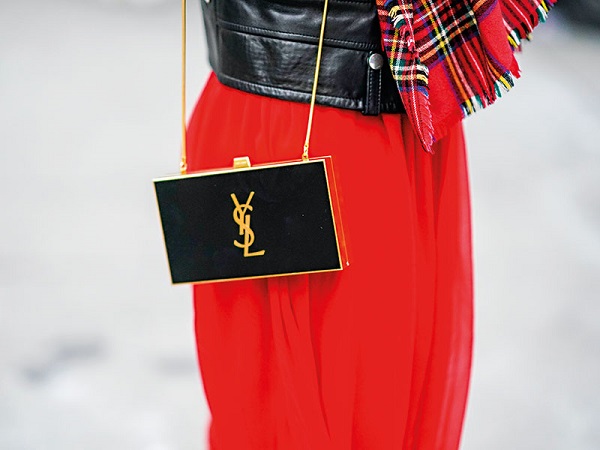
In the post-pandemic times, the luxury resale market which comprises of the buying and selling of second-hand luxury brands , has taken off like never before. Pre-loved and pre-owned luxury goods are the buzzwords now in the secondary market of the high-end luxury world. Bags, watches, and jewelry from expensive brands such as Balenciaga, Valentino, Jean Paul Gaultier, Oscar de la Renta, and under the Kering umbrella are just some who are getting a new lease of life and love, especially in global online markets.
Secondary pre-loved market dents fashion brands
Buying pre-owned clothes and accessories is a kind of luxurious experience for the middle class that is cheaper, convenient, and sustainable in these uncertain economic times. The sale of pre-owned luxury apparel has gone up to 65 percent last year relative to 2017 as compared with a 12 percent rise in new luxury sales, according to the Wall Street Journal.
However not all high-end luxury brands see eye to eye on this. Many fear that resale could cannibalize the sales of their full-price products and dent their image of exclusivity and coveted position built up over the years in the apparel, fashion, and luxury group. Other brands are worried about the complexity of implementing circular models in the apparel resale online markets and fear that most luxury brands will remain on the side-line fence of fashion if they refuse to jump onto this bandwagon.
According to resale market experts, the revenue of the global second-hand luxury goods market was estimated to be worth 4.9 billion U.S. dollars in 2021. But after Covid times, according to Statista estimates, this market is set to see a steep increase, reaching over 14.6 billion U.S. dollars by 2027. Some of the bigwigs of the high-end luxury market such as Louis Vuitton, Chanel, and Hermès have refused to stoop down to the burgeoning resale market, as they feel their quality and exclusivity should not be affected by the affordability factor and become a run=of-the-mill product. Rushing to put their stamp of approval on pre-owned products coveted by the Gen-Z and the middle class is not their thing and they prefer to sell quality over quantity to their discerning customers at their chosen price point.
Global trends affect Indian second-hand luxury goods market
Speaking on these lines, Antoine Arnault head of image and environment of LVMH, the French-holding multinational corporation specializing in luxury goods, has said that the group “will stay away from that second-hand market” for the time being. Bruno Pavlovsky, president of fashion and president of Chanel SAS, also has highlighted his brand’s own aversion to resale, saying “We want to retain control of our distribution.”
The second-hand luxury goods market in India is also strongly driven by the growing influence of western fashion trends coupled with improving living standards and rising disposable incomes of the consumers. Online auctions and various international e-commerce platforms that offer overseas delivery options have increased the sales of pre-owned luxury goods. India is expected to have a CAGR of 12.18% during 2022-2027, as the indirect influence of the pandemic continues to affect spending power.
While the high-end fashion market focuses on addressing sustainability issues, the global luxury resale speeds up its online as well as offline platforms for the commercialization of second-hand goods from the world’s most beloved luxury brands to make hay while the sun shines.
Texprocil India celebrates foundation day
Texprocil completes 68 years. A commemorative function was held at its head office in Mumbai, October 4, 2022.
Seminars and presentations on topics like sustainability, circularity and traceability were held in the hybrid format during which speakers from India as well as overseas participated.
Texprocil, also known as Cotton Textiles Export Promotion Council, released its new brochure highlighting the latest product offerings in cotton textile products that conform to sustainability and circularity norms as per international standards. The Council has already launched the General Certificate of Conformity (GCC) programme along with Control Union for the Traceability of Indian Farm Cotton. More than 50 companies have already registered as members of this program and GCC certificates are currently being issued to them.
During the foundation day celebrations, a new logo for the GCC program was launched. There was an overview of developments in the textile industry which was then followed by a presentation on traceability of Indian cotton. Among the other topics were the need for digitisation in today's world and sustainability as a mainstream strategy.
Texprocilis the international face of Indian cotton textiles and continues to create vibrant platforms for facilitating Indian exports worldwide.The traceability of cotton fiber is now an essential and mandatory parameter for export of value added cotton textile products to developed markets.
Vietnam holds Cotton Day
Cotton Day was held in Vietnam, October 4, 2022.At the event, US experts, suppliers and producers shared information, market trends, and ideas to optimise cooperation opportunities between Vietnam’s garment and textile sector and the US cotton industry.Vietnam is an important destination for US farm produce and cotton and the US hopes to promote bilateral cooperation in this field.
Vietnam is the second largest cotton importer from the US and also an important source of supply of the material. The breakthrough growth in Vietnam’s garment and textile exports has made the country a promising market for multinational material suppliers. Meanwhile, changes in the sector recently have proved the timely adaptation and flexibility of the industry.
Experts feel sustainable cotton production will drive continuous improvement of Vietnam’s garment and textile industry for sustainable development and that among the new trends in the garment and textile sector, verified data and supply chain transparency are the top factors that enhance the competitiveness of products.
This year, Vietnam aims for $42billion in garment and textile exports and to this end the sector has paid great attention to material supply sources and regulations on origin in import markets. However Vietnamese enterprises need information on cotton material sources and a market forecast report for the 2023-2024 period.
Levi Strauss cuts profit forecast
Levi Strauss has cut its full-year profit forecast. Reasons include softening demand, a strengthening dollar and higher costs. The rapidly strengthening dollar and higher product costs also caused Levi's to post adjusted gross margin of 56 per cent, down 60 basis points, compared with a year earlier.
The jeans maker, who has been battling supply chain disruptions since the pandemic began, now further strained due to the Russia-Ukraine war, has been raising prices of its denims to battle rising costs.The company now expects full-year reported net revenue growth of 6.7 per cent to seven per cent, representing 11.5 per cent to 12 per cent net revenue growth on a constant-currency basis.Earlier, the company forecast a net revenue growth of 11 per cent to 13 per cent.The company owns brands like Dockers and Denizen.
Consumers in the US are shifting their focus away from higher-priced products and clothes to essentials due to decades-high inflation, affecting Levi’s and other apparel makers. People are getting concerned about where their dollars are going. The company is more cautious about its business in Europe as the consumer in the region is impacted by much higher inflation as well as steeper energy costs.
Laos claws back from the pandemic
Laos’ garment industry suffered considerably during the pandemic. Many factories were closed and a shortage of workers also resulted in delay in the delivery of products. The garment industry has encouraged every village to have at least one shop stocked with clothes produced locally, aiming to reduce the import of the products and controlling the inflation rate of the country.
The industry says Lao people should use Lao products and replace imports. Curbing expenditure in foreign currencies is also seen as important to prevent imported goods from being brought into the country illicitly and priced higher than necessary. All garment factories in the country, regardless of their size, have been requested to closely cooperate, coordinate, and together tackle the problems.
Laos exports 80 per cent of its goods to Europe, nine per cent to Japan, four per cent to the US, and two per cent to Canada. There are some 77 garment factories in the country, 50 of which make goods for export and the other 27 produce garments for local consumption. About 25,000 people are employed by the factories, 90 per cent of them women. These factories produce a variety of clothes, including uniforms, shirts, T-shirts, polo shirts, office wear, coats, jeans, blankets, shoes, and other items.
Floods wreck cotton in Pakistan, industry shuts in protest
Pakistan imported three million cotton bales last year and needs to import at least five million bales during the current fiscal year due to damage to the crop by recent floods.
Current estimates of losses to the cotton crop due to floods are 3.5 million bales, accounting for 36 percent of the expected yield this year.Pakistan decided to reverse the competitive power rates for industries. In protest, textile millers have decided to shut down all textile industries in the country. More than 1000 textile mills have already been closed down. Almost 50 to 75 processing mills are closed and almost ten printing mills are closed in Faisalabad region. Similarly 50,000 looms mills closed due to the high price of electricity. Factories received bills at rates per unit which were too high. Almost 300 to 350 embroidery machines have been closed till date.
The closure of the textile industry will cause a huge loss to domestic exports. Five million employees will lose their jobs and 30 million people will be affected due to the closure of textile industries. The industry wants electricity and gas to be provided at competitive rates and without interruptions.
For the first two months of the fiscal 2022-2023, the value of textile and garment exports from Pakistan increased by four per cent.