FW
WWEPC India completes 58 years
The Wool & Woollens Export Promotion Council of India has completed 58 years.
WWEPC has rendered valuable services to the Indian woollen industry for enhancing exports and strengthening the production base through qualitative interventions, initiatives on export promotion and other activities.When world export of textile and apparel was governed by the multi-fiber agreement (quota period), WWEPC was assigned work of quota allocation for acrylic knitwear and woollen fabrics. WWEPC successfully transformed itself as a facilitator for export growth.
The council is regularly taking up issues being faced by the woollen industry with the government for effectively accommodating them into the policy framework. The council also provides a unique opportunity and platform for exporters of woollen products to build business contacts with overseas importers and buyers by organising participation in international trade fairs/exhibitions/buyer-seller meets in India and abroad.
The woollen textile and clothing industry is relatively small compared to the cotton and manmade fiber-based textile and clothing industry yet the woollen sector plays an important role by linking the rural economy with the manufacturing industry, represented by small, medium and large-scale units. The product portfolio is equally divergent from textile intermediaries to finished textiles, garments, knitwear, blankets, carpets, etc. with a presence in technical textiles.
US athleisure brands take CSR initiatives
Athleisure brands in the US are having a more sustainable approach to fashion.
TMRW Project which offers both men’s and women’s apparel, from T-shirts and tanks, to sweats and accessories, donates a portion of every order toward mental health research and suicide prevention. Beyond Yoga is a company run by women and utilizes local manufacturers, responsible sourcing and the use of recycled materials. The brand donates to non-profits. Headbands of Hope as the name denotes makes headbands for young children suffering from hair loss due to cancer. One headband is donated to a child with an illness for every item sold.The brand’s products are carried in many stores worldwide, and it has given over a million headbands away. It offers many hair accessories including different styles and collections of headbands, scrunchies, turbans, clips, hats, head scarves and more.Sparks Active donates a portion of its proceeds to environment, education or support for refugees and asylum seekers.
They prove activewear isn't only for fitness. Many fitness brands offer great quality at reasonable prices yet some are not ethically responsible in their production methods. Many brands today take part in fast fashion, a business model in the clothing industry that focuses on mass-producing designs at a low cost, often contributing to problems such as pollution, unethical sourcing and unfair labor practices.
Changes proposed in PLI 2.0 for Indian textiles
The Indian Texpreneurs Federation (ITF) has suggested changes to the proposed Production Linked Incentive (PLI) 2.0 scheme for the textile sector.
At least 25 companies that manufacture garments or home textiles in the western districts of Tamil Nadu are expected to invest under the scheme when it is implemented. These have to make investments in the Rs 15 crores or Rs 30 crores brackets. Since there are conditions such as the minimum number of machines to be installed, ITF says this cannot be common for the home textiles and garment sectors and that the entrepreneurs should be allowed to choose the machinery.
The average size of apparel units in Tirupur and home textile units in Karur is a Rs 20 crore to Rs 30 crore annual turnover. With several buyers looking at China plus one approach for sourcing, there are huge opportunities for Indian exporters. The units need scale, competitiveness, and specialisation to tap the opportunities.The proposed scheme will benefit small and medium-scale industries that want to scale up and invest in modern machinery.The PLI scheme for the textile sector was announced in September last year and approved 64 applications for production of manmade fiber, apparel, fabrics, and ten product lines in technical textiles.
Scotch & Soda opens stores in Europe
Scotch & Sodahas opened two new stores in London and one in Copenhagen. While the two stores take the UK portfolio to four, globally these are further addition to 31 stores that have opened since the start of the year.
Scotch & Soda is a fashion retailer from the Netherlands and is continuing with its plans to expand in Europe.Founded in 1985, Scotch & Soda is known for its apparels for men and women and accessories like footwear and bodywear.
Scotch & Soda has been around since the ’80s but was relaunched in 2001. Scotch & Soda currently boasts over 100 stores worldwide, more than 7000 other sales points and a fully up to date online presence with and integrated webstore, blog and social media. The brand is classic in many ways, but young and progressive when it comes to bringing great clothes to the market place. The products are rich in detail, high quality and affordable. The designers at Scotch & Soda spare no expense in ensuring the high quality detailing and finishing of each and every garment produced. The product is typically inspired by the best tried and tested classic and vintage styles, enriched with a wealth of inspiration from around the world.
Bangladesh exports to US up 53 per cent
In the first eight months of 2022 Bangladesh’s apparel exports to the US were up 53 per cent compared to the same period of 2021.
However purchase orders have declined significantly by nearly 30 per cent in the last few months due to the ongoing geopolitical crisis, energy crisis, and global inflation.
Top brands like Walmart and Gap have postponed their global orders due to overstocking their products. Bangladesh is veering away from dependency on the European or North American markets and is finding new markets like east Asia and the Middle East.
China and Vietnam occupy the first and the second highest positions respectively in the US market. US apparel imports from China in the January 2022 to August 2022 period experienced a growth of 37 per cent compared to the same period of 2021. Vietnam’s exports of apparel items to the US in January 2022 to August 2022 fetched a growth of 33 per cent. Bangladesh occupies the third position. India secured the fourth position by exporting apparel items and registering a growth of 56 per cent in the first eight months of 2022. Readymade garment imports of the US from Indonesia in the January to August 2022 increased by 56 per cent while imports from Cambodia grew by 51 per cent.
Cambodian FTA with South Korea comes into effect
The free trade agreement may help boost Cambodia’s apparel exports to South Korea.
The agreement also presents opportunities for value-added investments in Cambodia’s downstream processing industries through a plus one business model, in which South Korean companies could expand their supply chain network developed in not only China but also Vietnam or Thailand. South Korea has a great demand for high-value winter clothing and denim. Other potential products that have good demand in the country include non-leather footwear, home textiles, jute and jute products etc.
This year, Cambodia’s apparel exports to South Korea may touch pre-Covid levels despite the volatility in monthly shipments.The FTA will remove tariffs on 95 per cent of products imported from Cambodia, while Cambodia will eliminate duties on 93 per cent of imported goods.On a monthly basis, Cambodia’s outbound shipment of apparel to South Korea gained in July 2022 and further improved in August 2022. South Korea is a very minor market for Cambodia’s apparel exports and is currently positioned at 13th place in terms of apparel exports from Cambodia. South Korea accounted for a mere 1.51 per cent out of Cambodia’s total apparel exports in 2021. The biggest markets for Cambodian garments are, in order, the US, EU, Japan, Canada and the UK.
Footwear with government support holds great potential for India
India is working toward getting zero duty access through free trade agreements in leather goods, sportswear and footwear.
About 7,000 small industries units are connected with the footwear sector which holds great significance to the economy and foreign exchange earnings of the country.Nearly 40 per cent employed in the sector are women and for every 1000 pairs that are produced or sold, 425 jobs are secured. India is the second largest producer of footwear and leather garments. The center has notified the Indian Footwear and Leather Development Program with an outlay of Rs1700 crores for implementation during 2021-26.
India has immense potential in the footwear sector and ethical and responsible practices like zero-waste discharge, salt-free tanning, and occupational health and safety interventionscan increase production and export ten times in the near future. Through a quality control order imports can be limited and good-quality exports can be achieved. Strong global branding through road shows, e-platforms and global joint ventures can help the sector make a mark globally.
Attention can be given to the non-leather footwear sector as well. A lot of emphasis is now being given to the production of manmade fiber. Since brands are dependent on India for raw materials, Indian brands with high-value projects can find their way into the global market.
Can cotton weave a better future for fashion?
Given the volatility and roller coaster ride cotton has been going through in recent times, in terms of pricing and demand- supply; is adding further to the existing uncertainty in fashion business as well as disrupting the supply and global value chains. A peep into the three of the cotton world leaders India, China and the USA, at their cotton production, consumption and participation in global trade may reflect on the immediate future outlook, as what lies in stock for the fashion business.
Last Friday, October 7, 2022 was celebrated internationally as the World Cotton Day. Initialised on October 7, 2019 by the World Trade Organisation (WTO) in collaboration with four sub-Saharan African cotton producers Benin, Burkina Faso, Chad, and Mali, collectively known as the Cotton Four, the day was earmarked by the United Nations General Assembly in 2021. Together with the secretariats of the United Nations Conference on Trade and Development, the International Cotton Advisory Committee, and the United Nations Food and Agriculture Organization (FAO), the WTO Secretariat organized the event (UNCTAD). This year the theme is “Weaving a better future for cotton”. The focus is on sustainable ways to grow cotton as well as improve living and working conditions of those engaged in cotton farming such as small farmers and labourers.
The World Cotton Day is significant as about 75 countries worldwide grow cotton and their economies are benefitted through exports, downstream production lines and job generation. History has it that the oldest record of cotton farming was from India which remains the world’s second largest producer of the most-environment friendly fibre.
India launches cotton council
The government launched the Cotton Council of India on May 18, 2022 under the able chairmanship of legend cotton-man of India, Suresh Kotak. The council has been assigned to research, analyse and prepare a comprehensive plan of action to significantly improve farming methods, fibre quality, greater yields and sustainable farming. In 2022, India has produced 6,162,000 tonnes compared to China’s 6,423,000 tonnes. The USA is a distant third with 3,181,000 tonnes. . Currently India supplies 18% of cotton’s global trade and its main destinations are China, the US, Bangladesh, Vietnam, Taiwan, Thailand and Indonesia. 74% of all garments exported from India are also cotton products. The Cotton Council of India has started addressing the current primary concern – the price of cotton is rising despite a large area being under cotton cultivation. This has been attributed to poor levels of productivity among Indian farmers. Low productivity is perhaps the biggest hurdle India has to overcome to continue retaining its lead and work towards greater sustainability.
China flooding Indian market with cheaper rates
Over the last few years, the growth rate of China's cotton spinning industry is declining and labour costs, land rent and the prices of other production factors are on an upward spiral, thereby increasing the costs of cotton planting and decreasing the profits and area of cotton planting. The Chinese government is transferring cotton production capacity to Xinjiang which enjoys lower production cost compared to other parts of China. In 2020, the cotton planting area in China was about 3.168 million hectares, down 5.10% YOY.
Due to the pandemic, domestic consumption of cotton products has experienced a slow-down, leaving China with excess to export. The US ban on textiles originating from the Xinjiang province of China has further added to the crisis and China has found an opportunity to flood the domestic Indian market with cotton yarn that is cheaper than the domestic one, compounding to price issues India faces. Further, the US ban has hit India's cotton yarn spinning industry, with half of the mills becoming idle in the past four to five months.
USA’s 2022 crop forecast lowest in 13 years
According to USDA’s August forecast of the 2022 cotton crop, U.S. production is projected at 12.6 million bales, considerably below last season’s final estimate of 17.5 million bales and the lowest crop estimate in 13 years. Compared with 2021, cotton harvested area is also forecast significantly (31%) lower, but a higher national yield limits a further production decline. However, The US is projected to continue being the world’s largest cotton exporter and its share of global trade in 2022-23 at an estimated 27%.
As the world concluded its second World Cotton Day, stakeholders are hopeful for an outcome that irons out the current crises and establishes profitability through sustainability and support the fashion industry as a stable and sustainable raw material.
Cotton’s volatility has the world concerned
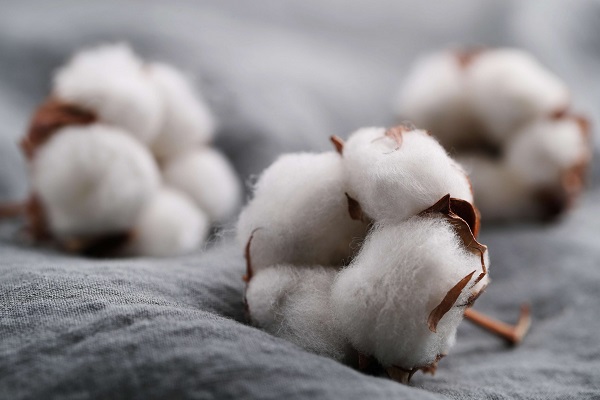
The global cotton market is projected to experience tight supply in 2021/22, with supply estimated to say no 1.2 percent, including a 4.9 percent contraction in stockpiles.
Global cotton demand is projected to rise 2 percent in 2022, driven by a revival in consumption from downstream industries like textiles and apparel; however, shipping container shortages, shipment delays, and high ocean freight rates are expected to dampen imports. A strong recovery in global demand amid lower production in key producing regions such as India, the U.S., Pakistan, Brazil, and Turkey during the previous season has tightened carry-over stocks for 2021/22, which is predicted to keep prices elevated, whereas the recent yield concerns within the U.S. and India has raised concerns of tighter global availability.
Lower-than-anticipated U.S. cotton supply is probably going to reduce export volumes, thus restricting global availability, with shipments already facing disruptions thanks to logistical issues. This is able to force mills in key consuming regions to utilize their domestic stockpiles.
Russo-Ukrainuan conflict has negative impact
Recent escalations within the Russia–Ukraine conflict is seen to negatively impact the cotton market. Meanwhile, a cutback on consumer spending and mill demand for cotton is predicted to exacerbate the adverse impact of prevailing deterrents to demand such as high inflation, rising interest rates, and withdrawal of stimulus packages. Further, mills are expected to adopt a cautious approach and are likely to carry back on orders for cotton amid the global uncertainty in demand, which can raise stocks.
Decline in Chinese, Indian and American production
China’s cotton production is estimated to drop by 8.5 percent in 2021/22 on account of a lower acreage and yield of 4.6 and 4 percent, respectively, for the present crop of domestic cotton. Further, a contraction in imports thanks to the prevailing tightness in U.S. export volumes is probably going to result in domestic stockpile depletion in China – where cotton stocks are projected to fall 7.8 percent. Indian cotton supply for 2021/22 is projected to decrease by 6.9 percent thanks to tighter domestic production on account of lower acreage coupled with erratic monsoons during 2021 and pest infestations in key cotton growing regions, which is probably going to lower yields. The U.S. cotton supply is estimated to contract by 4.9 percent for 2021/22 on account of a big fall in opening stock balance by 56.6 percent and a lower recovery seen in domestic cotton output. U.S. cotton production is predicted to recover by 20.6 percent in 2021/22 amid higher acreage for the crop. However, following a 26.6 percent fall in output within the previous year, the expected current-season output volume remains well below the 5-year average for U.S. cotton. Further, dry weather and extreme heat conditions within the key cotton producing region of Texas is expected to lower yields for the current season, further restricting output.
Is cotton farming a lucrative prospect?
The Indian government agency Cotton Corporation of India has predicted that 2022-23 will see a 15% rise in the domestic production of cotton – 36,000,000 bales of 170 kgs each. However, the cotton production year starting October 2022 and ending September 2023 is vulnerable to inclement weather which could adversely affect crops. With higher price realization per candy since May 2022, many farmers are opting to cultivate cotton instead of food grains, which has shot cotton cultivation up in India by 8% already.
Celebrating a day for celebrated natural fiber
October 7 is World Cotton Day, a celebration of the world’s most important natural fiber.
The fluffy fiber is found in many different products as an ideal and much-appreciated raw material. Cotton can be precisely described with 14 quality characteristics – focusing on length, strength, fineness, color, maturity, trash and moisture content of the fiber. The value of cotton as a raw material depends on its quality. Key factors are long and uniform fiber length, optimal fineness for each application and high strength for precious fibers.For spinning mills, cotton purchasing accounts for more than 50 per cent of costs. Some of the costliest mistakes in yarn manufacturing arise from poor control of the raw material at bale mix before spinning preparation. But fiber testing is also essential during the spinning preparation stages, to minimize any negative financial impact of excess waste, unnecessary cuts, reworking, and customer claims.Today, cotton fiber is found in clothing and cosmetics items. Applications span the invention of toilet paper to the recycling of denim pants into vehicle construction components.
The first evidence of cotton use was found in India and Pakistan, and dates back to around 6000 B.C. That means cotton’s been keeping people dressed for over 8000 years.