FW
Australia expects large cotton crop despite floods
The Australian cotton industry is still expecting a large cotton crop despite persistent rain which has delayed picking and planting.
Only two years after a severe drought, cotton farmers celebrated good water availability resulting in a record crop of 5.5 million bales last season. However the rain has persisted. Every inland river catchment is either full or flooded with 99 active warnings and nine major flood warnings in place. Farmers have suffered loss and damage due to the floods but at this stage the major damage appears to be to winter crops like wheat and barley.The northern half of NSW has a wider planting window and that means growers have till the later half of November to get their crops in and maintain a healthy yield for the coming season.
They can achieve that if the rain holds off long enough to get out on their fields and get their crops in the ground. But in the Macquarie Valley south to the Victorian border the planting window closes earlier and yields decrease the later crops are planted in the region.Overall at this stage a ten per cent reduction on crop forecasts for 2023 is expected , and with about a third of that crop forward sold, expectations are for a strong ongoing global demand for the cotton.
Former Lenzing executive joins Renewcell
Tricia Carey is Chief Commercial Officer of Renewcell.
She is a seasoned fashion industry executive with more than 25 years of experience promoting more circular and more sustainable materials within fashion. She has also been a catalyst for the industry-wide conversation around the shift to more climate-friendly and resource-efficient materials. Prior to joining Renewcell, Carey was Director of Global Business Development at Austrian fiber producer Lenzing.
Renewcell is an award-winning textile-to-textile recycling company based in Sweden. Renewcell’s product is called Circulose. Brands use it to replace high impact raw materials like fossil oil and cotton in their textile products. Circulose is a branded dissolving pulp product that Renewcell makes from 100 per cent textile waste, such as worn-out jeans and production scraps. Dissolving pulp cellulose is what the textile industry uses to make viscose, lyocell, modal, acetate and other types of regenerated fibers. The only difference with Circulose is that it’s made from textile waste instead of wood.
Renewcell functions as an ingredient brand that helps people find the most sustainable virgin-quality fashion pieces available – those made with Circulose. Cellulose is the most abundant organic polymer in the world. It’s what makes up the cell walls of most plants and trees. The purest cellulose found in nature is cotton.
Lenzing Q3 revenue up 24 per cent, profits fall
In the first three quarters Lenzing revenue was up 24 percent. This was primarily due to higher fiber prices. Lenzing was increasingly affected by the extreme developments in global energy and raw material markets in the first three quarters of 2022, in line with the impact on the whole of manufacturing industry.
The market environment deteriorated sharply, especially during the course of the third quarter, and the worsening consumer climate placed additional pressure on Lenzing’s business performance. In addition to lower demand, the earnings trend particularly reflects the sharp rise in energy and raw material costs.As a consequence, earnings before interest, tax, depreciation and amortization (ebitda) decreased by 11 percent yearonyear. Net profit for the period decreased by 33 percent.Adjusted equity grew by six percent as a consequence of the operating profit trend as well as positive currency effects. As a consequence, the adjusted equity ratio is at 37 percent.
Lenzing stands for the ecologically responsible production of specialty fibers made from the renewable raw material wood. As an innovation leader, Lenzing is a partner to global textile and nonwoven manufacturers and drives many new technological developments. Lenzing’s high-quality fibers form the basis for a variety of textile applications ranging from elegant clothing to versatile denims and high-performance sports clothing.
Cambodia- RCEP trade up 11 per cent
In the first nine months of 2022, Cambodia’s trade with Regional Comprehensive Economic Partnership (RCEP) member countries was up 11 percent from the same period last year.
Cambodia’s exports to RCEP member countries were up six percent while its imports from RCEP member countries were up 12 percent. Cambodia’s top five trading partners under the RCEP are China, Vietnam, Thailand, Singapore and Japan. The RCEP is a key instrument to boost economic recovery in Cambodia and in the region.This regional mega-trade deal is very beneficial to Cambodia as it has provided the country bigger market access with tariff concessions. For the long term, it will be a main driving force for Cambodia’s economic growth.
The Regional Comprehensive Economic Partnership is the world’s largest free trade agreement and is set to eliminate 92 percent of tariffs on goods traded among its 15 members. The garment, footwear and travel goods industry is the largest foreign exchange earner for Cambodia, accounting for nearly 60 percent of the country’s total export value. The growth can be attributed to the full resumption of socio-economic activities in the country, trade preferences, and rising global demand as the global Covid pandemic has waned.
US manufacturing picks up pace, albeit low
The US manufacturing sector continues to expand, but at the lowest rate since the coronavirus pandemic recovery began. So says the Institute for Supply Management.
Customers’ Inventories Index remained at a low level, with the same reading as in September and the Backlog of Orders Index slipping into contraction.
Despite this, the apparel manufacturing industry stood out. Apparel headed the nine industries reporting employment growth in October, followed by leather and allied industries.The same two industries also reported growth in new orders in October, while textile mills were one of 12 industries to report a decline.Apparel, textile mills, and leather and allied industries reported slower supplier deliveries in October, but the former two reported paying less for raw materials.
There has been expansion in the overall economy for the 29th month in a row after contraction in April 2020 and May 2020. However the figure is the lowest since May 2020, when it registered 43.5 per cent. The New Orders Index remained in contraction territory at 49.2 per cent, 2.1 percentage points higher than the 47.1 per cent recorded in September.The Production Index reading of 52.3 per cent is a 1.7percentage point increase compared to September’s figure of 50.6 per cent while the Prices Index registered 46.6 per cent, down 5.1 percentage points.
US to host digital textile print show
Digital Textile Printing Conference will be held in the US, December 7 to 8, 2022.
The conference, being held for the seventh consecutive year, connects leaders and innovators in the digital textile printing community. There is something for everyone at this year’s event – direct-to-garment, home décor, design, screen printing, sustainability, and more. What started as an experimental collaboration has become an annual event. This year’s Digital Textile Printing Conference features a packed agenda highlighting notable speakers, networking receptions, lunches, and an exhibitor space where attendees can explore new technology and products.
The event’s theme is digital textile transformation which is reflected in the overarching common thread of the thought-provoking presentations that will be presented by industry thought leaders across the two days. There will be sessions on business growth and digital textiles, textile industry updates, empowering the print community to better understand the interior design industry, on demand direct print, digital product passports, formulating pigment inkjet inks for fashion and apparel applications, computer to screen applications for garment printing, digital textile printing as an artistic medium, performing color process control in digital textile printing, advances in digital textile manufacturing. Tabletop exhibits and networking breaks are key benefits of the Digital Textile Printing Conference.
Deme and Kalki launch party wear
Deme by Gabriella and Kalki have jointly launched a party wear collection. The fusion style collection is inspired by retro glamour and Y2K styles and is bold, youthful, and mixes both brands’ signature dramatic silhouettes.
The collection has launched on Kalki’s e-commerce store for the winter festive season. This is a collection specially crafted to keep the party spirit alive. Deme by Gabriella x Kalki is every woman’s inner goddess’ dream collection. With the right amount of bling, grace, and playfulness, the ensembles are all glam but in a big way. It houses everything trendy– deep v-neck detailing, thigh-high slits, twisted drapes, balloon sleeves, sequins, ruffles, and more. The color palette of the collection is a perfect balance of playful pastels, bold browns, and everything in the middle.The collection is full of metallics, fluid drapes, and long skirts with high slits. Bandeau tops and corset lacing add a hint of 1980s nostalgia and sequins and velvet add classic winter glamour. Textiles include lycra, draped for a waterfall effect, while jewel-encrusted bodices add structure to the outfits.
Deme by Gabriella, launched in 2012, is a premium, ready to wear designer clothing label for women. Kalki is an ethnic wear brand that houses a range of bridal, couture and prêt collection as well as accessories, footwear, and jewellery.
Crocs Q3 revenue up 14 per cent
Crocs’ third quarter revenues were up14 per cent. Consolidated revenues increased by 57 per cent. Direct-to-consumer comparable sales increased 18 per cent. Crocs brand international revenues grew 43 per cent and North America direct-to-consumer comparable sales rose 13 per cent. Adjusted operating margin was 28 per cent.
HeyDude brand revenues surged 87 per cent. There was double-digit sales growth across all brands and channels. Crocs now expects 2022 consolidated revenues to grow between 49 per cent and 52 per cent compared to 2021.
Based in the US, footwear giant Crocs is confident in its ability to continue to gain significant market share, deliver best-in-class profitability, and generate strong cash flow.
Crocs had planned on 70 per cent of its production coming from Vietnam in 2021, before deciding to move out some output. Many factories in Vietnam's manufacturing hubs have been shut or are operating with drastically fewer on-floor workers since mid-July due to a surge in Delta variant cases, hitting supplies of major clothing companies. The company, known for its rubber clogs, will move production to China, Indonesia and Bosnia, from Vietnam which had become a manufacturing hub for many companies across the world, especially apparel.Crocs hopes to be able to ramp production back up quickly due to the simplicity of its shoes.
Economic slowdown, Ukraine war spirals down on Tiruppur garment hub
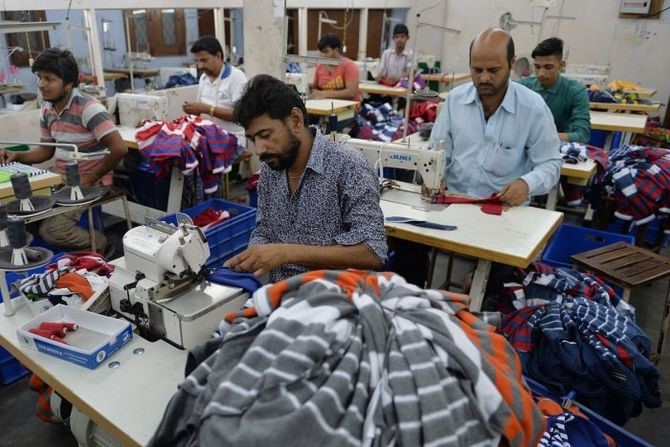
Tiruppur, the fifth largest city in Tamil Nadu and India’s main knitwear hub, contributes about 90 per cent to knitwear exports. Standing strong, this city has experienced many challenges in the past but has emerged stronger than ever – from the global financial market crash in 2008 and the Chennai High Court ruling against the city’s effluence dump into river Noyyal in 2011 to the government’s demonetization of bank notes in 2016 and the pandemic in 2020-21. Tiruppur has seen it all.
However, in 2022, it is hurting at the core. As soon as markets started reopening post-pandemic, the manufacturing hub got a blow with escalating yarn costs. For example, 30-count yarn typically cost Rs 220 per kilo but since April 2022 costs Rs 440 per kilo! This resulted in the multitude of MSMEs in Tiruppur curtailing purchase of yarn from mills and their own production lines, as they were unable to meet the expectations of foreign importers.
Raja M Shanmugam, President, Tirupur Exporters’ Association (TEA) confirmed the critical situation by stating that whilst factories ran eight hour shifts six days a week earlier, now most run four to five hour shifts and that too on alternate days. Some units are now running only four days week whilst some have temporarily suspended operations. Shanmugan estimates the decline during summer of 2022 was 40 per cent.
Government steps in
Assessing the seriousness of the looming fiscal crisis which will hurt the state, chief minister MK Stalin has requested the PM to provide fiscal aide to tide over this challenging period. Stalin pointed out due to the Ukraine war and the impending recession that is about to hit Europe and later in 2023 US, importers from these regions have become conservative with their new orders as their existing inventories are stockpiled with previous imports. He reiterated the interest of the state government to not let this successful industry fall apart over this temporary crisis and the central government can help avoid it. Stalin was confident Tiruppur’s resilient nature would see the hub weather this storm too.
Impact on the domestic front
Established domestic brands such as Lux, Amul and Dixcy that manufacture knitted innerwear and outerwear worth Rs 10,000 crores are currently dealing with a slow-moving inventory. However, that has not deterred the Rs 2,300 crore innerwear king Lux Industries to turnover its flagship brand Lux Cozi from Rs 700 crores to Rs 1000 crores by 2025. The brand has seen an uptake on e-commerce platforms such Myntra, Flipkart and Amazon – from Rs 5 crores in 2020 to Rs 8 crores in 2022. Saket Todi, Executive Director, Lux Industries stated that the company is experiencing around 12 per cent growth annually. Lux Industries is now eyeing the untapped and lucrative market for boys’ innerwear.
A silver lining
Meanwhile, latest media reports suggest, orders from global brands like Primark and Walmart have started to come in for garment makers in Tiruppur. This, after three months of continuous slide from global markets as their prices have become competitive due to fall in cotton and yarn prices.
Experts say, competing countries like Vietnam, Thailand and Bangladesh have been quoting much lesser prices compared to India. Indian exporters were facing problems over rising cotton and yarn prices in the domestic market and small and medium units who are into garments exports suffered from a liquidity crisis.
As per Subramanian, export situation has started improving a little with yarn prices in India have dropped 10-15 per cent and this benefits India more. Currency depreciation is also in India’s favor. So, there is optimism with big global brands placing orders. Tiruppur has 3,000 garment manufacturing units that employs 18 lakh people. The annual exports of Tiruppur are in range of ₹33,000-35,000 crore.
China, Asia Pacific a bright spot for apparel market growth
The apparel market in the Asia Pacific (APAC) region is growing at nine per cent a year.
Brands have a growing opportunity in resale. The resale market is growing in popularity among APAC consumers with 27 per cent of shoppers intending to purchase clothing via resale in the next 12 months.While consumer-to-consumer resale platforms pose an increasing threat to apparel brands, they should leverage this interest and consider integrating secondhand products in their ranges or launch partnerships with platforms, which could be particularly lucrative for luxury players considering the strength of the sector in APAC.
APAC fared better than most regions during the pandemic as it was cushioned by governments offering support packages and China’s continued economic growth. Online sales rose by 11 per cent during the period. The APAC apparel market is driven by urbanisation and growing regional wealth. The region’s growth is something brands can look to capitalise on. Of the top ten APAC apparel markets, China dominates and is followed by Japan, India and South Korea.
Sportswear continues to present a significant opportunity with 54 per cent of APAC shoppers purchasing sportswear for everyday use, and an equal proportion also purchasing it for exercise, training and/or sports.