FW
Indian home textile companies continue to face low orders
Home textile manufacturers are struggling to get export orders. They foresee tough times for almost six months, due to high raw material prices and high inflation in key exports markets such as Europe and the US. The US accounts for more than 55 per cent of India’s home textile exports. The home textile business has seen high inflation affecting demand from the US and Europe. High inflation has resulted in lower inventory for supermarkets in the US and Europe and retail consumer spending has decreased.
Margins have fallen significantly and even after the start of the new cotton season, the situation has not improved. Gujarat is a large manufacturer of home textiles and around 80 per cent of the production is meant for export. However, order levels are currently low. High raw material costs and low demand has affected margins of manufacturers significantly.
Once cotton prices stabilize, Indian players are expected to be in a better situation. This year, Indian cotton was more expensive than global rates so the playing field was not level for Indian manufacturers. But demand is expected to improve in the coming months and exporters are hopeful of getting the advantage of lower cotton prices with strong cotton arrivals this season.
Also, India’s share in the global home textiles market is low, so there is a huge opportunity for Indian manufacturers.
Chinese province to exhibit at ATSC
Some 20 key enterprises from Hubei will be present at Apparel Textile Sourcing Canada.
Hubei is a prominent apparel and textile manufacturing province in China. These enterprises are from weaving, printing, dyeing, cloth trade, clothing design, and manufacturing. With a marketing strategy that focuses on professional development and standardization of their products, they are preparing to expand their market share at ATSC.
For example, Shunfu Textile specializes in the R&D of denim fabrics. RoadStar is a sports brand focusing on skating equipment. Consumers expect brands to adopt digital solutions to enhance services and provide consumers with a better and more convenient experience. This exhibition is a key step for Hubei’s textile and garment industry to achieve a digital breakthrough in going global.
Apparel Textile Sourcing Canada (ATSC) will be held November 7 to 9, 2022. The exhibition has attracted more than 150 exhibitors from China, India, Bangladesh, Pakistan, Mongolia, Canada, the United States and other countries and regions. ATSC is the only international sourcing event focused on the Canadian and North American apparel, textile and fashion sectors. The product profile covers fashion accessories, men’s and women’sapparels, garments, children’sapparels, intimate wear, denim, home textile and decor, bedding and bath, leather and footwear, apparel fabrics and yarn, shawls, scarves, knits, cotton, garment accessories and many more.
India: Karnataka invites textile investors
Karnataka is inviting a series of investments in the textile sector. Manjushree Garments has committed Rs 340 crores and Shahi Exports Rs 150 crores.
The sector is expected to generate 36,457 jobs in the coming years. The state is offering incentives such as five per cent interest subsidy to mega industries and micro, small and medium units, incentives and concessions up to 100 per cent, and enhancement of wage subsidy, which varies across regions.
Four textile parks based on the PPP model are being set up in areas beyond Bangalore, for which tenders will be called shortly. Out of seven mega parks planned by the Centre one isexpected to come up in Karnataka. The state is taking a big leap in becoming the garment capital of the country since it is only the garment industry that gives back 30 per cent of its revenue to the communities.
However the industry in the state has a long way to go as all machinery, including sewing and knitting machines, is being imported. All raw materials, especially dyes, are from China. No textile machine, except spinning machinery from Coimbatore, is being made in India and huge amounts are being paid to import them.
Diesel amps up the experience with new Japan store
Diesel’s new flagship store in Japan aims to mark a new high for the brand. The store’s first floor boasts a sprawling bright space with bone-white and red walls, reminiscent of the brand’s iconic red logo hue, and galvanized metal racks that line the perimeter of the store. Sculptural shelving, modern-industrial modules and ample beanbag seating can be found throughout the open shopping area.Along with that the open see-through façade generates an inside-out feeling amplifying the retail experience.The entire space underlines elements of renewal, disruption and transformation that can be seen all through the store. The space contains reality captured elements to re-create scenes of the everyday life with the aim to generate a unique shopping experience.
The store carries Diesel's fall /winter 2022 collection, featuring a wide range of items for men and women and a selection of looks from the fall/winter 2022 runway show. The offer includes also the six looks capsule Red Look unveiled during the fall/winter 2022 runway show held last June, which are exclusive to Diesel Ginza and will be available for pre-sale.
For Diesel, Japan is one of its most important markets and Diesel has more than 100 direct operated stores in Japan.
Tremors of upcoming recession in Western world felt across global textile sector
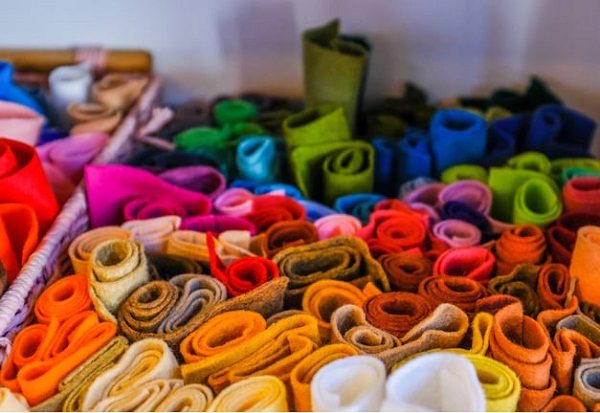
Worldwide, the textile sector is bracing itself for a challenging time ahead. Whilst industry pundits are assuring that is a short term challenge, the repercussions of the impending recession in the Western world are beginning to hurt nations that rely on textile export for revenue and employment. The pandemic and the Russo-Ukraine crises have disrupted supply chains, seen raw material prices soar and demands drop. Now, Western consumers are tightening their belts, prioritizing for food and energy and apparel then becomes a distant priority.
Bangladesh a case in point
Small and fragile economies are struggling in this new scenario and Bangladesh is a good case study. Readymade garments and textiles are lead export items and the local textile industry is stressed. Global recession and inflation means drastic drop in demand for clothes; it also affects affordability of raw material, current trade policies unfavorable towards its industry and internal security concerns is playing havoc.
Around the world millions of textile and garment workers have been affected with manufacturers either operating at lower capacity or just closing their units down. Predictions state that loss of jobs within one of the largest sectors will be followed by increase in local crime. There is optimism that this crisis is a short-term one and recovery could start as early as the third quarter of 2023 but Bangladesh has major challenges in restoring normalcy. A silver lining is global home textiles is growing at an annual rate of 3.51 per cent and this growth is expected to continue up until 2025 – Bangladesh is now considering diversifying into this segment to help raise its sinking sector.
India, Pakistan face similar challenges
In India, textile exports face challenges like its neighbors due to a decrease in demand from traditional buyers in the West and China. However, India enjoys a comparative advantage in terms of skilled manpower and in cost of production, relative to major textile producing countries. There was an expectation that India would be able to seize the opportunity when China shed its textile exports but unfortunately, India missed the bus as Bangladesh and Vietnam were quicker to respond. The Indian government has been proactively encouraging growth in this sector with many beneficial policies. It allows for 100 per cent FDI in the textile sector and introduced production-linked incentives schemes worth $1.44 billion for manmade fiber and technical textiles over a five-year period.
Since Pakistani textiles are mainly exported to China, US, Germany and Spain, it is beginning to feel the backlash of the high inflation and the impending recession about to hit Western importers. Meanwhile China has also steadily declined importing textiles from Pakistan. To add to its woes, domestic production of raw material like cotton has been decreasing and the lack of US dollar reserves makes it difficult for manufacturers to import cotton. More than 100 mills across Pakistan have shut operations as the sector faces an existential crisis. Additionally, small businesses are finding it extremely hard to get credit and the high premium for securing credit is raising operational costs significantly. Due to the huge devaluation of its national currency, Pakistan is unable to import modern machinery for the sector to diversify towards home and smart textiles.
Overall, governments and manufacturers are coming together to find solutions to ride out this crisis as it involves valuable dollar earning and employment. With many innovative solutions being worked on and the hope 2024 will see the end of the recession about to hit the West, things will hopefully recover, albeit slowly.
Winter wear market on a new high, retail and online sales expected to grow: Study
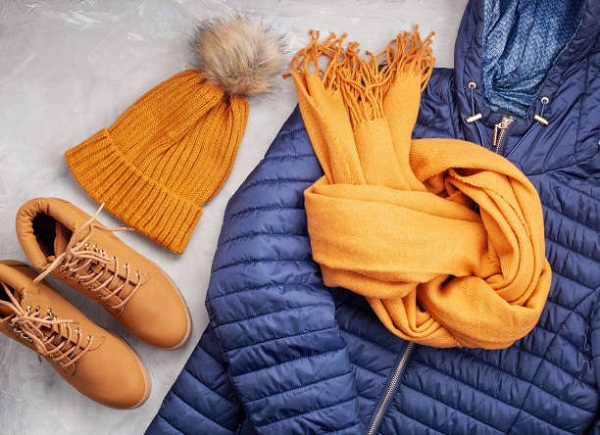
The global winter wear market is always a lucrative one because as temperatures start to drop, sale of most apparel brands through its retail and online channels keeps rising. Not only the climate change needs a whole new wardrobe, but the festive season of Christmas in Europe, Thanksgiving in America and the wedding season in India among others also makes people splurge on occasion-specific garments during the winter months. c As per latest Future Market Insight study, the global winter wear market is projected to grow at a CAGR of around 5 per cent through 2031, surpassing a valuation of $280 billionin 2020. To reduce the volatility of raw material prices, restrain the rise of the market’s volume and satisfy rising demand for premium brands, manufacturers are limiting their efforts on premiumizing their winter wear brands.
When the temperatures start to drop, sales through retail and online channels are projected to grow. Gap, for example, introduced the ‘Hill City’ menswear brand in 2018 to meet increased demand for premium men’s gear that combines highly technical fabrications, style, and high performance throughout the winter months.
Focus on innovation for sports brands
Winter sports as a cold-weather recreation sector is a huge profit-making segment for many brands as the younger generation in their fitness journey and more disposable incomes expect trendy high branded winter wear. The European and the US economy earns billions of dollars each year from winter recreational sports such as hiking, fishing, snow skating, ice fishing and outdoor ice hockey which continue through the long months of low temperatures, and plenty of snowfall. Some of these sports are now catching on in some states of North India as well which has high mountains, although even the general winter clothing industry of thermals and sweaters does extremely well.
To cash in on the winter sports segment, some brands such as Oros Apparel in November 2018, had released Solarcore insulation, a space-based insulation material that makes one of the warmest winter jackets in the market. The company cleverly utilized aerogel material technology, which was originally designed for spacesuits for NASA astronauts into making smart winter wear gear for young people.
Wellness is the key focus this winter
With wellness being the main focus after Covid years, almost all age-groups are now participating in winter activities that includes games and fun in the snow which has increased the demand for a winter portfolio of woollies, jackets, shoes, gloves, socks and many other products. Just like long walks, trekking and picnics in the sun were the highlight in summer, bracing the cold with appropriate clothing while being active is the focus for all age-groups.
The study reveals, stakeholders are focusing on a variety of marketing methods, including celebrity endorsement, product premiumization, marketing campaigns, events, and developing digital presence to engage with customers directly. The market for winter clothing will probably expand faster in the near future as a result of these factors.
The study estimates, the market for winter wear’s jackets and coats accounts for a rather high value share. And throughout the projection period, the category is anticipated to maintain its dominance. In North America, the US is expected to have a significant share of 83 per cent of the market.
The two Covid years made consumer purchasing behavior of winter clothes more thoughtful rather than impulsive and made them suffer losses. However, there is always light at the end of the tunnel as this same pandemic has now increased the profits of winter wear brands as there has been a greater shift to the ease of online shopping along with a greater urge to be out in the snow this winter of 2022.
AEPC encourages sustainable processes
The Apparel Export Promotion Council has launched Apparel Industry Sustainability Action 2022-2023.
The aim is to encourage textile companies which are working with sustainability as the country’s textile and apparel industry can reduce its footprint on the environment and can bring economic viability through sustainability of its processes.The initiative aims at evaluating the existing status of the Indian garment industry, encouraging wider penetration of these measures among the micro, small and medium units, hand holding these units with demonstrations and solutions, enhancing the brand visibility of sustainable companies on a global platform, and brainstormingthe necessary policy focus towards a wider and smoother adoption of sustainability measures among Indian garment units. AEPC will encourage sustainable companies which will be showcased on the dedicated sustainability social media platform for wide publicity and will finally culminate as Sustainability Awards. The award-winning Indian companies will finally get an opportunity to showcase their collection in a specially curated Sustainability Corner of India Pavilion in Pure London, UK, and Who’s Next, Paris, the world’s biggest fashion hub.
The textile industry is one of the major polluting industries, accounting for four per cent of greenhouse gas emissions and 20 per cent of industrial water pollution globally.
Monforts to exhibit at Igatex
Monforts will exhibit finishing technologies at Igatex, Pakistan.
These include Montex stentering equipment, Monfortex sanforizing units and Thermex dyeing ranges. Monforts will emphasise the robustness and versatility of the Montex stenter for essential processes such as drying, stretching, heatsetting and coating. Monforts has also achieved considerable success in Pakistan with its Econtrol dyeing system – an effective and established dyeing process.
More than 40 Thermex continuous dyeing ranges have been installed in Pakistan in recent years and operator training on the Econtrol process by sophisticated technologists is an additional service. The Econtrol pad-dry process has a number of immediate benefits. Compared to the common pad-dry-pad-steam process, no salt is used and no steamer is required for a separate fixation step. Compared to the pad-dry-thermo fix process, no urea is used and no smoke or deposits are generated, and unlike with the cold pad batch process direct feedback of the dyeing results ensures no batching time is necessary and guarantees good reproducibility from the lab to bulk production. Waste water treatment is also improved by this technology. Monforts provides a range of further resource-saving and energy recovery options tailored to each individual line installation.
Igatex is a textile machinery exhibition which will take place in Pakistan, December 1 to 4, 2022.
Portugal textile exports up 16 per cent
Exports of textile products from Portugal are 16 percent higher than they were the previous year.
Shaken in the last 20 years by competition from Asia, Portugal’s textile industry has found its footing again and become a major player, supplying firms not just in Europe but also in the United States.The industry has benefited from its flexibility and inexpensive labour along with a spirit of innovation focused on limiting damage to the environment. The textile industry’s advantages are reactivity and the capacity to adapt. Firms have the ability to use new techniques for sustainable output without compromising on aesthetics.
There is also increased demand from firms in Germany and Italy as well as in the United States. Portugal has the advantage of a workforce that remains competitive by offering quality products at reasonable prices. Portugal’s textile sector has made a dramatic comeback. The sector has resumed hiring.
Following the pandemic, which led to delays in deliveries, the industry prefers to use supply chains that are closer to home. Companies have understood that they need to find solutions and partners to reconcile sustainable development with competitiveness. However, the sharp gas and electricity price increases caused by the war in Ukraine penalise a sector heavily dependent on energy.
Inter Ikea faces fall in pretax profit
Inter Ikea had a 45 per cent fall in pre-tax profit for the year 2022 up to August. The fall reflected higher raw material and transport costs as well as the closure of its factories in Russia. Operating profit margin narrowed to four per cent from seven per cent. Inter Ikea is the owner of the world's biggest furniture brand.
Retail sales hit new records in the year, but that was thanks to price hikes, not volume growth. Inter Ikea’s annual sales volumes to retailers fell by seven per cent to eight per cent, half of that due to pausing of most Ikea operations in Russia in March.
Inter Ikea may raise prices to retailers again later this year if input costs rise further, but would again not pass on all the costs. Over the past two years, Inter Ikea has absorbed a billion euros in cost inflation itself. Though purchasing costs have now topped out at an elevated level this has not happened at the speed and magnitude hoped for. With continued high costs and falling consumer confidence, Ikea is bracing for another tough year. Promotion campaigns - something Ikea usually doesn't do - and lower prices on some popular products would now be the key to attracting cash-strapped shoppers.