


FW
Abercrombie posts surprise quarterly profit
Resilient demand has led to a surprise quarterly profit for Abercrombie & Fitch. So the American apparel retailer is optimistic about the holiday season.
The company’s shares that lost nearly half of their value this year were up about 19 per cent after the company also reported third-quarter sales above Wall Street estimates, defying inflation’s impact on non-essential spending. So the company expects the fourth quarter to mirror more pre-pandemic holiday.
Abercrombie & Fitch’s attempt to revamp its inventory to get rid of casual and athleisure apparel that have fallen out of fashion and bring in new styles have attracted wealthier shoppers who remain unperturbed by decades-high inflation. Abercrombie expects fourth quarter net sales to fall about two per cent to four per cent in fiscal 2022, compared with analysts’ average estimate of a 6.3 per cent drop.
Abercrombie & Fitch has invested in loyalty programs and developed its direct-to-consumer and omnichannel capabilities. All of these steps have contributed to an improved top and bottomline. The company undertook a massive rebranding initiative in 2014, moving away from the reputation it had built over the past decade. The company’s store count has been reduced; stores now have a smaller footprint with larger fitting rooms, and are integrated with technology.
Fifa tees come from India’s Tirupur
Tirupur has shipped T-shirts, tracksuits, and caps to Qatar for the Fifa World Cup.
Some 17 garment consignments have been dispatched to Doha from Kerala. This export has helped Tirupur’s garment exporters and brought them some cheer.
Tirupur’s apparel exports fell 21 per cent in October 2022 from October 2021. Of this, knitwear exports, which Tirupur is known for, fell almost 40 per cent. And this was the third straight month knitwear exports contracted. Average capacity utilisation at garment exporting units in Tirupur is 30 per cent now. The US, EU and the UK account for 85 per cent of shipments from Tirupur. With high inflation in these economies, clothing is not a priority for consumers now. Further, with buyers saddled with huge stocks, they are postponing delivery. This has resulted in stocks piling up at the producers’ end.
Tirupur in Tamil Nadu started out as a knitwear cluster but has since completely changed into the nation’s center for worldwide textile manufacture.By becoming a truly sustainable global apparel-making center, Tirupur has created a precedent. Currently, India's knitwear cluster has undergone a complete transformation into a major global center for the production of garments.For the last ten years, the cluster has been strictly pursuing the ZLD model and along the way has also taken up multiple projects aimed at reducing its carbon footprint significantly.
Indian garment exports set to cross 30 billion dollars: CareEdge Ratings
India’s readymade garment exports are expected to cross 30 billion dollars by 2027. So says CareEdge Ratings.
Trade agreements with key nations and the declining share of China in the readymade garment market are likely to benefit India as its exports are expected to grow at a compound annual growth rate of 13 per cent.
Having adequate raw material and a large labour workforce, India is well poised to grab the opportunity in the global readymade garment market. India has a very good presence across the cotton textile value chain from fiber to fabric, while it has a limited presence in manmade fiber, which is expected to get a boost by the expected free trade agreement with the UK and the PLI scheme.
Further, having a presence across the entirevalue chain reduces transportation costs and lead time, thereby providing a cost effective solution to customers.
So by 2027 India can have a 4.9 per cent share in world garment exports as against the current share of around three per cent.India’s share in global garment exports has remained sluggish from 2017 to 2021. Countries such as Bangladesh and Vietnam have captured a large part of China’s declining share in global garment exports.
ICAC to have virtual meeting
ICAC will have a virtual meeting on November 29 to December 1, 2022.
The theme will be regenerative agriculture. Because the ICAC is of the opinion that research is the lifeblood of the cotton industry’s development, a session at every plenary meeting is dedicated to a technical topic.
For the upcoming plenary meeting, that topic is how regenerative agriculture can contribute to a sustainable cotton industry. There will be presentations on soil organic carbon and soil health and improving cotton’s sustainability in the tropics. After the presentations are complete, there will be a discussion regarding the topic of the 2023 technical seminar session.
Formed in 1939, the International Cotton Advisory Committee (ICAC) is an association of cotton producing, consuming and trading countries. It acts as a catalyst for change by helping member countries maintain a healthy world cotton economy, provides transparency to the world cotton market by serving as a clearinghouse for technical information on cotton production and serves as a forum for discussing cotton issues of international significance.
In addition, members can take advantage of the ICAC’s global network of cotton researchers, whose expertise covers the supply chain from farm to textile manufacturing, and have free access to its cutting-edge technologies like the voice-based app and virtual technology cotton training program.
Nigerian textiles need attention
The textile industry in Nigeria is in a bad state. Smuggling is a major problem. Textile workers face job losses and the industry is unable to operate at optimal capacity. There is a gap between official policy pronouncements and implementation.
The Cotton, Textile and Garment (CTG) fund set up in 2008 hasn’t had much effect. While some of the policies such as the ban on textile imports between 2003 and 2007, the introduction of the Export Expansion Grant (EEG), and the textile and cotton intervention funds did bring succour to the industry there has been a reversal of policies by successive governments rather than strengthening and sustaining the policy measures.Money has been wasted on bailing out power companies.
Unless clear pathways for industrialization have been established the country will continue to witness a high level of unemployment and restiveness. Employment generation and employee retention, as well as poverty eradication, largely depend on the amount of value addition through industrialisation and the degree of diversification of the economy. The textile industry remains the key driver of sustainable jobs and development for most national economies of developing nations like Nigeria. Tax waivers for textile-based industries can encourage investment and encourage fair competition.
Pure London to showcase elegant collections
Pure London will be held in the UK, February 12 to 14, 2023.
This is the UK’s leading fashion buying event and will reveal an inspirational line-up of brands and designers. Premium Womenswear will showcase elegant and high-end collections.Purely Sustainable will present ethical and sustainable brands who are leading the industry in this arena. British brand Fika is a slow-process fashion range blending sustainability, community and consciousness.
The collection is designed to feel amazing and empower women so they can enjoy the good things in life.A dedicated space for all things intimate, Pure Body will be home to chic athleisure collections, lingerie, swimwear, hosiery and nightwear from vibrant international labels.
From functional everyday styles to delicate luxury and high-performance sportswear, Body will cover it all.Advocating the power of personal transformation through yoga on and off the mat, Karai Yoga,a super-luxe premium yoga brand,will offer luxury contemporary yoga wear for yogis or aspiring yogis looking for a distinct and unique image that stands out with distinctively magnificent high shine and dazzling vibrant colours.
Gen-Z is the destination for fun, trend-led and ready-to-order fashion and Novaencapsulates this perfectly. A mix of innovative and wearable designs, Nova is a one-stop-shop with a distinctive style.
India: SIMA suggests plan for increased cotton production
Southern India Mills Association (SIMA) has a plan for increasing annual cotton production from five lakh bales to 25 lakh bales.
The plan suggests ensuring adequate availability of quality cotton seeds, especially extra longstaple cotton, capable of giving higher productivity and with a fiber quality matching international standards.
The master plan also recommends adopting global practices in agronomy, mechanized harvesting and water conservation to reduce the cost of cultivation, increase productivity and meet global sustainability norms.
It also suggests strengthening textile processing, the weakest link in the entire textile value chain, with sustainable and competent technology. Textile processing has become a challenge in Tamil Nadu as the zero liquid discharge technology has no solution for sledge / mixed salt disposal.
Tamil Nadu’s textile and clothing industry is predominantly cotton-based and for a third of India’s textile business, 45 per cent of the spinning capacity, 70 per cent of the knitted garment capacity, 40 per cent of the home textile manufacturing capacity, 22 per cent of the powerloom capacity, 12 per cent of handloom capacity and is the only state having a presence of the whole textile value chain. The actual annual cotton requirement of the textile industry in Tamil Nadu is around 120 lakh bales while the state hardly produces four lakh to six lakh bales.
Lenzing tops Canopy’s Hot Button Ranking 2022 for third time
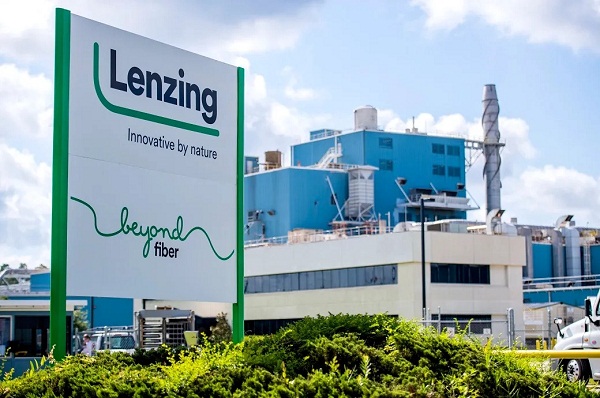
Austria-based Lenzing Group is spinning waves in the textile industry. Recently it emerged in top position in the Hot Button Ranking 2022 of Canadian non-profit organization, Canopy, which works collectively with some of the world’s largest fashion and beauty brands to bring forest-saving solutions from the margins to the mainstream. This global ranking standard of Canopy evaluates the world’s best environment-friendly cellulosic fibre manufacturers.
Focus on sustainability and responsible wood and pulp sourcing
It's a hat trick for Lenzing, as it confirms its leading role in areas of sustainability and responsible wood and pulp sourcing for the third time. The company manufactures environment-friendly high-quality wood-based viscose, modal and lyocell fibers and filament yarn, used in all segments of the textile industry such as clothing, home textiles and technical textiles, as well as the non-wovens industry.
Lenzing now proudly continues to wear its ‘green shirt’ labels again as, over the last five years, it has transformed more than half the viscose supply chain- known as green shirts -- at low risk of being sourced from endangered forests around the world. Ranking first in Canopy’s evaluation of the world’s 34 largest producers of cellulosic fibres relating to their sustainable wood and pulp sourcing as well as their focus on alternative raw materials is a huge achievement indeed for Lenzing.
Fully circular economy by utilizing waste
Lenzing has been focussing on creating a fully circular economy by utilizing waste in all aspects of its core business and developing circular solutions together with potential partners with the concept of a “We give waste a new life every day.” And to achieve this further, it is now cooperating with the Swedish pulp producer Södra and two global market leaders who are well-known for actively promoting the circular economy in the fashion industry are joining forces to better solve the global textile waste problem by making fibres from post-consumer textiles.
Lenzing is well-known in the textile industry for lyocell fibres made from 30 per cent recycled cotton waste. It plans for a greener future will put the textile and knitting industry into a spin. It plans to launch lyocell, modal and viscose staple fibres with up to 50 per cent recycled post-consumer content on a commercial scale by 2025 as well as develop a new circular business model by closing the loops for post-consumer waste. By then, it also plans to have secured more partnerships with 25 key supply chain companies which will further promote is a basic concept of climate protection and circular economy.
The Lenzing Group’s USP of high-quality biodegradable and composite fibres are used in many kinds of garments such as versatile denim and high-performance sports clothing and hygiene products and agricultural applications. Their business model offers solutions to help redirect the textile sector towards a closed-loop economy that is traceable and accountable from the beginning to the end. The company is focussing on accomplishing the targets of the Paris Climate Agreement and the “Green Deal” of the EU Commission to achieve an overall global aim of a zero-carbon future for the apparel industry.
Economic slowdown in the West will affect global apparel exports in 2023: Wazir Advisor

Wazir Advisor’s latest report, ‘Apparel Trade Scenario in Key Global Markets and India - Nov 2022’ reveals India’s garment export was not up to the mark at all, having suffered a decrease of 24 per cent compared to October 2021. However, on YTD basis the exports are 11per cent higher than 2021. However, keeping the high inflation in mind, there is no volume growth over 2019. The report on key markets viz: India, Japan, US, UK and the EU, covers a wide-range of topics related to the global apparel sector.
Slowdown affects consumer sentiment
The current economic slowdown and inflation has led to curtailed consumer buying and that is the main reason for this downgrade. Although India did gain 8 per cent in exports to the US, it lost 3 per cent in exports to the UAE and 1 per cent to the UK. Between January and September 2022, India’s overall apparel exports worth $12billion was largely to the US with 35 per cent share, the UK had 9 per cent share, the UAE 8 per cent, Germany 6 per cent, France 4 per cent and others made up 38 per cent.
With Europe already in inflation-ridden crisis and the UK slipping into recession and predictions that the US may follow will definitely affect garment exporters in 2023. India may well look at the Eastern markets like its neighbor Bangladesh. The proof lies in the fact that Japan’s apparel import as of August 2022 stood at $2.8 billion which was 23 per cent higher than August 2021. Last year, India exported apparels worth $141.37 million.
China sees a drop in the US market
In the US market, China has experienced a sharp decline in garment exports as its share steadily declined by 8 per cent since 2019. Vietnam and Bangladesh are the beneficiaries, experiencing a growth of 3 per cent each. India gained 1 per cent. Looking at the US market in September 2022, apparel imports were valued at $9.6 billion which is 18 per cent higher than in September 2021. On a year to date (YTD) basis, the imports are 35 per cent higher than 2021.
Monthly apparel store sales in the US market in October 2022 were estimated $17.3 billion, 2 per cent higher than October 2021. On YTD basis, sales are 9 per cent higher than 2021. Apparel inflation remained in the range of 5.5 to 8 per cent during 2022, which reveals low volume growth.
China, India lose ground in Europe market
The EU presents an interesting pattern as between 2019 and 2022, China held steadfast with 29 to 30 per cent share. India too, though small, has held steady at 5 per cent. However, both China and India haven’t seen growth whereas Bangladesh has grown by 3 per cent with 23 per cent share in 2022. In the January-August period of 2022, Bangladesh clocked €14.35 billion compared to €8.85 billion in the same period in 2021. With Bangladesh poised to focus on artificial fibers, it is predicted to grab more of China’s share in the EU in the years to come.
Turkey and Vietnam are in a similar situation as are China and India – steady but no growth. While EU’s import figures might look impressive, the high growth figures are due to a low base value and inflated prices. EU’s apparel imports in September 2022 were approximately 42 per cent higher compared to the same period in 2021. The EU basket of apparel imports from January to August 2022 stood at €73. 4 billion, with China at 29 per cent, Bangladesh 23 per cent, Turkey, India and Vietnam at: 12, 5 and 4 per cent, respectively; while others clocked in 27 per cent.
UK shows a different pattern
The UK market shows a slight difference as China, Bangladesh and Turkey increased their exports by 5, 4 and 3 per cent respectively. The UK’s apparel import basket for January to August 2022 stood at 15.4 billion with China’s share at 24 per cent, Bangladesh at 19 per cent, Turkey 10 per cent, India and Italy at 7 and 5 per cent respectively; others stood at 36 per cent. In terms of apparel sales, the year to date performance in the UK is 23 per cent higher and in October alone, it was 3 per cent higher than last October at a total value of £3.5billion. Overall, the growth of apparel sales, imports and exports look healthy but the uncertainty that might befall the world might have a different story.
Bangladesh: Value addition in garment exports drops
Value addition in readymade garment exports of Bangladesh have dropped to 51 per cent in the first quarter of the current financial year. The sector had enjoyed a 64 per cent value addition during the first quarter of the last fiscal. The fall is mainly because of a rise in raw material import cost, especially yarn, which has almost doubled in price but buyers had not increased product prices in line with that.
Exporters are worried about value addition in the next quarter and the business scenario as almost every manufacturer is running their factory at reduced capacity, resulting in increased overheads. If they can run factories at full capacity that may help to regain the value addition as cotton prices come down. Where they would barely make a one dollar profit on a dozen T-shirts, now they have to pay an additional dollar as diesel cost, which hurts profits further.
The industry is passing through a challenging time due to the ongoing Russia- Ukraine war. If they export the same value as last year, the overall industry export growth might be negative as they have to export a higher quantity of products to reach last year's value.











