


FW
Burberry sales in China plummet
Burberry’s sales in China are down 23 per cent. Covid-related disruptions in mainland China largely offset a stronger performance in Europe.
Burberry’s like-for-like sales in Europe, Middle East, India and Africa grew 19 per cent. Europe in particular continued to perform well, driven by strong trading over the festive period, and leather goods delivered another quarter of double-digit growth globally.
The company, known for its black, red and camel check, is pleased with its performance overall and remains confident of achieving its medium-term targets despite the tougher macro-economic environment. v
British luxury brand Burberry has an extraordinary legacy, a unique British heritage and a very strong platform to build on. The strategy also aims at refocusing on Britishness and strengthening the connection with British design, craft and culture.
In January 2022, Burberry’s higher quality business saw its full-price sales rise 26 per cent in the quarter versus comparable 2019 levels, while its total same-store sales slid three per cent. Burberry has been pursuing a fusion between social media celebrities and the blockchain, including the launch of NFTs in the gaming world. Burberry’s ultra-savvy marketing drives are helping the company win new style-hungry customers across the world, desperate to get their hands on a slice of the brand and willing to pay full price for the privilege.
Officiana joins recycling program
Officina39, a chemical company with a 30-year experience in research and chemical application in textiles, was part of the third edition of CirculART.
CirculART is an initiative that sees companies, artists and fashion designers working together with Cittadellarte – Fondazione Pistoletto to show how new balanced forms of production, design and sharing can be explored through a careful choice of materials and of sustainable supply chains.
The key concepts underpinning this project are reducing the consumption of raw materials, reusing raw materials, and recycling. CirculART proposes a new link between fashion and art, engaging both in a conscious and innovative combination of sustainability, sensitivity, beauty and union.The project links territory and production factories, bringing together actors from the different sectors making up the textile supply chain that work on the basis of a circular economy with companies that have chosen to embrace the ideal of sustainability and develop an innovative and avant-garde business model.
CirculART benefits from the active participation of several companies of excellence operating in the field of sustainable fashion. Among these are Achille Pinto, manufacturer of textiles and textile accessories for international fashion brands, Albini, Europe’s largest manufacturer of cotton fabrics for shirts and Erica IndustriaTessile, a leading company in the creation of textile prints, original and customised designs.
India: Alok Q3 sales down 19 per cent
For the third quarter Alok Industries’ net sales fell by 19 per cent as against the same quarter last year.
Total expense decreased by nine per cent. Raw material consumed was down 22 per cent year on year.Finance cost was down two per cent year on year. Employee benefit expense was up five per cent year on year.
Alok Industries is primarily engaged in the business of textile manufacturing, including mending and packing activities. Alok has operations in both the cotton and the polyester value chain. It has four manufacturing locations. The range of products includes fabrics, garments, embroidered fabric saris and terry towels.
Alok was incorporated in 1986 and began activities with the manufacture of texturised yarn by setting up manufacturing facilities at Silvassa. The company has expanded the texturising capacity to 30 machines, knitting capacity to 40 machines and weaving capacity to 170 air jet/ rapier looms.
Alok has developed an innovative yarn using its expertise in polymer-based yarns. The manmade fiber can compete directly with the hand feel of a natural cotton fiber. The product has been designed to help manufacturers and retailers decrease risk and volatility driven by single source cotton. The collection is made from yarns that weave into a fabric the feeling of cotton.
EU apparel imports up 24 per cent, B’desh largest growing supplier
The European Union’s imports of apparel increased by 24 per cent from January 2022 to October 2022.
In the same period apparel imports from Bangladesh rose by 41 per cent compared to the same period in 2021. Bangladesh is the second largest apparel import source for the EU. Imports from China rose by 22 per cent. China is the largest apparel supplier to the EU with a 29 per cent share. Imports from Turkey grew by 12 per cent. Imports from India grew by 23 per cent. And the EU’s imports from Cambodia, Vietnam, Pakistan, Morocco, Sri Lanka and Indonesia increased by 39 per cent, 33 per cent, 28 per cent, nine per cent, 18 per cent and 31 per cent respectively.
For the first nine months of 2022, the EU’s apparel imports grew by 25 per cent. Obviously, among the top apparel suppliers to the EU, Bangladesh attained the highest growth rate. Considering the war and the ongoing global economic situation, Bangladesh is in a better position than most of its competitors. Bangladesh is always at the top of buyers' choice as the safest sourcing destination. Moreover, Bangladesh is now at the top as a sustainable producer with a better working atmosphere and an improved eco-friendly industry.
Brazil sees huge cotton production
Cotton production in Brazil is expected to increase by 16 per cent. This is the result of an increase in productivity per hectare at 13 per cent and an increase in area by two per cent.
For the time being, the weather has been favouring both the planting and the development of the crop. Cotton producers, however, remain focused on higher production costs, especially of fertilizers. At the beginning of the crop season and due to higher cotton availability, the pace of trade is expected to increase. Some purchasers are already interested in guaranteeing the product of the next crop through contracts.
Consumption in the 2022-23 season is expected to be up two per cent from 2020-21.Ending stocks in Brazil were 1.34 million tons in December 2022, the lowest since 2018-19 and may sustain prices until the beginning of the next season. In December 2023, on the other hand, ending stocks are expected to be at 1.614 million tons, the highest since 2019-20. Shipments from Brazil from August 2022 to July 2023 are expected to be up seven per cent compared to the season before and the third highest in history.
However the cotton area in Brazil may be affected by the possible downturn of the world economy because of inflation and Covid cases in China.
Demand for sustainable kids clothing grows in India riding on celebrity lifestyles
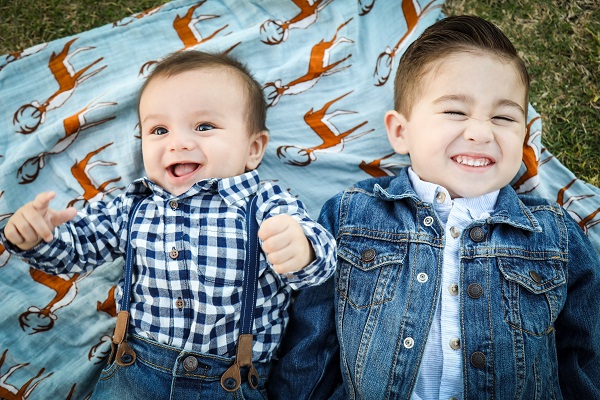
As the fastest-growing segment in India, children’s clothing is mimicking the eco-consciousness that has started establishing itself within adult clothing. Targeting new-born to 14 year olds, this clothing segment is mirroring the preference of parents who are not only supporting the green planet movement but also hoping to inculcate their values in their children.
Growing demand for organic, sustainable clothing
Today, many children’s clothing brands in India are branching out into sustainable and gender-neutral fashion in India. For a start, the buzz in children’s wear is organic clothing - the movement for babies is slowly and surely gaining traction in the fashion industry for toddlers, children and teenagers as well. Designers are attempting to give as many organic fashion choices for children’s apparel as feasible.
Organic children’s clothing that is both comfortable and fashionable does not interfere with a child’s health or activities in any manner. Children’s clothing lines and labels are popping up all over the country as these are all-natural, eco-friendly clothing brands that will not harm tender skins and create a feel good factor for responsible parents. For example, Bollywood star Alia Bhatt cashed in on the emerging trend to launch her sustainable brand Ed-a-Mama that met success with its eco-conscious and affordable children’s fashion. Sustainable garments are made from organic fibers – free of pesticides and synthetic fertilizers, and causing zero harm to mother earth – that are hard to source. This is why sustainable clothes tend to be more expensive as the cost is passed on to the consumers. Ed-a-Mama sources all its sustainable fibers from India and can therefore, price itself like a fast fashion brand.
Big brands foray
The sustainable fashion industry is currently valued at around $24 billion in India. And experts say, this is just a fraction of the industry’s full potential. As more Indians embrace sustainable fashion, the industry will only get bigger and better, including children’s fashion.
Major market players for banded kids’ apparel including companies such as Ruff Kids, Ruff Baby, Gini & Jony, ZAPP, Li'lTomatoes, and Weekender Kids, are expected to reach revenue of Rs 10 bllion by the end of 2022 and all of them have diversified into sustainable, durable and trendy lines.
Instagram and celebrities have fuelled growth as the social media savvy Indian parents have been a boon to brands trying to establish their sustainable, gender neutral and cruelty-free children’s clothing. Influencers and celebrity parents are at the forefront of this movement, inspiring responsible consumption and influencing fashion trends that are at par with international trends.
As Indians remain start struck, celebrity Bollywood parents are propelling kids fashion these days. Power couple Saif Ali and Kareena Kapoor started the craze with their sons as paparazzi detailed every move of their two boys. The styles and brands they sport become overnight “must-have” for a huge population of Indian parents. When Bollywood parents advocate sustainable clothing, it is natural that the demand for natural, organic textiles are high on value. The gamut of such fashion requirements run from fabric, texture, comfort to ecological impact.
As children become more fashionable and follow social media led trends, brands are trying their best to cater to niche tastes with capsule collections, just to ensure they can get them all under their brand fold. During most of the year, the preferred fabric for children’s clothing seems to be cotton and linen as man-made fibers that can convince parents of their authenticity are yet to make a meaningful appearance. In winter, natural wools and cashmeres are slowly inching out synthetic-fiber padded winter wear.
Global denim markets continues to stride ahead post-pandemic as demand grows
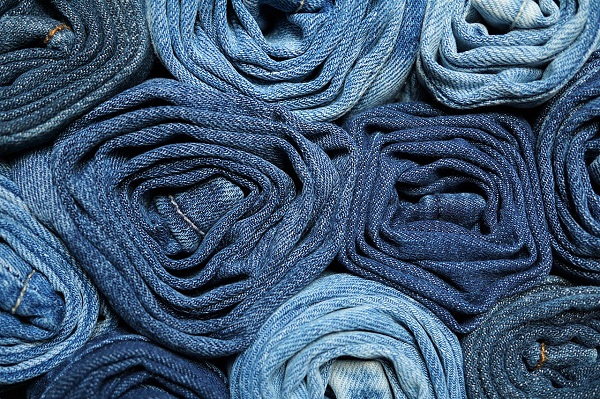
After two difficult Covid years of dressing down days, the fashion resilience of denim is being felt once agin. Every year, over two billion jeans are sold globally and apparel manufacturers are now focussed on cashing onto this lucrative segment in post-pandemic days.
It is expected by 2023, the size of the market for denim jeans fabrics will reach a stupendous 4,541 million meters as demand sores globally. In the five years between 2018-23 the market is expanding at 4.89 per cent annually from 3,576 million meters in 2018. Denim is an apparel segment that shows its true potential when it comes to export diversification with other apparel.
Analysts say, Christmas and New Year holiday season has seen a major revival of fashion resilience in the US markets, which will improve the entire global denim market. Global jeans market is expected to have a CAGR of 6.7 per cent during the forecast period from 2020 to 2025.
Focus on new business strategies and markets
Rome was not built in a day and thus the bigger denim manufacturers will need to adapt new business strategies, such as geographical and capacity expansion, M&A, and R&D, to boost sales. They need to strategically focus on establishing new market opportunities by entering newer and niche markets in the garment industry that are still in their developmental phase.
As per an Apparel Resources report, Indian domestic market for denim has been maintaining an average CAGR of 8-9 per cent for few years and is expected to reach the $12.27 billion by 2028. Unlike Europe, the US and other western countries where consumption per person average jeans is very high, in India it is far lesser with consumption of around 0.5 jeans per person as traditional dressing is more popular in most geographical segments.
To even reach the potential of one pair of jeans per person will require another 700 million pairs of jeans to be sold annually and this showcases the massive growth opportunities in the country. No wonder, global brands are rapidly increasing their presence in metros and small cities.
US leads the way
The US is currently the largest market, with India likely to experience the most growth, followed by China and Latin America. It is expected the US market will be around 4,313.56 million meters in 2022 and 4,541.05 million meters in 2023 as between 2018 and 2023, the average annual growth is expected to be 4.89 per cent. India is striding ahead as despite being smaller than China, Latin America and the US its market is expected to grow at a fast rate arriving at 419.26 million meters in 2023 from 228.39 million meters in 2016.
In the global denim market China, Bangladesh, Pakistan and India are key denim-producing countries. In denim export segment in 2021-22, Bangladesh with over 40 mills producing 80 million yards of denim fabrics remains at the top position in the US markets. This was followed by Mexico and Pakistan as the third largest supplier. Vietnam was in fourth position after it shipped denim items worth $348.64 million, up 25.12 per cent year-on-year.
Denim today has come a long way in the fashion segment as they appeal to everyone with different varieties of stretch to bio-polished, innovative colours from vegetable-based, indigo to sulphur dyed, fibre blends with the most recent being softer, lighter, comfortable silk denim for all seasons and a variety of textures, drapes and styles focussed on the athleisure and wellness current trend. Denim is not just a fashion apparel, it’s an everyday symbol of style and a daily essential and a must-have for almost everyone.
Turkey sees US as a promising market
Turkey’s ready-to-wear exports to the USA were up by one per cent in 2022.The target is to increase this to two percent.
But the European Union is by far the biggest market for Turkey’s ready-to-wear exports. America ranks second. However since recession threatens the EU market, Turkish manufacturers and exporters want to have a stronger presence in the US market.
US brands depended on the Far East for apparel products before the pandemic. But now, in the face of costs and increasing risks, hey are looking for new sources and Turkey has positioned itself as a strong alternative to Far Eastern manufacturers since the Turkish fashion industry, which has been producing for important brands in Europe and the US for years, has flexible production capability and has a strong design infrastructure.
From January 2022 to December 2022, Turkey increased exports of ready-made clothing by 4.8 per cent compared to the same period the previous year. Turkey’s apparel exports grew by around five per cent from January 2022 to November 2022. Export revenues earned by Turkey in the first eleven months of 2022 are the highest ever and the growth has been driven by soaring demand from Europe amid supply chain bottlenecks and soaring shipping costs.
World may see recession this year, says World Economic Forum
A global recession is likely in 2023.So says the World Economic Forum. The prospects for growth in 2023 are bleak, especially in Europe and the US.
The global economy is in a precarious position. The current high inflation, low growth, high debt and high fragmentation environment reduces incentives for the investments needed to get back to growth and raise living standards for the world's most vulnerable. Globally businesses are expected to cut costs significantly in response to economic headwinds. Geopolitical tensions may continue to shape the global economy. Further monetary tightening is expected in the United States and Europe.
This wider economic shift will likely reverberate through trade, investment, labour and technology flows, creating myriad challenges and opportunities for business. Leaders, says the World Economic Forum, must look beyond today’s crises to invest in food and energy innovation, education and skills development, and in job-creating, high-potential markets of tomorrow.
One positive signal is that supply chain disruptions are not expected to cause a significant drag on business activity in 2023. At the same time, some economies in the South Asia region, including Bangladesh and India, may benefit from global trends such as a diversification of manufacturing supply chains away from China.
House of Blueberry raises funds for digital fashion
House of Blueberry has raised seed funding for its digital fashion business in the metaverse and interactive entertainment. The money will be used to expand partnerships with new games and online worlds to reach a broader audience.
This is a fashion company in the metaverse and has been dressing avatars now for ten years. It believes that the communities within the games are actually the ones that are creating what the culture is and what the fashion should be. And so one of the core tenets for House of Blueberry is to build a community that can help inform what people want to be wearing. Its ultimate vision is to become the largest digital fashion house in the world.
Founded in 2012 House of Blueberry has sold over 20 million digital assets across platforms such as Roblox, The Sims, and Second Life under its own brand. On a mission to unlock the next level of self-expression for players, creators and digital denizens, House of Blueberry has created a respected brand in an emerging space with enormous opportunity.
This latest round of funding will accelerate growth to new communities by expanding from a primarily female design aesthetic into male and androgynous design, as well as accessories, makeup and environmental assets. House of Blueberry will also extend onto new games and online platforms where user-generated content and self-expression matter.











