


FW
BGMEA, Worldex India partner to capitalize on India-Bangladesh trade potential in T&A industry
Bangladesh Garment Manufacturers and Exporters Association (BGMEA) and Worldex India have partnered to boost the textile and apparel sector by bringing together suppliers and exporters of raw materials, chemicals, machinery, textiles, and apparel through trade shows.
The move aims to take advantage of the potential for mutual trade between the two countries. While Bangladesh hopes to sustain its growth in high-value-added apparel, India seeks to enhance its textile exports. Given their geographical proximity and complementary demand-supply match, both nations stand to benefit from this partnership. By increasing business interactions, BGMEA and Worldex India aim to establish a strong platform for a more robust trade relationship between Bangladesh and India in the coming years.
According to data from the World Bank, Bangladesh's apparel exports amounted to $26.39 billion in 2020, while India's textile exports were valued at $26.8 billion. This indicates that both countries are key players in the global textile and apparel industry. Moreover, the two nations share a long-standing trade relationship, with India being Bangladesh's largest trading partner, accounting for 10.5% of its total trade in the fiscal year 2019-2020.
The collaboration between BGMEA and Worldex India could open up new avenues for trade and investment in the textile and apparel sector. Trade shows offer an opportunity for businesses from both countries to connect and explore potential partnerships and collaborations.
Additionally, Bangladesh's focus on high-value-added apparel aligns with its efforts to move up the value chain in the sector. The collaboration with India, which boasts strength in raw materials and chemicals, could support Bangladesh in producing more sophisticated and high-quality garments.
World India is organizer of Intex South Asia shows in India, Bangladesh Intex show is scheduled to be held between June 22-24 at ICCB Dhaka.
Imminent face-off between Shein and US authorities
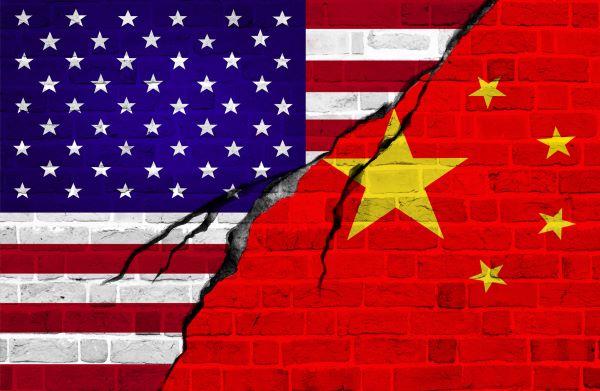
Is the most successful fashion app Shein going the TikTok way? The U.S.-China Economic and Security Review Commission (USCC) just filed in a report about Chinese fashion app Shein and Temu in relation to data risk, which the Chinese view as retaliatory tactics by the federal government of the US targeting Chinese apps that enjoy worldwide popularity. According to market researcher Bloomberg Second Measure, Shein accounted for 50 per cent of all fast fashion sales in the US as of November 2022, ahead of established brands like H&M at 16 per cent and Zara with 13 per cent. Although Shein is now based in Singapore, the relocation of its headquarters does not mean anything to the US authorities as Shein is 100 per cent Chinese owned as is Temu, the US-based online marketplace owned by the Chinese holding company PDD. The USCC report also alleged data security violations as well as infringement of intellectual property rights. Recently, short video app TikTok, owned by Beijing-based ByteDance, was banned on US federal devices over data concerns.
Data protection issues
The USCC report clearly stated that Shein was forcing its customers to share their personal information in a devious manner by offering discounts and vouchers to those customers who agree to share their personal details and activities from other apps and their personal social media accounts, a practice unheard of before, according to the US authorities. A spokesperson of the USCC stated that Shein was struggling to protect user data and its parent company Zoetop has been fined $ 1.9 million by the State of New York for mishandling credit card and other personal information. On the back of personal data mismanagement, infringement of intellectual property has also been cited as an issue with many American and European labels accusing Shein of copying designs. A spokesperson of Shein in Singapore gave a public response to a leading English daily in China, “Shein takes visibility across our supply chain seriously. The firm has been providing service and goods lawfully with full respect for the communities it serves for over a decade”.
The Uyghur factor
A group of US lawmakers has called for Chinese fast fashion brand Shein to be investigated over claims that Uyghur forced labour is used to make some of the clothes it sells. Shein has completely denied the accusation to the BBC, stating it has a zero tolerance policy on forced labour. Om May 1, the group of lawmakers wrote to the Wall Street watchdog US Securities and Exchange Commission that the US government is concerned that Shein plans to sell its shares in the US which Shein has denied stating it has no plans to be listed on Wall Street. The lawmakers’ letter provides references to cotton from the US-banned Xianjiang district in China being used in Shein’s clothing, proof that Shein’s suppliers rampantly use forced labour camps as their source of workers in manufacturing units in Xianjiang and other provinces of China and any product with such illegal provenance is not supported by the USA.
Shein attempts sustainability over affordability
As the heat on the brand rises across the governments of USA and Europe, and western customers are giving sustainability a thought over affordability, Shein has started communicating its contribution to the fashion sector in more ways than one. Last year, Shein pledged that by 2030, its production lines would have decreased GHG emissions by a quarter of the current volume and in 2022 alone it saved 69.6 tonnes of single-use plastic to prevent 142 tonnes of GHG emissions. Additionally, Shein launched a resell platform in the US in Octoner 2022, requesting consumers to resell Shein products rather than discard them.
Customized graphic T-shirts will be top seller this summer: Study
The time is always ripe for upgrading wardrobes every season if the wallet permits as the saying goes: fashion is like eating and you shouldn’t stick to the same menu. Urban dressing has now become all about creating your unique visual style which is a reflection of attitude and personality and it’s not always about brands. The fashion sector has once again become profitable post-Covid one with a projected market volume of $336.80 bn in 2023 with most of the revenue generated in China.
Customized top-wear to be most popular
Globally the number of fashion-conscious consumers is expected to touch 3.38 billion by 2027. For them a style quotient is a necessary statement. A recent study by Vistaprint, a custom printing and marketing company done in collaboration with OnePoll, a public relation and consumer insight expert company, listened what’s hot and what’s for summer of2023. The poll of over 2,000 consumers across all age groups in the US found out about their favorite customized T-shirt collections, the designs they love and those they avoid.
Based on the survey, fashion brand consultant Clare Alexander compiled a list of what is trending in customized T-shirts and also created a useful guide to design and print custom apparel. As per this, top wear such as T-shirts are the most popular item of customized clothing with over 51 per cent consumers owning them.
What’s hot and what’s in summer 2023
In customized apparel, garments that feature smart and bold quotes (32 per cent), bright colours (31 per cent) or logos on the front (31 per cent), are trending for both men and women. However, the future fashion trends are showing a rise in tie-dye (35 per cent), shirt pockets (33 per cent) and portrait photography (33 per cent) for the T-shirts, shirts and tops collection for both men and women.
With a concept of less is more, it is the simple designs that are the most effective. Using bold colours that make the garment stand out and custom-designing by a professional designer instead of using clip art or stock images, is trending.
Although portrait photography is extremely popular across all age groups, it’s an absolute no-no to use someone else's image without permission and the focus is to keep it simple without too many graphics or details. The survey also found most consumers are staying away from wearing T-shirts that use swear words (38 per cent), a photo of themselves (34 per cent), pictures of strangers (33 per cent), well-known phrases or slogans (33 per cent), animal prints (29 per cent) and innuendos (29 per cent). The focus should always be to stay clear of offensive language, graphics, or images and also avoid using hard-to-read fonts that need to be read up close as that misses the point.
Company logos and occasion-specific customized T-shirts are bestsellers
Less is more when it comes to the younger generations and 54 per cent of Gen Z and millennials buy custom clothing to reflect their unique personalities specially at specific occasions like birthdays or any celebrations. In the corporate sector, orders for customized T-shirts help to support small businesses by all employees wearing the trademark company icon or a customized design for a special event.
The Vistaprint survey has helped businesses to focus on making their logo colours stand out and make sure no competitor has similar tones when designing their customized apparel.
“Wearing artwork on clothing is an established fashion tradition, but graphic tees are perhaps the most literal form of this. Through prints, you can express yourself in visual form by representing places you have visited, favorite tunes, television shows, films, or designers. Most graphic tees also serve as a platform for showcasing brands and expressing loyalty for the creators,” says Clare Alexander, in the press release of this survey.
In matters of style, you need to swim with the current and develop your own style statement that blends in with what is currently trending, is what will rock the summer of 2023.
Kering partners with Sonovia to revolutionize denim production
French luxury group Kering, known for its prestigious brands such as Gucci and Saint Laurent, has entered into an agreement with Israeli green-tech firm Sonovia to integrate its innovative yarn-dyeing technology into Kering's denim production line.
Sonovia's chemical-free indigo yarn dyeing technology uses ultrasound to enhance the absorption of dye into the fabric, eliminating the need for chemical pre- and post-treatments, thus radically reducing manufacturing pollution while reducing dye baths by over 80%.
The integration of Sonovia's technology is expected to be a significant step towards achieving Kering's sustainability goals, as the company is committed to reducing its greenhouse gas emissions and water usage by 50% by 2025.
The denim industry, with an estimated $1.5 billion indigo dye market, is highly competitive, with many manufacturers seeking to reduce costs and improve efficiency. Sonovia's plug-and-play module can be easily implemented on any assembly line, making its technology accessible to a wide variety of global and traditional textile outlets, thereby providing a cost-effective and sustainable solution for manufacturers to meet consumer demand for sustainable products.
The partnership between Kering and Sonovia is a promising development for the future of sustainable fashion.
Driven by steady demand, Nylon 6 market expected to touch $26 million by 2032: Study

The synthetic polymer market led by nylon fibres which are far stronger and elastic than polyester fibres and can create smooth and lightweight fabric with high tensile strength, is doing rather well in the global markets. The Nylon-6 polyamide fibre which is semi-crystalline and commonly known as polyamide -6 (PA6) is the bestseller of this segment and the market is expected to be worth $26 million in 2032 growing at a CAGR of 5.9 per cent, predicts a Future Market Insights study.
The recent report on the Nylon-6 global market by Future Market Insights highlights, demand for environmentally-friendly products as well as the demand for Nylon-6 in emerging textile market will boost its popularity and hence growth. The incorporation of PA 6 and PA 6, 6 into 3-D printing systems is expected to lead to market growth for nylon-6. From 2016 to 2021, the market grew at 5.1 per cent and this pace is expected to continue over the next decade.
Versatility makes Nylon 6 suitable for many industries
Most industries value the strength, durability, and elasticity of Nylon 6 because it is characterized by many physical and chemical properties that make it suitable for a broad range of applications. About 60 per cent of global production of polyamides is composed of Nylon-6, due to its engineered thermoplastic properties, it has good flow properties, moldability, extrusion capability, chemical resistance, and morphological properties which are useful in present and future markets.
Some industries where its in use are: automotive, packaging, electronics & electrical, wires & cables, textiles, films and coating, while in future there will be a surge in demand in the healthcare and musical instrument segments. Nylon 6 is considered the most preferred polyamide in applications subjected to thermal and mechanical stress due to its high dielectric resistance and this will significantly increase its market share.
Start-ups entering the segment
The Future Market Insights report suggests, along with being used in various kinds of textiles, high-strength Nylon-6 is also popular in industrial applications, transportation, and electronic devices. Seeing it as a lucrative investment, many start-ups in India and around the globe are now using Nylon-6 products in various fields. The main players in the global market include BASF SE, Honeywell International, DuPont, Royal DSM, UBE Industries, Invista, Formosa Plastics Corporation, Gujarat State Fertilizers and Chemicals, June, Taulman 3D, Printscopia and others.
CORDURA Recycled Nylon 6,6 (RN66) is popular and a platform was launched by Material ConneXion, a manufacturer of recycled polymers, which has accepted the CORDURA re/cor RN66 collection. Also in Bangkok, Milan, Daegu, Skövde, Tokyo, and New York, the Material ConneXion exhibition will showcase award-winning fabrics, which includes this collection.
Some properties that hinders growth
However, a significant flammable dripping problem and insufficient flame retardance may limit the use of PA6 in many industries. Pollution caused by plastics and over-specified products, such as reinforced polypropylene, may hamper growth. Also, the low prices of other products like polyvinylidene fluoride, bio-absorbable polymers, and polypropylene, pose a threat of substitutes affecting the market growth.
Due to their biodegradability, some other environment-friendly materials like bio-absorbable materials also can pose a serious threat to the environment. With customers now more concerned about environment and health issues, most governments are monitoring methods for checking the negative effects of polymers on the environment, which will ultimately hit demand of the end-user that defines the growth of nylon-6 in its various segments of transportation, textile, industrial application, electrical and electronics as well as music, healthcare, and coating sector.
However, it is the textile and apparel industry that is the primary growth driver and analysts say if cards are played right, this synthetic fibre segment will be the front-runner now and in the near future.
Women’s wear market set to grow at 4.9% CAGR, driven by premiumisation by brands
Women's apparel market is expected to witness a substantial growth of USD 188.13 billion from 2022 to 2027, with a deceleration in growth momentum at a CAGR of 4.93%.The women's apparel market is expected to witness significant growth during the forecast period, driven by the demand for versatile and multifunctional dresses and the preference for premium and high-end brands. according to the latest market research report by Technavio.
Premiumization through well-positioned brands is a major driver for the market growth of women's apparel. Consumers have a strong preference for premium and high-end brands that represent quality, style, and status. The demand for versatile and multifunctional dresses for both business and private use and the ever-changing fashion trends dictate the demand for tops. These factors are expected to drive the growth of the tops and dresses segment of the market.
The market is fragmented, and the degree of fragmentation is expected to accelerate during the forecast period.
Emerging trends such as virtual reality are expected to fuel the demand for women's apparel. However, the competition with other consumer goods for a share of disposable income is likely to pose a significant challenge to the growth of the market.
In increasing India's cotton imports, exponential growth in duty-free Australian cotton provides relief
India's textile industry has seen a significant increase in cotton imports from Australia in 2022 compared to previous years, with a value of $283.766 million, representing a 4.28-fold increase in value and a 2.66-fold increase in volume from the previous year.
This surge in imports can be attributed to record-high prices of natural fibers and the exemption of import duties on cotton to support the industry during the 2021-22 crop market year. Although India and Australia had entered into the Economic Cooperation and Trade Agreement (ECTA), high prices last year led to an increase in imports beyond the agreement's restrictions. India's textile industry imported 80.860 million kg of cotton last year.
India's textile industry is a major consumer of cotton, but the country's domestic cotton production is often not enough to meet the industry's demand. Therefore, India imports cotton from various countries, including the United States, Brazil, and Uzbekistan. The United States has been the largest supplier of cotton to India, followed by Brazil and Uzbekistan. In 2020-21, India imported around 1.3 million bales of cotton from the United States, 540,000 bales from Brazil, and 320,000 bales from Uzbekistan.
India's total cotton imports during the 2020-21 crop year were estimated to be around 14 million bales, with the country's cotton imports steadily increasing due to a shortage of domestic cotton production and growing demand from the textile industry. According to the USDA, India is expected to remain a significant importer of cotton in the coming years due to the country's rapidly growing textile industry and the limited availability of high-quality domestic cotton. The USDA predicts that India's cotton imports could reach 2.5 million bales in the 2022-23 marketing year, up from an estimated 1.9 million bales in the previous year.
The increase in cotton imports from Australia provides some relief to India's textile industry when domestic cotton prices rise excessively, and the duty-free access to Australian cotton under the ECTA agreement is a significant development for the industry. The peak of cotton imports from Australia was $173.933 million during the third quarter of last year, well before the arrival of the new crop, when Indian cotton prices were still very high.
The surge in cotton imports from Australia, along with India's reliance on imports from other countries, highlights the challenges facing India's textile industry in meeting its demand for cotton. While duty-free access to Australian cotton provides some relief, the industry will need to continue to explore additional sources of cotton imports to meet its growing demand.
Clothing, furniture, and tech top BNPL purchases for US shoppers
Inflation is hitting Americans hard, forcing some to turn to buy now, pay later (BNPL) options to make ends meet. About 46% of consumers in the US used BNPL this year, up from 43% a year ago and 31% in 2021, according to a new survey by LendingTree.
While retailers are using this payment method to generate revenue, it is becoming a "bad outcome" for consumers' financial situation, reflecting it is a sign of slowing and that debt will start to flare up, especially with credit card interest.
The survey found that the largest percentage of consumers (46%) used BNPL for clothing, shoes, and accessories, followed by home furniture and appliances at 34%. Technology and beauty products were also popular, with 27% and 26% of shoppers using the plan, respectively. However, BNPL is increasingly being used for everyday purchases, such as groceries and gas, which could lead to overspending and accumulating debt.
According to an expert, a third of Americans are in a "tough position" due to more credit card debt than what is available to them in emergency savings.
The survey highlights the growing popularity of BNPL as a payment option, but also raises concerns about the potential financial consequences for consumers who use it for everyday purchases.
DyStar to close Ludwigshafen plant following restructuring decision
DyStar, the Singapore-based specialty chemical company, has announced that it will “restructure” its Ludwigshafen plant in Germany, leading to its closure. The plant, which has been producing indigo for over a century, was inherited by DyStar from its founders and has been an integral part of the company’s global network.
The restructuring is a strategic move by the company to focus on developing key emerging markets that have been shifting for over a decade in response to changing business conditions and market shifts. The move comes amid rising energy costs and inflation and is aimed at improving cost efficiency and driving sustainable productivity. The restructuring will be carried out in a phased manner, and terminated employees will receive severance packages.
The company has committed to working with the appropriate local resources to support affected employees and their families during the transition. DyStar has assured its customers that their production will not be affected as it will work closely to meet their specific requirements.
Scientists create self-healing, bacteria-repelling metallic coating for wearable textiles
A team of scientists from North Carolina State University, Flinders University, and South Korea have developed a new metallic coating treatment for clothing and wearable textiles that has the potential to revolutionize wearable electronics.
The treatment utilizes conductive circuits created by liquid metal particles that can autonomously heal themselves and repel bacteria, and even monitor the wearer's electrocardiogram (ECG) heart signals.
According to the researchers, the breathable electronic textiles can create circuits that maintain conductivity when stretched, and when the coated textiles are pressed with significant force, the particles merge into a conductive path. The technique involves dip-coating fabric into a suspension of liquid metal particles at room temperature.
The coated textiles remain electrically insulating until the oxide that forms on the liquid metal particles is ruptured, allowing the particles to percolate and create conductive circuits. The LM-coated textiles offer effective antimicrobial protection against bacteria and are also flexible and adaptable to different wearers.
This development could lead to new applications in human-machine interfaces, including soft robotics and health monitoring systems.











