


FW
India: Nitin Spinners reports increase in Q4 income/net profit, decline in Y-o-Y performance of FY2023
Nitin Spinners Limited, a textile company, has released its standalone financial results for the period ending March 31, 2023. The company reported a total income of Rs. 656.1596 crores during this period, marking an increase from Rs. 537.4878 crores in the previous quarter, ending December 31, 2022. The net profit for the period ending March 31, 2023, was Rs. 38.5357 crores, compared to Rs. 31.5824 crores in the previous quarter.
In a year-on-year comparison for the fourth quarter, Nitin Spinners reported a decline in total income from Rs. 769.5850 crores in Q4 FY2022 to Rs. 656.1596 crores in Q4 FY2023. Similarly, the net profit decreased from Rs. 85.4707 crores to Rs. 38.5357 crores during the same period.
Looking at the financial performance for the full financial year ended March 31, 2023, Nitin Spinners reported a total income of Rs. 2410.0169 crores, a decrease from Rs. 2694.1575 crores in the previous year. The net profit for the year was Rs. 164.8105 crores, compared to Rs. 326.1377 crores in the previous year.
India: Persistent wage disparity plagues garment workers in Karnataka
Garment workers in Karnataka, along with those in the textile, silk, and dyeing and printing sectors, have long grappled with a persistent wage disparity. While other employment opportunities in the state ensure minimum wages ranging from Rs 551 to Rs 651 per day, depending on the level of skill, a skilled garment worker earns a meager Rs 441 for an eight-hour shift. This amounts to just Rs 11,466 for a typical 26-day work month, leaving these workers struggling to support their households.
Wage disputes have been a longstanding problem in the garment industry. In 2010, the government of Karnataka withdrew its notification on minimum wages for the sector, which led to prolonged legal battles. Despite court interventions and orders, the issue resurfaced in 2018 when the government excluded the garment sector from the revised minimum wage notification. Industry representatives exerted pressure to reduce the proposed minimum wage, resulting in further delays and discontent among the workers.
The demographic composition of the garment workforce is shifting, with an increasing number of workers from other regions joining the industry. These migrant workers, often willing to accept lower wages, lack the support system and bargaining power of local workers.
Furthermore, the COVID-19 pandemic and subsequent lockdowns led some workers to explore alternative sectors that offered better pay, leaving the garment industry with a diminished skilled workforce.
China's textile, garment exports to Japan surge, driving industry growth
Japan's textile and apparel sector witnessed a significant surge in imports during March, with the import value reaching a substantial US$3.78 billion USD. The apparel segment alone accounted for US$2.75 billion, marking an impressive increase of 19.3% compared to the previous year. Furthermore, there was an even more notable month-on-month surge of 22.4% in the import value for apparel.
This substantial rise in both import volume and value reflects a growing demand for textiles and apparel within the Japanese market. In March, Japan imported 232,000 tons of textiles and garments, showing a slight 0.1% increase compared to the same period last year. More significantly, there was a remarkable month-on-month surge of 41%, indicating a clear upward trajectory.
Among the total imports, products originating from China dominated the market, accounting for 125,000 tons. This demonstrates a year-on-year growth rate of 1.9% and an impressive 64.4% surge compared to the previous month. The strong performance of Chinese exports signifies a thriving trade relationship between the two countries.
China's soaring demand revives European luxury sector
European luxury goods makers are experiencing a renaissance as soaring demand in China. The easing of COVID-19 restrictions in China has sparked a resurgence in consumer activity, with the luxury goods sector witnessing a remarkable upswing. Affluent individuals in China utilize luxury products as symbols of their prosperity and social status, leading to a robust market for these coveted items.
Industry experts are confident that the Chinese market will play a pivotal role in the future growth of the global luxury sector, as the number of middle-to-high income consumers continues to escalate.
Projections indicate that China's middle class will double in size by 2030, encompassing approximately 500 million people. Recognizing this upward trajectory, luxury brands are strategically positioning themselves to capitalize on this lucrative opportunity.
The revival of the luxury sector in China is also attributable to Chinese tourists' freedom to travel abroad, which has stimulated the industry by driving substantial purchases of high-end products in various destinations. Prior to the pandemic, Chinese consumers predominantly allocated their luxury goods budget to purchases made outside of China, significantly contributing to the industry's growth. However, in 2022, Chinese spending on luxury goods experienced a decline of 10-15 percent following a remarkable 20 percent annual increase in 2021. Subsequently, leading luxury conglomerates have shifted their focus towards the Chinese market.
French luxury brands, leveraging their cultural appeal and effective brand communication strategies, have garnered significant popularity among Chinese consumers. Notably, LVMH and Hermès have emerged as particularly desirable brands in China.
Conversely, Italian luxury brands have encountered challenges in adapting to the Chinese luxury market and have struggled with subpar communication strategies.
Jeanswear market projected to reach USD 118.28 Bn, fueled by demand from youth for branded and fashionable apparel
The jeanswear market is set to experience remarkable growth, projected to reach a value of USD 118.28 Billion by 2030, compared to USD 66.77 Billion in 2021. Verified Market Research anticipates a CAGR of 8.51% from 2023 to 2030 for this market.
Jeans continue to be immensely popular, especially among the younger demographic, due to their comfort, durability, and ease of wear. Manufacturers in developed economies are placing emphasis on creating "perfect fit" jeans, driving continuous product innovation within the market.
A recent trend in denim manufacturing is the incorporation of synthetic fibers, offering stretchability. Customers are attracted to jeans for their aesthetic appeal, moisture absorption, color resistance, and overall comfort. Increasing living standards and growing consumer awareness of various jean styles, such as boot cut, high rise, cropped, skinny, tapered, and regular fit, are also contributing to the expansion of the market.
The demand for branded apparel is on the rise, further propelling the growth of the jeans market. The preference for sustainable denim clothing is growing not only in developed countries but also in developing nations like China and India. This presents opportunities for jeanswear manufacturers to produce denim from recyclable materials, including plastic. The production of sustainable denim represents a significant opportunity for participants in the jeanswear Market.
As per global jeanswear overview, the market is witnessing a shift in consumer preferences towards distressed, cropped, and patched jeans. Trendy styles like cropped hems, boyfriend jeans, two-tone jeans, and skinny jeans are gaining popularity, especially among the younger generation, due to their casual appearance and media promotion. Decorative denim featuring patches, laces, and embroidery is also selling rapidly in the market.
The growing demand for fashionable apparel among the youth population is a key driver of market growth. Denim is widely available in casual wear, offering a wide range of colors and shades. Increased awareness of fashion trends, the presence of apparel retail chains, and the growth of e-commerce are expected to further boost market expansion. Changing lifestyles, coupled with rising disposable income, are fueling the demand for premium designer denim.
Additionally, there is an increased demand for denim accessories such as bags and shoes.
H&M's ESG record and responsible practices contradicted by sourcing from Myanmar
Swedish fashion giant H&M has garnered a positive reputation for its strong environmental, social, and governance (ESG) performance, surpassing many of its competitors.
The company has established a constructive relationship with IndustriALL, an influential global union federation. However, H&M's refusal to halt sourcing from Myanmar, a country ruled by a military dictatorship that bans unions and utilizes foreign exchange for purchasing weapons, raises significant concerns. IndustriALL raised this issue at the company's Annual General Meeting (AGM) held recently.
The Myanmar Labor Alliance, representing the majority of the trade union movement in Myanmar, has called for divestment from the country. Myanmar, under military rule, lacks freedom of association. By continuing to source from Myanmar, H&M facilitates the inflow of foreign exchange into the country, indirectly supporting the oppressive regime.
H&M responded by emphasizing the strength of its local team and its collaboration with the EU MADE program. However, Myanmar unions have condemned this program, dismissing it as a mere attempt to whitewash the situation.
IndustriALL holds a global framework agreement with H&M, which has been instrumental in addressing union-busting and remedying workers' rights violations in supplier factories. The global brand has set significant precedents by upholding freedom of association and prioritizing workers' health and safety. However, its refusal to sever ties with Myanmar contradicts these principles.
It is worth noting that H&M was the first company to sign the Bangladesh Accord, an agreement formed following the Rana Plaza collapse a decade ago. Furthermore, H&M played a crucial role in securing the release of 35 trade unionists who were arrested in Bangladesh in December 2016.
Additionally, the company is a founding member of the ACT on Living Wages initiative, highlighting its commitment to fair wages.
Social malpractices rampant in fast fashion segment with women facing more discrimination
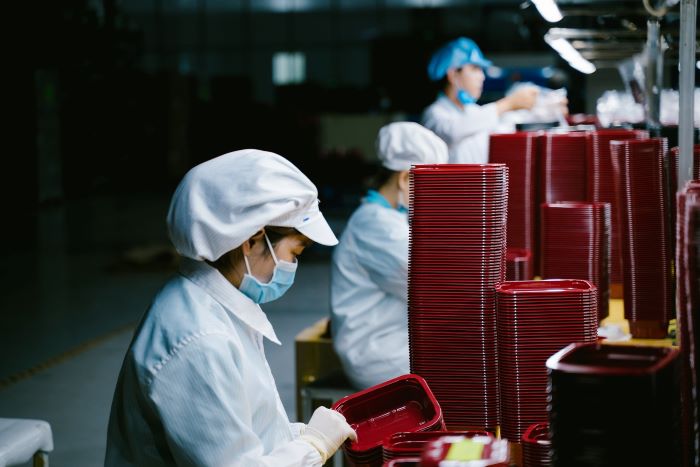
The days of long-awaited major fashion seasons of spring/summer and fall/winter have now gone replaced by fast fashion clothing with shorter lead times, frequent product turnover and cheap and cheerful reasonable pricing. While fast-paced fashion may be accessible and affordable to all, the manufacturing process uses low-quality materials and unskilled labor leading to global waste generation, pollution, labor exploitation, and social malpractices.
But the fashion industry honchos are turning a blind eye to this as profit stakes are high when sacrificing quality over quantity and that is what matters in the short run to them. Many global brands such as H&M, Forever 21, and Zara are now adding to the mass production of fast fashion by launching 52 micro–seasons over a year translating to one trend per week and breaking away from the traditional seasonal approach.
Laborers exploited in unorganized apparel segment
The fashion industry has always been labour-intensive depending on manual laborers much more than machines, with retailers under pressure to create a new line in time before their competitors do. Most retailers outsource the jobs to sub-contractors who then send it to South Asian countries such as India, Bangladesh, and Pakistan where cheap labour is easily exploitable. Child labour is rampant and women are treated even worse than men when working in factories in unhygienic conditions with low wages.
Extreme poverty, social norms condoning them, lack of decent work opportunities, labour migration, and incessant natural calamities all bring down the labor laws that are set up by the Human Rights Commission. There is an urgent need for innovative alternatives and rules to curb the toxic effects on both the laborers and the environment primarily in the unorganized sector who typically work on daily wages and without any legal document, which leads to further malpractices.
Fewer women in urban workforce compared to rural
In many countries like India, female labour participation rates have been low recorded at only 18 per cent in 2020 which is the lowest in South Asia and much below the 45 per cent global average. Women’s employment involvement is low despite rising GDP, increased education, rising family incomes and reduced fertility with just two children per family in urban areas. Industry analysts say that the gender participation gap is becoming worse over the years with 26.4 per cent for rural women versus 20.4 per cent for urban women in the workforce with stark differences across different Indian states.
This invisible women workforce in India is influenced by many factors on both the demand and supply side such as marital status, the number of children they have, lack of required education and skill sets and gender-caste intersectionality. However, women are far larger in number than men in the unorganized sector in jobs that are low-skilled and low-paid. In the urban corporate sector, they are outnumbered by men but this disparity is rapidly changing as women are increasing in number everywhere. Oxfam’s 2020 India Inequality Report called ‘On Women’s Backs’ points out generally women and young girls in India perform 3.26 billion hours of unpaid care work each day, which amounts to an annual economic contribution of $19 lakh crore.
The need of the hour is to properly execute some new and comprehensive labor legislation laws in countries like India, Bangladesh, and Pakistan, which have become the hub of such malpractices. There has to be a circular economy where every retailer of fast fashion needs to be held responsible for regularising supply chains in their respective manufacturing countries. NGOs and stakeholders should closely collaborate with the government, so these laws are actually implemented and supply chains are regularised more effectively. Re-use, re-style, and re-wear should be the new fashion mantra and not just showcase new product lines at every retailer’s whim and fancy if a circular and sustainable fast fashion segment without its toxic excesses is to be maintained in the near future.
Pakistan's textile exports decline by 14.2% in first 10 months of FY23
Pakistan's textile group exports have witnessed a significant decline of 14.2% during the first 10 months of the current fiscal year 2022-23 (FY23) as compared to the same period last year, according to the data released by All Pakistan Textile Manufacturers Association (APTMA).
The exports stood at $13.71 billion, compared to $15.97 billion last year. Additionally, the data showed that the country's textile exports witnessed a YoY decline of 28.7% in April 2023 and remained at $1.24 billion compared to $1.74 billion during the same month in the previous year.
Pakistan's textile industry is the backbone of its economy and one of the largest employers in the country. The industry has been struggling due to the ongoing COVID-19 pandemic, which has led to a decrease in demand for textiles globally. The industry has also been facing a shortage of raw materials and high energy costs, which have further contributed to its decline.
The decline in Pakistan's exports is a cause for concern as it could have a negative impact on the country's economy. The government needs to take steps to support the textile industry and increase exports to mitigate the impact of the pandemic on the economy.
Puma named official supplier of Formula 1 races, to launch F1 branded apparel
Puma has secured a deal to become the official supplier of Formula 1 races, granting the brand the right to produce F1 branded apparel, footwear, and accessories.
This agreement also includes equipping Formula 1 staff at track and creating fanwear for the sport's various audiences.
Puma has a long history of creating high-performance racing gear for F1 drivers, teamwear, fanwear, and lifestyle collections for the sport's most successful teams.
This partnership will allow PUMA to expand its reach and appeal to a broader fan base, particularly as Formula 1's popularity continues to rise, with its fanbase becoming younger and more diverse.
Puma 's subsidiary stichd will exclusively operate the fan retail stores during race weekends, selling Formula 1 licensed products as well as replica teamwear, fanwear, and special edition collections from all ten teams on the Formula 1 grid and F1 legends.
The first PUMA x Formula 1 products will be available worldwide from February 2024.
UK: 25% of home textiles end up in residual bin instead of recycled, reveals WRAP report
A report titled ‘Citizen Insights: Estimating the Longevity of Home Textiles in the UK’ published by WRAP reveals that almost a quarter of home textiles, including towels, curtains, and linen, end up in the residual bin instead of being recycled or reused.
It suggests that promoting proper care of home textiles can extend product lifespan and reduce environmental impacts.
It also highlights the potential for circular business models, encouraging consumers to reuse, repair, upcycle, resell, or rent textiles, and for retailers to design durable, recyclable products.
The report’s recommendations include designing products with circularity in mind, establishing circular business models, and implementing take-back schemes. The study aims to provide insights into the lifespan of textiles and to inform circular business guidelines.











