


FW
China's bid to join CPTPP unlikely to succeed, US offers Indo-Pacific Economic Framework as alternative
China's bid to join the Comprehensive and Progressive Agreement for Trans-Pacific Partnership (CPTPP), a Pacific Rim-focused trading bloc, is unlikely to be successful due to the country's poor track record on market access, according to US Senator Bill Hagerty of Tennessee.
Hagerty, who sits on Senate committees for appropriations, foreign relations and banking, argued that Beijing's bid amounts to "rhetoric" and that other members of the CPTPP would not accommodate a country that behaves "in a predatory fashion".
The comments put Hagerty on the side of those opposed to the CPTPP, a later version of the Trans-Pacific Partnership that former President Donald Trump pulled out of in 2017.
The US has instead offered its Indo-Pacific Economic Framework, which focuses on improving environmental and labour standards as part of a "worker-centred" trade policy.
The Indo-Pacific Economic Framework was launched by US President Joe Biden in May 2022 as a countermeasure to China's growing economic influence in the region. The framework aims to promote economic growth and development, increase investment in infrastructure, and support democratic values and human rights.
While the US has not yet formally joined the CPTPP, the Biden administration has signaled a willingness to engage with the agreement's members on trade issues.
In September 2021, the US and Japan signed a digital trade agreement that includes provisions on data localization and digital trade, and there have been discussions about the US potentially joining the CPTPP in the future.
The impact of the CPTPP on the global textile and apparel industry will depend on how effectively the participating countries implement the agreement's provisions.
Football legend Luís Figo launches luxury fashion brand, LF
Football legend and former Golden Ball winner in 2000, Luís Figo, has announced the launch of his own luxury fashion brand, LF.
The brand is named after the initials of his name, Luís Figo, and offers a high-end collection dedicated to the contemporary man who values refinement, details, and quality.
LF's range includes travelwear, sportswear, and "new chicwear" - a term coined by the brand that perfectly captures its inspiration. The brand aims to dress dynamic and out-of-the-ordinary men who love to appear impeccable on any occasion. LF's collection explores the moments that mark the lifestyle of a contemporary man and offers an approach to everyday life and style.
Figo's brand is not just a collection but a reflection of his values, which include savoir faire, elegance, class, and distinction. The LF collection will be available in selected stores from February 2024, and an exclusive selection will be available online from July 2023.
Italian luxury brand Ginori 1735 expands into South Korea
Italian luxury and lifestyle brand Ginori 1735 has opened its first store in South Korea, located in the heart of Seoul.
Developed in collaboration with South Korean actress and model Ko So-young, the store is inspired by the brand's iconic Oriente Italiano collection, and offers Korean enthusiasts access to Ginori 1735's best-selling collections.
The new store is part of the brand's international expansion strategy, which includes a distribution network spanning over 31 countries, an e-commerce channel, flagship stores in Florence, Milan, Sesto Fiorentino, and Paris, as well as selected dealers and a presence in high-level department stores and multi-brand specialty stores worldwide.
The brand's mission is to forward a modern Renaissance, a rebirth and rediscovery of the pleasure, personal expression, and art of everyday life.
Lee’s revenue falls 9%, Wrangler’s global revenue grows 3% in Q1 2023
Kontoor Brands, the parent company of denim brands Lee and Wrangler, announced a dip in revenues for Q1 2023. The company reported a 2% decrease in revenue to $667 million, with the international market weighing down the overall results due to the ongoing impact of Covid-policy changes in China.
International revenues fell by 14% to $149 million, while U.S. revenue for the quarter was $518 million, increasing by 2% over the same period in the previous year.
The results were mixed for the individual brands, with global revenue for the Wrangler brand growing by 3% to $423 million, while Lee brand revenues fell by 9% to $241 million. Despite the challenges, Kontoor Brands expressed confidence in the company's diversified growth strategy and its ability to generate sustained, profitable growth over time. Company also reaffirmed the 2023 outlook despite macroeconomic pressures that are expected to weigh on consumer demand in the second half of the year.
Looking ahead, Kontoor Brands expects fiscal 2023 revenue to increase at a low-single-digit percentage over 2022, with relatively balanced performances in the first and second half of the year.
Guess appoints Markus Neubrand as new CFO
Guess, the American fashion brand, has announced the appointment of Markus Neubrand as its new chief financial officer, effective August 1, 2023.
Neubrand, currently the group CFO of MCM Worldwide, brings with him two decades of experience in finance and operations in the fashion industry, including 17 years at Hugo Boss.
He will succeed Dennis Secor, who will remain with the company as executive vice president through March 31, 2024, to ensure a smooth transition.
Additionally, Fabrice Benarouche has been promoted to senior vice president finance, investor relations, and chief accounting officer, effective immediately. Carlos Alberini, CEO of Guess, praised Neubrand's leadership, operational, and strategy skills, and recognized Benarouche's contributions to the company.
IndustriALL supports call for companies to divest from Myanmar after military coup
The situation in Myanmar continues to worsen for the people and workers, more than two years after the military coup in February 2021. With the recent May Day celebration, the call for workers' rights and against violations of human rights is louder than ever. However, under the military dictatorship in Myanmar, human rights due diligence is impossible, and companies must plan a responsible exit from the country.
IndustriALL, a global union federation, supported a call by Myanmar unions for all multinational companies operating in the country to divest after the military coup. Companies that maintain operations in Myanmar are indirectly funding the military's war on its own people, contributing to a growing humanitarian crisis. The military has recently used airstrikes, killing over 100 people.
Wage exploitation, forced labor, and harassment against women are increasing, and violations against workers are becoming more frequent. The EU-funded MADE in Myanmar project, which aims to support the garment manufacturing sector by replacing unions with employer-selected "workers' representatives," is concerning.
Employers take advantage of the political situation to deprive workers of their rights, allowing serious human rights and labor rights violations to continue in Myanmar while helping the military gain legitimacy.
Global apparel market suffered high inflation woes in 2022; expected to recover in 2023: Statista
After recovering from the impact of the COVID-19 pandemic in 2021, the global apparel industry faced new difficulties in 2022 due to high inflation. The cost of production increased, and consumer confidence dropped, resulting in a slight decrease in revenue to 1.53 trillion U.S. dollars in 2022. However, the market is expected to rebound in 2023, with revenue forecasted to increase to more than 1.7 trillion dollars, as per analysis of statistics by Statista.
The women’s apparel market generates significantly more revenue than men’s or children’s apparel, with women's apparel alone generating about 163 billion dollars in revenue in the US.
The United States and China are the leading countries in the apparel market, with the highest demand for clothing. China topped the rankings for the highest value of apparel exports in 2021, while the US was second to the EU in the value of apparel imports.
The apparel market has several divisions, including the second-hand apparel industry, which is projected to grow as consumers demand more environmentally conscious options.
The luxury market is also a significant player, expected to double in size from 2022 to 2028.
Nordstrom to close both downtown San Francisco stores amid retail theft surge
Nordstrom, the American luxury department store chain, has announced that it will be closing both of its downtown San Francisco locations, citing the challenges of operating in the current environment.
The closure of the San Francisco Centre Nordstrom store and the Market Street Rack store comes amid a rash of retail thefts by brazen thieves, which has impacted retailers and businesses in the downtown area.
The company is not renewing its lease for either location due to the "dynamics" of the downtown San Francisco market, which has seen a significant decline in foot traffic and safety concerns for customers, retailers, and employees. The last day of business for the Market Street Rack store will be July 1, and the San Francisco Centre location will close at the end of August.
The closures have underscored the deteriorating situation in Downtown San Francisco, according to the Westfield mall, where the downtown Nordstrom store is located. A mall spokesperson stated that a growing number of retailers and businesses are leaving the area due to the unsafe conditions, which are preventing economic recovery of the area.
The statement further added that the mall has urged city leaders to find solutions to the key issues and lack of enforcement.
Shein responds to environmental, IP criticisms ahead of IPO, launches initiative to fund artists
As it gears up for an initial public offering, fast fashion giant Shein is aiming to counter criticisms over environmental waste, intellectual property violations, and the retailer's links to China.
The online company is investing millions in initiatives to address the complaints and is positioning itself as a retail heavyweight with which rivals will need to contend.
Shein is one of the most downloaded shopping apps and is a favourite of Gen Z, selling clothes such as mesh dresses and two-piece swimsuits for less than $9.
The company recently hosted a day-long summit for designers and has launched an initiative to fund and hire artists to create clothing lines. Its "Shein X" scheme offers independent designers a budget, pays production costs and markets their wares on its site.
India: Textile industry in Tamil Nadu faces loss as government requests more time for quality control compliance
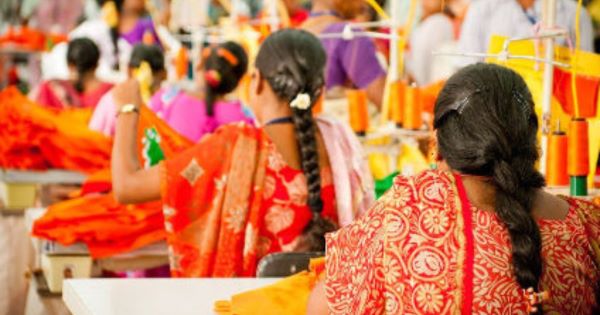
The Tamil Nadu government has requested the Centre to allow more time for the textile industry to comply with quality control orders (QCOs) for the importation of viscose and polyester fibres.
The government has suggested that the implementation of QCOs should be delayed until the Bureau of Indian Standards (BIS) resolves all outstanding applications submitted by importers seeking QCOs to adhere to quality standards. The state administration has also requested an exemption for filament yarn and artificial fibres, such as bamboo fibres, made outside of India from QCOs.
Delay in quality control orders puts textile industry at risk
The industry has claimed that a large number of applications from foreign suppliers are still awaiting examination and clearance by BIS, which can only happen after BIS officials have visited the applicants’ production facilities in their home countries. Even if these suppliers meet the QCOs requirements, the importation of these fibres cannot begin until the BIS inspectors have completed all the necessary steps and approved the applications. As a result, many textile producers who have already placed orders and have shipments in transit are likely to face significant business losses.
MSME textile businesses struggle with expensive BIS certification requirement
Tamil Nadu Chief Minister MK Stalin highlighted that if the import of necessary high-quality fibres is delayed, domestic producers of value-added goods would be forced to reduce their standards of quality and eventually lose customers. The textile industry, which is primarily composed of MSME businesses, has been mandated by the authorities to establish testing infrastructure to achieve BIS certification, which is an expensive and unfeasible requirement for many small firms.
Moreover, the fashion industry works on cycles scheduled more than six months in advance, and any delay in implementation deadlines could impede several ongoing processes. Additionally, sustainable fibres with distinct properties have been developed in viscose and polyester yarns, which could preclude the application of general QCOs. The government sources claim that bamboo viscose fibre, which is in high demand in the export market due to its anti-bacterial and anti-microbial properties, currently lacks a BIS standard.
Implementation delays in QCOs for man-made and viscose fibres cause of worry
The textile industry has expressed concerns about BIS's implementation of mandatory certification through various QCOs for various types of man-made and viscose fibres. They worry that the QCOs issued by the textile ministry on viscose staple fibres were only given one month to be implemented, and an additional two months were added to make it effective beginning March 29, 2023.
The Polyester Stable Fibre QCO will go into effect on April 3, 2023, according to the Ministry of Chemicals and Fertilisers, while QCOs for polyester fully drawn yarn (FDY), polyester partially orientated yarn (POY), polyester industrial yarn (IDY), and 100% polyester spun grey and white yarn will be effective from July 3, 2023.











