


FW
Brazil retains position as world’s second largest cotton exporter in 2023
Despite a 10 per cent drop in exports compared to 2022, Brazil managed to retain its position as the world's second-largest cotton exporter in 2023. The Brazilian Association of Cotton Producers (Abrapa) reported shipments of 1.618 million tons, generating $3.07 billion in revenue.
Brazil’s 2022-2023 cotton harvest suffered from unfavorable climate conditions, reducing the available volume for export.
The Russia-Ukraine war and the conflict between Israel and Palestine also impacted demand for cotton in Brazil, points out Abrapa.
However, despite the overall decline, Brazil’s cotton exports surged by 24 per cent in H2FY23 spanning between July and December. Brazil’s cotton shipments reached 1.194 million tons during the quarter, accounting for 74 per cent of the total annual exports.
While Brazil faced challenges in 2023, maintaining its position as the second-largest cotton exporter demonstrates the industry's resilience and potential for further growth. The positive trend in exports during the latter half of the year indicates a possible recovery in the future.
Sutlej Textile & Industries’ Q3 net loss plunges to 93.82%
Sutlej Textile & Industries suffered a significant financial blow in the third fiscal quarter ending December 31, 2023, with a net loss plunging 93.82 per cent to Rs 30.08 crore compared to the same period last year. However, the decline in net loss slowed down compared to the previous quarter, indicating a potential improvement trajectory.
The company’s revenues declined by 8.6 per cent Y-o-Y and 17.34 per cent Q-o-Q to Rs 607.47 crore. Its selling, general, and administrative expenses decreased by 11.95 per cent Y-o-Y and Q-o-Q. Operating income of the company plummeted by 157.54 per cent Y-o-Y during the quarter while rising by 45.11 per cent Q-o-Q.
In the coming quarters, the company could benefit from continued cost control measures and potential improvements in revenue.
Scoop concludes Autumn/Winter 24 season with triumph and Wonderment

Scoop, the renowned fashion showcase, concluded its Autumn/Winter 24 season on a high note, bidding farewell to guests who were treated to a remarkable display of international designers under the theme 'A Return to Wonderment'. The event, characterized by opulent art deco influences, drew a bustling crowd of buyers from both national and international markets, with notable attendees from renowned establishments such as Liberty London, Galeries Lafayette, and Harvey Nichols, among others.
Experiencing the spectacle: Reactions from attendees
Carl Jacklin of Agatha Boutique expressed admiration for the show's layout, describing it as spectacular, fresh, and vibrant. He emphasized the ease of discovering great collections for independent retailers like himself, attributing it to Scoop's unique atmosphere and the exquisite presentation of accessories throughout the venue.
Emma Cubley from Anthropologie echoed Jacklin's sentiment, praising the convenience of having all brands and agents gathered in one location. She described the buying environment as relaxed, fostering inspiration and facilitating the exploration of new collections.
Deryane Tadd of The Dressing Room, St Albans, noted the infectious energy permeating the show, fueled by an abundance of new offerings and the overarching theme's allure. She highlighted the convenience of having multiple shows under one roof, streamlining the buying process while ensuring an enjoyable experience.
International acclaim and discoveries
Margaret Gallagher and Mary McSweeney of Les Jumelles, Galway, Ireland, commended the exhibition's layout and expressed gratitude for discovering new brands while attracting attention to their own.
Malin and Aron Hose of Fifty 5a, Totnes Devon, lauded the vibrant ambiance and the opportunity to connect with both familiar and new brands, resulting in successful orders placed.
Curated by the show's Managing Director and Founder, Karen Radley, Scoop showcased over 200 contemporary womenswear, accessory, and lifestyle collections. Designers lauded the event's meticulous styling and the curated selection of collections, attributing the steady influx of retailers to its allure.
Testimonials of success
Various designers shared their experiences, with Claire Le Marque of Kirstie Le Marque emphasizing the significance of Scoop as a pivotal event for wholesale ventures. Dee Vasali of Talis Chains expressed gratitude for the warm reception and positive feedback received, while Caro Ritchie of Corita Rose celebrated newfound connections and a surge in interest for their products.
In reflection, Karen Radley, the driving force behind Scoop, expressed delight at the overwhelming response to the show. She attributed its success to the awe-inspiring discoveries made by attendees, coupled with the enchanting ambiance meticulously crafted for the occasion. As Scoop bids farewell to another successful season, Radley expressed gratitude to all who contributed to its triumph.
Conclusion
Scoop's Autumn/Winter 24 season stands as a testament to the enduring appeal of curated fashion showcases. With its captivating theme, expert curation, and vibrant atmosphere, the event continues to serve as a beacon for industry professionals seeking inspiration and new opportunities. As the curtains close on yet another memorable season, Scoop remains a cornerstone of the fashion landscape, promising future seasons filled with wonder and discovery.
C&A to launch new men’s denim range made with Lycra Adpativ
European fashion retailer C&A plans to launch its new S/S 2024 men’s denim range made with Lycra Adaptiv, a special stretch fiber that adapts to the functional needs of the wearer and its eventual slight shape and weight changes.
Made up by four different styles, the collection is designed to guarantee men extra comfort. It will be sold in 190 C&A stores across Europe and through the brand’s e-commerce at avarage prices of €49.90.
The new fiber, Lycra Adaptiv adapts to the functional needs of the wearer, giving a second-skin effect. Garments made with Lycra Adaptiv, follow the body's movements, adapting to different shapes and sizes and ensuring high levels of fit and comfort.
When the wearer is at rest, the polymer adapts its holding force to compression to provide the levels of fit, shape and control needed. When the wearer is in motion, the polymer adapts its stretch to provide better comfort in motion and a second-skin effect that allows the garment to stay perfectly in place.
This new C&A collection is the first range made using denim made with 92 per cent cotton, 6 per cent elastomultiester, known as Lycra T400, and 2 per cent by Lycra Adaptive, the first one in the market made with this fiber.
The Lycra Company's dual-core technology also allows garments to last and not lose strength or shape after several washes. The brand also makes online shopping easier, and allows for fewer returns as these garments fit better to different body shapes within a wider range of sizes.
C&A's new men’s denim range is designed for a variety of different styles ranging from the most classic cuts to most body hugging styles.
Apparel Group kicks off 2024 with 19 new stores in January
Fashion and lifestyle giant Apparel Group is opening 19 new stores across India, the UAE, KSA, and Qatar. This expansion marks a significant milestone in providing world-class experience, says Neeraj Teckchadani, CEO, Apparel Group. The company reaffirms its commitment to excellence by providing an unparalleled shopping experience to customers, he adds.
This expansion reflects Apparel Group's vision to set new retail benchmarks, offering a diverse brand portfolio. The group currently operates over 2,100 stores and 85+ brands across various platforms, employing over 20,000 people.
With a strong presence in the GCC and thriving markets in India, South Africa, Southeast Asia, and Egypt, Apparel Group is poised for further growth. They plan to enter emerging markets like Hungary and the Philippines, solidifying their position as a global fashion powerhouse.
Brother to go beyond garment printing at FESPA 2024
Going beyond direct-to-garment (DTG) printers, Brother plans to expand its reach at FESPA 2024. Aiming to become a ‘one-stop solution provider, the brand has created new solutions to address evolving industry needs by combining and refining existing products.
Known worldwide for its excellent technology, Brother will unveil products based on four themes including innovation, excellent quality, connectivity, and compact desktop solutions at FESPA 2024.
The Excellent Quality Zone at the trade show will feature Brother’s latex wide format printer, WF1-L640. This printer has been chosen to produce original copies for the 50-year anniversary exhibition of Kunio Okawara, a legendary mechanic designer who designed ‘Mobile Suit Gundam’ who made significant contributions to Japanese animation culture.
The Connectivity Zone in the trade will feature end-to-end automation solutions and Myze workflow management software designed to maximise productivity for end-users.
The Innovation Zone will showcase groundbreaking prototypes for direct-to-film (DTF) printing while the Compact Desktop Solutions zone will display sleek embroidery machines and versatile printers to expand your offerings.
Renowned for its excellent technology, Brother prioritises delivering top-notch results. The brand develops new products and solutions continuously to stay ahead of the curve. It is also committed to responsible practices throughout its operations.
Mango expands US presence with new San Diego store
Leading Spanish fashion brand, Mango continues its ambitious expansion in the United States with the opening of a new store in San Diego's Fashion Valley shopping district. This marks another step in the brand’s goal to reach 40 stores across the country by 2024-end.
Dedicated solely to the women's line, the San Diego store embodies Mango's signature ‘New Med’ design concept. This Mediterranean-inspired aesthetic features warm neutral tones and natural materials like ceramics, wood, and leather, creating a welcoming and inviting shopping experience.
Daniel Lopez, Director-Expansion and Franchises, says, the US is a strategic market for Mango and the brand aims to position it among its top five revenue-generating markets.
Mango is also strengthening its online presence in the country through its own platform and partnerships with major marketplaces. This multi-pronged approach ensures their fashion reaches a wider audience across the US.
Mango's US journey began in 2006, gaining momentum in 2017 with a flagship store renovation in New York and a partnership with Macy's. Since then, the brand has strategically expanded into various regions, including Florida, Texas, Georgia, California, and now San Diego.
Stringent government restrictions exacerbating MEG scarcity in Indonesia: APSyFI
Stringent government import restrictions are exacerbating the scarcity of mono-ethylene glycol (MEG), a crucial component in Indonesia’s polyester industry, leading to numerous factories across the country.
Farhan Ail, Secretary, The Association of Indonesian Spun and Filament Yarn Producers (APSyFI), says, linked to the Trade Ministerial Regulation No. 36/2023, the restrictions are a having a devastating impact on production and jobs. The factory closures may the broader supply chain across the country besides impacting the national economy, warn experts.
The issue is jeopardising not only production but also the livelihoods of countless workers employed in the sector, say industry stakeholders. They urge the government to reconsider the import restrictions and find solutions to ensure a stable supply of raw materials.
Turkish Textile & Apparel Industry: Navigating challenges and embracing opportunities in 2024
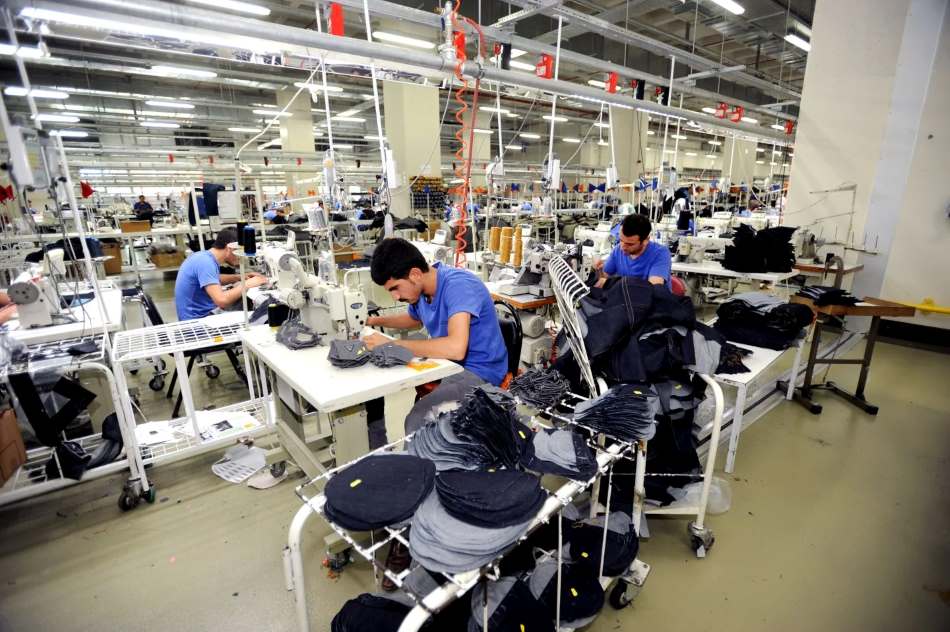
Despite a tough 2023, marked by declining exports and shrinking employment, Turkish textile and apparel industry remains cautiously optimistic for 2024. While acknowledging ongoing challenges like high inflation, increasing production costs, and slow European market, industry leaders point out to strategic advantages and proactive measures that could lead to a positive second half.
Global significance
An export powerhouse Turkey’s textile export was worth $11 billion in 2023 (down 10 per cent from 2022) and garment and apparel business was worth $19.2 billion (down 10.7 per cent from 2022). As per Statista, Turkey is the fourth largest exporter of textiles worldwide, with over 4 per cent of the global market share. The value of both textile and clothing exports has more than tripled since 2000. The EU remains the primary destination for Turkish textiles and apparel, accounting for around 65 per cent of total exports. However, exports to Europe saw a 17.6 per cent dip in 2023. Germany and Spain are the top two European buyers, contributing over $7.5 billion in 2021 as per Kohantextilejournal.com. In fact, Turkey managed to maintain its market share despite export decline.
Textiles exports ($ billion)
|
Year |
Export Value |
Change from Previous Year |
Market Share |
|
2021 |
12.2 |
- |
- |
|
2022 |
12.4 |
1.60% |
- |
|
2023 |
11 |
-11.30% |
Maintained |
Garment and apparel exports ($ billion)
|
Year |
Export Value |
Change from Previous Year |
Market Share |
|
2021 |
21.4 |
- |
- |
|
2022 |
21.5 |
0.50% |
Maintained |
|
2023 |
19.2 |
-10.70% |
Maintained |
Sources: Turkish Exporters Assembly (TIM); Istanbul Textile and Raw Materials Exporters' Association (İTHİB)
Turkey is also a leading cotton importer. It is the world's 5th largest cotton importer, ensuring a reliable raw material supply for its textile industry. Turkey also boasts of a well-developed yarn production base, catering to diverse customer needs and offering flexibility in fabric manufacturing. Growing focus on technical textiles like geotextiles and medical textiles presents new opportunities for diversification and value addition.
Over 65,000 textile and clothing companies operate in Turkey, ranging from small, family-run businesses to large-scale enterprises. This showcases a dynamic and adaptable industry structure. While the apparel industry is dominated by small and medium-sized firms, the technology-intensive textile production is increasingly undertaken by large-scale companies embracing innovation. Turkey possesses the complete value chain, enabling quality control and customization across production stages. Moreover, its long history in garment manufacturing has fostered a skilled workforce and efficient production infrastructure.
Beyond exports the domestic retail market flourishes as well. In 2022, Turkish households spent a record 12 million Turkish Lira per month on clothing, reflecting a 158 per cent increase compared to 2019, reveals Statista data.
Growth challenges and new opportunities
Despite its significance, and importance, Turkey’s textile and apparel industry has been facing several headwinds. Notwithstanding its proximity to Europe, exports to the continent have gone down. Moreover rising production costs are a bane. The labor-intensive sector is impacted by minimum wage increases and exchange rate fluctuations. The country is also facing stiff competition from Asian producers who pose challenges with increasing freight costs to Europe.
Even though it recorded a slight dip in exports, the industry anticipates an improvement in the latter half of 2024. It’s looking at new markets and focusing on regions like Mexico, Colombia, and Australia for export diversification. It’s actively organizing delegations to new markets to establish connections and explore opportunities.
And to move ahead it also needs to put right strategies in places. Focusing on brand value and differentiation in its product offerings is one way. Emphasizing on branding, technological advancements, and adaptation to changing market demands is the need of the hour. Turkey also needs to work on a regional minimum wage to address competitiveness concerns and potentially create jobs. Industry leaders like Ahmet Öksüz, Chairman of Istanbul Textile and Raw Materials Exporters' Association (İTHİB), acknowledges the difficulties but remains hopeful. He highlights these strategic advantages, particularly the proximity to Europe for both textiles and apparel, as Turkey navigates market fluctuations. He emphasizes, the importance of exploring new markets, embracing branding, and undergoing industry-wide transformation to ensure long-term competitiveness.
While the road ahead may not be smooth, the Turkish textile and apparel industry demonstrates resilience and a proactive approach to overcoming challenges and capitalizing on emerging opportunities. The success of these efforts, coupled with its strategic position in both textiles and apparel, will be crucial in shaping the industry's performance in 2024 and beyond.
British Wool re-elects English Northern Board Member
Carl Stephenson, a Bishop Auckland farmer, reclaims his seat as British Wool’s English Northern Regional Board Member for a fresh three-year term, starting April 1st.
Representing since 2015, Stephenson manages 400 acres, tending to Limousin and Beef Shorthorn cows alongside Swaledale, Bluefaced Leicester, and North of England Mule ewes.
Stephenson, expressing joy and honor at his re-election, looks forward to continuing his service and tackling upcoming challenges in the English Northern region.











