


FW
Europe's Source Fashion unveils diverse lineup

The third installment of Source Fashion, Europe’s foremost responsible sourcing exhibition, kicked off with a bang, boasting its largest and most diverse array of manufacturers, suppliers, and artisans from over 20 countries. The event, held at Olympia London, featured a special appearance and keynote discussion by renowned British fashion designer Patrick McDowell, whose captivating collection, 'Marie Antoinette Goes to Liverpool', graced the Source Fashion Catwalk.
At the heart of Source Fashion lies a commitment to responsible fashion practices, aiming to foster positive change within the retail industry. Suzanne Ellingham, Director of Sourcing at Source Fashion, emphasized the event's mission to facilitate better business practices and serve as a catalyst for ethical transformation within the fashion realm. Ellingham stated, "Our purpose is to create a safe buying space for buyers and to bring good, reliable manufacturers and suppliers from around the world to Olympia London."
Connecting the global sourcing community
With a focus on forging connections and fostering innovation, Source Fashion serves as a hub for the global sourcing community. The event brings together a diverse array of material suppliers, artisans, and manufacturers dedicated to crafting exceptional quality garments in an ethically conscious manner. Leading brands and retailers, including Canada Goose, Swarovski, and John Lewis, among others, converged at the exhibition to explore new opportunities and engage in meaningful dialogue.
Prominent figures within the fashion industry, such as Touker Suleyman of Low Profile Holdings and visitor Antonio De Pasquale, lauded Source Fashion for its role in facilitating invaluable networking opportunities and promoting sustainable practices. Exhibitors, like Ettos, a textile traceability platform, expressed optimism about the growing interest in product traceability and transparency.
A highlight of this year's event was the debut of the Source Luxury section, featuring a curated selection of premium exhibitors showcasing high-quality garments and fabrics. From UK-based material suppliers to off-shore exhibitors, Source Fashion provided attendees with access to an extensive range of sourcing options, including near-shore and luxury materials.
Sustainable fashion takes center stage
The Source Catwalk Stage showcased a sustainable and immersive catwalk experience, featuring designs that embody the ethos of responsible fashion. Patrick McDowell's collection, inspired by 'Marie Antoinette Goes to Liverpool', seamlessly merged classic silhouettes with contemporary twists, underscoring the designer's commitment to sustainability and storytelling.
The event also offered attendees a glimpse into the future of fashion, with insightful talks by industry experts such as fashion futurist Geraldine Wharry. Wharry emphasized the importance of embedding future foresight into current practices and highlighted emerging trends, including AI transparency and the shift towards sustainable business models.
As Source Fashion enters its second day, attendees can look forward to a lineup of engaging sessions covering topics ranging from retail transparency to the circular economy. Suzanne Ellingham expressed her satisfaction with the turnout on day one and anticipates continued success throughout the remainder of the event.
Source Fashion stands as a vital platform for the fashion community, offering a unique opportunity to engage with industry leaders, discover innovative sourcing solutions, and champion responsible fashion practices. As the event continues to evolve, it remains a beacon of inspiration and collaboration for those committed to shaping a more sustainable future for the fashion industry.
Texworld Apparel Sourcing Paris conclude latest edition on a positive note
The Texworld Apparel Sourcing Paris trade shows for the fashion industry concluded their latest edition on a positive note, with a broader, more diversified, and accessible offer. Despite increasing industry requirements, visitor numbers remained stable during the event held from February 05-07, 2024 at the Paris Expo Porte de Versailles.
Over the course of three days, nearly 8,000 visitors engaged with 1,300 weaving and clothing companies from 25 countries across the two levels of Hall 7. This concentration of international companies in Europe surpassed that of February 2019, highlighting the central role of European markets in the global fashion industry. Notably, buyers from the Euromed zone, including France, the UK, Italy, Turkey, and Spain, comprised a significant portion of the visitor structure, emphasizing the importance of the Parisian event as a nexus for designers, buyers, and suppliers.
Stylists like Agathe Coudert of the George Rech brand utilise Texworld to select fabrics from France and Eastern Europe while supplementing their needs at Apparel Sourcing with more intricate finished products like knitwear and silk blouses. For exhibitors, such as Oracle Textile Technology from China and Liberty Mills from Pakistan, the event provides a platform to showcase new products and engage with customers.
Furthermore, the trade shows are adapting to market changes by making the international offer increasingly accessible and emphasising sustainability. Initiatives like Texpertise Econogy focus on promoting sustainable products across textile fairs worldwide, reflecting a growing trend towards environmental consciousness in the industry.
To reflect evolving sourcing trends and brand universes, Texworld Evolution Paris has been rebranded as Texworld Apparel Sourcing Paris, accompanied by a new dual baseline. The next edition of the event, scheduled from July 01 to 03, 2024 at Porte de Versailles, will continue to showcase a selective range of products, emphasizing the convergence between textiles and finished goods.
This upcoming session will also be independent of the Paris 2024 Olympic Games, ensuring undivided attention towards Texworld Apparel Sourcing Paris and its role as a leading platform for the fashion industry.
Bangladesh’s export earnings from EU drop 20% in 2023: Eurostat
The downturn in the global economy has led to a decline in Bangladesh's apparel exports, particularly to its largest market, the European Union, where receipts dropped by over 20 per cent in the past calendar year.
According to data from Eurostat, Bangladesh's RMG export earnings from the EU totaled €17.38 billion in 2023, marking a significant decrease of 20.65 percent from the 2022 earnings of €21.91 billion. Exporters attribute this decline to high inflation and rising interest rates globally, which have dampened consumer demand, resulting in an inventory glut in Western retail stores and a reluctance among buyers to place new orders.
Official figures from Eurostat indicate that both knitwear and woven wear exports from Bangladesh to the EU declined in 2023. Knitwear exports fell to €10.64 billion from €13.95 billion in 2022, while woven items earned €6.74 billion, down from €7.95 billion in 2022. Overall EU imports of apparel from the world also decreased by 16.22 per cent to €83.19 billion in 2023 from €99.29 billion in 2022.
Bangladesh's key competitors, China and Turkey, also experienced negative growth in their exports to the EU market in 2023. Largest market for Bangladesh's clothing exports, Germany witnessed a 17 per cent decrease in shipments last year, according to Md Shahidullah Azim, Vice President, BGMEA. He attributes this decline to increased inflation and interest rates due to ongoing wars, which have led to swelling apparel inventories and reduced-rate work orders from buyers.
Despite these challenges, Azim notes a slight improvement in retail sales in December, following Christmas, which has led to a decrease in inventory levels and raised hopes for a turnaround in the industry. He mentions an increase in inquiries and work orders from buyers in recent times, expressing optimism for increased exports from April onwards.
Fazlul Hoque, Former President, BKMEA, links the decline in shipments to sluggish demand amid the economic crisis. He acknowledges that factories faced reduced work orders, leading to early closures and an inability to work overtime.
Looking ahead, exporters anticipate a potential improvement in the work-order situation in the coming months, although the full effects may not be seen for another five to six months. Eurostat statistics show similar declines in apparel exports from China, Turkey, Vietnam, and India to the EU in 2023, reflecting a broader trend of decreased demand in the Western fashion market.
Europe dominates global fashion landscape with six companies: Report
European countries dominate the global fashion landscape, boasting six of the biggest fashion companies. As per a new report by McKinsey & Co, the United States follows closely with four, while Japan and Canada each claim one.
At the forefront stands LVMH Moët Hennessy Louis Vuitton (LVMH), a colossal entity towering over its competitors with a market capitalisation of $421.6 billion. LVMH's extensive portfolio encompasses illustrious luxury brands such as Marc Jacobs, Givenchy, Fendi, and Dior, the latter of which holds a significant 41 per cent ownership stake in the conglomerate.
In a notable turn of events in 2024, Bernard Arnault, Chairman, LVMH ascended to the title of the world's wealthiest individual, surpassing Elon Musk.
Following LVMH is the American giant Nike. Notably, 68 per cent of Nike's revenue in 2023 stemmed from footwear, with the iconic Jordan Brand raking in approximately $5 billion annually.
Other noteworthy names in the list include Inditex, the Spanish powerhouse behind Zara and several other brands, and Fast Retailing, the Japanese holding company presiding over Uniqlo, Theory, and Helmut Lang.
McKinsey & Company forecasts a modest dip in the growth trajectory of the fashion industry from the previous year’s 5 per cent to 7 per cent to this year’s 2 per cent to 4 per cent. The report attributes this to subdued economic conditions and weakened consumer confidence, though the luxury segment is poised to remain a significant contributor to economic profit.
Calvin Klein launches new campaign for Spring 2024 jeans collection
Shot by photographer Mert Alas, Calvin Klein latest campaign with Jung kook to launch the brand’s Spring 2024 collection captured the essence of popstar’s global status, where he exudes natural confidence while commanding the iconic Grand Central Station in the brand's new Jeans styles.
The Spring 2024 jeans collection by Calvin Klein redefines wardrobe essentials with youthful energy and minimalist design codes. It includes the 90s straight fit Jeans that offer a nostalgic twist on denim classics. The oversized monogram T-shirt elevates a staple with a subtle Calvin Klein monogram logo.
Launched February 16, on calvinklein.com, the campaign unfolded on @calvinklein social channels throughout the week. Jung Kook's images also graced out-of-home placements worldwide. This season's campaign delved deeper into Calvin Klein's world, spotlighting culture-shaping talents like Jung Kook in moments that emphasise individuality, confidence, and the full Calvin Klein lifestyle.
Timberland launches new collection for nature lovers
Renowned for its outdoor legacy and commitment to innovation since its inception in 1973, Timberland has unveiled the eagerly awaited Motion Range collection, catering to both nature enthusiasts and urban adventurers alike. This unisex line of outdoor footwear, apparel, and accessories is meticulously crafted to deliver comfort, mobility, and performance across diverse outdoor terrains.
The flagship of the collection, the Motion Scramble footwear, showcases the TimberCush Comfort System and TimberGrip Lug Outsole technology. Engineered with premium materials like waterproof Timberland Leather and Cordura® fabric, these shoes offer unparalleled comfort and over 180 degrees of sole grips, ensuring superior traction, mobility, and durability during challenging hikes.
In alignment with its commitment to sustainability, Timberland introduces the GreenStride midsoles, comprising at least 65 per cent biobased materials, thus ensuring eco-consciousness without compromising performance. The Motion Range extends to apparel with highlights such as the Caps Ridge Waterproof Motion Jacket, featuring a 3D motion pattern for optimal mobility and crafted from DryVent™ fabric made from 100 per cent recycled polyester.
Moreover, the collection ventures beyond footwear and jackets, introducing innovative garments like the Baxter Peak Motion Stretch Pant and the Women’s Trail Tight. These pieces incorporate ergonomic construction and enhanced stretch, providing unisex styling options while utilising recycled materials and water-resistant treatments as part of Timberland's circular strategy.
Timberland's dedication to functionality extends to accessories, including the MiiR water bottle and satchel side bag, designed to complement the outdoor lifestyle. Just as enthusiasts of the iconic Yellow Boot cherish the accompanying dog tag, Timberland ensures that functionality is ingrained in every accessory.
With the launch of The Motion Range collection, Timberland seamlessly integrates its mission to inspire outdoor exploration and environmental stewardship into the fabric of its iconic label. The collection embodies a steadfast commitment to innovation, sustainability, and adventure, catering to the aspirations of nature lovers and urban explorers alike. Scheduled for release in the Fall of 2024, new styles will be available online at timberland.com and in Timberland stores, offering fresh avenues for exploration and self-expression.
Karnataka announces new textile policy for 2024-2029
The Karnataka Government has formulated a new textile policy spanning from 2024 to 2029, to invigorate the textile and weaving sector in the state.
The policy aims to foster increased investment and employment opportunities throughout the state.
One of the significant initiatives under this policy includes the establishment of a mega textile park spanning 1,000 acres in Kalaburagi district, North Bengaluru, through a Public-Private Partnership (PPP) model. A collaboration between the state and Central Governments, This park is anticipated to directly employ 1 lakh individuals and indirectly benefit 2 lakh people. The government has allocated a grant of Rs 50 crore for supplemental infrastructure for this monumental project.
Furthermore, the government plans to construct new textile parks in Kittur Karnataka, Kalyana Karnataka (Raichur), and Mysuru regions through public-private partnerships, with the expectation of generating 10,000 jobs in the near future.
In a bid to formalise the jeans manufacturing sector and uplift it to international standards, a common facility center and Jeans Apparel park will be established in Ballari.
The state government also plans to establish mini textile parks in 25 districts, with subsidies provided in accordance with existing textile policies. Additionally, measures will be taken to promote Khadi activities, particularly in Badanavalu village of Nanjangud Taluk, a place visited by Mahatma Gandhi.
Small and Medium Enterprises (SMEs) will receive government support to tap into the capital market, with the state offering assistance for SMEs to issue Initial Public Offerings (IPOs), covering up to 50 per cent of the cost or a maximum of Rs 25 lakh.
Moreover, the government aims to bolster the startup ecosystem with the launch of three new programs, including the Rajiv Gandhi Entrepreneurship Program and initiatives supporting early-stage women entrepreneurs.
Ethiopia inks agreement with UNIDO to invigorate T&A sector
Ethiopia has entered into an agreement with the United Nations Industrial Development Organisation (UNIDO) to revitalise its textile and garment industry with a significant infusion of funding over the next five years.
As per the agreement between the two parties, Ethiopia will receive $28 million, primarily from the Global Environmental Facility (GEF), with UNIDO contributing $3 million towards the initiative.
Spearheaded by the Ethiopian Textile Industries Development Institute, the project aims to enhance circularity within the industry by implementing more efficient technologies and promoting recycling programs to minimise both physical and financial waste. Alongside technological advancements, regulatory improvements and institutional capacity building will be key components of the endeavor.
Headquartered in Vienna, Austria, UNIDO has implemented over 300 projects across various sectors in Ethiopia since 1968. Its focus on technical support and capacity building has been instrumental in fostering growth in Ethiopia's textile, leather, and agro-processing industries.
Ethiopia boasts a rich history of cotton production and textile manufacturing, with a considerable number of factories ranging from large-scale to small-scale enterprises. In recent years, international brands like Walmart, H&M, and Jiang Lianfa Textile have invested significantly in the country, with total sector investment surpassing $1.2 billion.
Buoyed by the country’s vast livestock population, particularly cattle, the leather industry presents immense potential for growth in Ethiopia. Despite challenges such as outdated equipment and supply chain inefficiencies, the country remains a key player in leather production, churning out millions of square meters annually.
It has introduced several initiatives initiatives such as the establishment of leather industry clusters and the strengthening of fashion design capabilities to address challenges facing the industry. The recent agreement with UNIDO signals a renewed commitment to provide much-needed support to propel its leather sector forward.
Pakistan reports 10.10% rise in T&C exports in January 2024
Pakistan’s textile and clothing (T&C) exports grew for the second consecutive month in January 2024, shows data released by the Pakistan Bureau of Statistics (PBS).
Textiles and clothing exports by the nation surged by 10.10 per cent, reaching $1.45 billion during the month compared to $1.32 billion in the same period last year. On a M-o-M basis, Pakistan’s T&C exports grew by 3.33 per cent in January 2024.
According to the last PBS data, the value of Pakistan’s RMG exports surged by 13.85 per cent in January while the value of knitwear exports grew by 8.39 per cent and that of bedwear increased by. 19.26 per cent.
Pakistan also noted a 5.41 per cent growth in towel exports, 0.46 per cent growth in export of cotton cloth and 126.45 per cent rise in exports of raw cotton and yarn during the month.
Despite this recent growth, the sustainability of this upward trend in the coming months remains uncertain. In the initial seven months of FY24, Pakistan’s textile and clothing exports declined by 2.99 per cent to $9.73 billion from $10.03 billion in the corresponding months of the previous year. This decline was mainly attributed to rising production costs due to higher energy expenses and a liquidity shortage.
Pakistan’s import of textile machinery also declined by 34.81 per cent during this period, indicating a lack of focus on expansion or modernisation projects. On the other hand, imports of synthetic fiber, synthetic and artificial silk yarn, and other textile items increased during the same period.
The previously announced plans by the Ministry of Commerce to offer competitive energy prices to textile exporters and release pending sales tax refunds are yet to be implemented.
The Fabric of Trade: Chinese imports loom large over India's textile industry
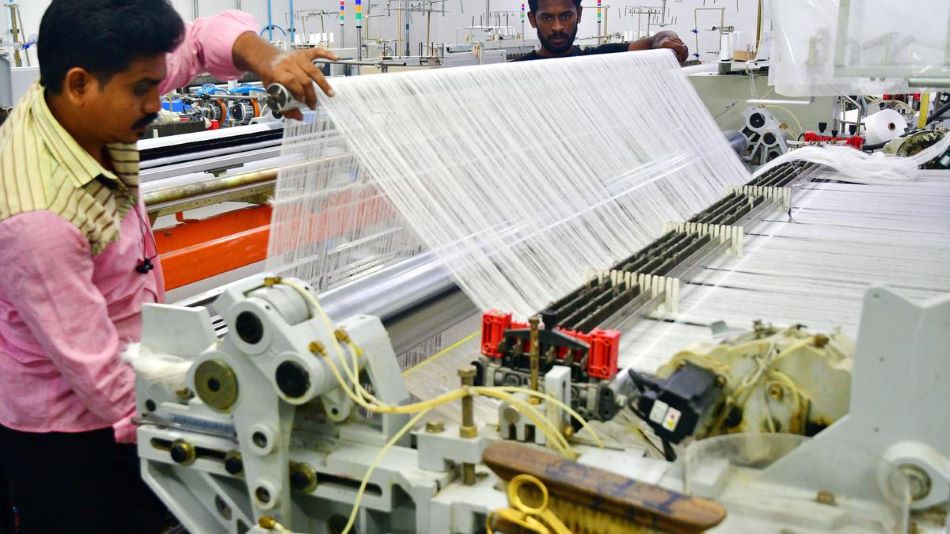
The influx of Chinese fabrics into India has become a contentious issue, raising concerns about unfair competition, job losses, and the fate of the domestic textile industry. This influx raises concerns about legality and the future of domestic manufacturers. The issue is fairly complex.
Policy tailwinds for Chinese fabrics
One major loophole is the Free Trade Agreements (FTAs). India's FTAs with ASEAN countries, including Vietnam, are indirectly benefiting China. Fabric exported from China to these countries can be re-exported to India duty-free, circumventing higher tariffs.
Duty structures are another bane. Import duties on finished fabrics are sometimes lower than on raw materials or yarn, incentivizing import of finished goods instead of boosting domestic production. The Indian government levies lower import duties on finished fabrics (20 per cent) compared to raw materials like yarn at 30 per cent). This incentivizes garment manufacturers to import fabrics instead of making them locally. Moreover, China's government provides significant subsidies and tax breaks to its textile industry, making production costs lower.
Trade Data Review shows a significant increase in fabric imports from China. In 2022-23 (April-Dec), India imported $3.7 billion worth of fabrics from China, a 40 per cent increase over the previous year. As per the Directorate General of Commercial Intelligence and Statistics (DGCI&S), India imported $6.4 billion worth of fabrics from China in 2022-23, primarily synthetic and knitted fabrics. And these are the official figures.
However, under-invoicing and misclassification is an issue. Experts allege under-invoicing of Chinese fabrics to evade higher duties, making them artificially cheaper. The All India Knitters' Association estimates that 30-40 per cent of imports are undervalued. Misclassification of fabrics as finished garments to attract lower duties is also suspected. Experts estimate that under-invoicing and smuggling could inflate the actual import volume by 20-30 per cent. This illegal activity distorts competition and deprives the government of revenue.
Then there is third-party routing. Fabrics routed through countries like Bangladesh, with whom India has duty-free trade agreements, raise concerns about circumventing import regulations. Estimates suggest that 10-15 per cent of fabric imports from Bangladesh originate in China, highlighting the scale of this practice.
Polyester and other synthetic fabrics dominate the import scene, accounting for over 70 per cent of the total volume. These are cheaper to produce in China due to economies of scale. Specialty fabrics like high-end silk and technical textiles are also imported, catering to specific market segments.
Impact on Indian industry
Rising imports through backdoor has affected Indian industry. The textile industry is a major job creator in India, with over 45 million workers. Rising imports are linked to job losses, particularly in textile hubs like Ludhiana, Surat, and Erode. Many small and medium-sized textile units are struggling to survive due to unfair competition from cheaper imports, leading to potential closures and loss of livelihoods. Industry associations claim Chinese fabrics are often sold at prices lower than the cost of raw materials in India, raising concerns about unfair competition. This under-pricing puts downward pressure on domestic fabric prices, squeezing profit margins of Indian manufacturers. Uncertainty and lower profitability discourage fresh investments in the domestic textile industry.
Government action and industry response
To curb this malpractice, the Indian government has initiated anti-dumping investigations against specific Chinese fabric imports. Also, there are proposals to increase import duties on certain fabrics. “The government needs to take immediate action to protect our domestic textile industry from unfair competition," says Sanjay Jain, Chairman, CITI.
Meanwhile, textile industry associations are actively lobbying the government for protectionist measures and promoting domestic production through initiatives like skill development and modernization. They are also asking for stricter enforcement of import regulations and a level playing field for domestic manufacturers.
Indeed, the issue of Chinese fabric imports into India is complex and multifaceted. While trade agreements and policy structures have inadvertently facilitated these imports, the alleged under-invoicing and illegal practices raise concerns about a level playing field. The impact on the Indian textile industry is significant, potentially leading to job losses, factory closures, and economic hardship. Addressing these concerns requires a multi-pronged approach, including stricter enforcement of trade rules, revisions in tariff structures, and support for domestic production. Only then can the Indian textile industry navigate this complex trade landscape and thrive in the global market.











