


FW
Sustainability takes centre stage at CIFF Fashion Fair
 Held in Copenhagen, the CIFF Fashion Fair, focused on sustainability. Besides the regular brands that showcased clothing lines made from organic cotton or other recycled materials, new brands like Tomorrow, OFFT, 1331 and Cult Studios also incorporated sustainability as a part of their DNA.
The Special Project area focused on the theme: ART - Alter, Repair & Transform. It enabled visitors to up-cycle and renew their old jeans with unique embroideries at the denim tattoo bar. Expert menders and designers assisted the visitors and also coached them on how to repair and renew own clothes.
New facilities planned for the sporting area
Young London designers Bethany Williams showcased unique denim pieces conjured up from leftover fabric.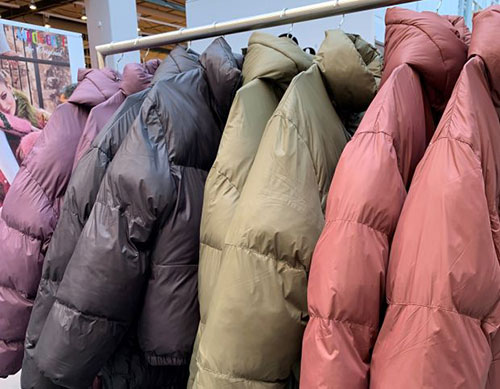 Together with Lee, each of them designed eight denim items, which were exhibited at the Special Project area.
New this season was the Sporting area where labels such as Arcteryx Veilance, Veja, Kavu, Petra Design and Doya presented their new collections. Kristian Andersen, CIFF Chief Innovation Officer had announced last season that it had planned bigger things for the Sporting area in 2020/21. It also plans to build sports facilities for the community.
Setting the trends for F/W 2020-21
CIFF also showcased trends for F/W 2020-21. Sand and earth tones will dominate in color while sporty minimalism, technical and functional details, straight lines, simple silhouettes and wide cuts were translated into the collections by countless labels. In terms of fabrics teddy fur, cord, knitwear and flannel were highlighted.
Kolkata Fabric Expos in June
Kolkata Fabric Expo will be from held June 13 to 14, 2020. The trade show will provide a common platform for textile and accessories manufacturers and buyers. Around 80 exhibitors are expected to showcase textiles and fashion accessories to an estimated 4,000 visitors. The two-day business-to-business trade show will cater to garment manufacturers, wholesalers, and buyers to facilitate networking, ideas exchange, and trend forecasting for the coming season.
A fashion expo will be hosted this year with a number of traditional wear-focused runway shows to promote clothing brands, with a focus on brands from around Kolkata. Kolkata fashion expo is eastern India's biggest fashion event aimed at bringing together the brightest and the best fashion minds from the country. This event has been created to provide an ideal platform where leading manufacturers, wholesalers and buyers will come together under one umbrella to idea and exchange thoughts on enhancing the fashion culture of India. The fashion expo is a one-stop facility with the best technology and creative ideas, a combination of quality, technology, and exemplary customer service. The aim is to launch a fashion renaissance in Kolkata. The fashion expo was launched in 2015 to showcase the region’s garment industry. Since its inception, the event has held multiple editions both in India and abroad.
Coronavirus leads to rescheduling of DTG 2020 in Bangladesh
The schedule for largest textile machinery trade fair in Bangladesh ‘Dhaka International Textile and Garment Machinery’ (DTG) has been changed from February 20-23, 2020 due to Coronavirus outbreak. The new schedule is for the trade fair to be held from June 11 to 14, 2020. This exhibition will connect local apparel and textiles manufacturers and exporters with global manufacturers, dealers and suppliers. It will also focus on the untapped markets that are flexible and important for Bangladesh.
DTG visitors can access diverse distinct exhibits and strong offerings from around the world, while also enjoying one-stop procurement exchanges at the best platform for seeking ideal suppliers on a comparison basis. DTG has annually kept bringing world-class professional brand suppliers for Bangladesh’s textile and garment industries and has been likened to a ‘mini ITMA.’
Leading exhibitors ranging from textile machinery, auxiliary equipment, accessories for textile machinery, bleaching and washing machinery, chemicals and dyes, cloth processing machinery and accessories, embroidery equipment, felting needles inspecting, measuring and folding machinery, knitting machinery, laundry equipment looms, spinning machinery and accessories will participate at the exhibition and showcase their latest technologies for the textile industry.
Many participants in the fair will showcase their latest tech solutions for the first time. The estimated participation would about 36,000 visitors.
Popularity of sewing increases amongst young generation
With fabric stores of yesteryear falling off the map, a new industry is rising up to meet the modern demands of young ‘sewists’. In the past 10 years, sewing clothing is experiencing a surge of popularity among these generations. The sudden interest is spurred, in part, by recent and widespread criticism of fast fashion.
These new sewists are coalescing on social media, learning new skills through videos, taking part in online sewing challenges on Instagram, and creating podcasts to share tips with one another. Sewing patterns, the paper blueprints home sewers use to create clothing, have changed dramatically in the past decade. Once dominated by brands birthed in the 1800s such as Vogue and McCalls, the sewing pattern business has ballooned to include countless online-only startups, such as Friday Pattern Company and Grainline Studio.
These newcomers are led by young women who are drafting modern, easy-to-understand patterns that can be downloaded and printed at home.
Indian Textile ministry awards exporters for their outstanding performance
"At a glittering function of The Synthetic & Rayon Textiles Export Promotion Council (SRTEPC), held on February 08, 2020 in Mumbai, Smriti Zubin Irani, Union Minister of Women & Child Development and Textiles awarded exporters of synthetic textiles for their outstanding export performance for the year 2018-19."
 At a glittering function of The Synthetic & Rayon Textiles Export Promotion Council (SRTEPC), held on February 08, 2020 in Mumbai, Smriti Zubin Irani, Union Minister of Women & Child Development and Textiles awarded exporters of synthetic textiles for their outstanding export performance for the year 2018-19.
The SRTEPC Special Award for the Best Overall Export Performance (Gold Trophy) was won by Reliance Industries. Grasim Industries won the Silver Trophy for Second Best Overall Export Performance and Wellknown Polyesters received the Bronze Trophy for Third Best Overall Export Performance. RSWM was also awarded a trophy of appreciation in this category.
The other companies who were honoured in various categories included: D'décor Home Fabrics, D'décor Exports., Sutlej Textiles and Industries, SAAM Textiles, Rughani Brothers, Le Merit Exports, Banswara Syntex, Dicitex Furnishings, PNR Industries, Grasim Industries Unit : Indian Rayon, Filatex India, Madura Coats, SKAPS Industries lndia, Pee Vee Textiles, Daman Polythread, Vardhman Textiles, Goyal Knitfab, Kishorilal Shyamsunder, Shriram Rayons, Siddhachal Textile, Reaghan Fashions, Duratex Exports, Atlas Exports (India), Shreekrishna Dyeing & Printing Works and BSL. Certificates of Merit were presented to Tulip Garment Accessories and Vineet Polyfab.
The Hon'ble Union Minister of Women & Child Development and Textiles, Smriti Zubin Irani said that despite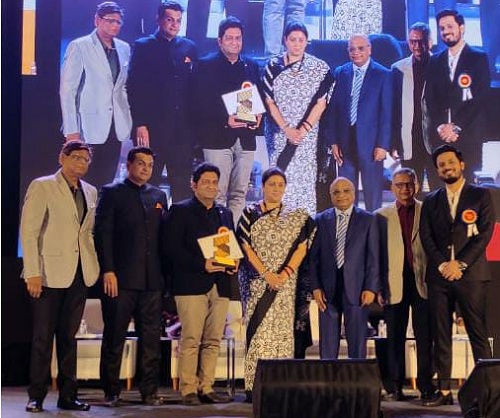 global slowdown and other insurmountable difficulties faced by the textile industry, exports of MMF textiles during 2018-19 was to the tune of US$6.13 billion. Lauding the efforts of the exporters, she said that this was possible due to the concerted efforts of the Council and its member exporters. She also informed that the Council has vision of achieving US$ 7 billion by the end of financial year 2020-21. She remarked that the recognition of the outstanding performance by exporters will motivate the industry to excel in the coming year and spur them to imbibe international best practices.
In his speech, the SRTEPC Chairman Ronak Rughani mentioned about the milestone announcement by the Government made in the recent Budget 2020-21 for setting up of the National Technical Textiles Mission with a four-year implementation period fram 2020-21 to 2023-24 at an estimated outlay of Rs. 1,480 crore. He said that this will be a great lease of life for the MMF textile segment because more than 90 per cent of fibers used in the Technical Textiles segment come from Manmade fibers.
The SRTEPC Chairman said that it’s Council's tradition to recognise the untiring efforts made by our members in export front and celebrate together the outstanding achievements and enterprising skills.
Anil Rajvanshi, Convener of the Export Award Committee and former Chairman, SRTEPC said that the export award function is not just an event but a celebration of the hard work put in by the award winning companies.
Union Minister of Women & Child Development and Textiles released a study report by Gherzi Textil Organisation AG, Zurich on "Promoțing Growth of Man-made Fiber Textile Industry in India - A Roadmap to identify gaps and suggest measures". This report would help in addressing the issues pertaining to both production and export of man-made fiber textiles
Messe Frankfurt India to organize Texcare Forum India
Texcare Forum India will be held on 15th February, 2020 at Bombay Exhibition & Convention Centre, Mumbai. The event is organised by Messe Frankfurt India Trade Fairs Pvt Ltd.
The event will focus on the scope of Industry 4.0 - Automization & Digitalization of Laundry & Dry Cleaning and re-thinking Laundry & Dry-Cleaning Business in the Digital Era.
For the textile, hospitality sector media and journalists covering water treatment and recycling technologies, the one-day Texcare Forum India - LaundrexNet summit will also take up discussions on the challenges in water management for industrial laundries/ textile care market and highlight cost-effective, energy efficient and eco-friendly Laundry Water treatment and recycling technologies.
The highlight of the event will be a tête-à-tête with Elgar Straub, Managing Director, VDMA Textile Care, Fabric and Leather Technologies.
Wool market puts aside Coronavirus
The wool market in Australia has shrugged off concerns about the Coronavirus and got down to business working on refilling the pipeline. The market showed considerable strength across virtually every micron group and quality type as buyers from all parts of the globe had a crack. Initially markets such as equities reacted badly but then mostly recovered or even increased such as the Australian stock market which is up around three per cent since the crisis began.
Supply chains in virtually every industry are being stretched, sometimes to breaking point. However, the wool fiber is known for its strength as well as elasticity. Often the wool market leads the way or more likely just recovers quicker. European, Indian and other Asian countries are all operating more or less full steam ahead, and production managers are searching high and low for wool to process.
The most commonly held position at the moment is that no new production will be coming off the combing machinery until March. Essentially this would see no new production of tops or yarn reaching Europe until the end of April which may test the elasticity of the supply chain to the very limit. In the meantime, the greasy wool market is being balanced very well by the growers on the supply side of the equation.
Cornovirus raises sourcing concerns from China
As coronavirus continues to spread, concerns about the outlook of sourcing from China are growing. Many stores including well-known clothing and footwear brands have been closed. Major cities in the country have been locked down, making it impossible for many workers to return to their job. Further, it is hard to predict how long such an unprecedented large-scale lockdown will last. In fact the real impact of the coronavirus is yet to come. For western fashion brands and retailers sourcing from China is always slow in January and early February because of the Chinese New Year. Countries around the world have begun to impose travel restrictions on Chinese travelers.
While last year’s tariff war had pushed Western fashion brands to source less from China, the coronavirus could accelerate companies’ sourcing diversification strategy further. But shifting sourcing orders to other countries does not seem to be a quick solution at this point. China remains the single largest textile and apparel supplier with no alternatives. Other apparel exporting countries especially those in Asia rely heavily on textile raw material such as yarns and fabrics made in China. Many apparel factories in Asia and Africa have management teams from China.
US apparel imports from China down nine per cent
Apparel shipments from China to the US fell 9.1 per cent in 2019. This brought China’s import share of apparel down to 29.68 per cent in value terms for the year compared to 33 per cent in 2018. In volume, China’s apparel import share fell to 39.93 per cent in 2019 from 41.9 per cent the previous year. US imports from Vietnam gained 11.01 per cent in 2019.
This gave Vietnam a 16.18 per cent market share, rising from 14.75 per cent in 2018. Imports from Bangladesh increased 9.83 per cent for the year while India’s shipments rose 6.8 per cent. Imports from Cambodia jumped 11.29 per cent for the year and Pakistan’s shipments increased 7.11 per cent. US apparel imports from Mexico were down 6.49 per cent for the year.
The only other top apparel suppliers that notched a decline in imports were: Indonesia, down 1.68 per cent, and El Salvador, off 2.45 per cent. This came as US’ overall apparel imports fell 0.3 per cent in volume. In value, US apparel imports from the world increased 1.16 per cent.
Among secondary suppliers showing strength in 2019 were Jordan, Egypt, Kenya, Madagascar, Ethiopia, Haiti, Turkey and Myanmar.
New York named ‘Top Global Fashion Capital of the Decade’
Global Language Monitor has named New York as the ‘Top Global Fashion Capital of the Decade’, while Paris takes the 2019 crown – its third in the last 10 years. GLM has been ranking the Top Global Fashion Capitals since 2007.
There is an ongoing battle between Paris and New York for the top spot. Over the decade, New York had an average rank of 1.6, finishing in first or second place every year since 2010. Paris finished second for the decade with an average rank of 2.4. London took third place on the decade's ranking with an average of 2.7, centering upon its spectacular two-year run from 2011 to 2012, coinciding with a highly anticipated Olympics Game and Kate Middleton’s Royal Wedding,
In 2019, Tel Aviv and Tehran also joined the rankings. Tel Aviv ranked 56th, while Tehran took the 57th spot. Tel Aviv, promoted as the ‘non-stop city,’ has a robust, globally renowned, public fashion profile. Tehran, under the leadership of the Islamic state, has a hidden but vibrant fashion scene.











