FW
EU helps Myanmar emerge from poverty
In Myanmar, the EU’s preferential trade tariffs have helped lift thousands out of poverty and reduce inequalities. Since 2015, Myanmar’s exports to the EU have grown by over 230 per cent. The EU’s enhanced engagement with Myanmar focuses more broadly on compliance with human rights conventions and labor rights. Partly thanks to GSP, countries like Myanmar are making constructive efforts to improve on labor rights, child rights and adherence to universal values. However, there are a number of areas where the EU will continue to encourage Myanmar to make urgent efforts, like democratic reforms, freedom of expression, cooperation with the UN and the rights of the Rohingya. The EU imports twice as much from least developed countries like Myanmar as the rest of the world does. Myanmar has shown a constructive attitude and engagement on the issues of concern raised by the EU.
The European Union will continue to engage with countries, including Myanmar, that fall under its Everything But Arms (EBA) trade initiative. EBA is an initiative under which all imports to the EU from least developed countries are duty-free and quota-free, with the exception of armaments. The initiative is part of the EU Generalised System of Preferences (GSP) aimed at encouraging development of the world’s poorest countries.
Premiere Vision to host Fashion Source in Shenzhen this November
Fashion Source will be held in China from November 27 to 29, 2020. This is a leading textile and fashion trade shows in Asia and takes place twice a year organized by Premiere Vision. The upcoming event will bring together a creative range of materials – yarns, fabrics, accessories, leathers, textile designs – from a broad selection of Asian and European producers. Founded in 2001, Fashion Source brings together the entire Chinese fashion industry. The leading apparel sourcing trade fair in the South of China, welcomes in each editions (May and November) more than 1,500 exhibitors and 50,000 visitors from around 20 Asian, European and American countries. The location in the heart of Shenzhen has contributed to its rapid expansion, driven by the long history of the region’s textile and fashion industry, technological developments, and its proximity to Hong Kong and Canton.
China - looking beyond the current health situation - is expected to become the world’s largest market for clothing and luxury goods as of 2025. Première Vision’s intention is to help companies develop their activity in this major fashion market, which is rapidly growing more sophisticated and upscale, particularly in southern China, which is seeing an extremely rapid development of industry players.
US jeans imports fall three per cent in 2019
In 2019, US jeans imports declined 3.16 per cent. The balance of power in denim manufacturing took a dramatic turn in 2019, leading to a decline in volume and value for the top three suppliers–China, Mexico and Bangladesh–and strong upswings for the next three–Vietnam, Pakistan and Egypt.
US denim imports from China plummeted 25.87 per cent in volume in 2019. The fall in value was 25.68 per cent. Mexico’s denim shipments to the US fell 1.84 per cent in value in 2019. The fall in volume was 6.78 per cent. Denim shipments from Bangladesh posted a 3.5 per cent increase in value in the year, but saw volumes fall 2.49 per cent. Jeans imports from Vietnam jumped 25.6 per cent in value in 2019. In volume, the country shipped 28.62 per cent more merchandise for the year. Denim imports from Pakistan rose 8.69 per cent in volume while increasing 5.13 per cent in value. Imports from Egypt rose 12.7 per cent in value and increased 8.96 per cent in volume. Denim imports from Nicaragua were up 16.91 per cent in value terms while volume was down 3.73 per cent. And denim imports from Cambodia increased 11.8 per cent in value as volume decreased 0.49 per cent in the year.
Eurovet shuffles shows across three continents
Eurovet has made changes for 2020 events. This will include all three continents where the show organiser is active. In the US, Curve until now held in Las Vegas will be moving further West, to Los Angeles. Eurovet has brought forward the dates of Unique by Mode City show, to link up with the Paris Fashion Week, and has also set up a parallel event called Culture Swim. In spring, Eurovet will be making changes to its Asian program with a new event, Interfilière Shenzhen.
This too has a strategic change involving a relocation, as the Interfilière supply chain event from Hong Kong to China. The move is part of a new partnership with the China Brands Innovation Design Week (CKIW) show, a major knitwear trade event set up in the spring, after a split between its organisers. The first edition of Interfilière Shenzhen is scheduled from April 9 to 11, 2020. At the next edition of Interfilière Shanghai, on September 24 to 25, 2020, Eurovet will in fact try a new format, opening the event to consumer brands and not just textile manufacturers. Initially, the focus will be on a selection of Chinese brands, picked by Eurovet to complete the industry picture.
Coronavirus: Not just China, global textiles and apparels sector feels the heat
"The impact of Coronavirus can be felt across the globe. The apparel and textile industry across the world is facing numerous challenges from sourcing to retail. And this uncertainty is affecting business"
 While the US-China trade war has negatively affected Chinese textile and apparel industry, the latest Coronavirus threat is sparking even more uncertainty in supply chains. The unpredictability surrounding the extent to which this virus is likely to spread, coupled with government-mandated production delays in select provinces and cities, is leading to an uncertainty over how it is likely to impact global manufacturing across sectors. It is likely to put export growth on hold, prolonging uncertainty regarding how motivating the phase one may be for US cotton exports.
Demand for textile fibers to fall
As data from the firm Wood Mackenzie reveals, one impact of the virus outbreak is likely to be the weakening demand for textile fibers like polyester as business activities may stall. Due to weak demand, producers, spinners and weavers are likely to return to their hometowns, which could lead to further faltering of the polyester chain. Besides polyester, other related industries like paraxylene industry are also likely to suffer.
Global cotton consumption is likely to dip by least 500,000 bales, thus increasing world carryover and reducing US exports. This could increase US cotton inventory by over a million bales over the past year to 5.9-6.0 million bales. Following prolonged decline in the US cotton exports, China recently made its strongest purchases of cotton in nearly two years. The country has been a key engine of economic growth for the past several decades.
Brands closing stores to prevent losses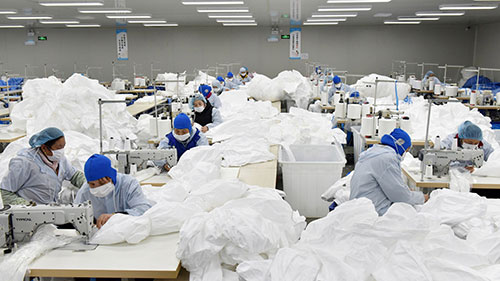
Besides textile players, many brands and fashion houses in China are also reeling under the impact of coronavirus on their businesses. Some brands that have shut stores are: Nike, Adidas,and Capri Holdings, which owns Versace, Jimmy Choo and Michael Kors. These brands have warned investors of sales taking a hit if the virus continues to spread across China. To prevent this from happening, Capri has closed around 150 of its stores in mainland China while Nike has down shutters on about half of the stores. Adidas too has shut a significant number of shops alongwith Ralph Lauren Corp and Tiffany & Co.
As a result of this epidemic, Levi Strauss & Co, which has shut about half of its stores in China due to Coronavirus, has taken a near-term financial hit. The virus outbreak is also impacting the assessment of world’s leading luxury groups. For instance, LVMH and Kering have lost their shares by around 5 per cent and 6 per cent. The epidemic has also put expenditures worth $149 billion at risk. As global newswires have revealed, Chinese stock markets have plunged by around 8 per cent since the outbreak of the virus.
Fashion events, fairs across the world being deferred
As the epidemic intensifies, the National Chamber of Italian Fashion has declared its solidarity with China. At the Milan Fashion Week, the chamber will introduce a twofold campaign, with a special event and multiple video conferences. In its 2020/21 season, it will organise 56 runways dedicated to ready-to-wear for fall-winter. The opening of the fashion week will take place on February 18, with the Chinese solidarity campaign. The opening of the Fashion Hub Market, a space dedicated to emerging creators, will serve as the backdrop for the event. Some Chinese designers based in Italy and Europe who typically show at Milan Fashion Week, will not participate this time around due to late shipments from China.
Meanwhile American Events suspended the NE Materials Show, scheduled for February 5 and 6 in Boston, as well as the NW Materials Show, scheduled for February 12 and 13 in Portland, OR. Organisers from Hong Kong-based Asia Pacific Leather Fair said they were considering postponing their event, set for the end of March. Major technology shows in Bangladesh, namely Dhaka International & Garment Machinery (DTG), has also been postponed.
The Première Vision Sports Show, Portland will be held as planned on February 12 and 13 but will not host attendees and partners from China.
Sourcing delays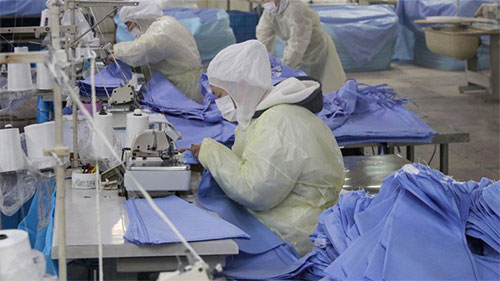
With long business closures and manufacturers in Hubei – the epicentre of the virus –closed until February 13. Many companies have informed their stakeholders about the delay in deliveries, while some are planning to shift their orders. As the disease continues to spread, there are concerns about sourcing from China. While factories in China are scheduled to reopen, numerous big cities in the country have been locked down, making it impossible for workers to return to their job. Further, it is hard to predict how long such an unprecedented large-scale lockdown will last.
Global fashion companies are at the moment following a ‘wait and watch’ policy. However, some delays in orders are unavoidable. At the same time, shifting orders to other countries is not a quick solution at this point either because, China remains the single largest textile and apparel supplier with no alternatives; other apparel exporting countries (especially those in Asia) rely heavily on textile raw material, such as yarns and fabrics from China; in many apparel factories in Asia and Africa, the management team is from China. And, many countries around the world have imposed travel restrictions on Chinese travelers at the moment. Indeed, the present situation could push more companies to look for new sourcing destinations. Moreover, for global fashion brands and retailers sourcing cost could rise as it requires more resources to move products around and build new supply chains
Need for a trade agreement to save EU, UK from future mayhem post Brexit
"Uncertainty prevails in Great Britain as the country exited from the European Union. Though negotiators have been trying to strike a deal to govern Britain’s future commercial relationship with the EU, if they fail to achieve this by December 31, 2020, UK would lose its duty-free access to EU markets. As a result, both sides would revert to commercial rules negotiated in 1995 by the WTO. Additionally, British exports to the EU will have to face tariffs."
 Uncertainty prevails in Great Britain as the country exited from the European Union. Though negotiators have been trying to strike a deal to govern Britain’s future commercial relationship with the EU, if they fail to achieve this by December 31, 2020, UK would lose its duty-free access to EU markets. As a result, both sides would revert to commercial rules negotiated in 1995 by the WTO. Additionally, British exports to the EU will have to face tariffs.
The absence of a trade deal would also result in trade in both directions reverting to WTO norms. This is likely to decimate the British industry and destroy jobs in the country. However, it could also provide the country with an opportunity to pursue better trade terms with other nations.
Import prices hike to impact trade relations
Another implication of Brexit is the increase in prices for certain European imports, including food, cars and textiles. As UK proposes to replicate the EU’s tariff commitments and quotas at the WTO, tariff rates on imports of certain European goods like cars, cod and Haddock, suits, clothing and other apparels would increase from the current zero rates. This would lead to the UK losing continuity of trade relations with around 72 nations that have forged preferential trade agreements with the EU. So far, the British government has secured continuity agreements with over a dozen countries, including Israel, South Korea and Switzerland. If the UK fails to roll over new EU agreements, WTO tariffs would also apply to British goods and services exported to these nations.
Increase in delays and red-tapism
For next six months or more there would be massive border queues and persistent delays. France had planned to implement post-Brexit border controls, and the UK government estimated 50 to 85 per cent freight truckers wouldn’t have the correct paperwork to enter the EU via France. That would delay cross-border shipments by up to 2 1 to 22 days and disrupt the EU and UK’s tightly integrated supply chains.
Service industries in the UK such as finance, law and accounting could lose preferred access to the lone market which provides freedom of establishment and free movement of people within the EU trading bloc. This would lead to more red tape and headaches for Britain’s services providers.
The WTO’s ability to fully settle trade disputes was dealt a major blow when the US paralyzed the organisation’s appellate body in 2019. This means the WTO can’t fully settle trade disputes however, it won’t have an immediate impact on the rules that govern UK-EU trade. Countries are developing an interim appeal-arbitration mechanism to help resolve their disputes and the WTO still has the ability to negotiate new trade deals and monitor how nations implement their trade accords.
Bangladesh: 75 garment factories shut operations
Around 75 small and medium-sized garment factories in Bangladesh have ceased production or closed down completely after losing out on orders as they could not fulfill the compliance requirements.
Industry stakeholders, most of the small- and medium-sized garment factories depend on sub-contracts as they do not get direct orders from buyers. In recent years, however, the flow of sub-contracts has dried up as the units are unable to meet the strict compliance requirements set by Accord and Alliance after the Rana Plaza collapse in 2013.
A small industrialist starts his/her business with a maximum capital of Tk. 15–20 million. But the factory needs a huge amount to meet the compliance measures. The remediation cost for a factory is estimated at Tk. 30–40 million. Bigger businesses can remediate their factories as they have the capacity, but smaller ones cannot do this. The ever-dipping profits and work orders will make the situation worse in the near future.
Buyers avoid brands that fail to focus on sustainability: ING
A new report by global financial institution ING reveals, consumer attitudes have reached a tipping point, leading them to avoid brands that don’t prioritise sustainability and environmental issues. Despite demanding change, customers will continue to prefer the linear ‘convenience economy’ model of ‘take, make and waste’ unless a more seamless transition towards circular economy is offered.
The report, titled ‘Learning from consumers: How shifting demands are shaping companies’ circular economy transition’ demands more convenient sustainable options for consumers in order to create meaningful engagement with the circular principles of reduce, reuse and recycle. Around 83 per cent respondents believe their behavior and choices can have a positive impact on addressing global environmental challenges. Furthermore, 61 per cent say they would be less willing to buy a company’s product if they discovered it was performing poorly on environmental practices.
The report notes the potentially vast gains for businesses that embrace the ‘reduce, reuse, recycle' principles of the circular economy by aligning with consumers’ changing demands. To better capture the opportunity of circular economy and engage with customers, companies must first understand the barriers to widespread consumer adoption. The barriers include cost, awareness and education, empowerment and reassurance, and circular infrastructure and convenience.
Bombay Dyeing targets revenue of Rs 500 crores in 2020
Bombay Dyeing is eyeing revenue of Rs 500 crores by 2020. It is betting big on its menswear brand Cezari to drive growth. It currently has 27 company-owned stores, 3,000 multi-brand stores and over 400 franchise stores across India. The company reported a consolidated net profit of Rs 162 crores for the December quarter as against a net loss of Rs 195 crores it had posted in the corresponding quarter last year. Total revenue for the quarter was Rs 390 crores as compared to Rs 425 crores it had reported in the year-ago period. The polyester segment contributed Rs 271 crores to the company’s revenue during the quarter while revenue from the retail and textile segment stood at Rs 46 crores.
Bombay Dyeing is one of the seven producers of polyester staple fiber in the country with a market share of about 15 per cent. Bombay Dyeing entered the business in 2006. The company produces a wide range of specialty products, including micro fibers, super micro fibers, trilobal, super high tenacity, optically white, optical white super high tenacity, micro super high tenacity, black and black super high tenacity. Bombay Dyeing has a presence all over the globe, except Australia and New Zealand, where there is no spinning industry.
Canclini launches its SS 2021 collecion – focuses on sustainability
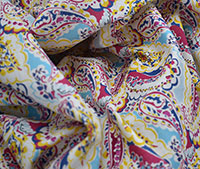 Canclini 1925 starts the new year by setting out guidelines for the future, focusing on a diversified product range, increasingly heterogeneous and green, as well as introducing all the novelties in the 2021 spring-summer collection. The strategy aims at greater product and market diversification, steadily keeping an eye on the quality of products and on the manufacturing process which needs to be even more ethical, innovative and sustainable.
Per Lei and Beachwear: a new extended product range - Constant attention to the market and to new trends lead to new and exciting interpretations in the 2021 SS product range. As a result of this approach, the two collections have been designed to encompass new worlds and products, leading to an offer which is sustainable and of outstanding quality at once.
The line Per Lei includes stylish fabrics with a totally feminine allure. The focus is to leave the comfort zone and 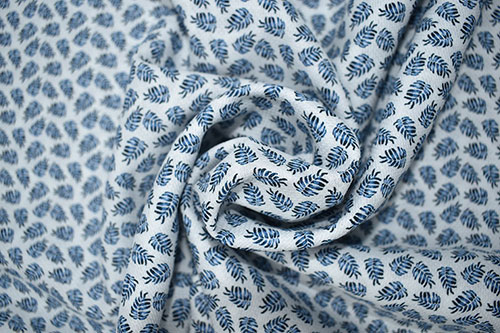 explore a field outside men’s apparel, relying on the expertise, using it to the advantage of other types of fabrics; the Per Lei range has been designed both for a young and dynamic woman and for a successful woman, catering for both formal and more casual occasions. The Beachwear range, on the other hand, is characterised by its colourful and lively interpretations, with a distinctly summertime mood, presented on appropriate foundations. Last but not least, the restyled Blue 1925 line, with denim and non-denim fabrics, offer a wide and multi-faceted range of concepts, for customisable, creative and adjustable projects for any outfit.
The 2021 SS collection: a continuing history of sustainability - Attention to research and the development of sustainable solutions has been rooted in the DNA of Canclini 1925 for decades, and its new 2021 SS collection is even more focused on green concepts. Innovation, energy impact and choice of raw materials are the distinctive traits of the company which, for the new range too, uses sustainable fibres such as Tencel and Cupro, bio cotton, organic linen and recycled man-made fibres. Hence, a comprehensive and diversified range, which includes classic fabrics with a restyled touch.
From the inimitable Lini by Canclini, to items with a high sustainable innovation rate, for example Madre Terra, Bio or Recycled, the range also includes a sports section, increasingly structured, as well as print proposals. Also worth mentioning are the restyled fabrics called Easy Life, which are low-maintenance, and the new Techno Shirt capsule, where formal meets sporty, in a perfect synthesis of versatile and highly eco-performing products, thanks to the use of man-made fibres.
“To deal with the philosophical and ethical evolution now underway, we are proud to put to the service of products and processes our consolidated culture of sustainability: an all-encompassing approach to wellbeing, protection of the planet and its inhabitants, in order to offer ever-evolving products, which also tell about our history of respect and commitment” says Mauro Canclini, Creative Director at Canclini 1925.