FW
Dubai International Apparel and Textile Fair in November
International Apparel and Textile Fair will be held in Dubai from November 28 to 30, 2022. The event will showcase clothing, accessories and more from global manufacturers, including India. The event has opened exhibitor registration and has scheduled over 100 exhibitors. The trade show will bring together buyers, retailers, and wholesalers from the Middle East and the North Africa region are looking to source apparel to retail in international markets. Over 3,000 buyers from the Mena region will browse a wide selection of apparel, textiles, accessories, home ware, footwear, leather goods, jute products, handbags, machinery, and more. With the apparel retail market growing swiftly in the Gulf region, there exists significant opportunities for businesses to establish themselves as leading sourcing brands in the region. The three-day bi-annual trade show will feature networking opportunities for brands with buyers from countries including Saudi Arabia, the UAE, Kuwait, and Bahrain, among others.
Designers and industry professionals are flocking to Dubai, which is fast making its mark on the industry. Dubai has become an important centre, with a very interesting energy and a very strong creative vibe. Fashion with a conscience is a priority for a lot of brands in Dubai. Dubai is also making waves in interior design. For many designers Dubai acts as a creative inspiration for their work since Dubai is a melting pot in the Middle East and the Gulf and both designers and Dubai love elaborate things and artistic things.
Fall in Vietnam’s June cotton, yarn and fabric imports
In June 2022, Vietnamese cotton imports dropped by 35 per cent year-on-year and 22 per cent month-on-month. Vietnamese yarn imports moved down one per cent year-on-year and 10 per cent month-on-month and exports dropped by 23 per cent year-on-year and three per cent month-on-month, states at CCF Group report.
Fabric imports decreased six per cent year-on-year and 18 per cent month-on-month. Vietnamese textiles and apparel exports moved up by 17 per cent year-on-year and 13 per cent month-on-month. The export value was second only to the highest level in January 2022, the second highest in the first half of 2022.
Vietnam’ cotton imports in June were down 35 per cent over the same period last year and 22 per cent from the previous month. The US was the main source of Vietnam’s cotton imports, accounting for 57 per cent of the total imports, followed by Brazil and Australia, accounting for 17 per cent and nine per cent respectively.
In conclusion, Vietnamese textile and apparel exports in June increased for four consecutive months, which were second only to the highest level in the first half of 2022, but its cotton imports, yarn imports and grey fabric imports all decreased year-on-year and month-on-month.
Indian textile exports at record high
India’s exports of textiles and handicrafts were at an all-time high last financial year. Demand for Indian textiles in the domestic and overseas markets is high. Especially after the pandemic, one sector under textiles which has really got a boost is home textiles. The seven mega textile parks that were launched are aimed at reducing the high logistics costs as well as the fragmented value chain which obtains now.
Most of India’s major exporting destinations like the US and EU are opting for a China plus one strategy, which will prove to be beneficial for India since the cost of labor is low in India as compared to that in neighboring countries.
However, Indian exporters face price pressures. Global apparel brands are negotiating hard with Indian exporters as cotton prices have fallen 15 per cent and the rupee has depreciated against the dollar. They want Indian apparel exporters to supply garments at the pre-covid level prices. The impending recessionary pressure in the US and Europe is forcing global brands to negotiate hard with Indian exporters, who have now started looking at other countries like Japan, Australia and Latin America for developing new markets for Indian apparels.
Adidas launches Ivytopia
Adidas has launched a collection in collaboration with Beyoncé’s Ivy Park, called Ivytopia, the new drop includes fashion styles, performance gear, footwear, and accessories available in inclusive and gender-neutral sizing. Moreover, the drop includes children’s wear. In particular, the collection features swimwear and modern silhouettes created with everybody in mind. Design details include floral-inspired prints, bold crystal prints, futuristic details and shapes to evoke another worldly experience. It also includes textiles like printed power mesh, metallic spandex, stretch twills, and French terry that speak to Ivy Park’s love of athleticism and fashion, amplified through lines and cuts that are abstract yet flattering.
Accessories for the collection mirror the apparel’s inspiration and include a five-panel wide brim hat, a reversible IVP bucket hat, as well as a tote that is oversized and multi-functional with removable exterior pouch pockets. Also included is a three-pack assortment of socks in line with the collection’s color palette.
Rounding out the collection is footwear styles including the iconic Stan Smith, which has been re-worked with a bold and slightly futuristic look. Additionally, there are both a new iteration of the Savage sneaker and the Ultra Boost in engineered knit which provides a light touch through design and feel.
Plant-based materials to dominate A/W 2022-23 collections: Textile Intelligence

The European fashion industry seems to be going back to nature as fabrics made from plant-based materials are set to dominate most collections in autumn/winter 2022-23 season. A report titled ‘Survey of the European fabric fairs for autumn/winter 2022-23,’ by the global business information company Textiles Intelligence reveals, fibers extracted from banana, pineapple and agricultural waste will become especially popular during the season.
Performance fabrics to gain popularity
Fabrics for A/W2022/23 will focus on environmental sustainability as manufacturers will introduce collections made from fabrics combining performance with value. Fashion producers will also introduce collections made from artificial leathers, linen and fabrics made using fibres derived from plant waste. Zurich-based fabric producer Bananatex will launch a range of biodegradable and tear-resistant fabrics made using fibres derived from Abacá, a species of banana plant. Extremely durable, these Abacá fibres are mostly used to make shipping ropes. Grown by local farmers in Philippine highlands, these fibers can be found in the country’s sustainably managed forests
To use these abaca fibers derived fabrics in its accessories, apparel and footwear collections, Bananatex is collaborating with major apparel brands like the H&M. Launched in 2018, the company is relatively young compared to contemporaries like the Madrid, Span-based Pyratex that has developed a fabric made using agricultural waste derived from banana cultivation.
Stabilizing oil in the Himalayan regions
Pyratex has launched Element I, a plant-based fabric made using fibres extracted from the stalks of wild giant stinging nettle plants. Naturally strong and breathable, these fabrics are durable and comfortable to wear. Originating in the Napalese Himalayas, Nettle plants and their stalks are harvested annually to promote root growth and stabilize the soil, especially in the mountainous Himalayan regions.
Based in Illinois, US, Natural Fiber Welding is the first company to produce plant-based artificial leather at scale .The company launched Mirum, an artificial leather made with biopolymers derived from agricultural by-products. Artificial leathers are traditionally made using polymers such as polyurethane (PU) or polyvinyl chloride (PVC). However, Mirum fibers are derived from natural fillers, including coconut husk fibre, cork powder, natural rubber, rice husk fibre, and vegetable oil.
Focus on linen fabrics
A/W 2022-23 season will also focus on the linen fabrics. Manufacturers will explore the fibers’ thermo-regulating properties and make it suitable for various applications. Consumers will also continue to source more linen boosting demand during the A/W 2022-23 season, says the Confédération Européenne du Lin et du Chanvre (CELC--European Confederation of Flax and Hemp).
China’s textile industry outlook remains bleak as 30% companies report losses
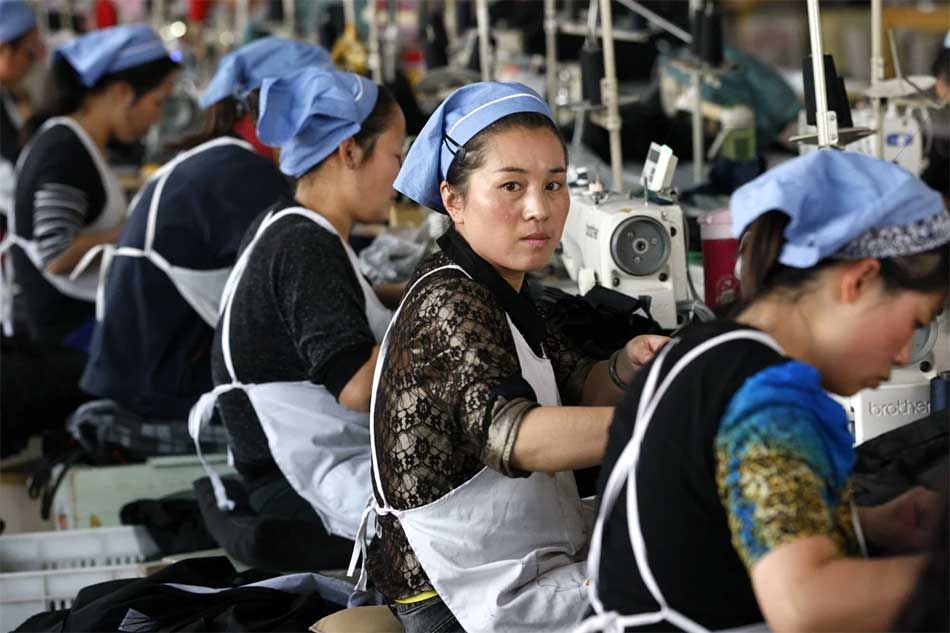
The outlook for China’s textile industry is rather bleak. Nearly, 30 per cent companies have reported a loss in the first five months of this year, as per data by China National Textile and Apparel Council. Similarly, companies’ total profit declined 20 per cent compared to the same period last year. The number of enterprises above a designated size reporting losses declined from 6 per cent to 27 per cent, says a report by Epoch Times. Companies’ total profit also declined 20 per cent to 73.4 billion yuan (about $11 billion).
Production of yarn and textile companies declines
The production of yarn and textile companies above a designated size fell 3.2 per cent and 1.3 per cent respectively year-on-year. Meanwhile, the production of clothing and chemical fiber companies remained constant as that of the same period last year. The average number of workers employed in the industry declined by 2.3 per cent to 5.54 million over the same period of the previous year.
Bigger losses for the dyeing industry
The dyeing industry reported greater losses, as per data released by the Bureau of Statistics of the Chinese Communist Party. In the first five months of 2022, 35 per cent of the 1,684 dyeing enterprises above the designated size in China suffered losses. The losses suffered by these companies also increased by 15 per cent compared to the same period last year. Overall, these companies reported a total loss of 1.535 billion yuan (about $2.3 billion),
Rise in costs leading to losses
The rise in losses of the textile companies can be attributed to growing inputs costs. Since the beginning of this year, price of natural gas, electricity, cotton yarn, and the cost of logistics and transportation have grown significantly, In addition, the strict measures implemented by CCP authorities to control the spread of Omicron resulted in weak consumer demand in China’s domestic market.
China’s total sales of clothing, shoes, hats, and knitted textiles from January to May this year, declined 8 per cent Y-o-Y to 509.3 billion yuan. In May, total retail sales declined 16 per cent Y-o-Y to 95.8 billion yuan (about $14.3 billion).
Great damage from COVID control measures
CCP’s zero-COVID policy and measures to prevent and control the epidemic have damaged the operations of China’s textile and garment companies to a great extent. Since late March 2022, China’s key textile and garment production areas Shanghai and its surrounding areas, Suzhou, Kunshan in Jiangsu Province, Hangzhou in Zhejiang Province and other places implemented lockdown measures on a large scale.
A survey conducted by the Jiangsu Textile and Garment Industry Association in Mid-April looked at the impact of lockdown on the province’s 199 large-scale textile and garment enterprises. It revealed a drop in operating income and liquidity in 85 per cent enterprises. Lockdown measures prevented efficient transportation of raw materials and equipment by blocking the passage of trucks to and from ports. They also led to an increase in freight costs by 20 to 30 per cent, as also labor costs.
Production drops over 50%
As a result, production of 25 per cent of the surveyed companies dropped over 50 per cent. In addition, production of 51 per cent of companies dropped in the range of 20 to 50 per cent. Only 1 per cent companies reported zero disruptions in production. Almost 73 per cent of surveyed companies highlighted increase in production costs as one of the major challenges faced by them while, 67 per cent said, they were concerned over falling orders. Around 65 per cent lamented the lack of normal production and operation while 41 per cent reported payments delays.
In Q1 this year, new order index for China’s textile industry declined 29 points to 37.8 from Q4 of 2021, reveals China Textile Federation Industrial Economics Research Institute statistics.
US denim imports up 40 per cent
Imports of denim jeans by US brands and retailers increased 40 per cent year over year through May compared to the same period in 2021, reveals OTEXA figures. Imports from top supplier Bangladesh increased 54 per cent, outpacing the 51 per cent year to date gain through April and giving the country a 22 per cent market share. Pakistan’s shipments rose 67 per cent, slightly below privious month’s 72 per cent year-to-date gain. Imports from Vietnam were on par with the prior month with a 40 per cent increase to $170.54 million, while China’s shipments rose 24 per cent, gaining ground on the 20 per cent year-to-date hike in April.
Imports from Cambodia increased up 38 per cent in the first five months, up from a 25 per cent rise previously, and Sri Lanka saw a 11 per cent year-to-date gain, slowing from a 21 per cent pickup in the prior month. Imports from Mexico rose 26 per cent. Shipments from Nicaragua rose 31 per cent in the five-month period. Imports from Colombia were up 91 per cent and goods arriving from Guatemala rose 61 per cent.
As evidence of the nearshoring trend, US imports from the western hemisphere increased 30 per cent year to date through May. Taken as a group, the region’s market share stood at 22 per cent.
Indian apparel industry has to seize chances
If the Indian apparel industry plays its cards right there is a big vacuum to be filled, considering some of India’s apparel exporting neighbors are in trouble. While apparel firms look for newer markets, what would really work, according to Narendra Goenka, Chairman, Apparel Export Promotion Council (AEPC), is filling the vacuum left by countries such as Sri Lanka, Pakistan, and Myanmar.
Volume could be a little lower but there is an opportunity in terms of the challenges in neighboring countries, says the Apparel Export Promotion Council. Pakistan is going through a tough time for energy. In Sri Lanka, the situation is dire. Sri Lanka’s exports are expected to go down by 15 per cent or 20 per cent. Myanmar has labor issues going on.
However there are challenges. Cotton prices have cooled down a bit but apparel makers have got a minimal respite from the dip in raw material costs. Customers especially from traditional big markets like US and Europe have been asking for discounts. Customers want a ten per cent to 15 per cent reduction in finished product prices but Indian exporters cannot lower prices by more than eight per cent or ten per cent. Then there is the impact of a weakening rupee. There are some headwinds in terms of the real recession in India’s traditional markets, the US and Europe.
Latest edition of Premiere Vision focuses on climate change
Première Vision was held in France, July 5 to 7, 2022. The physical fall/winter show marked industry-wide acceleration and cooperation in addressing climate impact in the fashion supply chain. At a time when global warming is already impacting supply — intense droughts have damaged cotton crops in both the US and India this year — the global textile fair made environmental performance a priority.
Meanwhile, designers applauded the global textiles fair’s major calendar change to July from September. They felt July was much better for sourcing since lead times are much longer now. Menswear designers, with little break from showing to starting the next collection, lauded the switch. They were able to combine winter ’23, spring ’24 and winter ’24 at the July show, which meant they did three seasons.
Despite being held between two airport strikes, with a city transport strike during its second day, 23,000 fashion professionals visited the show, up ten per cent versus February, with double that number logging on to the digital marketplace. There were almost 1,200 exhibitors, up by a third from the September 2021 show. Almost 70 per cent of design teams were international, with a marked return of US and South Korean visitors. Brands and exhibitors from China, Hong Kong and Taiwan remained absent due to quarantine rules.
India to have a pavilion at Apparel Textile Sourcing Canada
India will have a presence at Apparel Textile Sourcing Canada from August 22 to 24, 2022. Apparel Textile Sourcing Canada is the only major international trade show in Canada that brings together Canadian buyers and sourcing professionals and suppliers from all over the world. IT brings retailers, wholesalers and online/ e-commerce resellers in contact with manufacturers in dozens of product categories, and it is a premier destination to meet international apparel, textile, home textile and decor, fashion and fabric manufacturers and leaders. It is a venue to meet apparel and fabric buyers, sourcing directors, designers, merchandisers, retail chains, department stores, and more.
Apparel has a 50 per cent share in India’s textile and apparel exports to Canada. This is followed by home textiles and fabrics having a share of 50 per cent and eight per cent respectively. Over the years, apparel production in Canada has fallen while imports continue to increase. So India has a huge scope for expansion of apparel exports to Canada.
ATSC is the only international sourcing event focused on the Canadian and North American apparel, textile and fashion sectors. The product profile covers fashion accessories, men’s and women’s apparels, garments, children’s apparels, intimate wear, denim, home textile and decor, bedding and bath, leather and footwear, apparel fabrics and yarn, shawls, scarves, knits, cotton, garment accessories and many more.