Bangladesh apparel owners put restriction on wage hike
Garments factory owners have urged their association to increase minimum wage for workers by not more than 20 per cent and set the hike commensurate with the rate of inflation.This demand was raised at an extraordinary general meeting (EGM) of Bangladesh Garment Manufacturers and Exporters Association (BGMEA) recently. The meeting discussed fixing of minimum wages, preparation of biometric database of workers, amended labour law 2013 and the role of owners in implementing the steps taken by the clothing buyers’ ‘Accord’ and ‘Alliance.’
Every factory has to make fire and building safety assessments, said BGMEA President Atiqul Islam, urging owners to remove the tin-sheds from the rooftops to create 25 per cent open space for the compliance of fire safety.He also said the BGMEA has heard the owners’ voice and would take the decision on minimum wage considering their demands.
The country has witnessed 19.53 per cent inflation from 2010 and the trade body would like to offer 19-20 per cent wage hike as inflationary adjustment, said Arshad Jamal Dipu, a member of the wage board representing the owners. The wage should be based on the country’s socio economic status, he added. Production cost has increased due to compliance of fire and building safety while devaluation of Indian Rupee increased competitiveness in the global market.
The minimum wage should be fixed at a level which is affordable to all kinds of owners and the ultimate impact of the wage in the sector should be considered, saidAbdus Salam Murshedy, former BGMEA president.DipuMunshi, a former president of the apex apparel body, said minimum wage should not be beyond the limit of owner.A minimum wage proposal of Tk8,114 has already been placed from the part of workers before the wage board.
Jeffrey Krilla named President of Alliance for Bangladesh Worker Safety
Human rights expert and attorney Jeffrey Krilla has been named President of the coalition representing 20 North American apparel companies, retailers and brands.Krilla brings extensive foreign policy experience to the position, having spent most of his career working around the globe on trade, development and human rights issues.While a lawyer at Dentons US LLP, Krilla co-chaired the firm's Africa Committee and was the member of its Public Policy and Regulation practice. Prior, Krilla served as Deputy Assistant Secretary of State for Democracy, Human Rights and Labor.
"JeffreyKrilla's experience championing the rights of workers around the globe makes him the ideal person to lead the Alliance as it seeks to rapidly improve the lives of workers in Bangladesh," said Ellen O'Kane Tauscher, Alliance Chair. "His extensive foreign policy experience and his deep understanding of this issue will guide the organization as it strives toward its goal of inspecting all Alliance factories by next summer."
Krilla says he is excited to join an organization that is already making real progress in improving the lives of Bangladesh garment workers. "Just nine weeks after being formed, the Alliance has already achieved some significant milestones and has been a part of fruitful discussions with key stakeholders, including the ILO and the Accord, on developing common safety standards that will transform conditions of our workers," he avers.
Draft safety standards for Bangladesh unveiled
The Alliance for Bangladesh Worker Safety, a coalition representing 20 North American apparel companies, retailers and brands has unveiled its draft standards, focusing on key areas of concern including fire and building safety for the apparel industry.The Alliance published the draft fire and building safety standards as a part of a collective effort by the stakeholders to ensure a common set of safety measures for Bangladesh's ready-made garment (RMG) sector.These standards have been developed by a small group of professionals who have personal experience in the assessment of over 100 Bangladeshi factories for fire safety and structural integrity, the draft said adding this group has solicited input from a number of sources, including other Alliance retailers, who have been dealing with the same concerns as well as some professionals in the Bangladeshi factory design and management community.
The draft Alliance Standards were created in conjunction with fire and building safety experts, and developed with a commitment to align with the Bangladesh National Building Code, and is in support of the National Tripartite Plan of Action. "These draft standards are exclusively focused on the technical aspects of fire and building safety. The Alliance continues to advance its mission to improve safety for Bangladesh garment workers through separate, but closely related, work streams focused on worker empowerment and worker training," Rosanna Maietta of the Alliance told media.
The Alliance said in the spirit of transparency and collaboration, "We shared these standards with the ILO, the Accord, BGMEA, BUET and the Bangladeshi Ministry of Labour and Employment in advance of the meeting held on September 7."
Pakistan’s APTMA wants rate cut
In the past four years, the All Pakistan Textile Mills Association (APTMA) has registered an increase of $3.5 billion in textile exports,this, despite the energy crisis and high interest rates.The group has set a target of another $13 billion in the next five years that will generate 10 million jobs in the country.
An unprecedented energy crisis and highly uncompetitive interest rates have been hampering the growth of Pakistan’s textile industry since 2007.
Now the group has pursued the government for a reduction of 2.5 per cent in interest rates to compete with regional players. APTMA plans to hold international roadshows in the EU and the US and this exercise will start from a show in Lahore in the month of December. Efforts are also underway to bring Chinese investment into the textile sector of Pakistan.Pakistan is the fourth largest cotton producer in the world and the third largest cotton consumer.
APTMA is a trade organization for the Pakistani yarn, spinning, weaving and knitting industries. It also plans to become a member of the International Cotton Association so that it can avail of arbitration facilities at the world level for the cotton trade.
aptma.org.pk/
USAID supports SMEs
The United States Agency for International Development (USAID) is promoting the knitted garment sector in Pakistan by supporting small and medium enterprises (SMEs) in making exports to the international markets.Recently two among the group of 20 SMEs have made exports worth $3.3 million to the US markets.The USAID through its firm’s project is supporting these SMEs to build up their production base and cater to the demands of mid-tier international buyers in the knitted garment sector.
The 20 selected SME's have received accredited certifications, such as Worldwide Responsible Accredited Production (WRAP) and Customs Trade Partnership against Terrorism (C-TPAT). "These certifications have breathed a new life into our businesses and have provided us with direct and easy access to 700 member companies of the American Apparel and Footwear Association (AAFA) with a safe and secure supply chain," said a SME beneficiary.
In addition, the selected SMEs are being supported with training and workforce development, machinery upgrades, enterprise resource planning system and creation of market linkages.These efforts are expected to increase sales revenues by an additional million dollars by December 2014.
Sharing his experience of working with USAID, one of the SME's said, "Previously, we used to earn less profit as we had to export our products through intermediaries since we did not have international certifications. Thanks to USAID for supporting us in receiving international certifications, we are now sending our garments directly to the international markets."
Hong Kong to host fiber event
The PCI Fibers Conference 2013 will be held November 7 and 8th, 2013 in Hong Kong.This is a marketing conference covering textile fibers and certain raw materials. It will feature speakers on a number of fibers including acrylics, carbon, nylon, polyester, polypropylene, spandex and viscose as well as the prime feedstock and intermediates for these. Wool and cotton will also be covered.
China's manmade fiber capacity has been growing 15 per cent per annum until recently, while global demand over the period 2000-10 grew on an average at just under 5 per cent. In this period, while Chinese capacity has been growing rapidly, in the rest of the world, fiber types, such as acrylic staple, nylon textile filament and nylon staple, saw a decline in the range of 5 to 10 per cent a year.
For the period 2010-15, capacity growth in China is expected to ease back to 10 per cent a year, while elsewhere there are signs of some expansion, at the rate of just over 3 per cent, led in particular by India. Expansion in China is a little slower now, but it will continue to influence operations in other markets. China will continue to set the pace in nylon textile filament, in polyester textile filament and in polyester industrial filament, but in other fibers there is expected to be a more even global expansion.
Woolmark and Saksannounce Fabric No.1 award winners
In partnership with The Woolmark Company, Saks Fifth Avenue has announcedDormeuil and FratelliTallia di Delfino, the winners of the second annual fabric No. 1 award, a prestigious prize that commends the season's finest fabrics for Made-to-Measure suits and sport coats from the world's premiere textile mills.The two winning mills --Dormeuil, selected for suiting, and FratelliTallia di Delfino, selected for sports coats -- will be honoured at a special award ceremony on September, 19 at Saks Fifth Avenue's New York flagship store to kick off the semi-annual Men's Luxury event (which focuses on Saks' Made-to-Measure assortment).
Dormeuil, woven in England, this winning fabric's pure long filament Super 150's worsted wool has the enigmatic name: 15 point 8. The name refers to the very fine diameter of the fibre used (a mere 15.8 microns) to create a fine, soft fabric perfectly suited for wearing every season of the year. The extraordinarily soft handle is further enhanced by the special 2/120 compact yarn used in both the warp and the weft. The compact yarn is woven in an extremely tight British setting, which gives unequalled quality, regularity and performance for such a fine fabric. Dormeuil's exclusive finishing process is applied to create a lustrous soft handle. This fabric is 100 per cent wool and available exclusively at Saks Fifth Ave as a limited-edition, individually numbered, two-piece Made-to-Measure suit.
FratelliTallia di Delfino, Woven in Italy, this winning fabric is the perfect blend of fine pure new wool and cashmere of the finest grade. Carefully selected raw materials, an old fashioned yet contemporary woolen spun production cycle along with meticulous weaving grant thiscloth has deep, rich colours and an extremely soft, lofty handle. This beautiful fabric is 90 per cent wool and 10 per cent cashmere, which is the result of FratelliTallia di Delfino's continuous effort to blend its centenary tradition with today's state-of-the-art technical and stylistic innovation.
Individually tailored to its owner by Saks Fifth Avenue's master craftsmen, each Fabric No. 1 piece will be identifiable by a custom number and label, marking it as a one-of-a-kind garment. The Fabric No. 1 program will be supported by window displays in Saks' flagship store, a spread in Saks' Men's Fall Fashion Catalog, advertising in the Wall Street Journal and promotion on Saks' social media platforms. Fabric No. 1 Made-to-Measure orders will be available in limited quantities at Saks Fifth Avenue locations in New York, Chevy Chase, Chicago and Phoenix.
European Commission rejects organic textiles regulation
The European Commission, which is in the final stages of reviewing the current EU organic legislation, has decided that the legal basis of its organic regulation should not be extended to cover textiles.As a part of its latest review of the sale, farming and marketing of organic consumer products in the EU, the European Commission's Directorate-General for Agriculture and Rural Development has decided against including textiles as part of its regulations.
The EU looked at four key areas: simplifying the legal framework, whilst ensuring standards are not watered down; co-existence of GM crops with organic farming; better control systems and trade arrangements for organic products; and impact of labeling rules.
A statement from the Global Organic Textiles Standard pointed out that "Organic textiles are not currently included in the EU organic regulation, which cover organic food and farming in Europe. This means that the use of the term 'organic' is not controlled in the European market, so there are inappropriate and inaccurate claims made resulting in consumer confusion and the risk of greenwash".Despite these concerns, the EU concluded that the legal basis of the organic regulation should not be extended to cover products such as textiles and cosmetics, stating that "organic farming should remain focused on agriculture since it is a crucial instrument to deliver environmental services and boost development, innovation and employment in rural areas."
This leaves a significant gap in the organic legal framework, and GOTS noted that "Organic textiles are an important part of the overall organic market. They provide an opportunity to improve sustainability with a global reach. Making sure that the organic label is based on robust standards and verification will help provide confidence to consumers and build the organic textiles market."
The GOTS Technical Committee has already started to thoroughly evaluate and assess the contributions and will consult further experts as necessary to complete the 2nd Revision Draft. The 2nd Revision Draft will be published on November, 1, 2013 and GOTS Version 4.0 and the related manual are intended to be released in March 2014.
Global loses market share
Cotton is expected to continue to lose market share in the ongoing season. Despite the loss of market share, world cotton consumption is rising in absolute terms.It appears that 2013-14 will be the fifth consecutive season in which cotton prices in China will be substantially above polyester prices in China. Falling mill use of cotton in China due to its cotton procurement policy is encouraging a significant shift in mill use to other countries.
World cotton production would be down 3.5 per cent from last season. The US will likely account for most of this decline, because US production will fall by 25 per cent. By contrast, production in China and Uzbekistan is projected to remain unchanged.
World cotton trade is forecast to decline by around a million tons
to less than nine million. This decline is almost entirely accounted for
by reduced imports into China. Shipments from all major exporters are
expected to fall, except from the CFA zone where producers are
increasing production this season, thus also exports, and in response
to higher cotton prices.
Estimates of mill use in India and Pakistan during 2011-12, 2012-13 and 2013-14 have been lowered.
Turkey sets a target of 13,000 tons of cotton under BCI
The Turkey Cotton Association (IPUD) has set atarget of producing 13,000 tons of cotton for the 2013 harvest period under the standards of the Better Cotton Initiative (BCI) which will be launched this year in the country.The BCI aims to transform cotton production worldwide by developing Better Cotton as a sustainable mainstream commodity.In order to achieve this goal, the Aydin, Izmir, Bursa, Adana, Gaziantep, Mardin, Sanliurfa and Sirnak regions in the country have planned to cultivate about 8,000 hectares of land, with the help of seven organizations such as the IPUD, the National Cotton Council, Taris Cotton Association, the Sanko Textile and Apparel Exporters Association of Istanbul, Izmir Mercantile Exchange, Textile Employers’ Association of Turkey and Turkey Union of Chambers of Agriculture, who would work with around 310 cotton producers in the country.
Earlier in January, 2013, the BCI held a one-day multi-stakeholder workshop in Istanbul where 55 participants representing various cotton producers’ organizations, Turkish Government agencies, non-governmental organizations and intergovernmental agencies met and discussed implementing the ‘Better Cotton’ initiative in the country.
The workshop participants agreed that Turkish cotton quality is recognized for the efficiency of its production, but there are number of material sustainability challenges which BCI must focus on, which include water use and negative impacts of irrigated cotton; implementing threshold spraying (of pesticides); and, in southeastern provinces in particular, decent work for hired (seasonal) labor on cotton farms.
The participants also suggested that BCI should collaborate with a range of stakeholders, including public, private and third-sector (NGO) organizations, for the cultivation of Better Cotton in Turkey.
More...
Preview In Seoul focuses on functional and eco-friendly textile
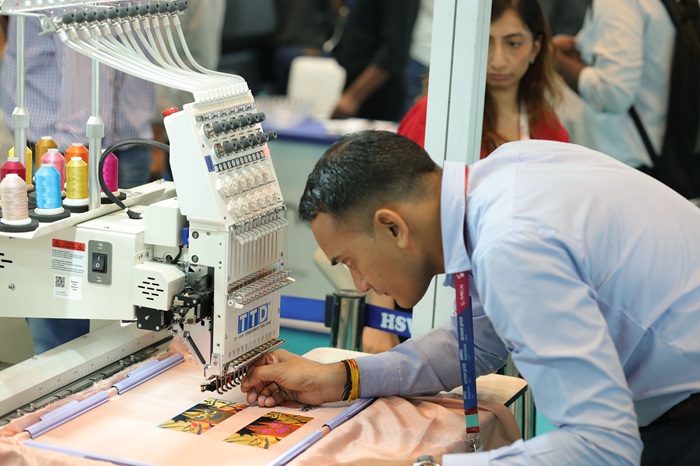
Preview in Seoul 2013held from September 4 to 6, 2013 at Hall B, in Samsung-dong, Seoul, Korea showcased new textile materials for the future growth engines, creating opportunities for discussions between business partners.
The exhibition focused on introducing various and differentiated functional and eco-friendly textiles, as well as patented materials. Many submitted products satisfied functionality, eco-friendliness, and reinforced fashion characteristics. Nearly 69 famous textile companies from 10 nations to enter in Korean market participated at the event.
Functional materials including moisture proof laminating materials, heat insulation, high-density thin fabrics, and UV blocking materials were augmented in this exhibition. The competitiveness of international participants was reinforced, too. Austria's Lenzingknown for its eco-friendly new materials, participated in the exhibition for three consecutive years. Everest, a Taiwanese company specialized for overall functional textiles, and Toyobo Japan, a leader in the development of new synthetic composite material, participated for the first time.
Nearly 41 Chinese textile companies including Jiangsu Hengli Chemical Fiber participated with an eye on the Korean market. Various companies from Turkey, Singapore, Taiwan, Indonesia, Uzbekistan, Pakistan, etc. showedcased their embroidery fabrics to outdoor functional materials, and demonstrated their price competitiveness as well the quality and technology.
The ‘Trend Forum Hall’ showing participants' various materials and the newest trends suggested buyers the possibilities in using various materials, and reinforced its index and visual functions through composing patent materials, collaboration (material company + designer), fashion products, and Small Order Zone. Small Order Zone was established for small quantity orders with low pricing to provide buyers opportunities to use various products.
In a symposium inviting fashion professional groups, PFIN offered 2014's SS Creative Trend Seminar to suggest the overall design directions for colours and fabrics in 2014's SS, while Fashion in Trend opened the five strategies to lead the outdoor fashion market with the agenda, the Challenge of Outdoor Fashion Companies.
Apart from luxury brands from the US and Europe, giant fashion groups, general import and export companies, garment makers and other important buyers from Japan, China, Taiwan and Hong Kong visited the exhibition. Studio Paglaiai visited PIS to import Korean high quality fashion material to the mid to high pricing market in Italy. Kusilas showed a great deal of interest in eco-friendly materials and embroideries.Hengyuan (Group) from China visited the expo to research the quality and the design competitiveness of Korean materials to launch its women's wear brand. Fazeya Group actively discussed with Korean material companies according to the policy to use Korean materials for their renewal plan of 200 or more shops.
Cambodia’s SL Garment Processing Factory takes back workers
About 6,000 Cambodian garment workers will return to work after their company agreed to withdraw a huge dismissal order for employees. After discussions with owners of the Singapore-owned SL Garment Processing Factory, workers will now return to work. But, despite the agreement, workers still have demands, including increased wages, improved working conditions and better health and safety standards.
The union says workers were being intimidated by armed military police who regularly inspect the factory. In July, a report from the International Labor Organisation said conditions for garment factory workers in Cambodia are declining. Inspection of 158 factories revealed that areas where things could be improved are: child labor, fire safety and workers' health.
The death of two factory workers in Cambodia in May raised the pressure to improve the record. The garment industry provides 6,50,000 jobs in Cambodia but safety needs to be improved. Since the country's elections in July, the government is investing more time into issues like workers’ conditions. It has agreed to help set up a committee for increased salaries.
Trident’s yarn revenues up 18 per cent
For the quarter ended June 30, 2013, Trident’s yarn segment revenues climbed 18 per cent. Higher realizations consequent to improved contribution from value-added products like mélange yarn enabled topline growth. This was despite a marginal increase in sales volumes. PBIT margins improved from 6.2 per cent to 16.8 per cent driven by cost optimization measures along with improving realizations resultant to enhanced product mix towards value-added products.
In terry towel lower sales volumes moderated topline performance -- partly mitigated by improved realizations on account of higher sale of value-added products. Despite lower sales volumes, profitability was flat given various cost rationalization initiatives combined with a change in the product mix towards value-added products.
Trident, the flagship company of the Trident Group, is a leading manufacturer and exporter of textiles and paper products. The group is broadening its reach and strengthening its partnership with suppliers and customers.
US textile and apparel imports rise during Jan-July
Import of textiles and apparels by the United States has increased by 3.11 per cent year-on-year during the first seven months of 2013.Apparel import was up 3.59 per cent year-on-year while non-apparel was up 1.63 per cent year-on-year.
Vietnam’s textile exports to the US jumped 13.48 per cent year-on-year during the seven-month period whereas US imports from Bangladesh increased 9.06 per cent year-on-year. China continued to be the top supplier of textiles to the US with its exports registering a rise of 1.82 per cent year-on-year.
India and Indonesia were the other countries among the top five textile exporters to the US during the period under review. US imports of textiles from India showed an increase of 4 per cent year-on-year. US textile imports from Indonesia grew 3.57 per cent year-on-year during the same period.
US textile imports from EU-28 countries rose 4.73 per cent year-on-year while imports from NAFTA fell 1.53 per cent year-on-year during January to July 2013.