Demand for separate exchange rate for RMG sector in Bangladesh
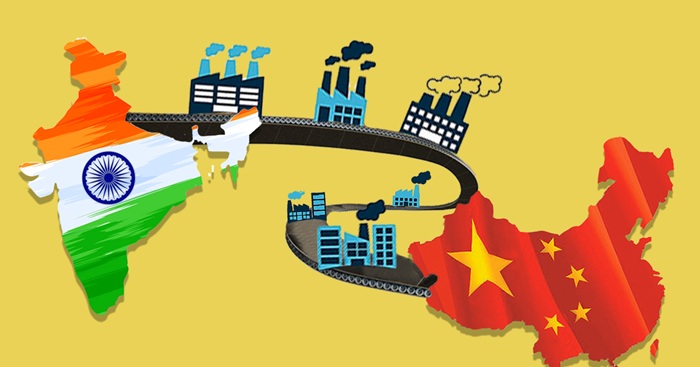
To keep up with competition, the readymade garment industry has urged the Bangladesh government to fix a separate exchange rate for Taka against the dollar. This demand was made recently by MdAtiqul Islam, President of the Bangladesh Garment Manufacturers and Exporters Association(BGMEA).The demand was for a separate exchange rate for the apparel sector to narrow the difference between the cost of importing raw materials for export and the actual export rate.The past few months saw declining order for Bangladesh as several buyers were moving to India and Vietnam.“India’s readymade garment manufacturers can easily accept order now as the value of rupee against dollar has depreciated. On the other hand, our Taka has gained. This development has set us back in the competition,” said Atiqul.
Former BGMEA President Abdus Salam Murshedi agreed.“Bangladesh’s readymade garment is becoming less able to compete in the international market for many reasons. A fresh blow is the neighbouring country’s inflation.”
Pakistan’s APTMA says power tariff hike render industry uncompetitive
The recent hike in power tariff will increase the cost of production by 21 percent, making Pakistan’s industry uncompetitive in the world market, feels Muhammad YasinSiddik, Chairman All Pakistan Textile Mills Association (APTMA). Addressing a press conference recently, he said that the government had increased power tariff for the industry by 70 percent which was not acceptable.
The hike has taken the power tariff of the industry to Rs 13.16 per unit as against Rs 7.75 per unit. He said they have rejected this increase that is just because of inefficiency of GENCOS and distribution system. He said that following the directives of the Supreme Court, the federal government had already withdrawn the notification for the recent increase for the domestic consumers, while the higher tariff for the industrial sector still existed despite the fact that both increase was made through the same notification.
The chairman also disclosed that the NEPRA chairman had proposed diverting gas from the Captive Power Plants (CPPs), CNG sector and fertilizer to GENCOS (generation companies) so that they could generate expensive electricity and sell it to the industry at highest rate. He rejected this proposal presented by NEPRA chief in the Supreme Court and warned the government that the result of withdrawal of gas from CPPs would be a drastic one.
ADB predicts a slowdown for garment export growth in Bangladesh
An updated assessment of economic trends and prospects in developing Asia forecasts a slowdown in the growth of Bangladesh's ready-made garment exports in the current fiscal year following a series of deadly industrial accidents in the country.Export growth is projected to slow down to 7.0 per cent on an expected weak expansion in garment exports because of some unfavourable buyer reaction in the aftermath of fatal factory fires and the horrific factory collapse. This projection is significantly lower than the government's estimate at 12.3 per cent for the year ending June 30 2014, which includes higher garment exports.
Highlighting key findings at a press conference in Dhaka, Mohammad Zahid Hossain, principal economist of ADB's (Asian Development Bank) Bangladesh Resident Mission also said labour unrest and a less competitive exchange rate may also curtail sales.
The bank's data shows Bangladesh's overall exports grew by 10.7 per cent in the fiscal year to June 2013, up from a rise of 6.2 per cent the year earlier, largely because of higher demand for low-end garments.
Garment exports, which provide close to four-fifths of export earnings, grew by 12.7 per cent, doubling the 6.6 per cent growth recorded in the prior year. This growth reflected higher demand in the EU and US, as well as faster expansion into new markets, according to the ADB.
www.adb.org
Bangladesh’s Next Collection factory faces assault, abuse charges
A Bangladesh factory that sews garments for The Gap and Old Navy brands routinely forces workers to work over 100 hours a week and they are slapped, shoved and punched, says a report.It also says workers live in penury, earning 20 to 24 cents an hour, and illegal firings are regular.The 68-page report focuses solely on the Next Collections factory in Ashulia, a thriving suburb of Dhaka, Bangladesh’s capital city. The factory employs 3,750 workers and 70 per cent of its production is for The Gap and Old Navy.The report contains allegations about the treatment of pregnant workers.
Charles Kernaghan, Director of the institute, said in the report ‘These abuses have been going on for more than two and a half years.”Laura Wilkinson, a spokesperson for Gap Inc, said the factory in question has been audited for working conditions and “allegations (in the report) don’t align with the audit and worker interviews.”
This shocking report comes after 1,129 garment factory workers, mostly women, died in the Rana Plaza collapse in Savar, an industrial suburb of Dhaka, on April 24, 2013.It is believed to be the deadliest garment-factory accident in history.
Greek’s textile sector improves on performance
Data released by Hellenic Fashion Industry Association (APR) reveals the Greek textile and apparel industry performed well during the first half of 2013 in comparison to the same period last year.The textile sub-sector production declined by 10.9 percent year-on-yearfrom January to June 2013, but it was better than the 17.9 percent year-on-year dip registered during thecorresponding period of 2012. Similarly, garment sector production increased 2.4 percent year-on-year, as against a drop of 16.8 percent year-on-year in 2012.
The textile sub-sector’s turnover fell 2.2 percent year-on-year during the six-month period, while the clothing sector turnover registered a marginal growth of 0.1 percent compared to a dip of 17.8 percent year-on-year in the corresponding period of 2012.
The turnover of enterprises serving the Greek domestic market fell 2.5 percent year-on-year in textiles and 1.7 percent in clothing, APR data revealed.In the domestic market, new orders rose by 0.1 percent year-on-year in textiles during the six-month period, whereas they increased by 2.3 percent year-on-year in garments.
On the export front, textile exports from Greece during January to June 2013 period remained at the same level as in 2012 at €196.2 million.The imports of textiles by Greece decreased by 8.6 percent year-on-year from January to June 2013, while clothing imports dropped 7.4 percent year-on-year.
US struggles to find skilled textile workers
The American textile and apparel industries as a whole is experiencing a nascent turnaround as apparel and textile companies demand higher quality, more reliable scheduling, and fewer safety problems than they encounter overseas.
Accidents such as the factory collapse in Bangladesh this year, which killed more than 1,000 workers, have reinforced the push for domestic production. However, the industries were decimated over the last two decades and 77 percent of American workforce has been lost since 1990, as companies moved jobs abroad and manufacturers are now scrambling to find workers to fill the specialized jobs that have not been taken over by machines.
Wages for cut-and-sew jobs, the core of the apparel industry’s remaining work force, have been rising fast, increasing by 13.2 percent on an inflation-adjusted basis from 2007 to 2012, while overall private-sector pay rose just 1.4 percent.
Like manufacturers in many parts of the country, those in Minnesota are wrestling to attract a new generation of factory workers while also protecting their bottomlines in an industry where pennies per garment can make or break a business. The backbone of the new wave of manufacturing in the United States has been automation, but some tasks still require human hands.Nationally, manufacturers have established recruitment centresthat use touch screens and other interactive technology to promote the benefits of textile and apparel work.
Last year, about 142,000 people were employed as sewing-machine operators in the United States, according to the Bureau of Labor Statistics. In the Minneapolis-St Paul metro area, which had almost 1.75 million workers last year and where the unemployment rate as of July was 4.9 percentonly 860 were employed in 2012 as machine sewers.
www.bls.gov
Bangladesh garment units need to think big
Mergers and acquisitions can help garment factories of Bangladesh. Most Bangladeshi garment factories are small in size and they depend on subcontracting. Therefore, mergers can help them attain scale, where they can make the necessary investment in compliance. This in turn can help them get orders.
Compliance has a cost but there are rewards too, because of the compliance, cost of production comes down, factories get better price, knowledge, experience and training that ultimately increase Production.
One country Bangladesh can look to for inspiration is Vietnam. Vietnam may not produce better quality products but the country is disciplined and there are no strikes and other irregularities in the readymade garment sector. Further factories in Vietnam are bigger and are compliant from day one. Vietnam does not allow any factory to operate unless it’s compliant. So Bangladesh has to develop its industry to remain competitive.
Trade unionism has crept into Bangladesh garment factories, which isn’t a bad sign, but ignorant young workers aged 18 to 30 are involved in trade unionism. There needs to be a move toward legal and constructive trade unions which understand their role and function.
For now Bangladesh remains in the list of first three countries
for garment sourcing and this is expected to be the situation at least till 2020.
Power and fuel price hike irks Pakistan textile exporters
Textile exporters in Pakistan say the recent hike of Rs 5.89 per unit in power and Rs 4.12 per litre in petroleum would fuel inflation and ultimately affect the already crisis-hit industry.
Their main fear is the cost of production in Pakistan isalready one of the highest in the region and these hikes will make Pakistani products lose their competitiveness in export markets. They say instead of increasing petroleum prices, the government should decrease the petroleum levy. Meeting export targets would be difficult if input prices are raised.
Exporters warn that frequent increase in power and petroleum prices will accelerate the capital flight from the country and discourage local and foreign investment. Therefore, in the larger national interest, they demand the government should take back this decision to save the economy from further damage.
Pakistan textile units are as it is suffering a serious energy shortage. Many industrial units have closed operations. Mill owners have urged the government to explore renewable energy resources and overcome the energy crisis in the country.
JICA signs MoU with Bangladesh associations for safety at RMG units
A Memorandum of Understanding (MoU) worth Taka 1.0 billion ($12.9 million)in loan and technical support from JICA was signed recently to build a safe working environment in the vulnerable readymade garment (RMG) and knitwear factories of Bangladesh.Japan International Cooperation Agency (JICA), Ministry of Housing and Public Works, Bangladesh Bank (BB), Bangladesh Garment Manufacturers and Exporters Association (BGMEA) and Bangladesh Knitwear Manufacturers and Exporters Association (BKMEA) jointly signed the MoU.
Under the MoU, each vulnerable factory will get up to Taka 100 million ($1.29 million) based on its safety assessment reports, officials said.Japanese experts will provide the building assessment support under ‘RMG Sector Safe Working Environment Programme’ initiated in the MoU following the Rana Plaza disaster.
Two of JICA's on-going projects will contribute to this new initiative in two different aspects:‘Financial Sector Project for the Development of SMEs (FSPDSME)’ with the BB and ‘Capacity Development on Natural Disaster Resistant Techniques of Construction and Retrofitting for Public Buildings (CNCRP)’ with the Public Works Department.
The central bank will provide concessional financing such as maximum 10 per cent interest rate and up to 15 years repayment period with two year grace period to the garment factories through the existing FSPDSME procedure, JICA officials said.
www.jica.go.jp
Bangladesh still a preferable destination for retailers
Retailers are betting on Bangladesh’s garment industry more than that of any other country for the coming years show recent studies. Despite the recent deadly factory accidents that have put their reputations at risk.According to a new study by McKinsey & Co, Wall Street Journal, Bangladesh’s $20billion garment business came out ahead of smaller rivalsVietnam and Cambodia in the ranking of countries with the highest potential for future sourcing.
Research showed that production capacity and price appeared to trump safety and labour issues when it came to choosing where to source clothes. Bangladesh has suffered more industrial disasters than any other garment-producing country but its low minimum wage and high number of garment factories has made it a magnet for global retailers, according to the report.
Retailers including H&M, Wal-Mart, Gap and Zara parent Inditex SA are grappling with how the public perceives their role in Bangladesh. Labour unions have pointed fingers at retailers for turning a blind eye to safety violations in factories. The companies have formed safety pacts aimed at improving working conditions which also help improve their image.
More...
North American Alliance assures completion of RMG factory inspection
A 12-member Alliance delegation headed by its president Jeffrey Krillaare in Dhaka to work out the detailed framework of the safety program including development of a common safety standard.The delegation of the Alliance for Bangladesh Worker Safety reiterated its commitment to completing the proposed inspection of Bangladesh ready-made garment (RMG) factories within the stipulated timeframe.The coalition of North American apparel companies and retailers, industry associations and NGOs was established inJuly to improve workers' safety in Bangladeshi garment factories."The Alliance members informed that they would inspect about 500 garment factories by July 2014," laboursecretaryMikailShipar told the media. He said the Alliance team had also reiterated their assurance that they would carry out their inspection under the national common standards that would be set according to the laws of the land.
The Alliance members have committed more than $45 million to administer the programs and to support the specific ones in the initiative, with some companies offering an additional combined total of over $100 million in loans and access to capital to assist factory owners they work with in Bangladesh targeting factory safety improvement.
Cashmere World to be held in Hong Kong on Sept 25-26
Cashmere World, a vertically integrated business platform for the international cashmere trade, will take place from September, 25-26 in Hong Kong. It is a high-quality, annual meeting place for business, a catalyst for fashion trends and technology innovation, as well as a venue for the promotion of the unique qualities of cashmere.
The leading international cashmere trade fair was renamed to Cashmere World in 2010, as a result of a new partnership between CFNA and the professional fair organizer UBM, which operates 110 international events annually.
The event fosters international collaboration of cashmere professionals spanning the various sectors of this specialized industry, from raw materials to finished products, including yarns, fabrics, garments, knitted sweaters, fashion accessories, lifestyle accessories, components and accessories, processing chemicals and dyes and machinery.
The past three events in 2007, 2008 and 2010 attracted some 200 exhibitors from major cashmere supplying countries, including Afghanistan, China, India, Mongolia, Nepal, Pakistan, Switzerland and the UK, displaying the full spectrum of products and services from along the entire cashmere supply chain. About 12,000 visitors from around the world including France, Hong Kong, Italy, Japan, the UK and the US, attended the event.
Bangladesh’s apparel exports to the US grows 9%
Apparel exports from Bangladesh to the US recorded a 9 per cent growth in the first seven months of the current calendar year compared to that of the same period of 2012.Bangladesh exported 1.21 billion sq. mtr.apparel products during the first seven months of 2013 to the US market against 1.09 billion sq. mtr.during the corresponding period in 2012.
US imports from Bangladesh totaled $4.9 billion in 2012, an increase of 0.8 per cent from that in 2011 and up by 130 per cent from 2002. The five largest categories of US imports from Bangladesh in 2012 were woven apparel ($3.3 billion), knit apparel ($1 billion), miscellaneous textile products ($ 178 million), headgear ($115 million) and others ($86 million).
Bangladesh is trying hard to bring reforms in its ready-made garment sector. It aims to be one of the best apparel sourcing places in the world and to be the most competitive in the world in terms of both price and quality.
Ultimately it depends on global retailers continuing to have their confidence in Bangladeshi suppliers. And that faith doesn’t seem to have been shaken in spite of the recent tragedies in Bangladeshi apparel factories.
IlyasMehmood elected PTEA chief
IlyasMehmood of Dawood Exports was elected unopposed as the Chairman of the Pakistan Textile Exporters Association (PTEA). Adil Tahir of Adil Tahir Textiles was elected as vice chairman for 2013-14. Earlier, 12 members were elected to the executive committee of PTEA for the next two years.The new PTEA chief is a seasoned industrialist and heads a group of ultra-modern textile mills. He is serving on the boards of many charitable, health and educational institutions. He plans to tackle problems facing the textile industry like the high utilities cost, the trade deficit, additional levies as well as the law-and-order situation.
The Pakistan Textile Exporters Association was established in 1985. Several of its members have won export merit trophy awards. It handles issues like authentication of applications for drawback claims to exporters, sales tax refund problems and dissemination of textile-related information to members. It proposes suggestions to the government for promotion of exports. It issues certificates of origin of textile items to its members.
A major activity of PTEA is facilitating its members by obtaining favorable market environment in buyer countries by fighting against tariff and non-tariff barriers on textile imports from Pakistan.
www.ptea.org.pk/