Libolon recycled fabrics for textile applications
Libolon is a core brand of LeaLea Enterprise and Li Peng Enterprise who offer global services in both nylon and polyester. The services include polymerization, spinning, weaving, dyeing to post finishing processes. With 30 years of experience and fully automatic production lines for bulk production, Libolon is the best textile partner in Asia. Libolon develops RePET, recycled yarns and recycled fabrics, creating eco textiles that help protect the environment and natural ecosystems. These recycled yarns and recycled fabrics are made by recycling plastic bottles. Its features include free of petrochemicals, conserve natural resources, and reduce the environmental burden while still offering high-quality textile solutions. It can be used in any nearly any textile application.
Libolon’s innovative RePET solution and recycled yarns are more environmentally-friendly than traditional RePET products due to the elimination of the dyeing process. Using recycled fabrics and eco textiles, Libolon’s RePET-solution and rpet recycled yarns reduce emissions of GHG and COD, lower water consumption, and decrease the amount of chemicals involved in the production process. RePET-solution rpet recycled yarns also offer higher performance, including light-protection, water-protection, washing-protection, anti-UV, anti-aging, anti-weathering, and colour reproducibility properties. Libolon’s RePET-solutions is the best choice for recycled fabric and eco textile products.
TTRI showcases its latest innovations at Taipei exhibition
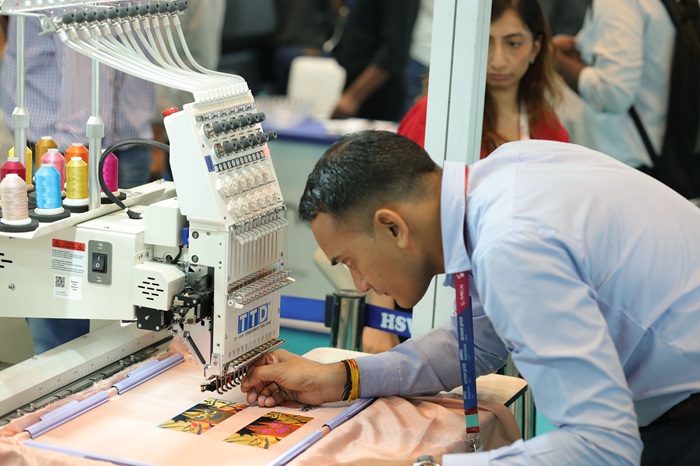
The Taiwan Textile Research Institute (TTRI) showcased a range of cutting-edge textile innovations and research at the recent ‘2013 Textile International Forum and Exhibition’. The exhibition is a part of the Taipei Innovation Textile Application Show which runs at the Taipei World Trade Centre Nangang Exhibition Hall. The TTRI’s pavilion caught visitor’s attention with a great mountain vest mockup, symbolizing the recent establishment of Taiwan Outdoor Group (TOG), an organization that joins together more than 20 local outdoor gear brands.
“The image of TOG highlights Taiwan outdoor gear brands as a whole. When we go abroad to do promotions, we introduce Taiwan as our brand concept, rather than individual products, says TTRI Executive Vice President Lien Jung-shen. At present, TOG has 22 members, including well known names like Atunas, GoHiking and Global Spirit.
TOG Chairman Robin Hsu says, the market for outdoor gear is worth $6 billion in South Korea and $2 billion in China. “The potential growth for Taiwan’s outdoor gear market is big because it is only $0.2 billion now,” he said.
Apart from TOG, the TTRI also showcased innovations in fabrics, such as the iodine antimicrobial yarn, which incorporates organic iodine agents in its fibre, perpetuating the antibacterial effect. In the past, antibacterial agents were processed onto the finished cloth. However, the TTRI’s R&D team has succeeded in manufacturing yarns that are already antimicrobial, so that the textile remains germ-free at all times.
Uzbekistan explores Chinese market as cotton boycott continues
Uzbekistan, the sixth largest cotton producer, has been facing a boycott by western firms owing to the use of child labour during harvesting. But now it has cracked a new deal to export 300,000 tonnes of cotton fibre to China in a bid to explore new markets. The country has also allowed monitoring of its harvest by the International Labour Organisation (ILO), while the reports of forced labour continue to creep in even this year.
Apart from China, the country has initiated an agreement with Bangladesh to export 200,000 tonnes of fibre in August. The two Asian manufacturing hubs will together account for around five-sixths of Uzbekistan's total cotton fibre exports, which are expected to total around 600,000 tonnes this year.
Uzbekistan officials may finalise the agreement with China at a cotton industry fair in October, which will give a boost to China's share of the harvest from around 15 per cent to 50 per cent, making it the single largest buyer of Uzbek cotton. At the same time, the Uzbek government is keen to increase domestic processing of locally produced cotton to 50 per cent.
www.ilo.org
Jeanologia presents garment finishing technologies at PV Asia, Intertextile
Jeanologia, the Spanish company and world leader in development of sustainable technologies for garment finishing will present its latest offerings at the Denim by PV Asia and Intertextile events in Shanghai. It aims to transform the Chinese textile production model into efficient, sustainable and automated process. Jeanologia developed textile laser that reproduces jeans wear and tear avoiding the use of harmful techniques that could damage health of the workers, allowing savings in energy water, chemicals and time, at the same time getting automated production. In addition, eco-G2 uses ozone washing and oxygen from the atmosphere, which helps in saving over 60 per cent water and energy and about 85 per cent in chemicals.
Enrique Silla, President of Jeanologia says, "Asian textile production is increasingly directed towards automation, productivity and social responsibility, the use of laser technology, E-soft and ozone developed by our company, will contribute to this goal.” Silla also stressed on the importance of transparency in the Chinese textile industry because, he feels the industry must be concerned about the environment, health of workers and sustainability. "What matters is not only the product itself but the way in which it is made, how it is done," he explains.
He also highlighted the importance of the partnership between Prosperity and Jeanologia to transform the Chinese market, and stated that "China will remain the world's leading producer of jeans this time thanks to the efficiency of sustainable technologies like laser treatments or using ozone instead of water.”
Fashion, Vintage and Who collections to be exhibited at both events, will allow visitors to know more about the multiple effects that can be achieved and compare the garments before and after application of textile finishing techniques. Fashion features the latest fashion trends adapted to laser, Vintage is a purist collection getting back to basics created by laser and ‘Who is using laser’, shows how the world's most recognized brands use laser and ozone technology of Jeanologia in their collections, either for a premium denim or a low cost collection.
Jeanologia products and solutions are currently being used in more than 45 countries including China, México, Colombia, Brazil, USA, Germany, Italy, Portugal, India, Russia, Japan, Morocco and Bangladesh.
Milano Unica’s Sustainability-lab breaking new ground
The 16th edition of Milano Unica discovered new potential catering to sustainability issues. In an attempt to promote sustainability, Sustainability-lab.net; an online social network of textile and fashion professionals who are actively promoting sustainability in the fashion business invited a selected group of exhibiting companies to participate in a ‘Catalogue of Sustainable Fabrics and Accessories’.
The project, supported by Milano Unica, is breaking new ground for the Italian textile community and represents a roll-out, fine-tuning step to test market reactions that will be further developed at next editions of Milano Unica. The ‘Catalogue’ openly declares the parameters used in the evaluation and sustainable practices are summarized through easy-to-read icons in companies’ data sheets.
The catalogue was designed and created by Sustainability-lab with the support of Milano Unica. As Massimo Mosiello, Managing Director of Milano Unica says, “The catalogue does not cover completely the supply of sustainable fabrics and accessories showcased at Milano Unica yet. It is however a first positive test that allowed us to check ‘hands on’ companies’ sensitiveness about sustainability and to better understand the narrative of the companies’ strategies for sustainability. We are committed to ban green washing practices and to value actual engagement in sustainability. This first group of companies presented in the ‘Catalogue’ has cooperated with Sustainability-lab in developing an effective and meaningful language to frame in a concise but clear way companies’ commitment to sustainable practices."
Sustainability-lab project manager explained that the first step of the project led them to meet companies seriously committed to reducing environmental impact, to develop measures of social engagement, to use eco-friendly, renewable or recycled materials. “Our commitment is to widen the scope of the ‘Catalogue’, starting from next Milano Unica edition in September, in order to encompass a wider range of sustainable fabrics and accessories."
US/Africa: Apparel brands and retailers urge AGOA renewal
Groups representing various apparel manufacturers, brands and retailers in Africa and the US are calling for the swift renewal of the African Growth and Opportunity Act (AGOA) before its expiry in September 2015. Groups backing the calls for immediate renewal of AGOA include: African Cotton and Textile Industries Federation (ACTIF), American Apparel & Footwear Association (AAFA), National Retail Federation (NRF), Outdoor Industry Association (OIA), Retail Industry Leaders Association (RILA), and United States Association of Importers of Textiles and Apparel (USA-ITA).
As sourcing decisions are made many months in advance, the groups want AGOA to be renewed as soon as possible that is by 2013 and no later than 2014. Another goal is to see AGOA renewed for a longer period; at least 15 years to ensure the predictability necessary to support trade and investment decisions.
Short term renewals will not provide enough certainty to enable the industry to make capital intensive investment decisions necessary to attract textile investments or affect long term sourcing partnership decisions. Another call is for long-term renewal of the third country fabric provision, which has become central to AGOA.
Pakistan’s textile and clothing exports increases this fiscal
Pakistan’s textile and clothing exports witnessed a growth of 9.99 per cent in the first quarter of the current fiscal compared to last year. Export proceeds from these sectors rebounded following substantial increase in export of raw cotton and value-added products, reveals data Pakistan Bureau of Statistics. Export of textile and clothing surged to $3.576 billion in July-Sept 2013 up from $3.251billion during the corresponding months of last year.
A sector-wise analysis showed that export of low value-added products, such as cotton yarn, was up by 8.55 per cent, cotton cloth 4.01 per cent, made-up articles 9.95 per cent, and other textile material 10.84 per cent in first three months of the current fiscal year over same months last year.
Depreciation of Pakistani currency is also one of the catalyst for export increase during the first quarter of the current fiscal year. In terms of rupees, exports proceeds witnessed a growth of 19.82 per cent in July-September 2013 this year from a year ago.
Cotton carded, yarn other than cotton yarn, towels and art silk products witnessed a negative growth in July-Sept 2013 over the same months last year. Exports witnessed a growth because of increase in export to the European markets owing to preferential market access on selected products.
The growth in yarn and fabric exports was mainly due to improved energy supply. Total export proceeds witnessed a growth of 9.23 per cent to $6.712 billion in July-Sept 2013 from $6.144 billion over the corresponding period of last year.
IFC launches ‘Better Work’ scheme for Bangladesh RMG workers
The International Finance Corporation (IFC) has launched the ‘Better Work Bangladesh’ (BWB) program to improve working conditions of thousands of readymade garment factories (RMG) workers and promote its competitiveness. BWB is part of Better Work global program funded by the governments of Australia, the Netherlands and Switzerland. The government of Bangladesh and Better Work have agreed to link the continuation of the program to progress made relating to specific commitments.
In a joint initiative with the International Labor Organization (ILO), the BWB will provide factory-level services including compliance assessment in line with national labor laws and international standards, and advisory and training services to improve the workers' working conditions.
BWB will build partnerships with the government, employers, unions, buyers, and other industry stakeholders. The goal of the program is to promote sustainable change in the sector by helping factories improve working condition and building capacity for better labor administration and industrial relations. The program will be funded by Switzerland and the United States.
By helping improve working conditions in RMG, BWB will not just put people first but will also improve productivity, safeguard jobs and investment, and promote growth of the sector.
Mitsubishi launches Soalon, a unique fibre
Mitsubishi Rayon Group, a renowned synthetic acrylic and acetate fibre manufacturer develops polyester fibre and polypropylene fibre for carpet, clothing products etc. It has recently launched a unique fibre called ‘Soalon’. Soalon is a semi-synthetic fibre derived from cellose but excels in thermal setting characteristics. The pleats are kept after repeated washing. Soalon is classified into semi-synthetic fibre and triacetate ‘Soalon’ is made from hightly pulified wool pulp and acetic acid. It has natural beauty and yet has many functions achieved by highly advanced technology.
Soalon features are its low refractive index and random grooves on the surface of the filament. Random grooves, diffuse light and gives a refined sheen and its low refractive index creates vivid colour development. The raw material used in Soalon is wood pulp. Soalon has high moisture content compared to synthetic fabrics. As a result, it causes less unpleasant static electricity and gives a gentle touch to the skin. When Soalon releases sweat and dampness, it takes away the heat of vaporization around it. The fabric itself is cooled, maintaining coolness inside clothing and gives a comfortable feeling.
Soalon is made from trees, which gives it higher moisture content compared to synthetic fabrics. This means that ‘Soalon’ causes less unpleasant static electricity and gives a gently touch to the skin. It has moderate firmness and resilience.
RES Spa showcases eco friendly collection at Premier Vision
Italian company, RES Spa showcased its Autumn/Winter collection 2014-’15 at Premier Vision (Paris). The hi-tech collection featuring neoprene acquires new properties such as high water-resistance, breathability, excellent temperature control. All these make it a unique material for winter clothing. Designed as an active wear, the collection can also be used in other sectors due to its outstanding features.
Its silver fabric consists of a knitted nylon coated with silver fibres. Besides having bacteriostatic features, the fabric creates a barrier to electromagnetic waves. It also possesses exceptional technical characteristics derived from the continuous research conducted by the company that confers to garments and accessories features of elastic resistance, bacteriostatic and anti-static effect, stain resistance in addition to wear resistance and resistance to atmospheric agents. Furs and meshes embellished with metallic effects, two tone fleece, warm and breathable, flocked 3D fabric printed fabrics with veiled transparencies among others are part of the unique collection.
RES Spa specializes in lamination of high-tech fabrics, devoting particular attention and efforts to applications in the fields of sports, footwear, furnishings, safety-wear and car interiors. Its products are environment friendly, heat resistant and water resistant and extremely resistant to delamination. The textile solutions developed by RES can be applied to a wide range of synthetic and natural materials.
RES gives constant attention to R&D, making use of considerable investments in terms of human and financial capital, carrying out its activities availing of its well-equipped laboratory for materials.
More...
Singapore’s Indorama expands production in Uzbekistan
The second stage of Singapore's Indorama Industry’s textile production has become operational in the Ferghana region of Uzbekistan. After the second phase worth $31 million was commissioned, the cotton fibre processing enterprise's capacity increased by 5,000 tons to 15,000 tons. The project was financed through a direct investment worth $25 million by the Singapore-based company and by loans from foreign banks involved in project financing. Swiss company Rieter supplied equipment to the textile complex. The project implementation ensured increased capacity of processing cotton fibre up to 10,000 tons per year.
Indorama Kokand Textail joint venture was established with a capital of $20 million, where Indorama has a 75 per cent stake, the National Bank for Foreign Economic Activity, a 25 per cent.
Uzbekistan is the sixth world producer and the third largest exporter of cotton fibre. An average of 3.5-3.7 million tons of raw cotton is harvested and 1-1.2 million tons of cotton fibre produced in the country annually. More than 75 per cent of cotton fibre is exported.
Thermore launches ‘Aria’ a synthetic alternative to down feathers
Thermore, a worldwide leader in research, production and marketing of thermal insulations for apparel and sleeping bags has launched ‘Thermore ARIA’, a perfect technical synthetic alternative to real down feathers. An Italian word, ‘Aria’ means air in English. It perfectly describes this new insulation which is 98 per cent air by volume: ultra-light, soft and an efficient high-loft insulator. Aria product mimics the look of down when quilted with suitable fabrics. It is hypo-allergenic and does not contain any dangerous chemicals (it's free of PFOS and PFOA) and offers a very safe and humane alternative to using animal products for quilted outerwear.
The insulation does not need to be applied with specialized machinery or unique garment construction. Also, problems of fibre migration does not exist due to Thermore's proprietary finishing process-thus preserving the long term quality and appearance of the garment. Aria is an excellent alternative to down in with regards its appearance, health and ethical concerns, cost, availability and overall performance.
Thermore is dedicated to innovation and is using its experience to anticipate market demand with new products such as ARIA that are perfectly designed for purpose. ARIA straddles the seasons with an almost impalpable touch, yet still offers a full winter thermal performance.
Thermore was founded in 1972 in Milan and is a worldwide leader in the research, production and marketing of thermal insulation for apparel and sleeping bags with operations in Europe, US and Asia including production facilities in Thailand and offices in Hong Kong. The global presence of the Thermore Group makes it possible for international clients to benefit from its market leading experience at a convenient and cost effective price point. Thermore’s current product range includes Classic, Ecodown, Rinnova, Pro, and now ARIA. Thermore is a member of the Italian Outdoor Group, Outdoor Industry Association, SnowSports Industries America and of the Camera Nazionale della Moda Italiana.
Tashkent holds IX International Cotton and Textile Fair
The IX International Uzbek Cotton and Textile Fair commenced in Tashkent on October 16, 2013. Over 1,000 representatives of cotton and textile industry firms and companies from 40 countries are participating in the event. Fibre samples of this year's Uzbek cotton harvest and new textile products have been put up for sale in the exhibition halls of capital's Uzexpocenter. During the fair, participants will be able to conclude a contract for the selected batch of products and discuss the transportation routes. Given the importance of further development of the national textile industry, cotton forum participants will be able to get acquainted with the investment potential of the country's regions and projects in the textile industry.
The Fair's program provides for a conference, which will discuss the current problems and prospects of the development of world cotton market. The conference participants, including leading international experts in the field of world cotton and textile industry, will discuss issues as demand and offer, prices and factors of influence on the world cotton market, conditions and prospects of production and marketing of cotton in Uzbekistan.
US exports of cotton to China grows by 192%
Cotton Council International (CCI) organized a comprehensive Cotton USA Supply Chain Marketing event in Guangzhou from October 8-12. Renowned U S spinners got an opportunity to meet 25 new Chinese companies and visit six factories in the Guangzhou area. A detailed presentation on the attributes of US open-end yarn and benefits of Supima yarn for high-quality products were part of the event. CCI also presented information on US cotton production and spinning locations. Following the one-and-a-half-day private trade fair, US mills toured a variety of factories, met with purchasing managers and discussed product needs.
There has been 192 per cent increase in US cotton exports to China totalling to 173,000 bale equivalents since the first cotton trip to China. Sales in the first eight months of 2013 of US cotton yarns reached $120 million, which is ahead of the $44 million at the same time last year. The climate for imported cotton yarn to China remains excellent.
Cotton Council International (CCI), the export promotion arm of the National Cotton Council of America (NCC) is dedicated to promoting quality US cotton, cotton seed and their products. CCI represents the export promotion interests of the US cotton industry’s seven segments i.e. producers, ginners, warehouses, merchants, cottonseed handlers, cooperatives and manufacturers. CCI has more than 55 years of experience promoting US cotton fibre and products to the trade and to consumers around the world.