Increasing interest of investors in Bangladesh textile industry
Bangladesh’s readymade garment sector is a ready market for textile goods, so investors' interest in the textile industry is increasing.Local and foreign entrepreneurs have been coming forward with fresh investment or reinvestment in the textile sector. A total of 1,457 fresh investment proposals were registered from local investors in fiscal year 2012-13. Since the readymade garment sector is growing significantly, demand for backward linkage accessories, including fabrics and textile items, is also rising.
Most textile units in the country are going to double their production capacity to meet the growing demand for fabric and yarn at home and abroad. Due to fresh investments, and growing demand for textile items, cotton consumption in Bangladesh will increase by seven per cent this fiscal year.
The textile sector is getting popularity among local and foreign investors thanks to export-oriented industries enjoying different types of incentives like tax holiday, warehouse facility and others.
UN monitoring Cambodian plants for worker’s rights
The United Nations is monitoring garment factories in Cambodia, particularly worker’s rights and safety standards. Accidents have occurred in Cambodia recently, including two at factories in May, one of which left two people dead.The program is known as ‘Better Factories Cambodia’. It inspects manufacturing facilities for problems such as child labor and unsafe conditions and offers training for factories to upgrade.
Better Factories plans to release information on a new website about the performance of all factories it has inspected at least twice regarding 21 issues, such as wages, worker rights, fire safety and treatment of unions. But some people in Cambodia have opposed the program, saying it could wind up exposing factory owners to public ridicule.
Currently, Better Factories Cambodia submits confidential reports to factories, whose business partners have the option to buy them. It also publishes public summaries that don't name plants. Under the new program, factories that have had three or more Better Factories inspections and still fall two standard deviations below the mean for compliance will be subject to an even higher level of disclosure.
IFAI to break records in Orlando
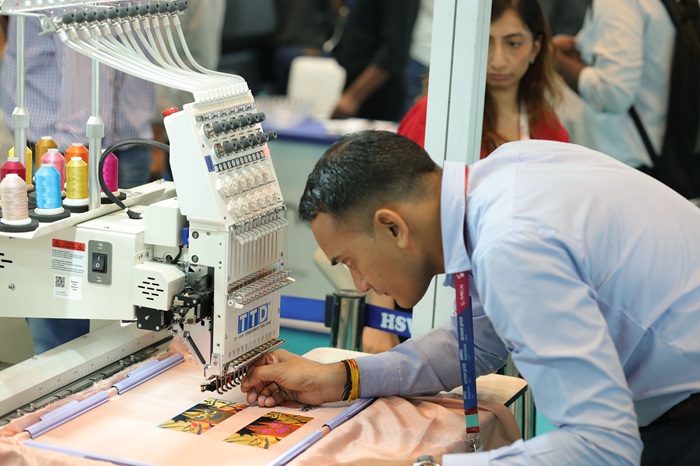
The Roseville-based Industrial Fabrics Association International (IFAI) will bring the IFAI Specialty Fabrics Expo 2013 to the Orange County Convention Center (OCCC) in Orlando, Fla, from October 23 to 25. The expo, said to be the largest specialty fabrics event in America and held in conjunction with IFAI's Advanced Textiles Conference & Trade Show, will feature more than 400 exhibits covering more than 100,000 sq. ft. of exhibition space at the OCCC, and will collocate with the 2013 SGIA Expo.Special events include the Industrial Fabrics Foundation (IFF) golf tournament and a sunset gator tour on and the IFAI annual meeting. Winners of the IFAI International Achievement Awards (IAA) competition will be presented during a special event held prior to the IFAI annual meeting. IFAI received 236 entries from 96 companies in 13 countries for the IAA competition, which recognizes design excellence within the specialty fabrics market.
The ShowStoppers awards competition will return after its debut at the 2012 Expo. The competition is open to all Specialty Fabrics Expo and Advanced Textiles Conference & Trade Show exhibitors and recognizes product innovation in six categories: fabrics, fibers and films; chemicals, coatings and compounds; hardware, findings and accessories; equipment and tools; services to manufacturers; and end products. Entries will be on view in a special ShowStoppers display booth on the show floor. The award winners will be selected by expo attendees and announced on October 24.
Other show floor highlights include a fabric sourcing centre offering samples of exhibitor materials organized into application types; aerospace display featuring specialty fabrics used in air and space applications; and a welding workshop.
The 2013 SGIA Expo, organized by the Specialty Graphic Imaging Association (SGIA), Fairfax, Va. will present the full spectrum of specialty printing and imaging technologies and applications in more than 219,000 sq. ft. of floor space at the OCCC. Organizers report the SGIA Expo and IFAI Specialty Fabrics Expo will be complementary, especially for those involved with printing graphics on flexible materials.
"People will be talking about the IFAI Specialty Fabrics Expo and Advanced Textiles Conference & Trade Show in Orlando for years to come," said IFAI President Mary Hennessy. "On the heels of our Centennial show in Boston, we are set for another record-breaking year. Exhibit sales and attendee pre-registration numbers are soaring, as people are buzzing about the possibilities of the two dynamic shows together."
As a part of the Expo's education program, IFAI will present three business power programs with industry-specific roundtables‘Survive and Thrive Strategies,’‘Winning Sales and Services Strategies’ and ‘Work Smart Strategies’. Bonus programs will be offered each afternoon, including "Growing into Graphics — When to Make the Leap to Buy Equipment"; "Advanced Asset Protection, Business Succession & Exit Planning Strategies"; and "Finding, Training and Retaining a Skilled Workforce to Insure Competitiveness."
www.ifai.com
India, Lanka sign MoUon Chinese market
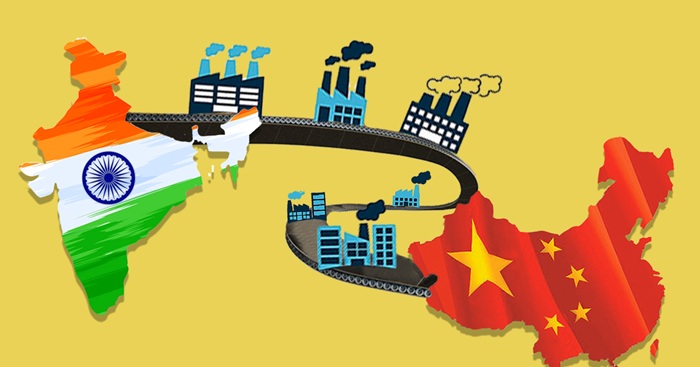
India and Sri Lanka have signed a memorandum of understanding (MoU) on combining their strengths – Sri Lanka’s garment producing infrastructure and India’s quality fabric output. The aim is to jointly compete for China’s textile market as that country’s textile industry is gradually moving from production to consumption.The MoU comes after last year’s agreement allowing Sri Lanka to export up to eight million pieces of apparel to India with zero duties. The MoU will assist in effective cooperation between the Indian and Sri Lankan textile industries. It will expand business and co-operation in the development of SME in the handloom, power loom and textile sectors. The MoU will remain in force for five years and may be renewed.
The Chinese textile sector represents 40 per cent of Sri Lanka’s annual industrial output. Textile and garment exports are worth roughly US$248 million annually, showing that the country is still largely agricultural in nature, despite its modern image.
Labor costs, raw material costs and financing costs of China’s textiles and garment companies are rapidly increasing, and the Chinese market shows a great potential for foreign imports.
World apparel and textile production continues to rise
Global apparel and textile production has continued its year-on-year growth into the second quarter, with developing and emerging economies leading the way.While the latest figures support forecasts for a modest rise in total world manufacturing growth in 2013, apparel and textile output in the quarter is lower than it was in the first three months of the year. In the latest of its regular reports, the United Nations Industrial Development Organization (UNIDO) forecasts that global manufacturing output will grow by 2.7 per cent in 2013 as recovery begins in Europe and higher demand is seen across industrialized nations.
Textiles production rose 4.8 per cent in the second quarter compared with the same period last year, owing to a 6.3 per cent rise in developing countries, partly offset by a 1.4 per cent decline in the industrialized nations. But output was 1.5 per cent lower than in the first quarter of this year, with a decline of 2.1 per cent in developing countries and flat production in industrialized ones.
Apparel and fur output rose 3.7 per cent year-on-year, with an 8.9 per cent rise in developing countries partially offset by a decline of 7.4 per cent in the industrialized nations."Developing and emerging economies performed well in the production of basic consumer goods," UNIDO said, adding that the production of wearing apparel rose in India, Indonesia, South Africa and Turkey.
BATEXPO,Bangladesh’s biggest apparel show to be held on October 10
The 24th edition of BATEXPO (BangladeshApparel and Textile Exposition), is set to be held from October 10 to 12, 2013. It is Bangladesh’s biggest apparel trade show and local exporters are expecting $90 million worth spot orders and a large number of global buyers. The international quality and competitive prices of products are expected to attract new buyers from Japan, South Africa, Mexico, Argentina, Brazil and Russia to the annual exposition. In all there will be buyers from 60 countries including traditional and new markets.
The country's readymade garment are now going in for environment-friendly green manufacturing plants and they are investing in more sophisticated production technologies which will boost exports in the coming days. BATEXPO hopes to emerge as an icon in the global fashion retailing industry
BATEXPO is organized annually by the Bangladesh Garment Manufacturers and Exporters Association (BGMEA) .The exposition provides a platform for Bangladeshi clothing manufacturers and exporters. BGMEA has been continuously striving for the last three decades to promote the readymade garment industry of Bangladesh.
www.bgmea.com.bd/batexpo/
Nepal’s textiles and pashmina exports on a high
The export of handicraft products surged by 6 percent in the last fiscal year, compared to the previous year. A significant increase in the export of pashmina products, metal crafts, glass and leather products have helped in increasing the export earnings from the sector, said the Federation of Handicrafts Associations of Nepal (FHAN).The FHAN’s statistics show that Nepal exported handicrafts items worth Rs 4.36 billion in 2012-13, compared to Rs 4.11 billion in 2011-12. The export of handmade textile products increased by four percent to Rs 2 billion, while the export of non-textile handicrafts products increased by eight percent. Hem Ratna Shakya, President, FHAN attributed the publicity of handicrafts products to trade fair for the increase. The branding of ‘Chyangra’ Pashmina, a collective trademark, and the rising price of the US dollar helped improve export earning from the sector. “Encouraged by the good impact of Chyangra Pashmina, that has helped maintain the quality standard, we have planned on issuing similar trademarks for the entire handicrafts products of the country,” he added.
Shakya attributed the export growth to the increasing demand for metal crafts from China. “Increasing participation of the local traders in the China-based trade fair has also helped the publicity of the product in recent days.”With importing handicrafts worth Rs 1.27 billion, the US became the largest importing nation in the segment. Nepal exported handmade products worth Rs 1.20 billion in 2011-12 in the US. Germany and Japan were the second and the third largest buyers of the Nepali goods.
Cambodian textile workers suffer malnourishment
Cambodian garment workers stitching clothes that supply to UK high street are malnourished to the point of collapse.A recent study reveals a third of Cambodian garment workers producing clothes sold in the UK by global brands, including clothing giant H&M, are not getting enough food. Some 25 per cent are so underweight they would be classified as anorexic were they diagnosed in the UK.The findings of the report by worker rights group LabourBehind the Label follow a spate of mass fainting over recent years, when groups of up to 300 at a time have passed out.Researchers attributed the incidents to the serious malnourishment of the industry’s 400,000-plus mostly female employees who work for a monthly minimum wage of around $80 (£50) – too little to fund an adequate diet, the researchers say.
According to the report, Shop ‘Til They Drop, employees consumed around half the calories needed for garment factory work, while protein intake fell well below half the basic human need. The recommended 3,000-calorie diet alone would cost some $75 a month, leaving just $5 for all other costs.Although some factories offer allowances for food, these are often spent on other essential expenses, which for many include sending a share home to family members, the report states.
Apparel manufacturing set to restart at GIC in N Korea
Apparel and textile manufacturing is set to restart at North Korea’s Gaeseong Industrial Complex (GIC), also called Kaesong Industrial Park. Located just north of the South Korean border, the process of starting GIC will begin nearly five months after work was halted as tensions escalated between the two Koreas following a nuclear test done by North Korea in February this year.
The second meeting of the South-North Joint Committee for GIC, held recently decided that the GIC companies will begin testing machines, and resume operations thereafter, according to a press release by the South Korean Ministry of Unification.
Through the meeting, both the countries established a systematic framework, which will help the GIC become a stable industrial complex that has international competitive power. The GIC has 123 South Korean factories that together employ over 5,000 North Koreans. About 60 percent of these factories are engaged in manufacturing of fabric and apparel.
In order to compensate for the GIC companies’ financial losses, South and North Korea agreed to give the tax exemption benefit for the year 2013. The deadline for tax payment by the GIC companies for the year 2012 is now extended to the end of 2013.
Launched in 2003, GIC is largely financed by South Korea. In 2012, the complex produced $470 million worth of products, and was the biggest contributor to inter-Korean trade. The industrial zone is the last functioning inter-Korean joint project and is a major source of revenue for North Korea.
China to invest in Tanzania textile plants
China has a plan to invest in cotton ginneries in Tanzania. The investment plan includes construction of cotton processing factories in the Shinyanga region with the view to adding value to improve farmers’ earnings and creating an estimated 30,000 new jobs.Seven cotton factories will be built that will include cotton processingfactories, textile factories, and factories for packaging materials. Chinese investors would also help increase productivity in the region by introducing new technology as well as seeds from China.
Currently farmers in the region are producing 400 kg of cotton
per hectare, whereas in China farmers produce four tons of cotton by
cultivating on the same size of land. Chinese industries require new markets for their products and Africa is a potentially enormous outlet. Chinese clothing, jewelry, electronics, even matches, tea bags have flooded cities, towns and villages in Africa. African consumers like Chinese products because they are affordable. China on its part sees Africa as a strong source of raw material supplies.
More...
Paraguay’s apparel exports to Brazil on the rise
Nearly 7 out of 10 garments exported from Paraguay are destined for Brazil, and the apparel sector of Paraguay has been reactivated due to growth in exports to the Latin American country.Argentina used to be the traditional buyer of Paraguayan apparels. But there have been obstacles faced in the Argentine market because of which entrepreneurs are trying to explore other markets.
Several Brazilian textile companies are coming to Paraguay because of the opportunities being offered by the country, mainly in terms of the Fiscal Incentives Act, the Maquila Law, and the law that provides legal guarantee for domestic and foreign investments. Around 20,000 people in the country are directly dependent on the apparel sector, of which most are women or heads of the household.
Paraguay's earliest manufacturing industries processed hides and leather from its abundant cattle and tannin from quebracho trees. Small-scale manufacturing, especially textiles, flourished under the Francia dictatorship, when the nation's borders were closed.
Textiles, clothing, leather, and shoes comprise the third largest manufacturing subsector of the country. These industries are traditional, grounded in the nation's abundance of inputs like cotton fibers, cattle hides, and tannin extract.
Bangladesh wants India to remove tariffs
Bangladesh wants India to remove all tariff and non-tariff barriers on Bangladeshi garments.Although India granted duty-free access for Bangladeshi readymade garments in September 2011, the volume of trade has not risen to expected levels. Bangladesh feels this is due to various barriers. The main complaint is that despite granting duty free access to Bangladeshi garments, India levies a countervailing duty of 8 per cent on the assessable products and a special additional duty of 4 per cent. A further point is that India does not accept test certificates issued by laboratories in Bangladesh for garments and other products.
In the meantime the neighboring country has urged Indian entrepreneurs to set up their units in Bangladesh and take advantage of the duty-free and quota-free access it has to advanced countries. India and Bangladesh's trade basket of goods and services includes cotton, automobiles, iron and steel, mineral fuels, paper yarn, copper and related products, and organic and inorganic chemicals. Bangladesh is an important trading partner for India. Bangladesh and India have signed the doubletaxation avoidance agreement as well as one on bilateral investment promotion and protection.
Myanmar: FDI inflows generates 20,000 jobs in garment sector
Around 20,000 jobs have been created in Myanmar during the current fiscal year due to the increase in foreign direct investment (FDI), reveals government data.During the first five months of the fiscal year 2013-14, the FDI reached $1.8 billion, and was mostly focused in the garment manufacturing sector, reports sources.
Aung Naing Oo, Director General of the Directorate of Investment and Company Administration (DICA), said the majority of investments came from East Asian countries such as South Korea, Japan and China. He said that Japanese automaker Nissan Motor Company was the most notable major investor in recent months.
“Every single garment factory that opens creates an additional 1,000 jobs,” he said. “This fiscal year, we have so far approved 20 garment factories, so can estimate that around 20,000 new jobs have been created.”Naing Oo added that a quicker process now exists for setting up a garment factory; one can now become operational within six months after acquiring the relevant permits.Oo said this fiscal year DICA is expecting around US$ 3 billion of FDI in the country.
Turkey textile exports up 6.6 per cent
Turkey’s textiles exports, excluding apparels, has seen an increase if 6.6 per cent in the first six months of 2013 compared to the corresponding period of last year.Turkish firms exported $4.164 billion worth of textiles to other countries during January to June 2013, accounting for 5.6 per cent of total Turkish exports.
Segment-wise, woven fabric exports earned $1.436 billion, followed by knitted fabric which fetched $845.6 million. Yarn exports from Turkey were worth $838.5 million, while fiber exports amounted to $307.8 million from January to June 2013. Exports to the EU accounted for 45 per cent of all Turkish textile exports during the six-month period.
Turkish textile exports rose to $7.75 billion in 2012 from $7.7 billion in 2011. Turkey exported textiles worth $542.2 million to Russia, $418.2 million to Italy, and $213.8 million to Germany during the first quarter of 2013.