Verve for Design zone showcases innovations at Intertextile Shanghai
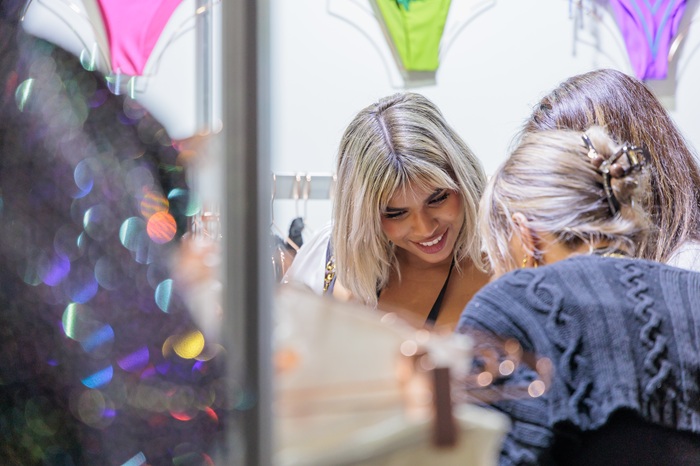
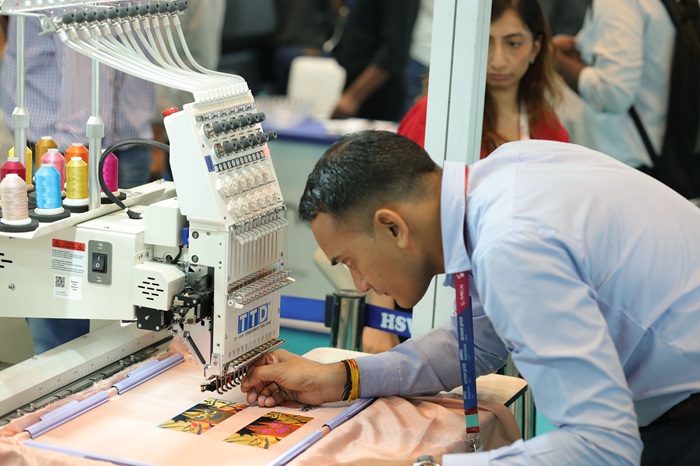
Innovation was an important part of Intertextile Shanghai Apparel Fabrics and Verve for Design proved this fact while showcasing original designs from Australia, France, Italy, Japan, Korea, Taiwan and UK. The zone offered opportunities for new designers to display their work which was a crucial element of Verve for Design, which was firmly embraced by Australia’s Longina Philips Designs. “We have introduced a new constantly evolving collection called ‘The Print Room’, which was created as a platform to facilitate design by young emerging designers and offered us a distinct edge in terms of the design work we can offer to our clients,” said Senior Designer Shannon Cheung.
Handmade designs was one of the main attractions for Chinese consumers particularly in the mid range market. Italy’s Lineastudio di Sartori Stuart & C SAS is on point with this trend, bringing both handmade and digital designs in a bid to meet the major textile players in the Asian market, said Stuart Sartori, President.
This zone was truly about expressing creativity and showcasing originality. As Dietmar Voegel, owner of UK-based Circleline Designs pointed out, “We work with people who are interested in original design and artwork and want to distinguish themselves from the mass market.”
S. Café: The fabric from coffee grounds breaking new ground
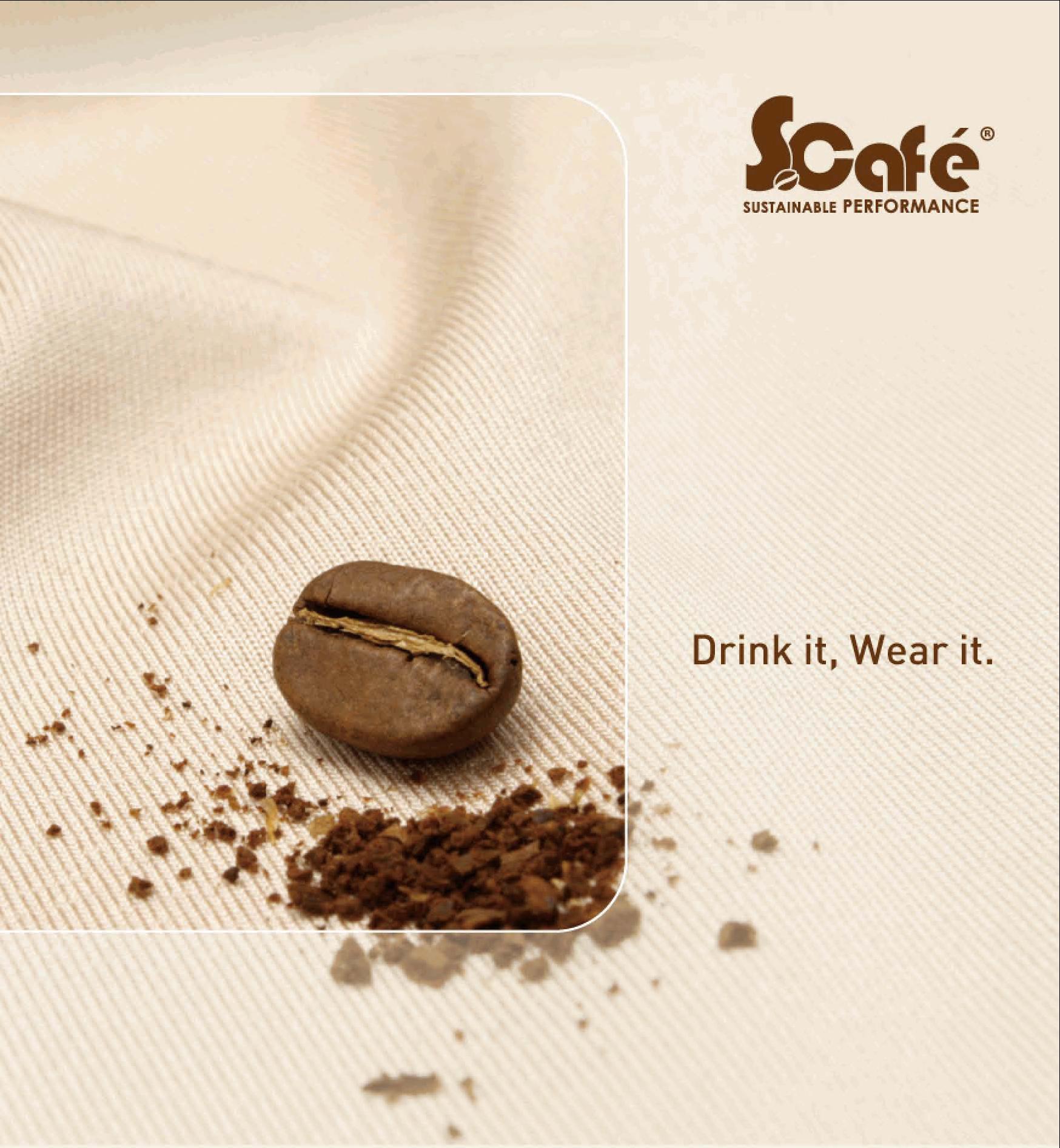 Singtex Industrial, a leading Taiwan-based textile company has launched SPIIN (S. Cafe, Partnership, Innovation, Inspiration, Nature) to integrate industrial resources by leveraging partners the textile supply chain. It aims to become an essential platform for partners to explore creativity and business opportunity of utilizing coffee yarn called S. Café, into textile manufacturing.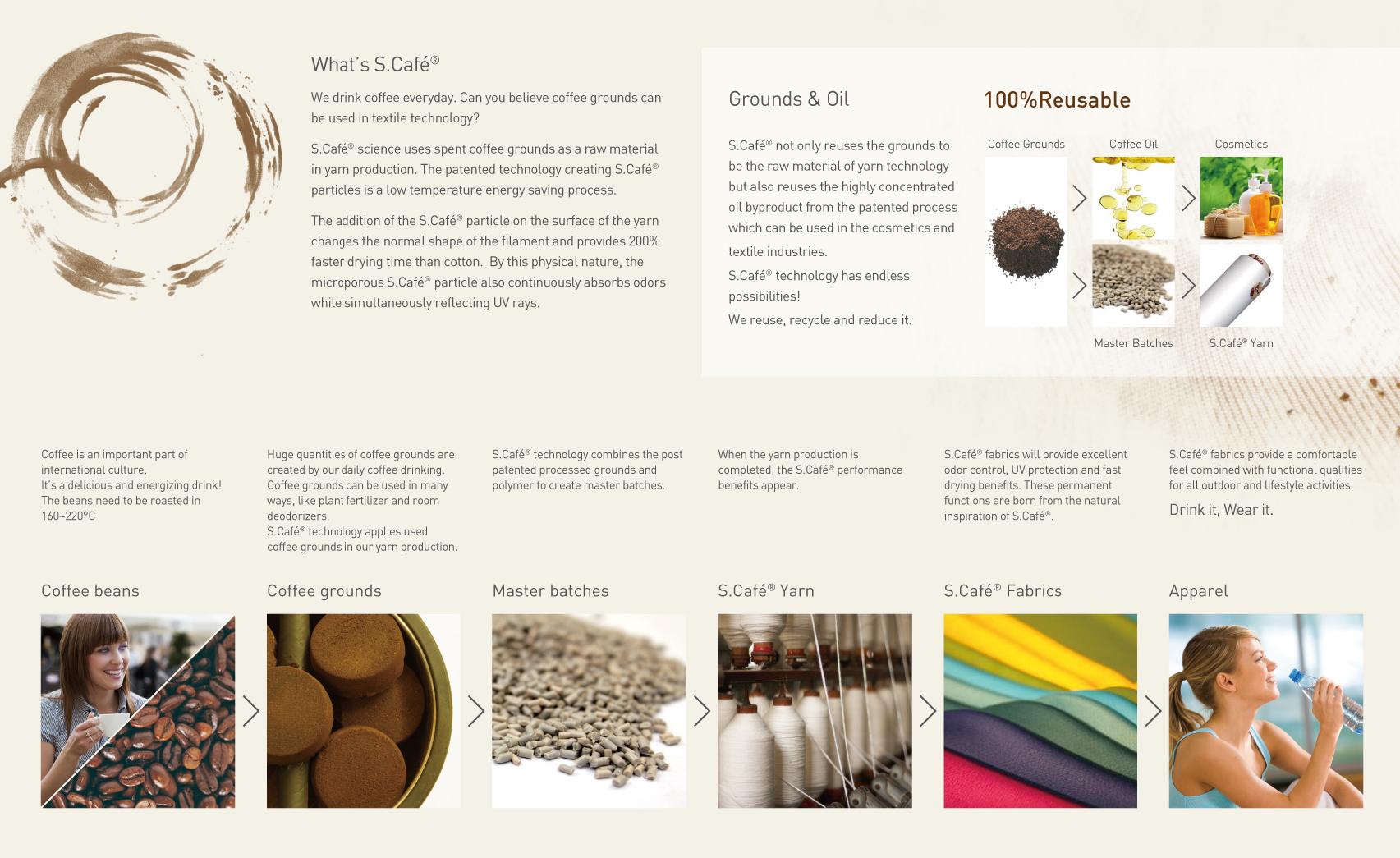
S. Café is a technical composite fibre used to make yarn which then
becomes knitted or woven fabric through a series of manufacturing processes. It utilizes the natural ability of coffee grounds to absorb odours for a comfortable wearing experience and provides UV protection and fast drying. It combines the post patented processed coffee grounds and polymer to create master batches. The technology not only reuses the grounds to be the raw material of yarn technology but also reuses the highly concentrated oil by product from the patented process which can be used in cosmetics and textile industries. S. Cafe fabrics provide a comfortable feel combined with functional qualities for all outdoor and lifestyle activities.
Jason Chen, President, S.Cafe explains, “The idea of using coffee ground came to us in 2005. Being from the yarn background and with a coating and lamination factory, I saw a future in technology from coffee beans. The process involved taking the coffee ground in nano particle size, collecting and drying them. Simultaneously PET bottles are recycled which gets blended into the recomposition stage to be developed as yarn.” Chen further explains, “Out of coffee that is grown, .02 per cent of coffee is used which means 99.98 per cent coffee ground is eliminated or thrown away. Using this coffee ground makes the process sustainable"
The coffee yarn is sustainable and commercially viable and can also absorb sweat. “The product is 30 per cent more expensive in comparison to regular yarns. We sell the yarn to weavers and it goes to China, Korea, India and US. We have a co-operation with an Indian company which uses the yarn for branding and marketing purpose,” added Chen.
Talking about the growth aspect, Chen reveals, “We grow by 30 to 35 per cent a year and work on high tech textiles and environment friendly fabric. The fabric is also exported to brands like Nike, Adidas and some Japanese brands. We have a garment factory in Vietnam which is used for ODM (Original Design Manufacturer) primarily used for design. Some of this is for garment brands. It’s a vertical service. The future looks very optimistic. We are an IPO listed company and a 50 million dollar company. As of now we have a small business in India. Some brands that make garments in India use our fabric. We are open to cooperation with Indian firms.”
S.Café has won Best Invention at Geneva Inventions and Pittsburgh Invention Gold Medal Award of Merit. Additionally, S.Café obtained GRS (Global Recycle Standard ) certification by Control Union (Holland base notarization unit) and Recycled Material Certification by TÜV (Germany base notarization unit).
Morocco emerging as new sourcing destination
Over 135 companies from the upstream textile supply field from the Euromed region and Moroccan clothing manufacturers exhibited at this year’s editions of Maroc in Mode & Maroc Sourcing on October 24 and 25, in Casablanca. Denims and piece-dyed casual trousers were a focus of the exhibition with many innovative ranges on display.
Organised by Amith, the trade body for Moroccan textile and clothing manufacturers, in collaboration with Maroc Export saw retailers and fashion labels such as Stefanelli, Simonetta, Antica Sartoria or Pinko from Italy; Cortefiel, Iturri, Escorpion from Spain; Perry Ellis, Topshop, House of Fraser from Great Britain and Willy Bogner, Mac, Mustang and Orsay from Germany visit the fairs.
The largest groups of visitors came from France, including Galeries Lafayette, Caroll, Cache Cache, Pimkie, La Redoute, La Nouvelle Vague, Go Sport along with Russian labels exhibiting for the first time. An extensive range of textiles for the production of in-house collections in the fields of womenswear, menswear, childrenswear, jeans, body and beachwear, as well as branded and private label collections and sustainably produced eco collections were on display.
Owing to rising production costs in Asia, Morocco’s textile and clothing industry is being viewed as a safe and comfortable sourcing destination. Duty-free delivery to the EU, short distances involved in transit, as well as environmentally friendly and sustainable production methods are some advantages that make Morocco attractive for international manufacturers.
Garment Printing back on track
Garment Printing, a leading international promotional and customized clothing company, offering a complete range of bespoke printing techniques has re-invested in its innovative IT platform that improves on its already strong, international supply chain. Combined with an enhanced customer relationship system, the company is focused on reducing turn-around times and improving customer satisfaction, proven by its increase in positive feedback.
“Fast Track IT innovation is driving our express T-shirt printing demand,” says CEO Gavin Drake. Having printed and embroidered extensively for the television, media, music, and advertising companies and global brands, Garment Printing is familiar with sudden changes and urgent requests. Drake has applied his 15 years experience of the printing business to solving unexpected pressures on his companies supply chain and ensuring high quality service for his customers, explaining how his customer services teams are like an extension of its clients marketing teams.
Garment Printing does not have fixed turnaround times. They work as per client’s requirements and urgent delivery deadlines. Whether it’s same-day T-shirt printing, next-day embroidered polo shirts, or anything personalized, customized or branded with company logos and designs, Garment Printing makes it happen.
www.garmentprinting.co.uk
Interfiliere & Mode Lingerie enthral in new format
The 9th edition of Interfiliere Shanghai & Shanghai Mode Lingerie, two trade fairs dedicated to lingerie and swimwear were held from October 22-23, 2013 at Shanghai Exhibition Centre. The two-day show saw nearly 7,300 visitors from 60 countries.
One of the main attractions in this edition was the trend forum by Concepts Paris. It showcased selected fabric and product samples and gave away the trends for next lingerie and swimwear collections. With the aim of bridging the gap between Chinese and international lingerie and swimwear brands, Shanghai Mode Lingerie had a new format and layout.
The two day event also saw trend and branding seminars that was attended by designers, marketing managers and buyers looking for the latest trends. Concepts Paris, Carlin International, Stylesight gave away insights and information for next collections and seasons.
Shanghai Mode Lingerie also developed a top-class business club, exclusively focused on B2B meetings, to give visitors a unique opportunity to meet and sit down with brands. This helped existing and potential partners to know the products better and learn more about the brand identity and image.
For the first time, Eurovet collaborated with Stylesight, the leading content and technology solution provider for professionals in the style, fashion and design sectors. They presented beachwear trends for S/S 2015. Specialists explored the latest collections of 269 Interfiliere exhibitors and 41 lingerie and swimwear brands from Europe, US and Asia. The trade show attracted 71 per cent Chinese visitors. The top regions and provinces were Guangdong, Shanghai, Zhejiang, Jiangsu, Fujian and Beijing.
International visitors from Hong Kong, Taiwan, Japan, South Korea, United States, Thailand, Russia etc, attended the show. This time exhibition space increased from two to three halls. This edition profiled 269 local and international exhibitors from 17 countries divided into seven product-base.
Historic venue an added attraction for next ‘Made in France’
 Made in France, the high-end apparel and accessories manufacturing trade show will take place in Paris from April, 9 to 10, 2014. This time the event will take place at a new venue, the Carreau du Temple. In fact, the historical venue where the event is set, is a major highlight this time. It will enable the show to build on the success of 2013 and encourage world-renowned contemporary know-how, techniques and craftsmanship to remain at the cutting edge of fashion. In keeping with the venue’s community spirit, ‘Made in France’ plans to open certain exhibitions and events to the general public.
The Carreau du Temple site, home to an open-air market, was ordained for the trade of old linens, clothes and rags, which was transferred out of Les Halles at the beginning of the 19th century. By 1808, the newly-covered market traded in carpets, silks, ribbons, gloves, feathers, household linen, leather, and second-hand clothes. In 1904, the market hosted the first Foire de Paris (Paris Fair). It was a huge hit with the public and the Carreau du Temple became a hotspot for stylish men and women with limited means. Sports arrived at the Carreau in 1920, although fashion, particularly men’s fashion in the 1960s and 70s, remained the district’s speciality. Since the 1980s, the Carreau du Temple hosted Paris Fashion Week’s catwalks, connecting it to a world of luxury and fashion.
This edition of the show will gain momentum as it has got a new shareholder called PV Manufacturing. The district’s ready-to-wear designers, jewellery and accessories workshops and leading school of applied arts will continue to establish connections between fashion and production at Made In France. Around100 exhibitors from apparel and accessories manufacturing experts with exclusive rights to label their products ‘Made in France’, will be among the first to fill this new fashion hotspot, which also boasts of sports and cultural facilities. The high-end manufacturing trade show will bring together experts with the capacity to turn fashion and accessories designers’ visions into reality, in one ideal location.
Miroglio Textile, a new approach to fabric printing
After years of work and investment in R & D, Miroglio Textile has come up with a new method of printing textiles called E.volution. A one-of-a-kind, this method improves quality standards in terms of technical and environmental performance. It is a combination of advanced next-gen digital printing, great environmental responsibility and outstanding creativity.
E.volution has recently added two new products namely Twin Fabs and Filature Miroglio. Filature Miroglio, part of Miroglio Textile, is a range of yarns made of a blend of 80 per cent Tencel and 20 per cent Ecolabel certified regenerated noble fibres such as wool, alpaca, cachemire. These yarns has been woven and printed with the E.volution system by Miroglio Textile.
Unique ingredients together with the cooperation and skills of an important partner like Lenzing, coordinated and implemented by Miroglio Textile in yarn, fabric and printing innovation, makes this range really unique in its look, touch and functionality from both technical and sustainability point of view.
Thermal management range by Newlife
Saluzzo Yarns, part of Sinterama Group has recently introduced the ultimate top innovation of the Newlife platform. The new ‘Thermal management’ range by Newlife offers new levels of lightness and thermal insulation together with high sustainable performance. It’s an unique range that fits new applications both for casual and active wear. New textile partnerships were made which were in line with manufacturers requirements.
For work wear, unique offers came from a complete supply chain based on Newlife yarns, woven by French weaver Chamatex with the inclusion of Sympatex sustainable laminate for a specific high quality top work wear (police, transports etc) fabric range, with enhanced mechanical properties, abrasion resistance and colour fastness. The ultra thin membrane ensures excellent handle and comfort stretch. It has dynamic breathability which means, the more the body perspires, the more moisture the membrane can transport outwards. The membrane is 100 per cent recycled and recyclable.
Newlife is the result of an ambitious project developed by Saluzzo Yarns. It is a unique, complete and certified system of recycled polyester yarns obtained entirely from used plastic bottles, which are transformed into a polymer by mechanical, and non-chemical process, right up to the production of the 100 per cent ‘Made in Italy’ yarn thanks to an exclusive horizontal partnership agreement. The knowledge gained by Saluzzo Yarns, together with its on going research aimed at innovation and the complete, patented process, which forms the basis of this entirely Italian-made project, makes Newlife into an incredibly flexible platform.
BGMEA to propose Tk 4,500 ($58) as minimum wage for workers
Manufacturers of readymade garments (RMG) have decided to propose a minimum wage Tk 4,500 for garment workers before the wage board.
The Bangladesh Garment Manufacturers and Exporters Association (BGMEA) held a meeting with all former presidents and other business leaders to take their opinion on the wage hike.
In its last meeting held in August, the wage board had asked owners' and leaders to submit their proposals in the next meeting. The meeting was attended by its office bearers including president Atiqul Islam among others.
Arshad Jamal Dipu, who is representing the owners, said there is a scope for government interference in the recommendations of the wage board and if the government wants, it can increase the wages. "The industry can't afford a minimum wage of more than Tk 5,000 ($64.7) at this moment," he said. "That is why we want to discuss the matter with the government so that the final wage remains within Tk 5,000."
Nazma Akter, resident of Sommilito Garments Sramik Federation said workers will be cheated if their basic payment is not increased properly. She feared that it might lead to an unwanted unrest among workers if their demand is neglected.
Bangladesh: Import of garment machinery comes under cloud
Bangladesh Bank has launched an inquiry into the recent substantial increase in garments machinery import despite ongoing political turmoil to see whether there is any attempt to draw off money abroad through over-invoicing. The opening of LCs for import of capital machinery increased by 23 per cent in July-August period of the current fiscal year over the same period of the last fiscal year. The value of LC opened against capital machinery stood at $428 million and settlement stood at $380 million during the period as compared to $348.31 million and $334 million respectively in the corresponding period of the last year.
Bangladesh Bank senior executives suspect money laundering activities as opening of import letter of credit (LC) increased substantially during the fag end of the present government tenure. Generally, the trend is witnessed at the end of every government. They said the ill attempts are being made through over-invoicing as the imported machinery are reported as new and at higher price, but actually those would be second hand ones at lower price.
The rising trend is illogical, say experts, as the entrepreneurs remain shy of making fresh investment in this situation of political instability ahead of the upcoming general election. Earlier, Anti Corruption Commission of Bangladesh had moved to investigate the cause of significant increase in LC opening.
More...
Depreciating currency boosts Nepal’s garments exports this fiscal
The value of Nepal’s readymade garments exports have risen by 17.8 per cent year-on-year, during the first two months of Nepali financial year that began on July 16, 2013. Depreciation of the Nepali currency vis-à-vis the US dollar was the major factor contributing factor that increased exports. On July 16, 2013, the exchange rate for 1 US dollar was Np Rs 95.01, which gradually rose to Rs 101.47 on September 15, 2013.
Nepal exported garments worth Np Rs 786.2 million ($8 million) in July to September, 2013 period as compared to exports worth Np Rs 667.4 million ($6.8 million) made during the corresponding period of last fiscal, as per the latest data from the Nepal Rastra Bank. During the two-month period, Nepal’s garment exports to India increased to Np Rs 55.1 million ($0.55 million), as against exports valued at Np Rs 35.2 million ($0.36 million) made during the same period last year.
For Nepal, garments were the second-largest export item, after hand knitted carpets, during 1990-2000 and fetched Np Rs 13.12 billion ($0.13 billion) at its peak. However, apparel exports declined to Np Rs 11.89 billion ($0.12 billion) in 2003-04, and then to around Np Rs 4 billion ($0.04) in 2012-13.
The inclusion of garments in the revised GSP would help Nepali clothing to qualify for preferential access to the US market. In addition, the Ministry of Commerce and Supplies (MoCS) is also considering the inclusion of garments in the Nepal Trade Integration Strategy 2010 priority product list, in order to boost the sector.
Cambodia’s garment exports rises 22% upto September
Cambodia’s garment exports continued to grow in the first nine months of the year in spite of the political uncertainty. The country’s garments and footwear exports were worth $4.1 billion in the first nine months of this year, a rise of 22 per cent from the $3.44 billion in the nine months upto September 2012, the Ministry of Commerce has revealed. As per Garment Manufacturers Association in Cambodia (GMAC), though volumes have increased, factory profit margins were squeezed due to labour disputes and demand for higher wages.
GMAC points out that the US is the biggest market for Cambodian garments and textiles, with imports worth $1.21 billion in the first nine months. Europe, Canada and Japan are the major importers.
Hing Thoraxy, Senior Researcher at the Cambodia Institute for Cooperation and Peace said increasing garment exports reflects Cambodia’s improved economic conditions in and its growing importance in the exports market. Thoraxy added that while output is good, more is needed to diversify and enhance production levels. “We need to shift from simple T-shirts to produce more complicated products such as coats and shirts with embroidery, to add value to the product,” he said.
www.gmac-cambodia.org
Pakistan stands to earn more as China’s share in global textile drops
Following the reduction of China’s share in the global textile and clothing trade coupled with the anticipated GSP Plus status for Pakistan by the EU in early 2014 Pakistan can earn an additional $700 million per year. Industry sources reveal Pakistan is working to get the Generalized System of Preferences (GSP) plus status by January, 2014 from EU which will allow textile products greater access to those markets. The sole purpose of GSP scheme is to help poor countries by making it easier for them to export their products to EU at reduced tariffs.
In FY13, textile contributed 53 per cent to Pakistan total exports of $24.6 billion. Textile sector will gain as EU is likely to grant GSP plus status to Pakistan. Currently, any importer in EU who imports Pakistani textile products has to pay 11 per cent duty, which makes Pakistani products costly.
The new GSP legislation has set enhanced monitoring of the conventions (every two instead of three years) and with scrutiny by the European Parliament. GSP plus offers preferences over and above the standard GSP by covering roughly 70 more lines mostly duty-free. Pakistan is currently eligible for the GSP plus status and most likely will get the status in January, 2014. Neighbouring countries like India, Bangladesh are holding GSP standard which offer partial reduction in tariff and Afghanistan has EBA status which allows it to export everything but arms absolutely duty-free and quota-free.
Italian textile industry still coping with a slowdown
Italian textile industry has still to recover from the economic slowdown reveals latest data. The first part of 2013 shows a negative trend for the industry, with signs of a slight recovery during the second quarter of 2013. According to ISTAT data on industrial production (adjusted for the work calendar), during the first and second quarter of 2013, the Italian textile industry (excluding knitted fabrics) suffered a setback when compared to the same period in 2012, registering negative figures for the 7th consecutive quarter. The first quarter of 2013 was characterized by a -3.3 per cent production decrease, while the second quarter showed weak improvement, despite the negative zone (-0.4 per cent). It has been observed that in the first half of 2013, the Italian textile industry registered a slight production slowdown (-1.8 per cent).
The entire textile industry follows a similar trend as the weaving sector, holding steady during the 2nd quarter and then beginning to stabilize, as in 2012. During the first half of the current year, the textile industry experienced a slight decrease in production (-2.1 per cent).
During the first five months of 2013, Italian fabric export remained in the negative. From January to May 2013, foreign sales of Italian fabrics registered a slight decrease amounting to -3.4 per cent in value and -4.0 per cent in quantity. A minor decline characterized silk fabric import (-3.7 per cent) during the first five months of 2013. Considering these results, the total turnover for the January-May 2013 period, was only slightly below that of the previous year (934 million euros to 846 million euros, a reduction of 88 million euros).
Among the top 10 market outlets, only Turkey and Hong Kong were in the positive zone, increasing by +12.8 per cent and +1.0 per cent, respectively. Even though Germany remains the primary market outlet for Italian fabrics, there was a slight decline in export (-4.1 per cent) as there was to France (-2.6 per cent).
During the first five months of 2013, China is once again the leading supplier, covering 25.9 per cent of total fabric import, still in the positive zone (+0.4%). Turkey makes up +23 per cent (compared to -19.4 per cent registered last year). Fabric import from the Czech Republic and Pakistan has increased +5.3 per cent and +10.7 per cent respectively, while imports from Spain (-2.1 per cent) and India (-16.2 per cent) are in decline.