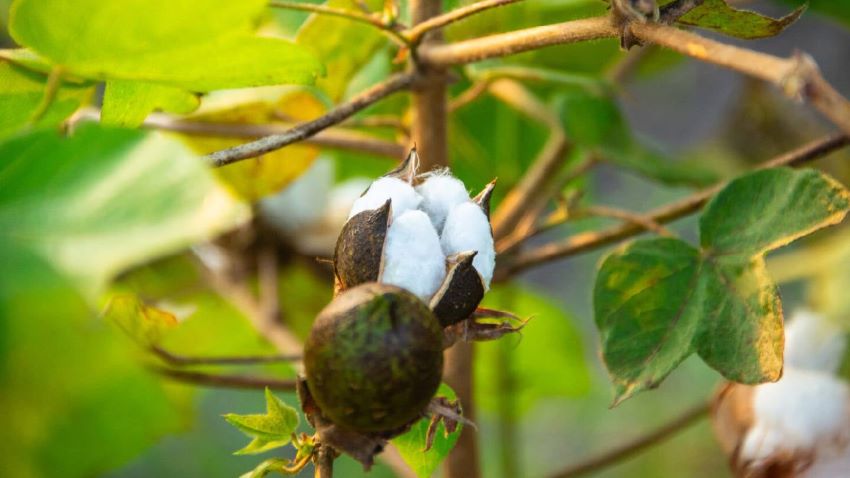
Zimbabwe’s cotton output may decline by 52 per cent this year after a severe drought. The challenges affecting the industry include: mobile payment system being used to pay farmers; punitive rates charged by errant businesses that are heavily eroding farmers’ earnings. Farmers want cash to be made available to them in areas where there is no mobile network; lack of research and poor development of new seed varieties affecting productivity. Also, due to lack of proper regulatory enforcement, cotton companies engage in side marketing activities. While other cotton producing countries have already adopted hybrid varieties with high yield potential, Zimbabwe will this year, introduce hybrid varieties. Zimbabwe needs more varieties to suit various regions, rainfall patterns and soils so that production increases. One suggestion is for Zimbabwe to consider producing genetically modified organisms to increase production.
A scheme was introduced in 2015 to save the industry that faced imminent collapse after farmers abandoned cotton production citing poor prices and low levels of funding. The scheme has helped production to increase from 28,000 tons, the lowest output in nearly two decades, to about 1,42,000 tons last season. At its peak, Zimbabwe produced 3,52,000 tons of raw cotton in 2012.
- 1
- 2
- 3
- 4
- 5
- 6
- 7
- 8
- 9
- 10
The second life economy gets a boost as resale outgrows traditional apparel reta…
For decades, resale existed in the margins of the apparel economy, thrift stores, peer-to-peer marketplaces, and charity bins quietly absorbing... Read more
Rising polyester costs shake India’s textile manufacturing hubs
India’s synthetic textile industry is confronting a sudden and destabilizing price shock that is reverberating across its vast manufacturing ecosystem.... Read more
Cotton markets hold firm as tariffs, higher supply reshape global fiber economic…
In a year marked by tariff escalations, geopolitical brinkmanship and a recalibration of global trade flows, the international cotton market... Read more
Beyond Cotton How Kapok could redefine sustainable insulation in textiles
In the lush, humid heart of Southeast Asian rainforests stands a giant, a silent sentinel of the forest canopy. Growing... Read more
Bharat Tex 2026: Redefining the global textile value chain
Union Minister of Textiles, Giriraj Singh, has officially unveiled Bharat Tex 2026, signaling a significant leap in India’s influence over... Read more
Intertextile Shanghai Spring 2026: A hub for global textile innovation
The textile industry’s pulse is quickening as Intertextile Shanghai Apparel Fabrics – Spring Edition prepares to open its doors from... Read more
Moscow Fashion Week 2026: Blending sustainable innovation with timeless glamour
Scheduled to run from March 14-19, 2026 in Moscow, Russia, the Moscow Fashion Week (MFW) is cementing its status as... Read more
The Store as Stage: How fashion is crafting immersive consumer worlds
The North American fashion retail sector in 2026 is shedding its product-first identity and shifting towards a model that values... Read more
Turning the supply chain upside down, on-demand production reshapes apparel
The global fashion industry, long celebrated for its creativity and scale, is facing a structural reckoning. For decades, retailers and... Read more
Intertex Milano 2026 - A global nexus for textile innovation
Intertex Milano is set to return this summer, confirming its status as a premier international destination for the textile and... Read more