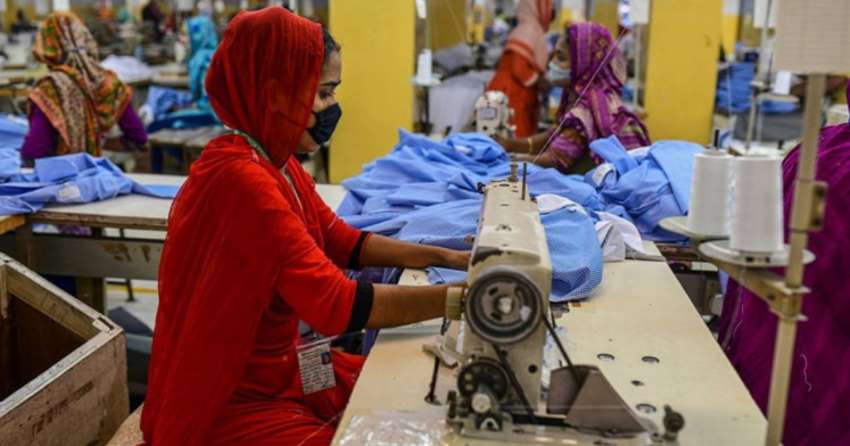
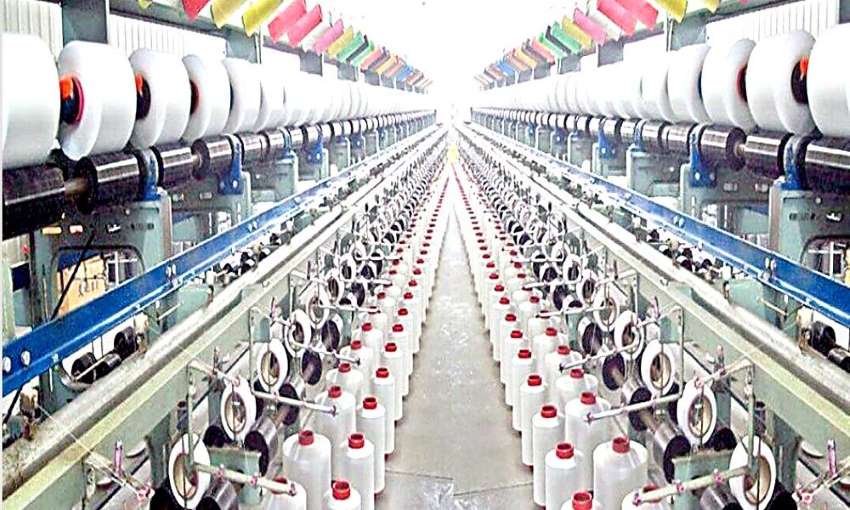
India’s huge textile industry, long celebrated for its command over cotton and competitive manufacturing scale, is going through a foundational redesign. At the heart of this shift lies an emerging consumer appetite for textiles that do more than drape and insulate. Fabrics are being engineered to sense, monitor, regulate, and communicate, transforming garments into data-driven wearables. What was once a downstream innovation challenge for brands and designers has now become a structural rewrite of the fibre-to-fabric ecosystem itself.
The stakes are rising sharply. The country’s smart clothing opportunity projected to touch nearly $1 billion by 2030 depends on a decisive shift from commodity-driven production to the sophisticated construction of e-textiles and technical fabrics. This means India’s most traditional mills must learn the language of electronics, automation, and materials science almost overnight.
The policy engine behind the transformation
India’s federal policy posture is now explicitly aligned with this upstream transformation. The industry is being repositioned not simply as labour-intensive manufacturing, but as a technology-led manufacturing base with integrated material science capabilities.
For example, the Ministry of Textiles reports that India currently produces 1,700 million kg of man-made fibres and 3,400 million kg of man-made filaments annually. Further, an analysis of the Indian market shows that India’s technical textiles industry was valued at $29 billion in 2024 and is forecast to reach $45 billion by 2026, $123 billion by 2035 and $309 billion by 2047.
In addition, India’s share of global textiles & apparel trade is about 3.91 per cent in 2023-24, while the sector’s exports accounted for 8.21 per cent of total Indian exports that year. Major government programmes such as the Production Linked Incentive (PLI) scheme for textiles and the National Technical Textiles Mission (NTTM) are directly supporting investment in man-made fibres, technical textiles and value addition. Reports say, the PLI scheme has catalysed investments of around Rs 7,343 crore (approx. $ 0.9 billion) in the textiles sector, generating turnover of Rs 4,648 crore and exports Rs538 crore in one cycle.
From a strategic viewpoint, this policy architecture signals a clear objective: reposition India’s upstream textile segment from low-end, labour-intensive bulk manufacture to a high-value, technology-enabled materials manufacturing hub.
Inside the smart textile mill
In spinning rooms and weaving halls across the country, a quiet digital revolution is already underway. The traditional textile workflow reliant on manual inspection and high wastage is being replaced with AI-driven defect tracking, predictive maintenance, and automated process control. Such upgrades were once optional for mills serving mass-market fashion, but they become business critical when the raw materials involved are conductive polymers or nano-ink coatings that cost many multiples of standard cotton.
Quantitative benchmarks reinforce the case: mills that introduce automated inspection systems and end-to-end digital workflows can reduce defects, increase uptime and mitigate waste critical when conductive inks or specialty fibres cost multiples of standard materials. Several industry studies suggest a profit boost of roughly 8 to 9 per cent can be achieved when defect levels drop through digital inspection.
Crucially, intelligence is now being embedded at the earliest stages of manufacturing. Rather than attaching sensors to garments at the final assembly stage, a method that compromises comfort and durability, Indian mills are experimenting with ways to weave electricity into fabric itself. Modified polymers are being extruded into conductive filaments; silver-nanoparticle inks are being printed on base fabrics with circuitry designed to stretch and bend with the human body. The tactile softness of a T-shirt must coexist with the performance reliability of a biometric device.
Integration, value capture and new business models
The business case for vertical integration has never been stronger. Vertically integrated textile parks such as those envisaged under the PM MITRA programme are emerging as the preferred model for embedding end-to-end capabilities: fibre production, yarn spinning, weaving, smart-fabric conversion, electronics embedding and finished apparel. This integration secures shorter lead times, higher margins and better IP protection.
One real-world example: a South India–based textile leader, servicing defence and high-performance wearables, developed a biometric-monitoring jacket. Critical to the success was the company’s ownership of the entire chain, from conductive ink development to sensor layout on fabric ensuring washability, signal stability and acceptable cost structure. Such projects illustrate that competitive advantage in the smart-apparel domain is not anchored in the garment alone, but in the upstream mastery of materials and integration.
For B2B players in the supply chain, fibre suppliers, chemical formulators, machine-builders, fabrics converters the opportunity is twofold. First, addressing high-growth segments like defence, medical wearables, industrial safety and sports performance gear; second, capturing margins previously reserved for brand-led garment segments. Technical textiles thus become a new frontier of value capture rather than commoditised apparel.
The roadblocks to India’s growth
Yet, the ascent of e-textiles is far from frictionless. Inputs such as carbon fibres, graphene composites, and nano-inks remain significantly more expensive than conventional fibres, narrowing the market to specialised sectors like defence, medical monitoring, and athletics. A workforce steeped in traditional textile know-how must suddenly acquire fluency in flexible electronics and digital manufacturing. Without this talent transformation, progress remains uneven, especially across MSME clusters that dominate the textile economy.
Durability continues to be the toughest scientific challenge. A smart garment cannot lose function after three laundry cycles or under strain during use but achieving that resilience requires testing protocols and performance standards that India has yet to institutionalise. Meanwhile, energy storage remains the final frontier. Wearables today rely heavily on rigid battery components; the vision of energy harvested directly from human motion is still trapped inside the research lab.
A fabric industry becoming a tech industry
Despite these barriers, the direction of travel is unmistakable. India’s textile sector is shifting from a business defined by price and productivity to one shaped by intellectual property, innovation ecosystems, and exportable technological value. What emerges from this transition is a fundamentally new identity: textiles that think, fabrics that interact, garments that generate data.
The companies that adapt fastest today will become the global suppliers of military wearables, medical monitoring apparel, sports-performance gear, and industrial safety solutions tomorrow. And as costs fall and capabilities mature, the intelligence embedded in protective gear will flow into everyday wardrobes.
India’s transformation from the world’s fabric mill to the world’s fabric-tech powerhouse has already begun and it is being spun, woven, and printed deep within its textile heartlands. The success of this metamorphosis will determine not just the future of Indian apparel manufacturing, but the nation’s ability to lead in a global industry where function is rapidly becoming fashion’s most prized feature.