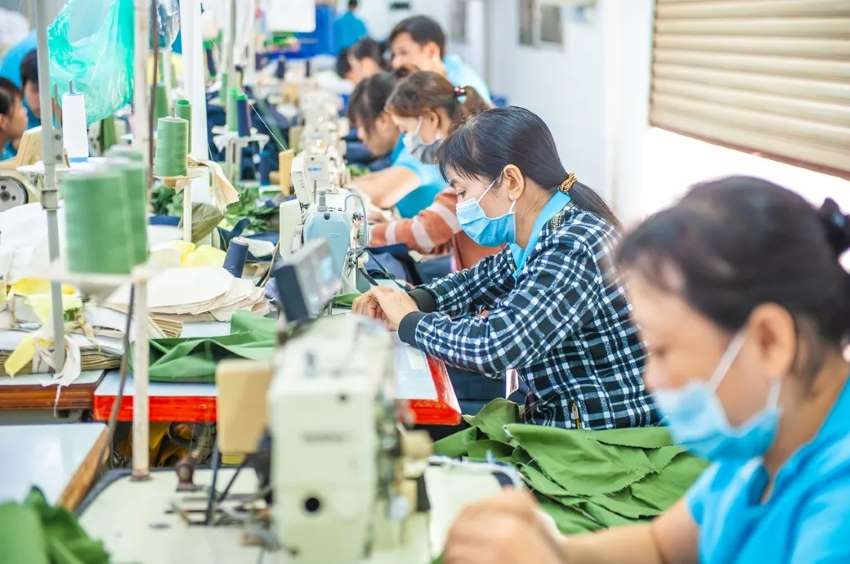
In a landmark move for India’s second-largest employer, the Union Budget 2026-27 has unveiled a comprehensive transformation roadmap for the textile, apparel, and handicraft sectors. The budget focuses on scale, sustainability, and global competitiveness to propel the industry toward an ambitious target of a $350 billion business size by 2030. Industry leaders have characterized the announcement as a strategic pivot toward modernizing India's "fibre-to-fashion" value chain, with Dr. A. Sakthivel, Chairman of the Apparel Export Promotion Council (AEPC), describing the budget as forward-looking, growth-oriented, and balanced, reflecting a strong commitment to a globally integrated sector.
Strategic pillars of the Budget 2026
The budget introduces several new missions to streamline the fragmented sector, addressing the textile economy from farm-to-factory linkages to high-value exports. Chandrima Chatterjee, Executive Director of the Confederation of Indian Textile Industry (CITI), noted that the budget lays out a comprehensive roadmap through the Integrated Programme for Textile Sector, which encompasses fibres, clusters, handlooms, sustainability, and skilling. These pillars are structured to ensure raw material security and modernized manufacturing, an intent echoed by the Clothing Manufacturers Association of India (CMAI), which stated that the package signals a clear, outcomes-oriented intent to modernize the sector, strengthen livelihoods across the value chain, and accelerate India’s competitiveness in domestic and global markets.
Initiative Primary Focus Objective National Fibre Scheme Raw Material Security Strengthening availability and self-reliance in silk, wool, jute, and MMF. National Handloom & Handicrafts Programme Artisan Integration Integrating and scaling existing schemes to improve market access for small producers. Tex-Eco Initiative Sustainability Promoting globally competitive and environmentally responsible fashion. Samarth 2.0 Skill Development Modernizing the skilling ecosystem through industry-academic collaboration. Mission for Cotton Productivity Agricultural Yield Raising yields, promoting extra-long staple (ELS) varieties, and tech support for farmers.
Sanjay K. Jain, Chairman of the ICC National Textiles Committee, emphasized that these specific announcements become even more significant given the global shifts of the last six months, as the industry needs to build capacity to capture opportunities opening in the global market. He stated that the focus on sustainability, skilling, and capacity scaling is perfectly in tune with building for the future. R.K. Vij, President of the Textile Association (India), echoed this sentiment, highlighting that the budget's focus on capacity building in textiles and technical textiles marks the first time a budget has specifically prioritized Man-Made Fibre (MMF), natural, and new-age fibres.
Modernization and the revival of traditional segments
The budget places a high priority on infrastructure and rural inclusion through the planned establishment of new Mega Textile Parks in mission mode, which aim to attract investment, improve compliance, and create integrated hubs for scale and exports. This is complemented by the Mahatma Gandhi Gram Swaraj Initiative, which is designed to energize khadi, handloom, and handicrafts by promoting inclusive growth and rural livelihoods. Chandrima Chatterjee pointed out that the revival of legacy clusters and these new parks will strengthen competitiveness and support large-scale employment. Furthermore, the Textile Expansion and Employment Scheme aims to modernize traditional clusters through capital support for machinery and common testing centers, which AEPC suggests will greatly enhance productivity in MSME-dominated clusters.
CMAI further noted that the emphasis on skilling through Samarth 2.0 and the broader ecosystem commitments will equip workers with contemporary manufacturing and design skills, enabling productivity gains and faster adoption of Industry 4.0 technologies. Durai Palanisamy, Chairman of The Southern India Mills’ Association (SIMA), pointed out that the announcement of a Capital Support Scheme for Modernization is essential, given that the previous Technology Upgradation Fund Scheme (TUFS) had attracted around ₹4 lakh crore in investment before being discontinued in 2022. He believes this dedicated support will enable the sector to attract the envisaged investment of $100 billion by 2030.
Empowering MSMEs and enhancing liquidity
Recognizing MSMEs as the backbone of exports, the budget introduces robust financial and trade reforms. Dr. Sakthivel stated that the emphasis on liquidity and ease of exports through customs-related reforms will reduce transaction costs and enhance efficiency for exporters. Liquidity is further addressed through the strengthening of the Trade Receivables Discounting System (TReDS), which now includes mandatory onboarding of Central Public Sector Enterprises (CPSEs) and credit guarantee support through the CGTMSE. CMAI highlighted that beyond sector-specific measures, cross-cutting reforms such as tailored credit cards for first-time entrepreneurs and the National Manufacturing Mission will further "Make in India" objectives.
Trade facilitation measures such as the recognition of trusted importers, reduced cargo verification, and factory-to-port clearance using electronic sealing are expected to significantly reduce logistics costs. Chandrima Chatterjee added that measures such as extending export realization timelines and enabling SEZ units to access the domestic market will significantly enhance export efficiency. However, she also cautioned that the industry was looking for a stronger investment incentivisation scheme specifically for sustainable technologies and supply chain logistics to fully leverage future Free Trade Agreements (FTAs).
Sectoral challenges and the cotton crisis
Despite the overarching optimism, the industry has raised critical concerns regarding the cotton value chain. SIMA Chairman Durai Palanisamy expressed that the Budget could have considered the removal of the 11% import duty on cotton, which he deems essential to meet quality cotton shortages and export commitments. He warned that domestic cotton prices have already increased by 5% compared to international prices, a gap that could widen and threaten the financial viability of the entire value chain.
CMAI observed that the Budget appears oriented towards strengthening long-term supply-side and structural interventions rather than catalysing an immediate spurt in consumption. Chandrima Chatterjee reinforced this by stating that the industry was looking forward to specific support for the cotton value chain to address the consistent cost disadvantage it faces due to raw material issues. While the government has already allocated ₹5,900 crores under the Mission for Cotton Productivity, many in the trade, including TAI President R.K. Vij, noted that the industry was expecting changes in custom duties where local capacities are currently short.