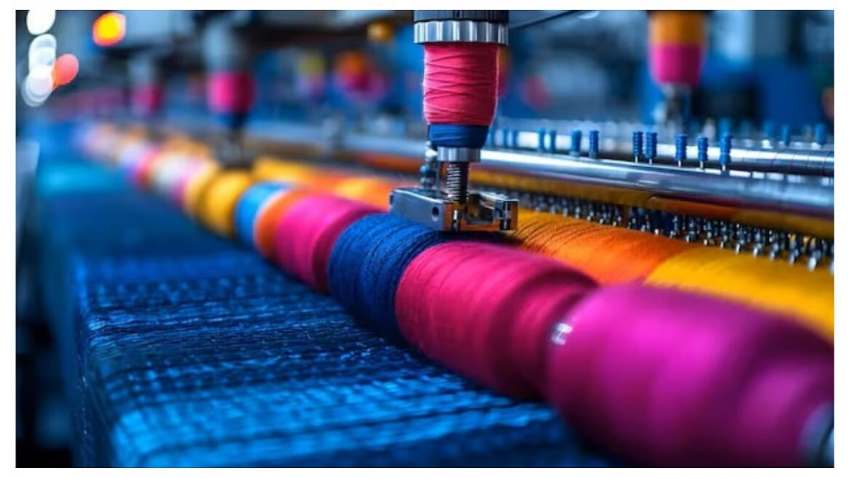
That foreign investors are pouring their capital into Vietnam will definitely help develop the local textile and garment industry. However, there are fears about projects in this category, especially those involving the dyeing phase. Impact on the environment is one concern.
So far, the bulk of foreign direct investments in the textile and garment industry are in the fields of fiber manufacturing, garment and accessories. The dyeing sector accounts for only around nine per cent of the total investment. Since the dyeing process may cause environmental pollution, one way is to license only projects that have decent water-treatment systems. High standards should be applicable to wastewater like water-treatment systems. Priority should be given to dyeing projects that bring in modern technology in wastewater treatment.
Aside from environmental pollution, some localities are also afraid of textile and garment projects because they are labor-intensive ones which require large armies of migrant workers. A larger populace of migrant work force would also mean there must be more schools, health care facilities, accommodation and a larger force in charge of security issues. Propelled by bilateral and multilateral FTAs signed recently, Vietnam is now emerging as one of the top spots in the world for investors in the garment and textile industry.
- 1
- 2
- 3
- 4
- 5
- 6
- 7
- 8
- 9
- 10
Compliance drives India’s $176 bn textile shift
India’s textile economy is no longer selling fabric alone; it is selling proof. As compliance rules harden across export markets,... Read more
The second life economy gets a boost as resale outgrows traditional apparel reta…
For decades, resale existed in the margins of the apparel economy, thrift stores, peer-to-peer marketplaces, and charity bins quietly absorbing... Read more
Rising polyester costs shake India’s textile manufacturing hubs
India’s synthetic textile industry is confronting a sudden and destabilizing price shock that is reverberating across its vast manufacturing ecosystem.... Read more
Cotton markets hold firm as tariffs, higher supply reshape global fiber economic…
In a year marked by tariff escalations, geopolitical brinkmanship and a recalibration of global trade flows, the international cotton market... Read more
Beyond Cotton How Kapok could redefine sustainable insulation in textiles
In the lush, humid heart of Southeast Asian rainforests stands a giant, a silent sentinel of the forest canopy. Growing... Read more
Bharat Tex 2026: Redefining the global textile value chain
Union Minister of Textiles, Giriraj Singh, has officially unveiled Bharat Tex 2026, signaling a significant leap in India’s influence over... Read more
Intertextile Shanghai Spring 2026: A hub for global textile innovation
The textile industry’s pulse is quickening as Intertextile Shanghai Apparel Fabrics – Spring Edition prepares to open its doors from... Read more
Moscow Fashion Week 2026: Blending sustainable innovation with timeless glamour
Scheduled to run from March 14-19, 2026 in Moscow, Russia, the Moscow Fashion Week (MFW) is cementing its status as... Read more
The Store as Stage: How fashion is crafting immersive consumer worlds
The North American fashion retail sector in 2026 is shedding its product-first identity and shifting towards a model that values... Read more
Turning the supply chain upside down, on-demand production reshapes apparel
The global fashion industry, long celebrated for its creativity and scale, is facing a structural reckoning. For decades, retailers and... Read more