For decades, cotton has defined India’s manufacturing identity and policy priorities, even though global demand has shifted towards synthetics. Today, Man-Made Fibres (MMF) make-up nearly three-fourths of the world’s fibre consumption, forming the raw material backbone for everything from athleisure to outdoor performance gear. India’s export competitiveness has suffered because it has remained heavily skewed towards natural fibres, limiting its participation in the fastest-growing apparel categories.
This imbalance is now beginning to correct itself, led by one of India’s most influential integrated textile players, Vardhman Textiles Limited (VTL). The company’s Rs 350 crore investment in a state-of-the-art synthetic performance fabric plant in Baddi marks a decisive step toward building domestic capability for advanced technical textiles. More importantly, it highlights a shift to reduce India’s longstanding dependence on imported high-performance fabrics, which had previously placed local garment exporters at an inherent disadvantage compared to Vietnam, China, and Indonesia.
Rebuilding value chain yarn upwards
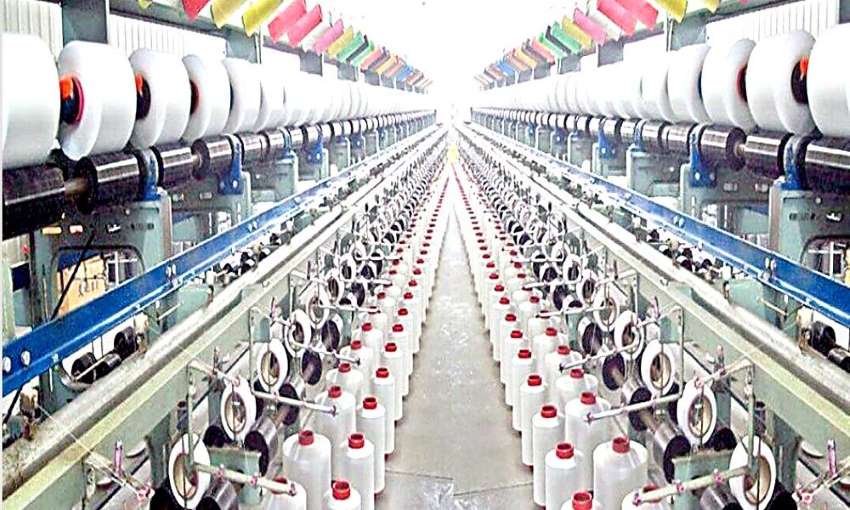
The most important challenge for India’s technical textile ambitions has been the fragmentation of its value chain. While the country has strong spinning capabilities, its ability to produce specialised performance fabrics, particularly the complex weaves and filament blends needed by global brands has remained limited. Vardhman’s new plant is designed to address this systemic gap by creating a fully integrated pipeline that begins at the yarn stage and flows seamlessly into MMF-based woven fabric manufacturing.
The company’s existing spinning infrastructure of over 1.2 million equivalent spindles, capable of producing a wide range of cotton, polyester, acrylic, and blend yarns, serves as the foundation for this integration. The new facility builds on this base with high-speed water-jet and air-jet looms, enabling the production of fine-denier, high-stretch, abrasion-resistant and tightly constructed fabrics. These fabrics are essential for the world’s fastest-growing apparel segments viz, sportswear, activewear, outdoor gear, and performance-driven workwear, categories that have increasingly shaped consumer behaviour in the US, Europe, and the UK.
By positioning these capabilities under one operational umbrella, Vardhman is effectively establishing one of India’s first scalable platforms for premium performance textiles, an area that has long been dominated by East Asian manufacturers.
Technology that bridges the global gap
The standout differentiator at the Baddi plant is the introduction of one of India’s earliest double-head coating systems, capable of processing both solvent-based and water-based coatings. Unlike conventional units that offer only single-process finishes, this dual-coating capability expands the range of functional treatments that can be applied to fabrics. These include waterproof and breathable membranes, wind-resistant layers, stain-repellent surfaces, and bonded composites used in multi-layered gear.
This technological sophistication brings India closer to the finishing standards required by global outdoor, athleisure, and technical workwear brands. Experts say, Decathlon was involved from the conceptualisation phase of the plant, signalling buyer confidence in India’s emerging MMF ecosystem. The development is a shift in sourcing patterns, where global brands, traditionally reliant on Chinese and Korean mills are now starting to evaluate India not just as a garment supplier, but as a viable materials hub.
All about global fibre demand gaps
The following snapshot illustrates the mismatch between global demand and India’s historic fibre mix:
Table: Global and Indian fibre market comparison
|
Fibre Type |
Global share (approx.) |
India's share (approx.) |
Gaps/challenges for India |
|
Man-Made Fibers (MMF) |
75% |
40-45% |
High dependence on cotton affects competitiveness in the global market. |
|
Natural Fibres |
25% |
55-60% |
Oversupply in low-margin cotton categories restricts value-addition and diversification. |
This data highlights a long-standing reality: India’s dominance in cotton does not translate into competitive advantage in the global apparel marketplace, because modern fashion is primarily synthetic-rich. From yoga leggings and gym tops to outdoor jackets and industrial uniforms, the global demand is driven largely by polyester and nylon blends that combine comfort, durability and performance. Vardhman’s move into MMF aligns India with this global trend line and reduces the structural handicap created by an unbalanced fibre portfolio.
Relief for apparel exporters
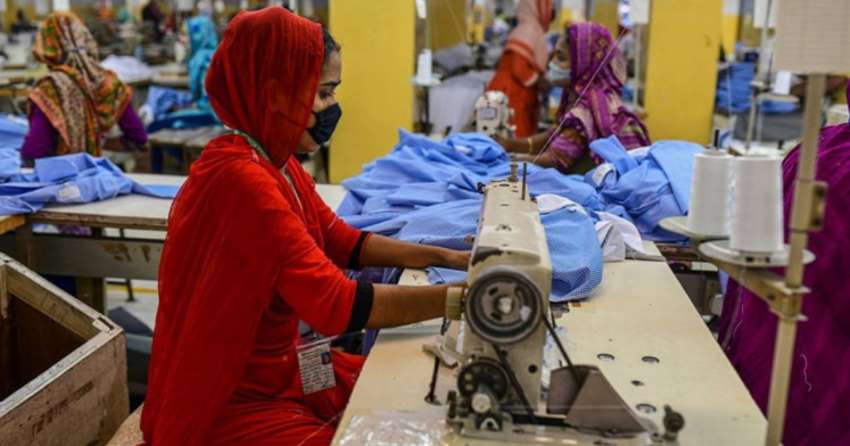
Indian apparel manufacturers have long been constrained by the need to import synthetic stretch fabrics and technical nylon blends, often waiting eight to twelve weeks for shipments to arrive from China or Korea. These long lead times have hindered their ability to cater to fast-fashion timelines and respond quickly to seasonal design changes.
With Vardhman’s new MMF facility now operational, exporters gain immediate access to domestically produced high-performance fabrics, reducing sourcing delays by nearly half. This shift fundamentally changes the competitiveness of manufacturers serving Western markets, where retailers increasingly demand shorter delivery cycles and more flexible product assortments.
The plant’s initial production capacity of 1.5 million meters per month, focused primarily on polyester-rich blends with a supporting share of nylon, directly meets the raw material needs of India’s most dynamic apparel segments. For exporters targeting the US, EU, and UK markets that collectively represent about two-thirds of India’s apparel shipments this supply-chain consolidation could be transformative.
Table: India's apparel export markets and MMF opportunity
|
Market |
Share of India’s apparel exports (approx.) |
Categories impacted by MMF/synthetics |
|
US |
27% |
Athleisure, Performance Basics, Synthetics |
|
EU |
33% |
Outdoor Apparel, Fast Fashion |
|
UK |
6% |
Sportswear, Layered Garments |
|
Total Western Share |
66% |
All High-Stretch and Coated Fabrics |
A closer look at India’s top export destinations underscores the importance of the MMF transformation. Western buyers favour performance-driven clothing, which relies heavily on synthetic materials. As India strengthens its domestic MMF fabric capabilities, it becomes better positioned to service these markets with both cost efficiency and speed two non-negotiable demands in the global supply chain.
Financial muscle behind the expansion
The scale of Vardhman’s synthetic-fabric ambitions is underpinned by the company’s robust financial base. Although the global textile market has seen volatility, the company recorded a net profit of Rs 187.76 crore in Q2 FY26, a modest decline despite industry pressures. Importantly, the company’s EBITDA margin grew 13.5 per cent, signalling a shift toward higher-value product categories. With a current ratio of 4.6x in FY25, Vardhman maintains a strong liquidity position, giving it the resilience and flexibility needed to pursue long-term investments.
The Baddi MMF unit is part of a broader Rs 2,000 crore capex programme that includes spinning modernisation, fabric capacity expansion, and the development of new technical textile capabilities. The company anticipates the new plant reaching 20-30 per cent utilisation by Q4 FY26, with the ramp-up expected to meaningfully contribute to revenue and margins from FY27 onward.
Table: Vardhman’s legacy and its next growth chapter
|
Market |
Share of India’s apparel exports (approx.) |
Categories impacted by MMF/synthetics |
|
US |
27% |
Athleisure, Performance Basics, Synthetics |
|
EU |
33% |
Outdoor Apparel, Fast Fashion |
|
UK |
6% |
Sportswear, Layered Garments |
|
Total Western Share |
66% |
All High-Stretch and Coated Fabrics |
Vardhman’s heritage is deeply rooted in yarn manufacturing, yet the company has consistently expanded into higher-value segments over the decades. With a 43 per cent export share in FY25, the company is uniquely positioned to benefit from the global pivot toward synthetic-rich categories. Its future strategy places significant focus on MMF leadership, signalling a deliberate shift away from traditional, lower-margin product lines.
A structural reset for India’s global position
What Vardhman has initiated is not merely the commissioning of another textile mill; it is a structural reset of India’s fibre identity. The timing is aligned with national policy measures such as the PLI scheme, the establishment of PM MITRA parks, and ongoing discussions to rationalise duties on synthetic fibres. If other large players follow Vardhman’s lead, India could finally evolve from a cotton-centric manufacturing base to a full-spectrum textile powerhouse capable of servicing modern fashion’s most essential material needs. With the Baddi plant now operational, the MMF transition is more than an industry aspiration, it is a reality unfolding across shop floors, coating lines, and weaving sheds. And with that, India’s long-awaited fibre correction finally has momentum.