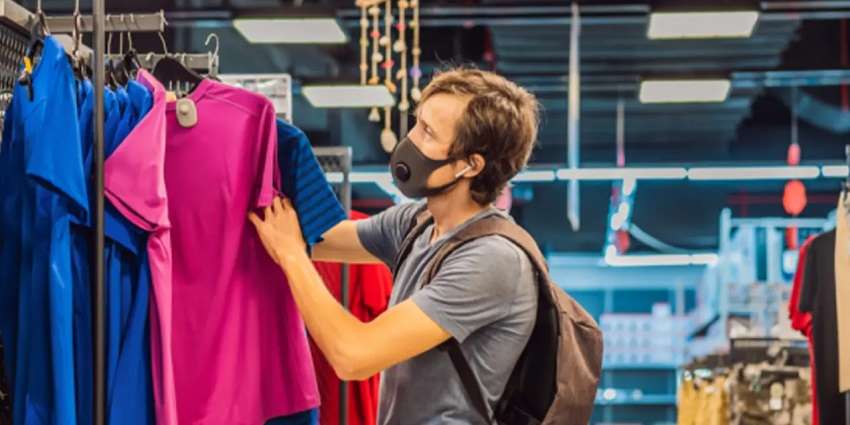
Luxury brands are struggling in the US due to a variety of factors including the dominance of e-commerce over brick and mortar. Despite efforts to improve productivity and building brand recognition , still store closings continue and high-end brand stocks remain beaten down.
Apparel, home, accessories and fragrances company Ralph Lauren has seen its shares decline 15.8 per cent in the recent one-month period after posting mixed quarterly earnings in May. Revenue fell short of expectations. Same store sales sank 12 per cent year-on-year.
High-end fashion company Michael Kors’ current quarter guidance was below expectations. While fiscal fourth quarter results surpassed estimates, the stock is down 5.7 per cent after recovering slightly from the initial sell-off.
Shares of the fashion brand Burberry hit a three-month low in April on weaker-than-expected second-half sales growth, dragged down by weakness in North America. But the firm had stronger-than-expected full-year earnings. In mid-May, the British maker of luxury apparel and accessories announced more cost cuts and share buybacks in its preliminary 2016-17 report as it completed its transition year amid a fast changing luxury market. Revenue down two per cent was boosted by a three per cent gain in retail, while adjusted profit before tax fell 21 per cent. The firm plans to double down on building its brand strength and its digital presence.
- 1
- 2
- 3
- 4
- 5
- 6
- 7
- 8
- 9
- 10
Polyester volatility redraws India’s textile industry competitive map across Asi…
India’s synthetic textile industry has entered a phase of cost instability as polyester staple fibre (PSF) prices rise across domestic... Read more
The £7 Billion Question: Who pays for fashion’s ‘free rental’ habit?
The global fashion industry is facing an uncomfortable paradox: its most valuable customers may also be its most destructive. A... Read more
India, China Bangladesh face fresh headwinds as global apparel markets rebalance
Global apparel trade is entering a more uneven recovery phase, with demand growth persisting but losing uniform momentum across major... Read more
Global cotton enters a deficit year in 2026 as supply drop meets logistics risk
The global cotton economy has entered a fragile and sensitive phase. Early projections for the 2026-27 season suggest that world... Read more
India’s textile trade gets a Pacific push as New Zealand FTA removes tariff barr…
India and New Zealand have inked a ‘once-in-a-generation’ Free Trade Agreement (FTA), one that will have a profound impact on... Read more
Lululemon’s world-first nylon circularity push signals a new apparel arms race
The global apparel industry’s circularity narrative is entering a more technically demanding phase. Polyester recycling once the flagship of sustainable... Read more
Beyond the DTC Rush: Levi’s hybrid channel strategy sets a new retail benchmark
The global apparel sector is entering a phase where channel strategy is no longer a tactical lever but a core... Read more
The New Rules of Resale: EPR turning secondhand into fashion’s strategic growth …
The global fashion industry is facing a decisive regulatory and commercial reset. What began as a sustainability narrative around reuse... Read more
The 2027 Mandate: Why denim’s future hinges on verifiable data
For decades, the global denim industry has relied on a narrative of durability, heritage, and authenticity. That narrative is now... Read more
Europe’s textile core unravels as costs, imports and policy pressure bite
Europe’s textile and apparel sector, long seen as a benchmark for craftsmanship and industrial depth, is slipping into a prolonged... Read more