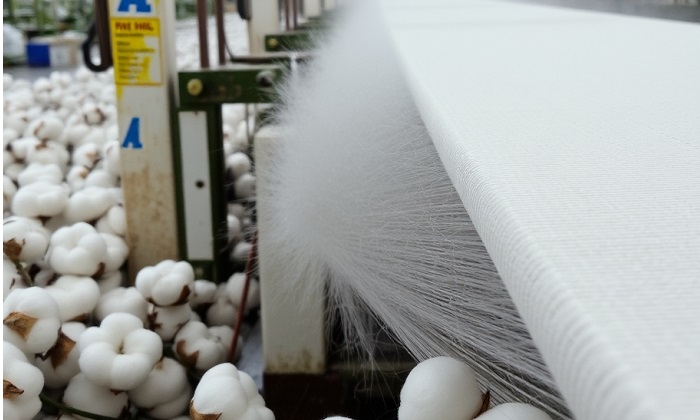
Turkey plans to impose anti-dumping duties on US cotton imports. But this decision may increase raw material costs of Turkish textile producers by two to three per cent and affect the price competitiveness of Turkish exports. Turkey has decided to place three per cent duty on US cotton imports with the argument that such imports were hurting domestic cotton production.
The face-off is likely to put a strain on trade relations between one of the world’s top fiber growers and one of its biggest customers at a time of weak global prices and demand. Turkey is the second biggest buyer of US cotton, with shipments ranging from 1.5 million to 2 million bales per year. Turkey exported $17 billion worth of garments and ready-to-wear clothing last year and $8 billion of textiles and raw materials.
The country has made headway in cotton production. Availability of high quality seeds, an increased number of harvesters and good farming practices have all facilitated higher yields. Turkish mills have been investing in new machinery and technology to increase quality and lower costs in order to get ahead in the very competitive international textile trade.
- 1
- 2
- 3
- 4
- 5
- 6
- 7
- 8
- 9
- 10
Luxury resale’s next big battle is no longer digital, it is about who controls s…
For nearly a decade, the luxury resale story was written in the language of platforms. Market leadership was measured by... Read more
Digital Arms Race: Indian apparel giants deploy AI to neutralize tariff crisis
The Indian textile and apparel sector is in a digital survival phase in 2026, shifting from traditional labor-intensive models to... Read more
Europe’s Textile Endgame: Why Project FAE is becoming fashion’s most critical in…
Europe’s apparel majors are no longer treating circularity as a branding layer. With Project FAE or Feedstock Activation Europe, the... Read more
Engineering color at source, dye-free production is cutting cost, water, and tim…
For over a century, coloring has been anchored in wet processing, an energy-intensive, chemically saturated stage that happen post spinning.... Read more
The €11 bn deadlock, can Europe’s textile recycling catch up?
Europe is at a tipping point. Fast fashion consumption, led by rising incomes and a growing global middle class, has... Read more
From field to fiber, Bharat CottonNet is closing India’s cotton value gap
India’s cotton economy is entering a decisive phase of reform with the rollout of Bharat CottonNet 2026 along with the... Read more
US apparel imports drop 13.5% as Vietnam gains and China’s grip breaks
The US apparel sourcing market has entered 2026 with a sharp demand decline but an equally important shift in supplier... Read more
H&M finds growth below revenue line as margin discipline pays off
H&M Group’s latest quarter signals a decisive shift in global fast fashion: scale is no longer the primary reason for... Read more
As Europe cuts orders, India sees a rare export window post-FTA
The sharp dip in EU apparel imports is not, at first glance, the kind of headline exporters celebrate. January’s 15.48... Read more
The Death of the "Stockpile" Model: Inside the Digital Textile disrupt…
For decades, the global textile industry has been a game of high-stakes gambling: manufacture thousands of identical garments, ship them... Read more