Stretch has become essential to modern fashion. Activewear, denim, underwear and athleisure all depend heavily on elastic fibres such as spandex, also known as elastane. But the same fibre that gives garments flexibility creates a major recycling problem. When spandex is combined with polyester or nylon, the resulting fabric becomes a multi-material product that is difficult to recycle through conventional mechanical processes.
The problem is significant. Around 80 per cent of textiles in the US apparel market are estimated to contain some spandex. Once these garments reach the end of their useful life, separating the elastic component from the main fibre can require costly and complex processing. As a result, many blended garments ultimately end up in landfills or incinerators. This is where research from the Massachusetts Institute of Technology (MIT) could have commercial significance.
One fibre family, one recycling stream
MIT researchers have developed an elastic yarn made entirely from polyolefins, using polyethylene for both the outer sheath and the flexible core. Unlike conventional stretch yarns, which combine chemically different materials, the MIT yarn keeps its components within the same material family. That means the finished yarn can potentially be melted, extruded and spun again without first separating different fibres.
The research, published in ACS Materials Letters, reveals the yarn could be remelted and respun through 10 cycles while retaining its performance.
Table: Conventional stretch yarn vs. recyclable MIT polyethylene yarn
|
Feature |
Conventional stretch yarn |
MIT polyethylene yarn |
|
Core |
Polyurethane/spandex |
Polyethylene copolymer |
|
Sheath |
Polyester or nylon |
Engineered polyethylene |
|
Recycling |
Difficult multi-material separation |
Direct remelting |
|
Processing |
Often requires specialised separation |
Compatible with melt processing |
|
Tested Recycling |
Performance can deteriorate |
Performance retained through 10 cycles |
The significance goes beyond simply replacing one fibre with another. The innovation tackles the problem of blended textiles by designing stretch into a material system that can remain recyclable.
Designed for existing manufacturing
The MIT approach also has a potential advantage for textile manufacturers: it does not depend on an entirely new fibre ecosystem. Researchers developed different polyethylene formulations for the yarn’s core and sheath. The flexible core provides elasticity, while the stronger outer material provides protection and strength.
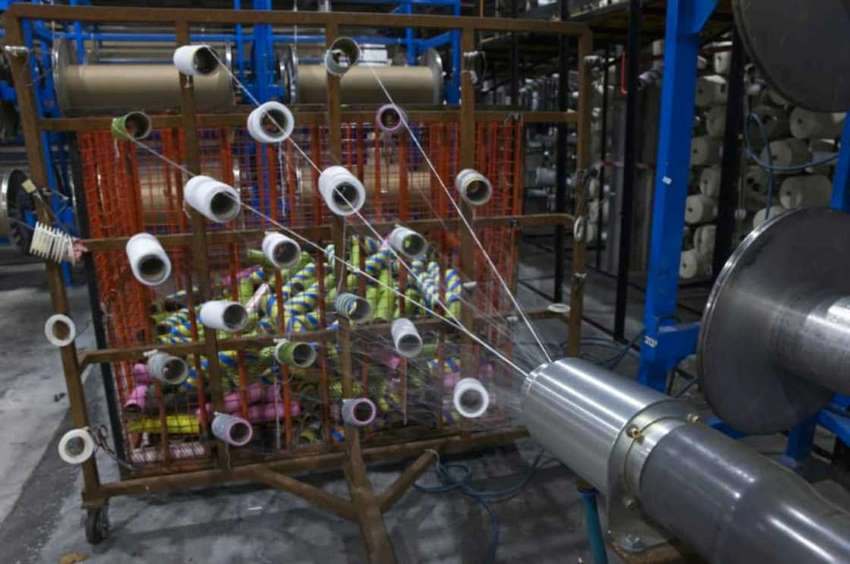
The materials are heated to around 350°F (177°C), extruded through fine nozzles and converted into filaments before being processed into yarn. This creates a yarn that can potentially move through existing spinning and textile production infrastructure with relatively limited changes. The lower processing temperature could also offer an energy advantage compared with polyester, which generally requires significantly higher temperatures during processing.
Why activewear could be the first test
The biggest commercial opportunity may lie in performance apparel. Consider a pair of leggings made with 82 per cent recycled polyester and 18 per cent spandex. The recycled polyester content may allow a brand to market the product as partly sustainable, but the elastane blend still makes end-of-life recycling difficult.
A mono-material stretch yarn could change that equation. Instead of sending a blended garment to a specialised chemical recycling process, manufacturers could potentially shred the product, melt the material and convert it into new pellets or fibres. For fashion companies facing tighter circularity requirements and producer-responsibility obligations, this could eventually reduce the cost of managing textile waste.
The commercial hurdles
The technology is promising, but laboratory performance does not automatically translate into mass-market adoption. Textile mills would need to validate the yarn across knitting, weaving, dyeing and finishing processes. Brands would also need to assess durability, comfort, colour performance and consumer care requirements.
Polyethylene presents another challenge: it does not behave like polyester when dyed. Solution or dope dyeing may therefore, become more important, requiring colour pigments to be incorporated during fibre production rather than relying on conventional dye baths. That could reduce water use and wastewater generation, but it would also require brands and mills to make colour decisions earlier in the supply chain. Garment-care standards may need adjustment as well, particularly around high-temperature washing and drying.
Challenge to spandex’s dominance
The global spandex market, valued at billions of dollars, is deeply embedded across activewear, denim, intimates and athleisure. Replacing it will not happen simply because an alternative yarn becomes technically viable. The larger opportunity is to rethink how stretch fabrics are designed.
For years, fashion has treated recyclability as something to address after a garment is made. MIT’s approach reverses that logic by designing the material itself around future recovery. If the technology can move from laboratory-scale production to commercially competitive textile manufacturing, it could give brands a new way to combine stretch performance with circularity. The bigger lesson is that the next phase of sustainable fashion may not be about finding better ways to separate blended garments. It could be about eliminating the blend altogether.