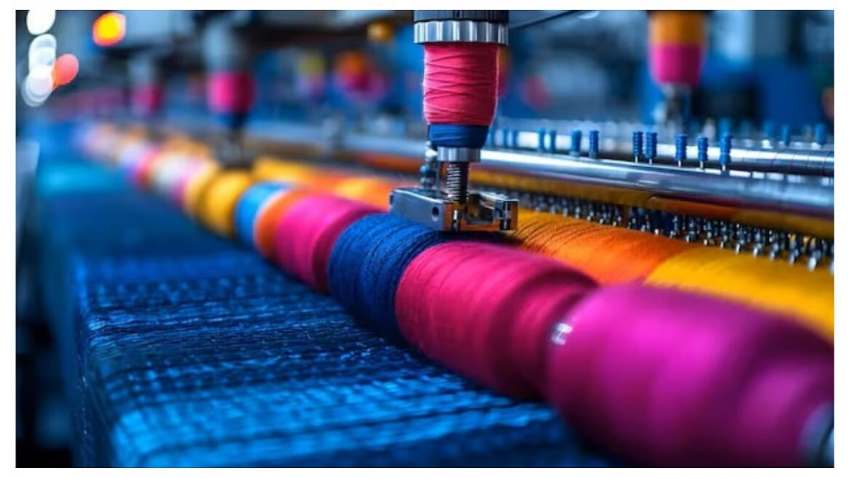
The Tirupur knitwear cluster is looking to the Indo-Pacific economic corridor as it would open up traditional apparel markets abroad. The Indo-Pacific economic corridor is a treaty likely to have 12 countries, such as India, the US, Australia, Indonesia, Japan and New Zealand, on board. Under the treaty, each country is expected to provide a conducive climate for trade exchanges for other members and investment to develop infrastructure.
Especially in the apparel market, India could utilise the advantage, if the US, which has a traditional apparel market, has a lower import tariff and a softer approach. Apparel exporters in India could get a huge help from the corridor. The corridor will provide a platform for a select group of nations and it help others develop their economies. If the partners are provided preferred status by other nations, it will be a win-win situation for both sides.
Though the economic corridor has been mainly mooted to counter China, it will not affect China much, at least not in the apparel market. Since Chinese firms have already made big investments in countries such as Bangladesh, Vietnam and Cambodia, which are top competitors of India in the apparel industry, China may not feel the heat of the corridor.
- 1
- 2
- 3
- 4
- 5
- 6
- 7
- 8
- 9
- 10
The Lyst Reset: Chanel and Dior rewrite luxury’s power index
The global luxury hierarchy has been quietly rewritten, and not by sales alone. In Q1 2026, Chanel rose to the... Read more
Inventory, not expansion, defines winners in global apparel
The 2025 fiscal year has crystallised that revenue growth and operational health are no longer moving in tandem. In an... Read more
From growth-at-all-costs to cash discipline, the new economics of DTC fashion
The global direct-to-consumer apparel market is entering a correction phase, as fashion brands across the US, Europe and the UK... Read more
Britain’s Forgotten Growth Engine: Why policy gaps are undermining fashion and t…
Britain’s fashion and textile industry, often framed through the lens of creativity and design, is emerging as a case study... Read more
Beyond price rallies structural reform can strengthen India’s cotton economy
India’s cotton economy is entering a decisive phase, where firmer prices and tighter arrivals in the 2026-27 season have given... Read more
Polyester volatility redraws India’s textile industry competitive map across Asi…
India’s synthetic textile industry has entered a phase of cost instability as polyester staple fibre (PSF) prices rise across domestic... Read more
The £7 Billion Question: Who pays for fashion’s ‘free rental’ habit?
The global fashion industry is facing an uncomfortable paradox: its most valuable customers may also be its most destructive. A... Read more
India, China Bangladesh face fresh headwinds as global apparel markets rebalance
Global apparel trade is entering a more uneven recovery phase, with demand growth persisting but losing uniform momentum across major... Read more
Global cotton enters a deficit year in 2026 as supply drop meets logistics risk
The global cotton economy has entered a fragile and sensitive phase. Early projections for the 2026-27 season suggest that world... Read more
India’s textile trade gets a Pacific push as New Zealand FTA removes tariff barr…
India and New Zealand have inked a ‘once-in-a-generation’ Free Trade Agreement (FTA), one that will have a profound impact on... Read more