India generates nearly eight million tonnes of textile waste every year, placing the country at the center of the global circular economy though it is rarely acknowledged as such. While much global attention centers on futuristic recycled fibers and chemical breakthroughs, a decades-old, quietly efficient revolution has shaped the southern textile belt. In Tirupur, the cradle of India’s knitwear industry, hundreds of mechanical recycling hubs have grown into one of the world’s most important textile revival systems, converting mountains of discarded fabric into millions of tonnes of usable fiber.
Visitors who walk through these facilities often leave stunned. What they discover is a paradoxical ecosystem: advanced machines that rely on intensely human labor, immense material streams that depend on purity, and a globally competitive recycling economy held together by improvisation, ingenuity, and sheer scale.
The mechanical backbone of the circular economy
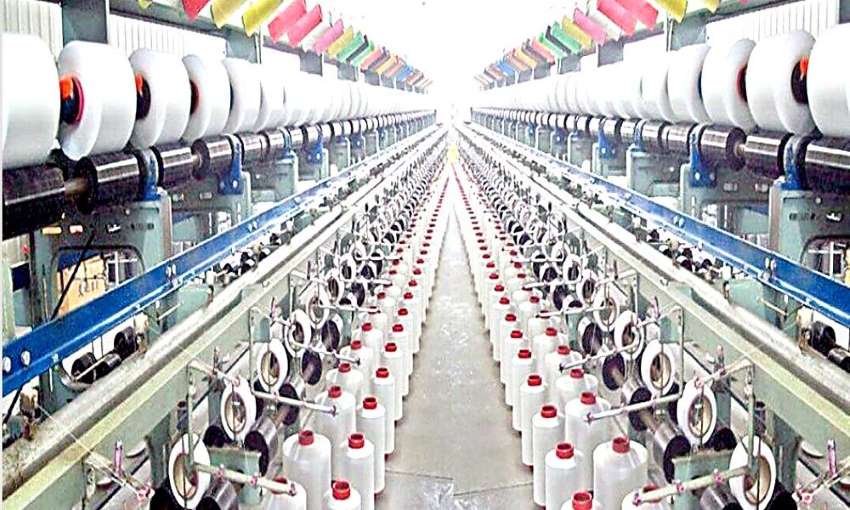
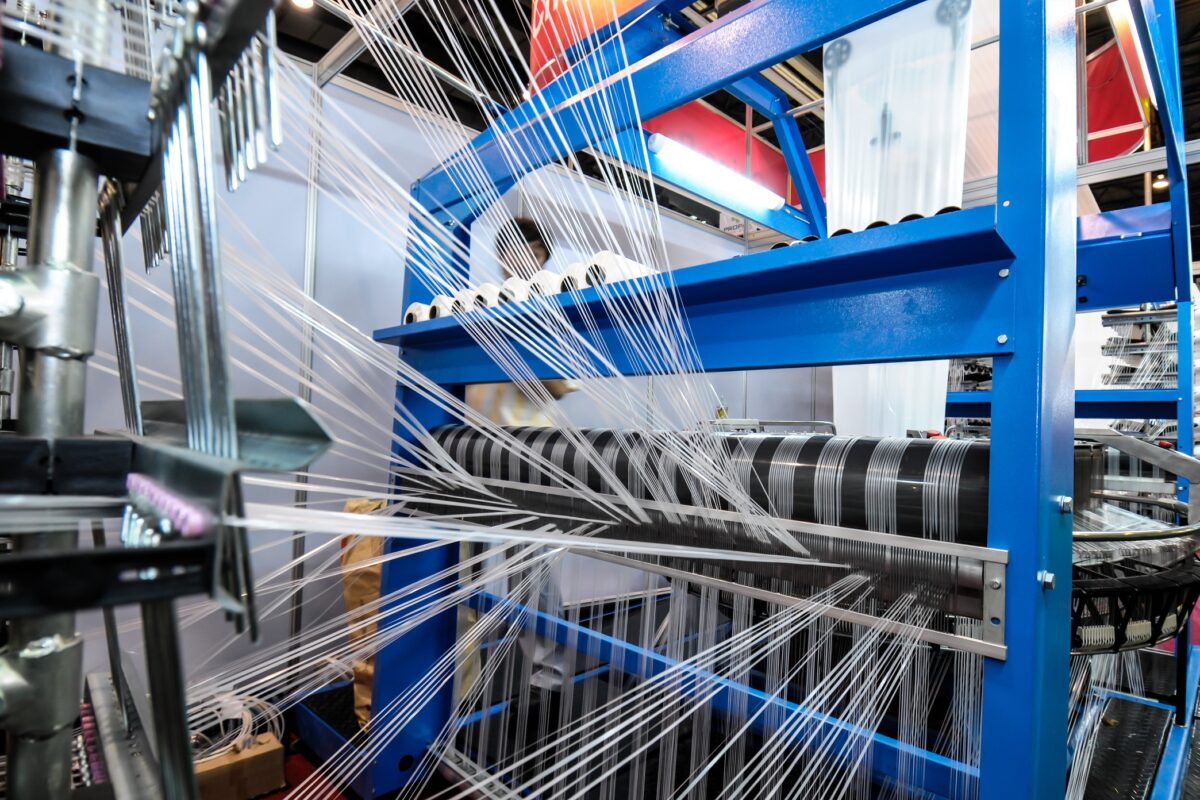
At the heart of this industrial engine lies mechanical recycling, a system that relies on high-power shredders, openers, and carding machines to tear textile waste back into usable fiber. The process is deceptively simple but technologically demanding. Facilities across Tirupur run a mix of machines whose capabilities directly determine the strength, length, and usability of the recycled fiber they produce.
Standard units typically operate upgraded Chinese lines, robust workhorses that efficiently process cotton-rich clippings while maintaining acceptable fiber length. Premium operators, by contrast, have invested in advanced Turkish or Austrian machinery capable of preserving greater fiber length. The difference in output quality between these two systems is real but often narrower than assumed. Decades of local innovation, tweaks, retrofits, custom drums, and optimized blade settings, have pushed Indian machines to global levels of performance.
Yet even the most advanced machines cannot escape the fundamental laws of recycled fiber. The shorter the fiber becomes, the more reinforcement it needs. For most garment-grade applications, recyclers must blend their output with up to 40 per cent recycled polyester to ensure adequate yarn strength. But some of Tirupur’s most exacting recyclers have developed a surprising specialty: ultra-pure input streams, sometimes achieving contamination rates as low as one per cent. Such purity is not a machine-made miracle but the result of something far more human.
Why India imports clean waste
Contrary to global narratives about circularity, India’s mechanical recycling sector does not rely on discarded consumer garments. Instead, its engine runs on pre-consumer waste, cutting-floor clippings from knitwear factories. These clippings, generated in large volumes within Tirupur itself, offer the ideal characteristics for mechanical fiber recovery: cleanliness, fiber uniformity, and predictable composition. The table reflects the structure of India’s textile waste stream, illustrating both the abundance and the hierarchy of what actually gets recycled.
Table: Waste stream and utilization in India’s textile recycling sector
|
Waste stream category |
Estimated annual volume (kilo tonnes) |
Primary use in recycling |
Challenges |
|
Pre-Consumer Waste (Clippings) |
3,265 |
Preferred Feedstock |
Cleaner input, higher-quality output. |
|
Post-Consumer Domestic Waste (PCW) |
3,944 |
Low Utilization/Downcycling |
Inadequate sorting prevents value recovery. |
|
Imported Waste |
584 |
Supplement Clean Feedstock |
Sourced from places like Bangladesh, Mexico, US, and EU to maintain consistent quality supply. |
|
Total Waste Managed Annually in India |
7,793 |
India is a Global Recycling Hub |
Source: Fashion for Good / IDH (2020s Estimates) |
This data reveals the irony at the core of India’s recycling landscape. Despite nearly four million tonnes of domestic post-consumer waste, very little of it enters high-value recycling streams. Instead, recyclers import waste often from as far as Mexico not because India lacks material, but because domestic post-consumer waste is too mixed, too stained, or too poorly sorted for efficient processing. The import of clean clippings, particularly cotton-rich ones, acts as a stabilizer for the mechanical mills. Without it, the machines would run slower, produce shorter fibers, or require heavier polyester blending each of which erodes profitability.
Where machines depend on humans
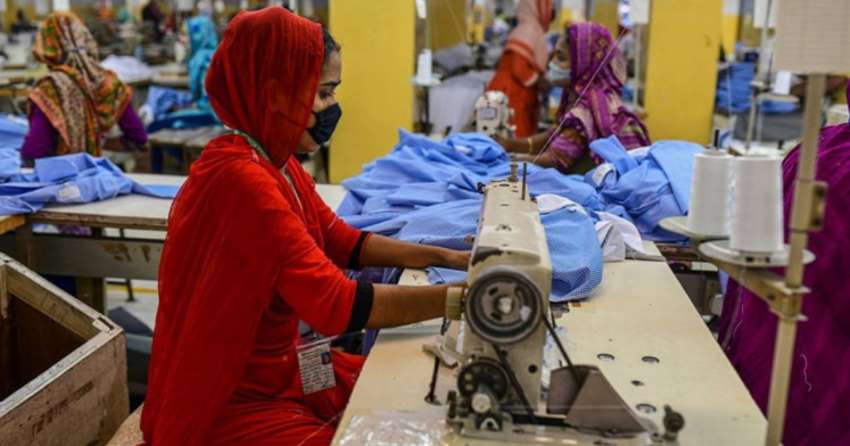
Behind every bale of recycled fiber lies the most labor-intensive and low-tech step of the process: sorting. Before textile waste can enter the shredders, skilled workers separate it by color, material, and contamination level. This is no small task. A single mis-sorted polyester piece can contaminate an entire batch of cotton, lowering quality and value.
The manual sorting floors of Tirupur are immense. Rows of workers many of them women sit before mountains of textile scraps, moving at a speed and precision no machine has yet replicated. It is here, in these labor hubs, that India’s recycling sector shows its true scale as an employer. Across India, an estimated four million people work in the broader textile waste ecosystem, and sorting is its largest job creator.
The cost structure reflects this reality. Sorting and waste procurement together comprise more than 60 per cent of a recycler’s daily operating cost. Machines may define the final product, but humans define both the quality and the economics.
The pressure valve for a waste-heavy ecosystem
Not all textile waste is created equal. Materials with high contamination, blended fibers, elastane-heavy jerseys, or low-grade imports cannot be remade into high-quality yarns. For these streams, downcycling acts as a crucial release valve. Waste unsuitable for spinning is shredded further and transformed into non-woven textiles used in insulation, automotive interiors, mattress fillings, filtration media, or industrial wipes. This downcycling layer prevents hundreds of thousands of tonnes of material from entering landfills. It also provides steady revenue for recyclers, creating a diversified ecosystem that absorbs different grades of waste without collapsing under inconsistent input quality.
The Next Leap: Automation, AI, and the future of recycling
The next frontier for Tirupur lies in solving the bottleneck that has limited the sector’s growth for decades: sorting. Recognizing the lost value in poorly sorted post-consumer waste, several Southern Indian recycling groups have begun experimenting with technologies that could fundamentally reshape the ecosystem.
AI-powered optical scanners, near-infrared (NIR) sorting systems, and semi-automated conveyor-based classification lines are now being tested in pilot plants. Their potential is transformative. Machines that can recognize fiber composition and color with precision could unlock India’s vast domestic post-consumer waste supply, redirecting it from landfills into high-value recycling streams. Early financial models indicate that sorting hubs adopting automated classification stand to increase revenue by nearly 10 per cent, thanks to the higher value of clean, categorized waste.
A circular engine at the crossroads
South India’s textile recycling cluster is among the world’s largest, most advanced, and most understated circular economies. It is a system built on contradictions: high-tech machines paired with manual sorting, local waste supplemented with imported clippings, and global environmental goals met through human-powered precision.
As automation, AI-assisted traceability, and domestic post-consumer waste systems mature, Tirupur is poised to evolve from a mechanical recycling powerhouse into a fully integrated circular economy hub. What emerges next will not just influence India’s textile sector but could redefine how the world understands and implements industrial-scale recycling. The hidden mills of Tirupur are no longer just recycling fabric. They are reimagining the future of waste, work, and the circular economy itself.