India’s textile and apparel industry is facing an unexpected mid-cycle rupture that is reshaping the sector’s economics far faster than policymakers anticipated. What began as a favourable season for the spinning and raw-material economy, egged on by a weak rupee and heavy government-led cotton procurement has now unravelled into a broad-based export contraction triggered by steep new US tariff slabs. The sector, is suddenly staring at a liquidity spiral that is throttling production, delaying payments and disrupting labour flows in major clusters like Tiruppur, Surat, Ludhiana and Mumbai.
The turning point was in August 2025, when the US raised import duties on several Indian textile categories as high as 50 per cent. Expected to be a temporary pressure point as trade negotiations progressed, the duties have instead persisted, altering procurement behaviour among global buyers and overshadowing the price advantage that depreciating domestic currency and competitive cotton prices typically bring to exporters.
A value chain in disequilibrium
The Indian textile value chain has historically moved in tight correlation: when cotton prices firm up, spinning mills adjust output; yarn prices set the tone for weavers; garmenting units respond to buyer cycles. In November 2025, however, these links have frayed.
Southern India’s spinning belts of Coimbatore, Erode, Salem and parts of Andhra Pradesh are reporting muted activity even as raw cotton prices remain high. The Cotton Corporation of India’s (CCI) aggressive MSP procurement increased fibre prices by Rs 300 to Rs 500 per candy, lifting sentiment among cotton growers. A weaker rupee, nearing Rs 86.2 per US dollar, should have ideally boosted export competitiveness across the chain. Yet, mills are unable to pass on any gains because demand from garmenting units remains sharply depressed.
Data from the Confederation of Indian Textile Industry (CITI) confirms the imbalance. Textile and apparel exports between April and October 2025 fell 1.57 per cent year-on-year. The sharper blow, however, came in October, when cotton yarn, fabrics and made-ups registered a 13.31 per cent decline, the steepest monthly fall in two years. This decline, which typically signals weakening global retail offtake, has been compounded this time by halted US shipments and delayed payments.
A Mumbai-based yarn trader captures the sector’s anxiety succinctly, saying that buyers are unwilling to commit even to small consignments as long as tariff uncertainties linger. With invoices stuck in transit and garmenting units tightening cash flows, fresh bookings have slowed dramatically, creating a downstream pressure that spinning mills are struggling to absorb.
The US duty shock
The tariff increase US has emerged as the most disruptive force in India’s global textile positioning this decade. India’s textiles traditionally do not enjoy the same duty-free access that Bangladesh, Vietnam or Cambodia receive under the US GSP or preferential trade agreements. But with the new slabs stretching up to 50 per cent on certain finished apparel categories, India’s cost disadvantage has widened to 30-35 per cent.
The impact is visible across order books. US buyers, who historically contributed 29 per cent of India’s apparel exports, have cut volumes drastically, in some cases by as much as 70 per cent. The sharpest decline has been recorded in mass-market cotton apparel, home textiles and low-value knitwear segments that constitute the backbone of India’s MSME-led garmenting clusters.
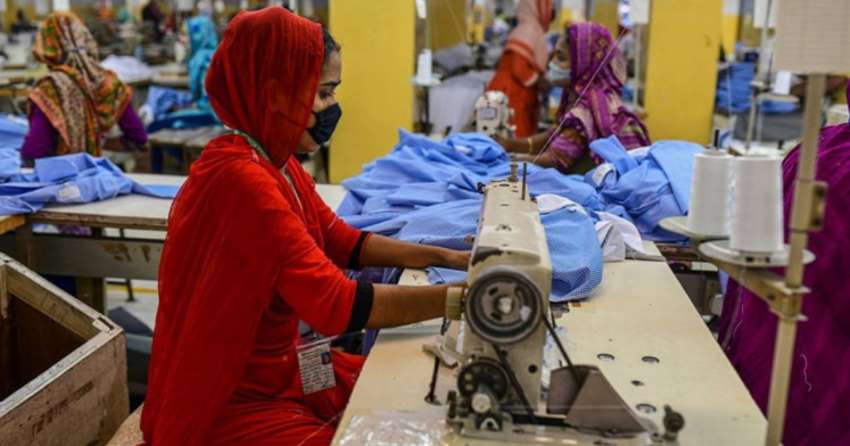
This drop is already altering the financial ecosystem. MSMEs, which make up nearly 70 per cent of India’s textile production units, are now confronting an acute cash squeeze. Payments from overseas clients are being delayed beyond customary 60-90 day cycles, forcing units to rely heavily on working capital loans at a time when borrowing costs remain high. Industry reports estimate that garment units in Tiruppur are holding unsold inventories worth nearly ₹6,800 crore, while several Ludhiana knitwear exporters have reportedly begun furloughing workers to manage fixed costs.
Credit rating agency ICRA’s latest sectoral review reflects the seriousness of the shock. It has revised its outlook for India’s export-oriented apparel industry to ‘Negative’ for FY2026, projecting a revenue decline of 6-9 per cent and a decline of operating profit margins from 10 per cent in FY2025 to nearly 7.5 per cent. This margin drop could rise further if tariffs persist into mid-2026, risking long-term buyer migration to more cost-efficient sourcing destinations.
The liquidity spiral
The most immediate consequence of the tariff regime is the liquidity freeze gripping export hubs. The payment cycles of garment exporters already stretched in a slow global retail environment have increased by an additional 45-60 days, choking the cash flows of small and mid-sized vendors. Banks, wary of rising exposure in the sector, have begun restricting credit limits for high-risk MSMEs. Industry associations warn that Non-Performing Assets (NPAs) in textile-heavy districts could rise by 20-25 per cent over the next two quarters if relief does not arrive.
Garmenting clusters are particularly vulnerable because they operate on thin margins and depend heavily on pre-shipment and post-shipment credit. With buyers deferring shipments, many units are now sitting on completed orders that cannot be dispatched due to payment bottlenecks. The slowdown is also visible in powerloom hubs like Bhiwandi, where loom utilisation reportedly dropped below 40 per cent in November for the first time since the pandemic-era lockdowns.
Gokaldas Exports’ playbook for survival
While the broader sector reels under tariff pressure, a few large players are adapting their expansion strategies to cushion external shocks. Gokaldas Exports, one of India’s oldest and most diversified apparel exporters, illustrates how manufacturers are seeking geographical and product diversification to reduce dependence on US markets.
Founded in 1979, the company built its early business around supplying woven apparel to global brands, but over the past five years it has systematically expanded into knitwear, man-made fibres (MMF) and specialised performance wear. This repositioning is deliberate: MMF-based products face lower volatility in cotton prices and offer wider market access beyond the US, particularly in Europe, the Middle East and Japan. The company’s recent acquisitions have also strengthened its vertical integration, enabling it to reduce lead times at a moment when buyers are increasingly prioritising speed and reliability over cost alone.
Market sentiment remains cautiously optimistic toward the company’s model. Even amid tariff turbulence, Gokaldas Exports’ stock has rallied intermittently on hopes of a pending trade agreement between India and the US. Investors view its strategy coupling government PLI incentives with non-US market expansion as reflective of how the broader industry might restructure to withstand geopolitical risk.
A race against time for policy relief
The outlook for India’s textile and apparel sector now hinges on a narrow set of uncertain variables. The most critical among them is the outcome of the India-US trade negotiation currently underway. Early signals suggest progress, but with US election considerations and India’s need for broader market assurances, timelines remain opaque. Any delay risks accelerating India’s loss of market share to Bangladesh, Vietnam, Turkey and Mexico, countries already positioned to absorb diverted orders.
Yet, amid export turmoil, India’s domestic textile economy is on a different path. The sector is projected to reach $646.96 billion by 2033, driven by rising incomes, premiumisation of apparel, and a nationwide push towards sustainable, MMF product lines. This difference between global stress and domestic growth could give the sector partial insulation, provided the government intervenes swiftly to ease liquidity and expedite tariff negotiations.
Industry leaders warn that without timely relief, structural damage could set in, leading to labour displacement, permanent shutdowns of MSME units and a long-term reconfiguration of global sourcing routes away from India. For now, the industry waits for clarity, its hopes pinned on trade diplomacy, domestic demand resilience and the entrepreneurial ability of manufacturers to adapt their business models in an era defined by volatility.