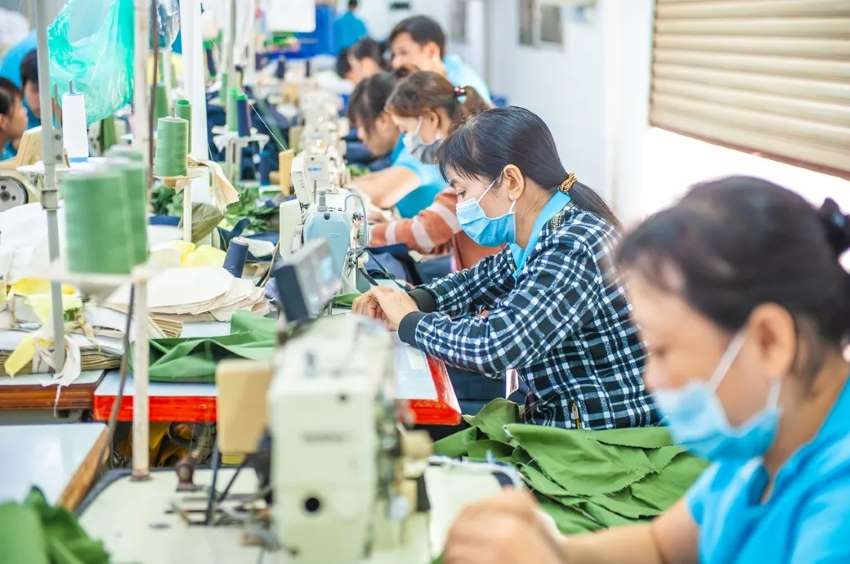
Pakistan’s readymade garment exports rose five per cent in July to May 2015-16.
The quantity of readymade garment exports went up by four per cent. In May 2016, readymade garments exports were up five percent compared to May 2015. In terms of volume, readymade garments exports were up 2.23 per cent in May 2016 from May 2015.
The growth of readymade garment manufacturing in Pakistan represents a progression towards higher value addition in the global textile chain. Low or intermediate value-added products make up approximately 69 per cent of Pakistan’s total textile exports.
Pakistan’s garment exports have a relatively narrow base, with a few products accounting for the bulk of exports; the top six export products account for over 78 per cent of all garment exports. Export concentration also occurs at the lower end of the price range. For four out of the five most traded products, Pakistan’s average export price is approximately half of the world average export price.
The decision to protect the local fiber industry and impose high tariff and non-tariff barriers on the import of man-made fibers, yarn, and various fabrics has severely limited the export potential of garments. Garment manufacturers are required to produce and export items without imported yarn, fabric, or special trimmings and accessories. This raises costs and reduces international competitiveness. Additionally, given that man-made fibers now comprise 65 per cent of total fiber consumption in the world, Pakistan’s exporters are excluded from a substantial proportion of the market.

- 1
- 2
- 3
- 4
- 5
- 6
- 7
- 8
- 9
- 10
China’s inward turn, domestic demand is rewriting the export model
China is undergoing one of its most consequential economic recalibrations in decades, driven by geopolitical instability, rising Western protectionism, and... Read more
Why Shein sees itself as a technology company, not a fashion brand
The modern fashion industry has traditionally been defined by creativity, merchandising expertise and global sourcing networks. Yet few companies have... Read more
India’s textile sector turns crisis into competitive advantage
India’s textile and apparel industry has emerged from one of the most turbulent periods in its recent history, transforming a... Read more
India’s Export Divide: Textile mills advance, apparel makers face global headwin…
India’s textile and apparel (T&A) sector entered FY2027 with a striking internal contradiction. While the country’s overall merchandise exports increased... Read more
China’s inward turn, domestic demand is rewriting the export model
China is undergoing one of its most consequential economic recalibrations in decades, driven by geopolitical instability, rising Western protectionism, and... Read more
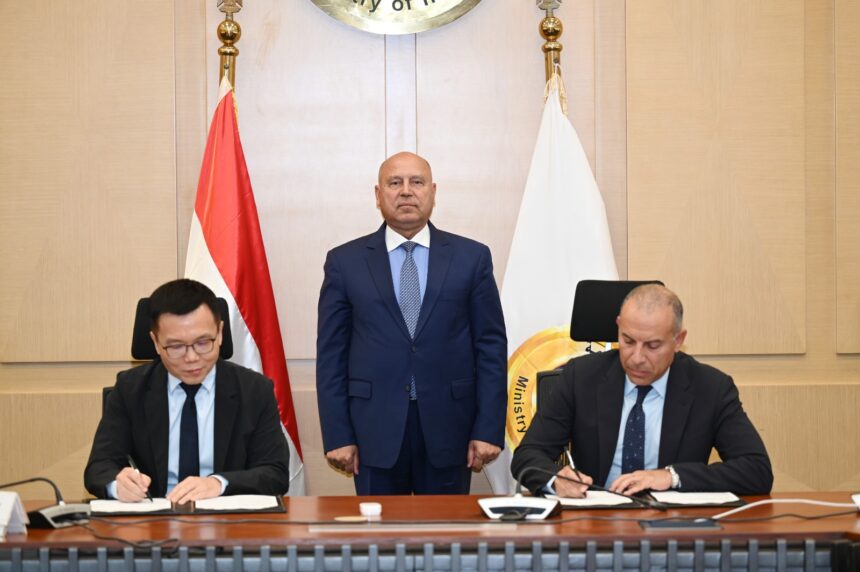
Egypt bets on a $2 bn green textile city to become Europe’s next sourcing hub
Egypt is making a decisive play to become one of the world's most important apparel manufacturing destinations after securing a... Read more
EU textile imports hit $295.66 bn as price wars mask manufacturing stress
The European Union’s textile and apparel imports grew to $295.66 billion in 2025, a 9.4 per cent year-on-year increase from... Read more
Landmark India-UK trade pact to supercharge textile export margins
The long-awaited India-UK Comprehensive Economic and Trade Agreement (CETA) is officially scheduled to commence on July 15, 2026. This breakthrough... Read more
Is it the end of aspirational luxury? Asia’s consumers demand more than logos
While the global personal luxury goods market remains broadly stable at around €358 billion, the apparent resilience masks a deeper... Read more
Vietnam wins, India slips as US apparel sourcing undergoes massive reset
A trade realignment is transforming the global apparel market, yet India’s manufacturing has stalled at the starting line. Newly released... Read more