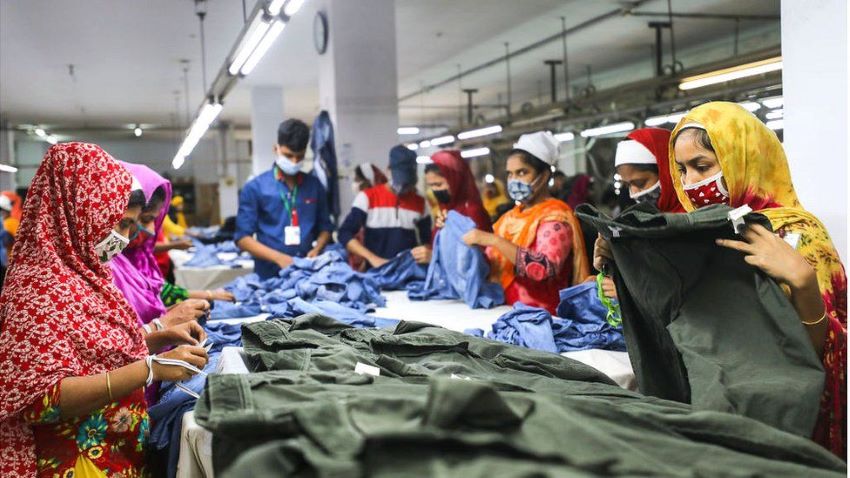
Pakistan’s textile industry is unable to meet export orders and cannot expand its operations to create an export surplus. Among the factors hindering Pakistan’s textile exports are the withdrawal of the zero rating status, the high energy cost and the cotton shortage. The industry wants the energy package continued for another five years. Sales tax is collected on value added items at each stage but refunds are only available after export. The production cycle requires 185 days to complete. This has triggered a huge liquidity crisis. Adequate finance and credit availability are stressed as vital for the growth and enhancement of the industry. Over the last five years Pakistan’s cotton production has fallen by 22 per cent which has caused a loss of almost two per cent of the total GDP. The textile industry will have to import five million bales to meet the requirements in the ongoing financial year.
Over the last one year, interest rate has increased from 5.75 per cent to 13.25 per cent, further restraining investment in the sector, along with increased working capital requirements owing to the recent devaluation of the currency. One suggestion by the industry is that advanced seed technology be available for quality seed development. Seed technology controls weeds and insects.
- 1
- 2
- 3
- 4
- 5
- 6
- 7
- 8
- 9
- 10
The second life economy gets a boost as resale outgrows traditional apparel reta…
For decades, resale existed in the margins of the apparel economy, thrift stores, peer-to-peer marketplaces, and charity bins quietly absorbing... Read more
Rising polyester costs shake India’s textile manufacturing hubs
India’s synthetic textile industry is confronting a sudden and destabilizing price shock that is reverberating across its vast manufacturing ecosystem.... Read more
Cotton markets hold firm as tariffs, higher supply reshape global fiber economic…
In a year marked by tariff escalations, geopolitical brinkmanship and a recalibration of global trade flows, the international cotton market... Read more
Beyond Cotton How Kapok could redefine sustainable insulation in textiles
In the lush, humid heart of Southeast Asian rainforests stands a giant, a silent sentinel of the forest canopy. Growing... Read more
Bharat Tex 2026: Redefining the global textile value chain
Union Minister of Textiles, Giriraj Singh, has officially unveiled Bharat Tex 2026, signaling a significant leap in India’s influence over... Read more
Intertextile Shanghai Spring 2026: A hub for global textile innovation
The textile industry’s pulse is quickening as Intertextile Shanghai Apparel Fabrics – Spring Edition prepares to open its doors from... Read more
Moscow Fashion Week 2026: Blending sustainable innovation with timeless glamour
Scheduled to run from March 14-19, 2026 in Moscow, Russia, the Moscow Fashion Week (MFW) is cementing its status as... Read more
The Store as Stage: How fashion is crafting immersive consumer worlds
The North American fashion retail sector in 2026 is shedding its product-first identity and shifting towards a model that values... Read more
Turning the supply chain upside down, on-demand production reshapes apparel
The global fashion industry, long celebrated for its creativity and scale, is facing a structural reckoning. For decades, retailers and... Read more
Intertex Milano 2026 - A global nexus for textile innovation
Intertex Milano is set to return this summer, confirming its status as a premier international destination for the textile and... Read more