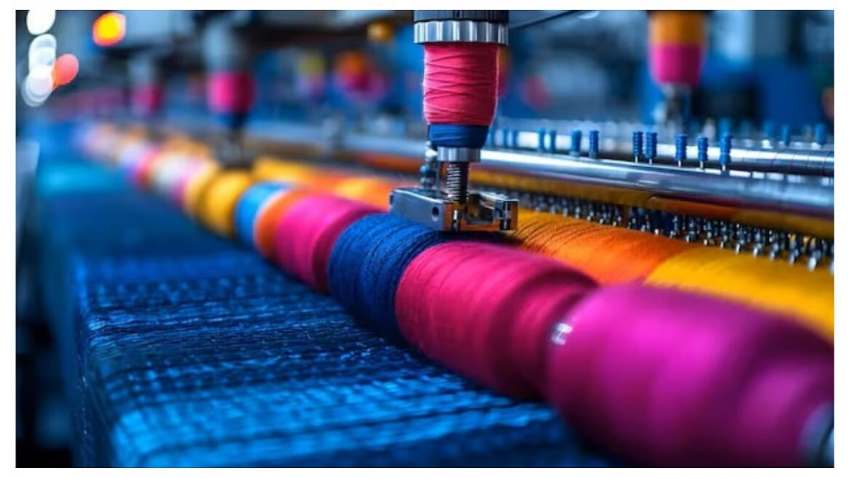
Researchers have developed a textile capable of harnessing energy from both sunlight and wind. A fabrication strategy merged two different lightweight, low-cost polymer fibers to create energy-producing textiles. The first component of the textile is a micro cable solar cell, able to gather power from ambient sunlight. The second is a nano generator capable of converting mechanical energy into electricity.
Under ambient sunlight, and in the presence of wind blowing or human motion, the textile swatch was able to charge a small commercial capacitor up to 2V in one minute. The textile could continuously power an electric watch, charge a cell phone, and even drive water-splitting reactions, releasing hydrogen.
After optimising individual components, researchers worked on optimizing the overall textile. To maximise its energy output, they had to perform a systematic optimisation of the individual electrical connections and overall patterns between the photovoltaic and tribo electric components. After the system was optimised, the team put together a plain-weave fabric that included a four-centimeter-square tribo electric textile and a 1 x 4 centimeter photovoltaic textile, mixed with wool fibers.
Overall, the fabric doesn't generate a lot of electricity. But it has the advantage of being able to generate electricity where it may be needed.
- 1
- 2
- 3
- 4
- 5
- 6
- 7
- 8
- 9
- 10
Polyester volatility redraws India’s textile industry competitive map across Asi…
India’s synthetic textile industry has entered a phase of cost instability as polyester staple fibre (PSF) prices rise across domestic... Read more
The £7 Billion Question: Who pays for fashion’s ‘free rental’ habit?
The global fashion industry is facing an uncomfortable paradox: its most valuable customers may also be its most destructive. A... Read more
India, China Bangladesh face fresh headwinds as global apparel markets rebalance
Global apparel trade is entering a more uneven recovery phase, with demand growth persisting but losing uniform momentum across major... Read more
Global cotton enters a deficit year in 2026 as supply drop meets logistics risk
The global cotton economy has entered a fragile and sensitive phase. Early projections for the 2026-27 season suggest that world... Read more
India’s textile trade gets a Pacific push as New Zealand FTA removes tariff barr…
India and New Zealand have inked a ‘once-in-a-generation’ Free Trade Agreement (FTA), one that will have a profound impact on... Read more
Lululemon’s world-first nylon circularity push signals a new apparel arms race
The global apparel industry’s circularity narrative is entering a more technically demanding phase. Polyester recycling once the flagship of sustainable... Read more
Beyond the DTC Rush: Levi’s hybrid channel strategy sets a new retail benchmark
The global apparel sector is entering a phase where channel strategy is no longer a tactical lever but a core... Read more
The New Rules of Resale: EPR turning secondhand into fashion’s strategic growth …
The global fashion industry is facing a decisive regulatory and commercial reset. What began as a sustainability narrative around reuse... Read more
The 2027 Mandate: Why denim’s future hinges on verifiable data
For decades, the global denim industry has relied on a narrative of durability, heritage, and authenticity. That narrative is now... Read more
Europe’s textile core unravels as costs, imports and policy pressure bite
Europe’s textile and apparel sector, long seen as a benchmark for craftsmanship and industrial depth, is slipping into a prolonged... Read more