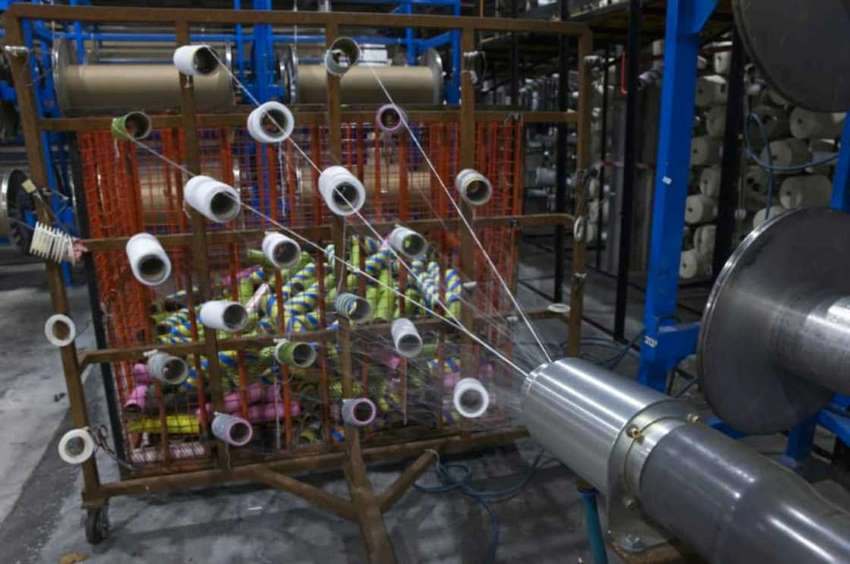
Malkha India spearheads a movement to give more control to cotton farmers, providing them the means of production. The initiative started in 2003, strives to bring control of spinning and weaving. And its founder Uzramma, says there are Malkha centers in Telangana and Andhra Pradesh. The primary drive for her movement stems from the link between cotton farmer suicides and power looms, which function best with American cotton. The only cotton suitable for the power loom is American cotton, which won’t grow in India. So farmers need fertilizers and pesticides, which they buy with their own money until they can’t, and then they are forced to take loans.
India is the second largest producer of cotton in the world, and yet its major cotton export is American cotton, which doesn’t grow here naturally. While power looms are faster and can process more cotton, some native cottons are damaged and torn and are labeled inferior. In addition, weavers are paid very little.
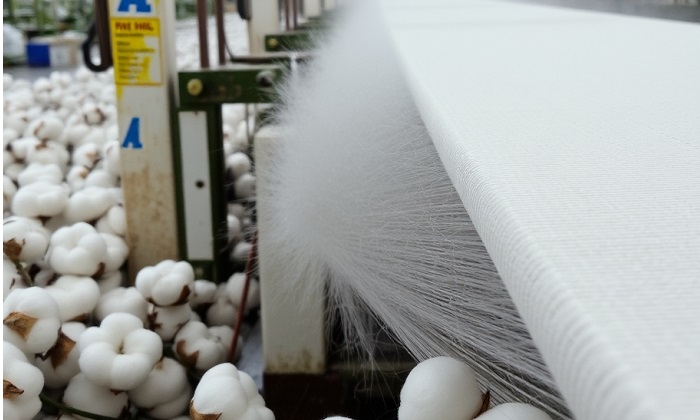
The issue finds its roots in mass farming overseas. In the US, huge fields of cotton are harvested with large cotton picker machines that compact the cotton into bales but this is said to damage the cotton. Also, the cotton that is run through the power loom produces only one color of fabric and uses large amounts of electricity to run. Handweaving cotton allows a more flexible and cost-efficient production.

- 1
- 2
- 3
- 4
- 5
- 6
- 7
- 8
- 9
- 10
China’s inward turn, domestic demand is rewriting the export model
China is undergoing one of its most consequential economic recalibrations in decades, driven by geopolitical instability, rising Western protectionism, and... Read more
Egypt bets on a $2 bn green textile city to become Europe’s next sourcing hub
Egypt is making a decisive play to become one of the world's most important apparel manufacturing destinations after securing a... Read more
EU textile imports hit $295.66 bn as price wars mask manufacturing stress
The European Union’s textile and apparel imports grew to $295.66 billion in 2025, a 9.4 per cent year-on-year increase from... Read more
Landmark India-UK trade pact to supercharge textile export margins
The long-awaited India-UK Comprehensive Economic and Trade Agreement (CETA) is officially scheduled to commence on July 15, 2026. This breakthrough... Read more
Is it the end of aspirational luxury? Asia’s consumers demand more than logos
While the global personal luxury goods market remains broadly stable at around €358 billion, the apparent resilience masks a deeper... Read more
Vietnam wins, India slips as US apparel sourcing undergoes massive reset
A trade realignment is transforming the global apparel market, yet India’s manufacturing has stalled at the starting line. Newly released... Read more
US clothing prices rise faster than inflation, reshaping fashion retail strategy
After nearly two years of heavy discounting, inventory liquidation, and margin decline, apparel prices in the US are now rising... Read more
From gym to boardroom performance fabrics are redefining apparel demand
The global apparel industry has entered a new phase of evolution as the distinction between sportswear and everyday fashion continues... Read more
Digital Dominance Redefined: Zara moves past H&M in $100 bn fast fashion bat…
The global fast-fashion sector has reached a inflection point in 2026 where the battleground is no longer only store shelves... Read more
Spykar accelerates offline expansion: plans 100 new stores across India
A titan of the Indian denim-first fashion scene, Spykar has officially unveiled an aggressive retail growth strategy. As consumer demand... Read more