Orissa has launched an investment program called Go-Swift. Within eight months, some 300 investment proposals have been submitted. The proposals belong to a variety of sectors ranging from food processing, seafood, aluminium downstream, apparel, cement, tourism and others.
Go-Swift expects a cumulative investment commitment of some Rs 18,208 crores with an employment potential of over 29,000 people. This is first-of-its-kind initiative by any state government in the country. Due to the significant ease of application and the expeditious approval process, there has been a considerable increase in the number of investors wanting to set up their business in the state.
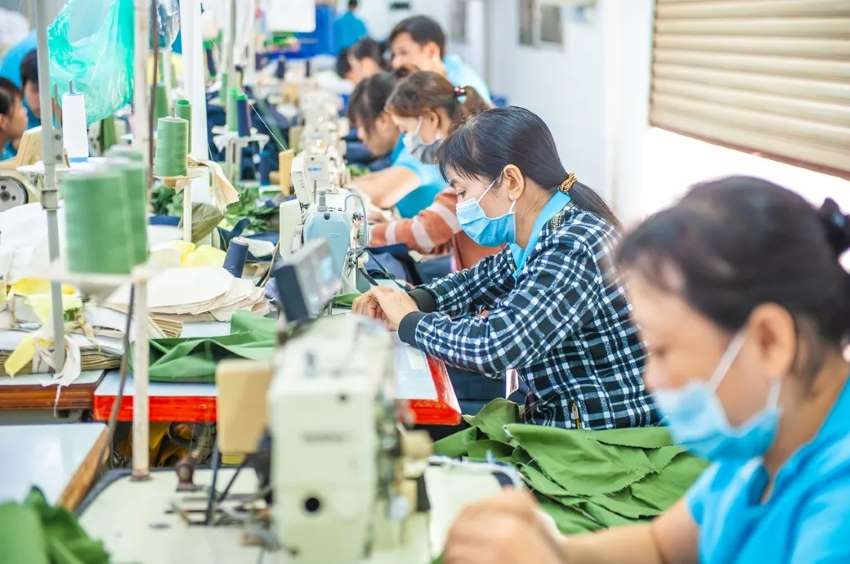
Kitex Garments for instance will set up an apparel manufacturing unit in Orissa. The project will create employment opportunities for over 5000 people, mostly women. Kitex is an exporter of cotton garments, especially infant wear, to the US and Europe. The company has two segments – garments and fabrics. In fiscal ’16-’17 the garment segment contributed 84 per cent to sales and fabrics 16 per cent.
Kitex, based in Cochin, is in the process of upgrading its current facilities so as to expand capacity. It is a vertical set-up with knitting and processing of fabrics while finished garments are done in-house. The facility covers an area of 1,80,768 sq. ft.
- 1
- 2
- 3
- 4
- 5
- 6
- 7
- 8
- 9
- 10
Britain’s Forgotten Growth Engine: Why policy gaps are undermining fashion and t…
Britain’s fashion and textile industry, often framed through the lens of creativity and design, is emerging as a case study... Read more
Beyond price rallies structural reform can strengthen India’s cotton economy
India’s cotton economy is entering a decisive phase, where firmer prices and tighter arrivals in the 2026-27 season have given... Read more
Polyester volatility redraws India’s textile industry competitive map across Asi…
India’s synthetic textile industry has entered a phase of cost instability as polyester staple fibre (PSF) prices rise across domestic... Read more
The £7 Billion Question: Who pays for fashion’s ‘free rental’ habit?
The global fashion industry is facing an uncomfortable paradox: its most valuable customers may also be its most destructive. A... Read more
India, China Bangladesh face fresh headwinds as global apparel markets rebalance
Global apparel trade is entering a more uneven recovery phase, with demand growth persisting but losing uniform momentum across major... Read more
Global cotton enters a deficit year in 2026 as supply drop meets logistics risk
The global cotton economy has entered a fragile and sensitive phase. Early projections for the 2026-27 season suggest that world... Read more
India’s textile trade gets a Pacific push as New Zealand FTA removes tariff barr…
India and New Zealand have inked a ‘once-in-a-generation’ Free Trade Agreement (FTA), one that will have a profound impact on... Read more
Lululemon’s world-first nylon circularity push signals a new apparel arms race
The global apparel industry’s circularity narrative is entering a more technically demanding phase. Polyester recycling once the flagship of sustainable... Read more
Beyond the DTC Rush: Levi’s hybrid channel strategy sets a new retail benchmark
The global apparel sector is entering a phase where channel strategy is no longer a tactical lever but a core... Read more
The New Rules of Resale: EPR turning secondhand into fashion’s strategic growth …
The global fashion industry is facing a decisive regulatory and commercial reset. What began as a sustainability narrative around reuse... Read more