The textile industry is an important contributor to Kenya's economy, serving as a large source of jobs and export earnings. But Kenya’s apparel industry, valued at $330 million a year, is still small, with an estimated 30,000 workers, versus the $23 billion industry in Bangladesh that employs 4.2 million people. In Kenya, the industry comprises only six per cent of the small manufacturing sector.
However, the country is trying to grab a larger slice of the global clothing market. It has the best chance to do so in a few years, thanks to shifting global trends. It all boils down to China, which is no longer the factory of the world. Even when it comes to Bangladesh international buyers are reconsidering their strategies. People are very concerned about building safety in Bangladesh. While Africa has water, cotton, labor and green energy. Cotton exports from Africa account for about 13 per cent of the world's production. And unlike Bangladesh, African countries also have duty-free access to the US apparel market.
Foreign buyers, mostly from the US, are hoping to increase the volume of orders they place with Kenyan apparel factories. And Kenyans happen to be expert clothes makers. Some factories in Kenya already produce denim for H&M, Walmart and others.

- 1
- 2
- 3
- 4
- 5
- 6
- 7
- 8
- 9
- 10
China’s inward turn, domestic demand is rewriting the export model
China is undergoing one of its most consequential economic recalibrations in decades, driven by geopolitical instability, rising Western protectionism, and... Read more
Why Shein sees itself as a technology company, not a fashion brand
The modern fashion industry has traditionally been defined by creativity, merchandising expertise and global sourcing networks. Yet few companies have... Read more
India’s textile sector turns crisis into competitive advantage
India’s textile and apparel industry has emerged from one of the most turbulent periods in its recent history, transforming a... Read more
India’s Export Divide: Textile mills advance, apparel makers face global headwin…
India’s textile and apparel (T&A) sector entered FY2027 with a striking internal contradiction. While the country’s overall merchandise exports increased... Read more
China’s inward turn, domestic demand is rewriting the export model
China is undergoing one of its most consequential economic recalibrations in decades, driven by geopolitical instability, rising Western protectionism, and... Read more
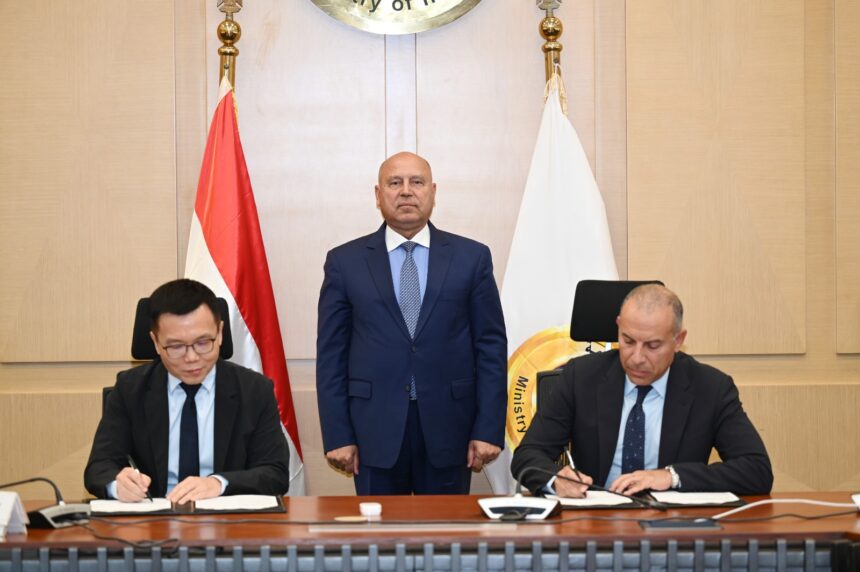
Egypt bets on a $2 bn green textile city to become Europe’s next sourcing hub
Egypt is making a decisive play to become one of the world's most important apparel manufacturing destinations after securing a... Read more
EU textile imports hit $295.66 bn as price wars mask manufacturing stress
The European Union’s textile and apparel imports grew to $295.66 billion in 2025, a 9.4 per cent year-on-year increase from... Read more
Landmark India-UK trade pact to supercharge textile export margins
The long-awaited India-UK Comprehensive Economic and Trade Agreement (CETA) is officially scheduled to commence on July 15, 2026. This breakthrough... Read more
Is it the end of aspirational luxury? Asia’s consumers demand more than logos
While the global personal luxury goods market remains broadly stable at around €358 billion, the apparent resilience masks a deeper... Read more
Vietnam wins, India slips as US apparel sourcing undergoes massive reset
A trade realignment is transforming the global apparel market, yet India’s manufacturing has stalled at the starting line. Newly released... Read more