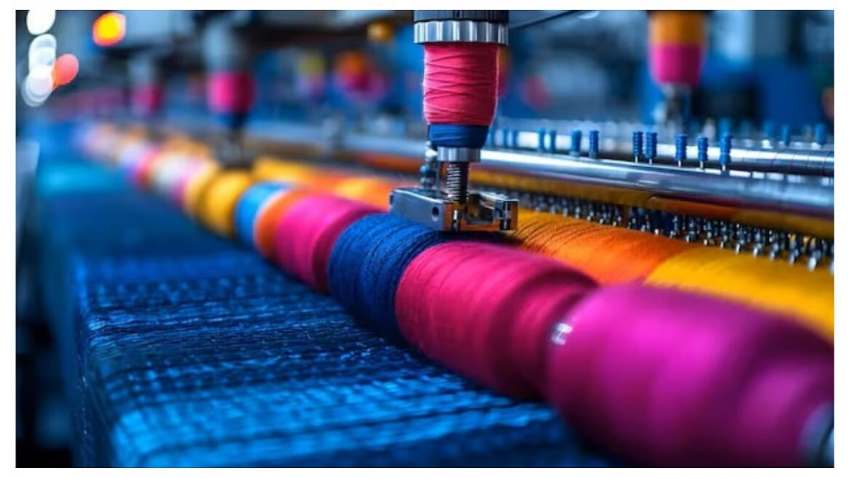
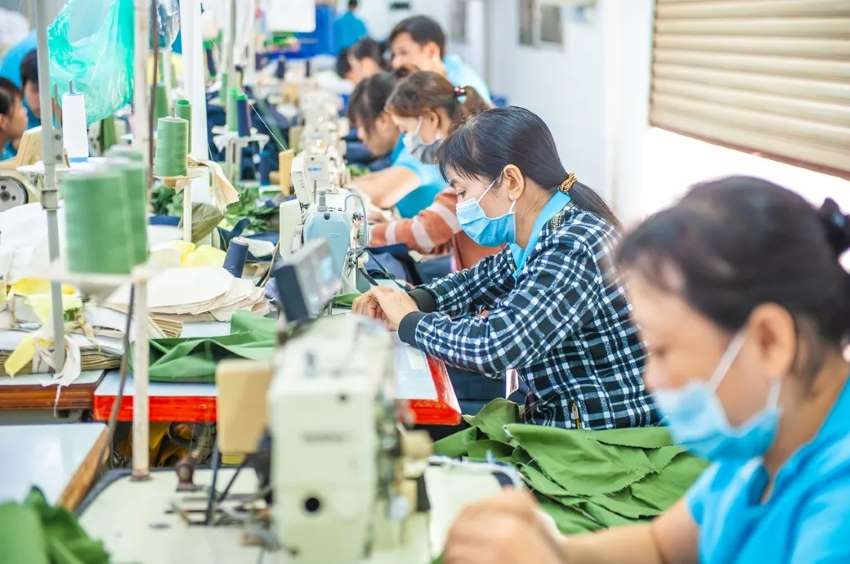
India has launched an initiative to help small industries adopt sustainable and efficient textile technologies. This initiative called Saathi is expected to benefit the almost 25 lakh powerloom units in the country which produce 57 per cent of the total cloth in the country. The use of efficient equipment would result in energy savings and cost savings to the unit owner who would in turn repay in installments to Energy Efficient Services over a four to five year period.
The provision to repay in installments is a novel idea as it will not cast undue burden on small power loom owners since they will not be required to incur any additional capital expenditure. This initiative is a step in the right direction as there is enormous scope for increasing the production and exports of fabrics from India in view of the abundant availability of raw materials and technical skills in the country. Exports of fabrics can be increased substantially if they are treated on par with garments and made-ups in terms of incentives.
However, despite these advantages, and even though weaving capacity has increased by 12 per cent over the last seven years, woven fabric production has decreased by 3.58 per cent as fabric export has become uncompetitive due to various added costs, non-refund of state levies and duty free access enjoyed by countries like Pakistan, Bangladesh, Vietnam in the EU market.

- 1
- 2
- 3
- 4
- 5
- 6
- 7
- 8
- 9
- 10
China’s inward turn, domestic demand is rewriting the export model
China is undergoing one of its most consequential economic recalibrations in decades, driven by geopolitical instability, rising Western protectionism, and... Read more
Why Shein sees itself as a technology company, not a fashion brand
The modern fashion industry has traditionally been defined by creativity, merchandising expertise and global sourcing networks. Yet few companies have... Read more
India’s textile sector turns crisis into competitive advantage
India’s textile and apparel industry has emerged from one of the most turbulent periods in its recent history, transforming a... Read more
India’s Export Divide: Textile mills advance, apparel makers face global headwin…
India’s textile and apparel (T&A) sector entered FY2027 with a striking internal contradiction. While the country’s overall merchandise exports increased... Read more
China’s inward turn, domestic demand is rewriting the export model
China is undergoing one of its most consequential economic recalibrations in decades, driven by geopolitical instability, rising Western protectionism, and... Read more
Egypt bets on a $2 bn green textile city to become Europe’s next sourcing hub
Egypt is making a decisive play to become one of the world's most important apparel manufacturing destinations after securing a... Read more
EU textile imports hit $295.66 bn as price wars mask manufacturing stress
The European Union’s textile and apparel imports grew to $295.66 billion in 2025, a 9.4 per cent year-on-year increase from... Read more
Landmark India-UK trade pact to supercharge textile export margins
The long-awaited India-UK Comprehensive Economic and Trade Agreement (CETA) is officially scheduled to commence on July 15, 2026. This breakthrough... Read more
Is it the end of aspirational luxury? Asia’s consumers demand more than logos
While the global personal luxury goods market remains broadly stable at around €358 billion, the apparent resilience masks a deeper... Read more
Vietnam wins, India slips as US apparel sourcing undergoes massive reset
A trade realignment is transforming the global apparel market, yet India’s manufacturing has stalled at the starting line. Newly released... Read more