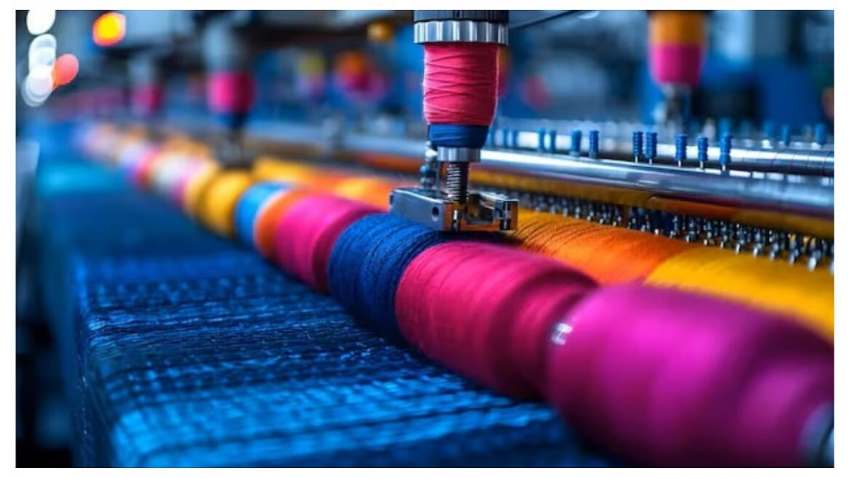
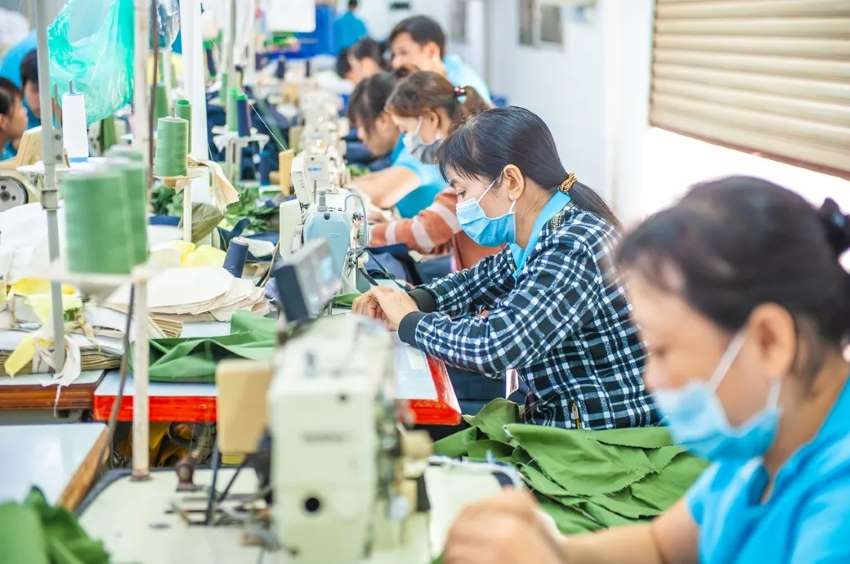
The textile and handicrafts industry constitutes an important segment of the Indian economy. It is one of the largest employment generators after agriculture. The sector employs about seven million people. The sector is strategic from the point of view of low capital investment, high ratio of value addition, and high potential for export and foreign exchange earnings for the country.
It is estimated that out of the total number of persons employed in handlooms, handicrafts, and sericulture, about 50 per cent are women. There are more women in the household industry than in the registered small scale or cottage units. However, in the organised sector, the percentage of women workers is extremely low, with the exception being garmenting.
Handlooms and handicrafts are a major source of income for rural communities in general and for rural women in particular. Efforts are being made to revitalize the cottage based traditional sectors like handlooms, handicrafts, jute and wool through an integrated approach covering the entire value chain. To provide encouragement to textile manufactures and farmers of raw materials, incentives are being provided like a minimum support price for cotton farmers, upgrading the technology for handloom weavers and providing centers for trade facilitation.
- 1
- 2
- 3
- 4
- 5
- 6
- 7
- 8
- 9
- 10
Beyond the DTC Rush: Levi’s hybrid channel strategy sets a new retail benchmark
The global apparel sector is entering a phase where channel strategy is no longer a tactical lever but a core... Read more
The New Rules of Resale: EPR turning secondhand into fashion’s strategic growth …
The global fashion industry is facing a decisive regulatory and commercial reset. What began as a sustainability narrative around reuse... Read more
The 2027 Mandate: Why denim’s future hinges on verifiable data
For decades, the global denim industry has relied on a narrative of durability, heritage, and authenticity. That narrative is now... Read more
Europe’s textile core unravels as costs, imports and policy pressure bite
Europe’s textile and apparel sector, long seen as a benchmark for craftsmanship and industrial depth, is slipping into a prolonged... Read more
Automation, innovation, regulation are the forces shaping textiles in 2026
The global textile sector has entered a new era. Early 2026 saw the industry breach a $1.06 trillion valuation, reflecting... Read more
The new Brussels rulebook, every EU apparel order is now a balance-sheet risk
The humble export order sheet is undergoing a transformation. What was once a straightforward commercial instrument: SKU, volume, FOB price,... Read more
Why 2026-27 could be a defining cotton year for India’s farm-to-fashion economy
The global cotton economy is entering a more constrained phase, and for India, the implications run far beyond the farm... Read more
Luxury resale’s next big battle is no longer digital, it is about who controls s…
For nearly a decade, the luxury resale story was written in the language of platforms. Market leadership was measured by... Read more
Digital Arms Race: Indian apparel giants deploy AI to neutralize tariff crisis
The Indian textile and apparel sector is in a digital survival phase in 2026, shifting from traditional labor-intensive models to... Read more
Europe’s Textile Endgame: Why Project FAE is becoming fashion’s most critical in…
Europe’s apparel majors are no longer treating circularity as a branding layer. With Project FAE or Feedstock Activation Europe, the... Read more